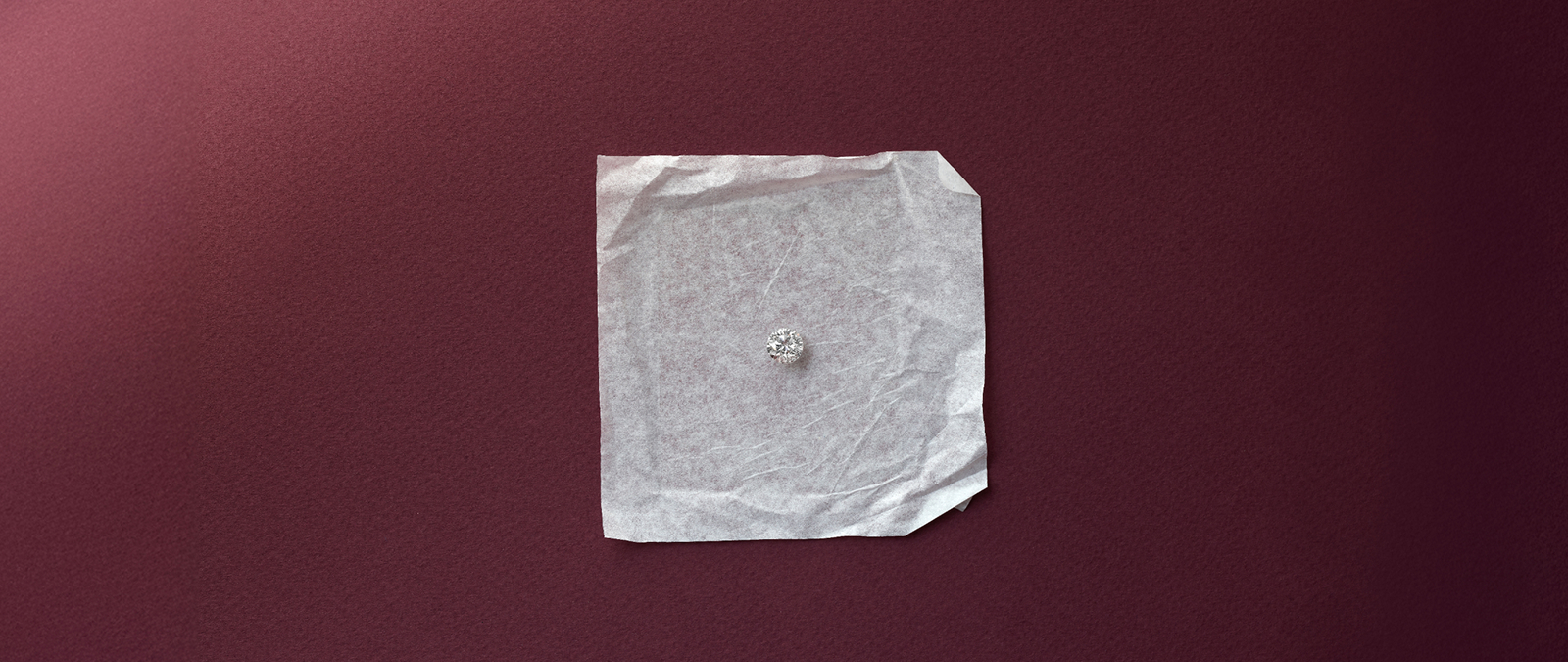
When it comes to diamond clarity, understanding what it means – for your jewelry and your wallet – is more straightforward than you might think. Here, we’ll explain all, from the diamond clarity scale for natural vs lab-grown diamonds to inclusions, blemishes and the rest of the 4Cs.
What clarity and inclusions mean in diamond grading
You might already know that natural diamonds are graded based on the 4Cs of diamonds. These four factors work together to determine a diamond’s overall appeal and financial value.
- Cut – How well the diamond has been cut, shaped and faceted, affecting how beautifully it catches and reflects the light. If you’d like to learn more about how a diamond’s cut brings out its brilliance and sparkle, you can explore our guide on how cut reveals brilliance in natural diamonds (opens in new window).
- Colour – How white or colourless the diamond appears, with the most prized stones showing little to no tint. If you’d like to understand how a diamond’s colour influences its beauty and value, you can explore our guide the color spectrum of natural diamonds
- Clarity – How free the diamond is from internal inclusions and surface blemishes, graded on a scale that runs all the way up to Flawless. If you’d like to learn more about why high-clarity natural diamonds are so rare and sought after, you can explore our guide on the rarity of high clarity natural diamonds.
- Carat – The weight of the diamond, which gives an idea of its size while working in harmony with cut, colour and clarity. If you’d like to get a clearer idea of how diamond weight relates to size and overall balance, you can explore our guide on what is a good diamond carat size for an engagement ring?
While all of them matter, clarity is often emphasized, especially in the natural diamond vs lab-grown debate.
But what exactly is diamond clarity? In simple terms, it means how free a diamond is from internal ‘birthmarks’ (known as inclusions) and external markings (known as blemishes). These can be anything from tiny crystals trapped inside the stone to little feather-like lines or minute dots that are often impossible to spot with the naked eye1.

Understanding the diamond clarity scale
Currently, only one institute (the International Gemological Institute) continues to grade natural diamonds and LGDs in the same way using the diamond clarity scale. HRD Antwerp does not grade LGDs at all, instead choosing to focus on the natural diamonds, and the Gemological Institute of America (GIA) has introduced a more streamlined assessment method of grading man-made diamonds2.
Given that most lab-grown diamonds occupy a narrow range of quality characteristics, they are now classified by the latter as either ‘standard’ or ‘premium’ based on their quality and craftsmanship. Clarity in these cases is either very good or excellent, and anything considered below this standard is not graded at all.
For those grading using the diamond clarity scale, a universal system is adopted to help determine how ‘clean’ a diamond appears internally and externally. This scale currently ranges from:
- FL (Flawless): no inclusions or blemishes are visible under 10x magnification. If you’d like to learn more about what truly makes a flawless natural diamond unique, you can explore our guide on why flawless natural diamonds are so rare.
- IF (Internally Flawless): no inclusions visible, only minor surface blemishes
- VVS1 & VVS2 (Very Very Slightly Included): inclusions are extremely difficult to detect, even under magnification
- VS1 & VS2 (Very Slightly Included): inclusions are minor and difficult to see with the naked eye
- SI1 & SI2 (Slightly Included): inclusions are noticeable under magnification and may be visible without it
- I1, I2 & I3 (Included): inclusions are usually obvious and may affect the diamond’s transparency and brilliance
What’s important to note is that these categories aren’t about good versus bad per se; they’re simply tools to help us understand a diamond’s internal makeup. And although a diamond clarity chart or scale can be helpful, it’s worth remembering that most inclusions are microscopic. You’d need a jeweler loupe (a specialist magnifying glass) to spot them, and many have no impact on sparkle.
Clarity and inclusions in natural diamonds
A natural diamond formation happens under intense pressure and heat deep beneath the Earth’s surface. As they make their epic journey towards the surface, they are likely to pick up a few souvenirs along the way. Diamond inclusions are the geological equivalent of freckles, tiny little scars or marks our body might collect as we grow and age.
Inclusions in natural diamonds can be anything from tiny fractures and marks created in the intense formation process, to other minerals amassed within the stone. They tell us the diamond is natural, formed over time and completely one-of-a-kind.
It’s important to think of inclusions as birthmarks of authenticity instead of imperfections. If your diamond has a feather or a pinpoint, that’s an assurance of its origin, not a defect. They are beautiful reminders of your diamond’s identity and fascinating backstory.


Clarity and inclusions in lab-grown diamonds
Lab-grown diamonds are created in factory environments using HPHT (High Pressure High Temperature) or CVD (Chemical Vapor Deposition) methods. These processes aim to mimic Earth’s conditions in a much more controlled environment, which results in diamonds with typically fewer inclusions that can be made in a matter of week3.
Fewer inclusions doesn’t mean none at all, though. LGDs can still have man-made inclusions that are often metallic or synthetic growth-related. In many cases, these imperfections are minimized or strategically placed4. The result? Diamonds that look hyper-clean, almost pristine. Much like a filtered Instagram image – beautiful but often missing authenticity, a sense of character, a personality.
Why diamond clarity isn’t the only thing that matters
The diamond clarity grading system exists to help standardize evaluation, not to tell you how to feel about a certain diamond. There’s something incredibly beautiful and alluring about a gemstone that’s weathered with time and pressure while still managing to dazzle.
Additionally, a diamond with slightly more inclusions but an incredible cut will sparkle much more than a technically flawless gem with a mediocre cut. That’s because the brilliance and light performance of a diamond matter more than clarity.
Many diamonds that fall somewhere in the VS (Very Slightly Included) or SI (Slightly Included) range are what jewelers call ‘eye clean’, too. This means that any inclusions are invisible to the naked eye.
How to choose a diamond with clarity in mind
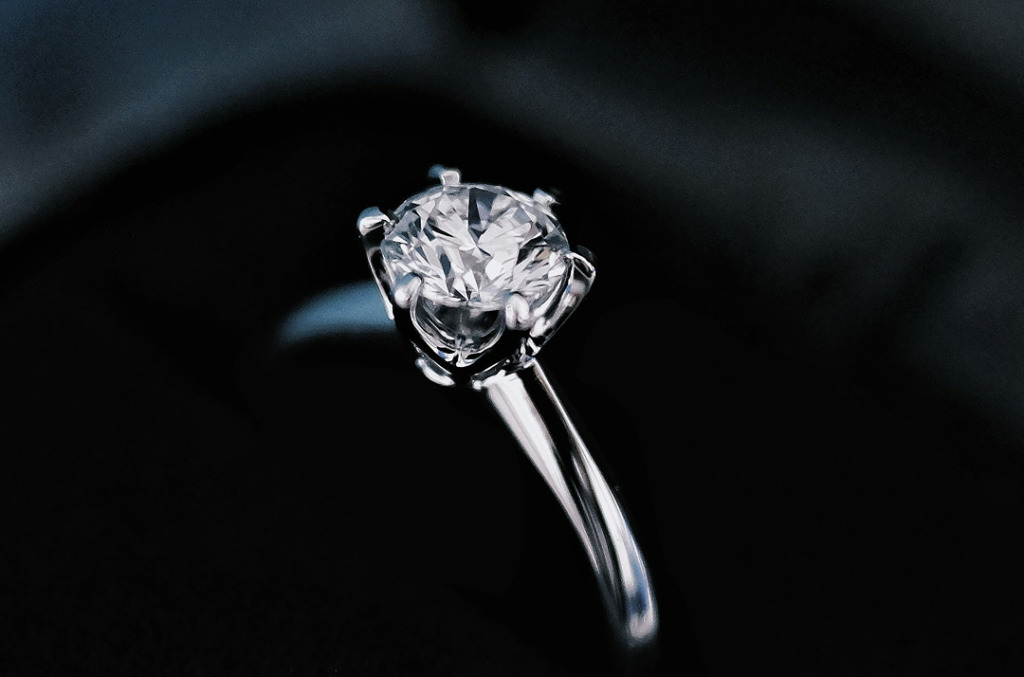
Seeing a diamond before you buy it is vital. Diamond inclusion charts and clarity reports are great, but they don’t always reflect the magic and emotional resonance of a natural diamond when it is in front of you.
Secondly, consider what resonates with you. It’s about your personal values and tastes, not prescriptive rules or trends. Diamonds are beautiful and rare, but each one is also unique, much like you are. Being given a natural diamond with inclusions could be compared to receiving a handwritten letter over a text or email – it’s more personal and unrepeatable, thanks to its unique nature, formed over millions of years below the Earth’s surface.
Either way, focusing on what matters most to you means you can’t go when choosing a natural diamond, regardless of where it ranks on the clarity scale.


