
At a friend’s wedding last summer, there was a brief pause that almost no one noticed. Just before the vows, the bride slipped her engagement ring off her left hand and placed it quietly on her right. Later, when her partner delicately held her hand in his, ready to place the wedding band on her finger, it was bare; waiting for the band that would mark their vows.
After the ceremony, while her guests sipped champagne, she moved the engagement ring back, stacking it neatly above her wedding ring. Later that evening, I asked why she had done it that way.
The answer was simple. She wanted the wedding band placed first, closest to the heart.
It was a small adjustment, but it revealed how much thought can sit behind a single gesture. Eventually, almost every couple arrives at the same quiet question: how do you wear an engagement ring and wedding band?
What hand does a wedding ring go on?
In the United States, the most common answer is the left hand, on the fourth finger. The tradition traces back to the idea of the vena amoris: the “vein of love” that was once believed to run directly from the fourth finger to the heart. While anatomy has since corrected that belief, the symbolism remains and the left ring finger has become cultural shorthand for commitment1.
How the wedding ring hand becomes instinctive
You see it in the close-up framing of engagement announcements, where the left hand is angled toward natural light. In wedding portraits, where fingers are intertwined just enough to reveal the band beneath the engagement ring. On red carpets, where cameras zoom in on clasped hands.
The left ring finger reads instantly as a sign of commitment.
When Sofia Richie Grainge stepped out after her wedding weekend in the South of France, her diamond wedding band sat neatly beneath her emerald-cut engagement ring on her left hand, the order precise and traditional. Selena Gomez wears her diamond gap-design band beneath her marquise-cut diamond in the same way.
The placement feels intuitive because it is widely shared. Generations of repetition have made a tradition of the gesture.
But applying instinct does not make it a universal rule.
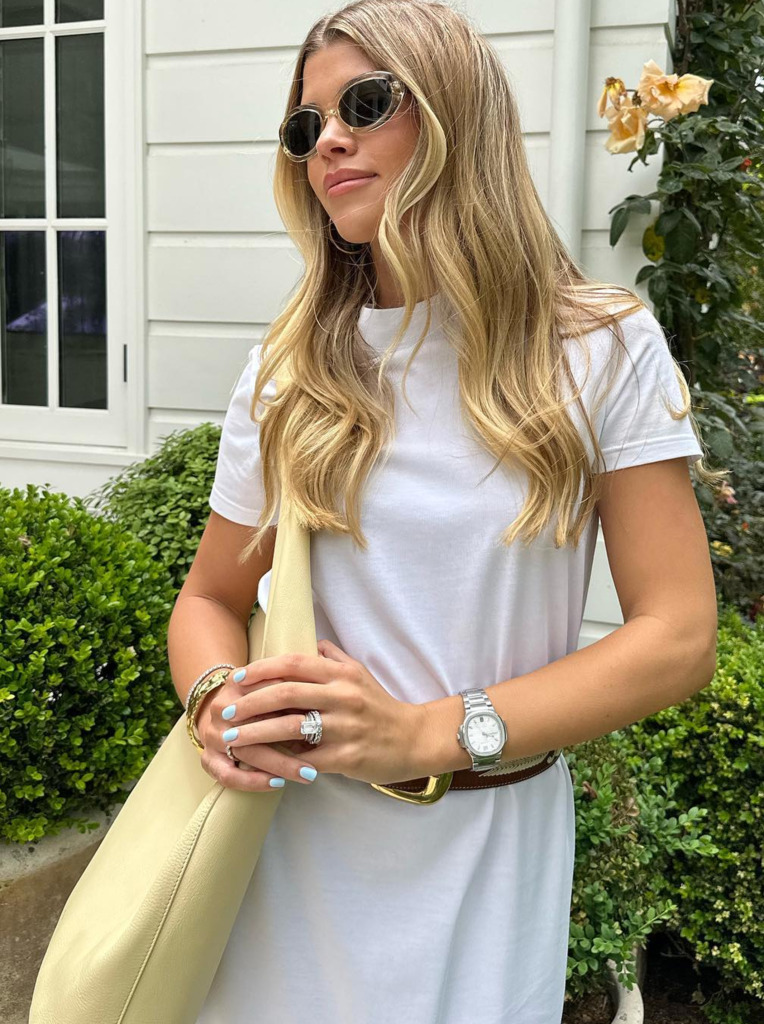
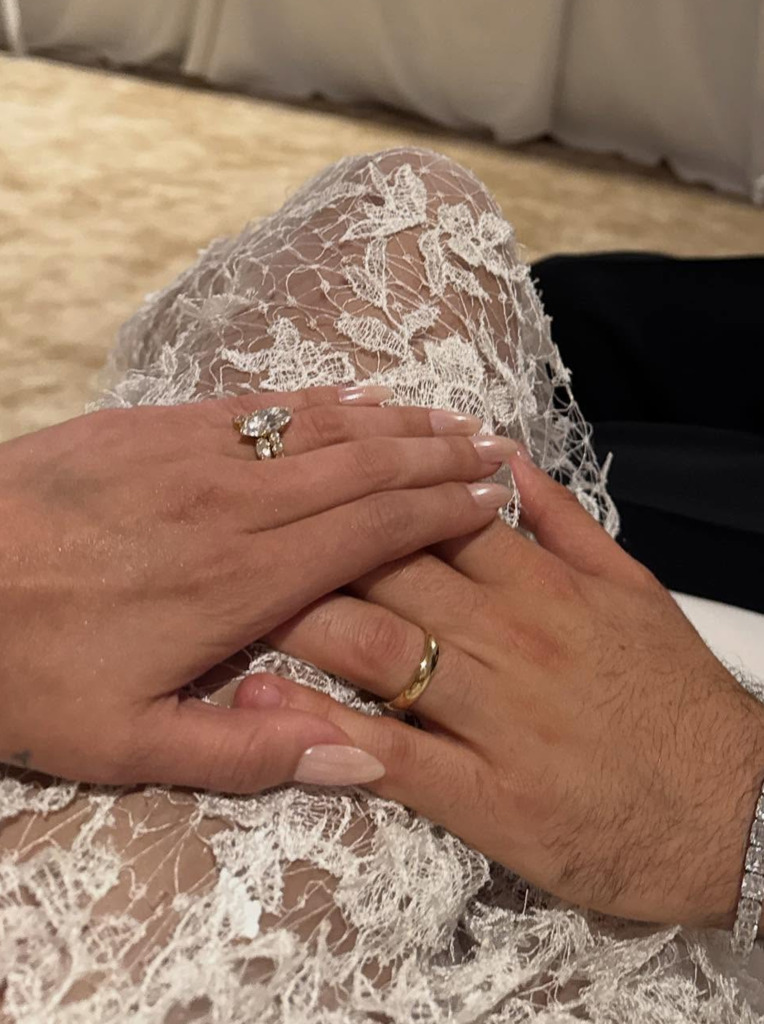
Can you wear a wedding ring on your right hand?
If you’ve ever wondered if you can wear a wedding ring on the right hand, the answer is, of course, yes. Many people do, either for cultural reasons or simply because it feels more practical for their lifestyles. Some families and cultures do the opposite of what seems conventional by following a right-hand tradition. Others make decisions based on comfort or work.
The wedding ring hand is ultimately about consistency. It is the hand you will gesture with, sign documents with and hold someone else’s hand with for years. That daily reality matters more than strict adherence to convention.
Couples choosing bands meant for everyday wear often lean toward timeless natural diamond wedding jewelry, designed to balance durability with symbolism.
Natural diamonds are valued not only for their brilliance, but for their permanence. Formed over billions of years, they carry a sense of endurance that aligns naturally with the idea of marriage.
If a diamond is a letter from the deep: explaining the formation of the Earth and telling the story of its extraordinary and unique journey to the surface, then a diamond ring continues that story. It is the perfect ode to your relationship. If a ring is going to live on your hand indefinitely, both its structure and its meaning should hold meaning and sentiment in a truly unique way.
The question of what finger a wedding ring goes on may have a traditional answer, but the question of what feels right in your own life is the one that lasts longer.
What hand does an engagement ring go on?
If the wedding band formalizes a commitment, the engagement ring announces it.
It’s usually the first piece of jewelry you will own that carries such a shared meaning. Long before the ceremony, before seating charts are created and floral arrangements planned, the engagement ring quietly signals that something significant has been decided. It sits at the center of modern proposals and engagements, shaping how that story is told long before vows are exchanged.
Before the wedding
Before there is a wedding band, the engagement ring carries the narrative on its own.
It marks intention and, in the US, is worn on the left fourth finger, much like the wedding band.
The tradition of wearing it on the left ring finger has been shaped by centuries of custom and reinforced by modern culture. The history of diamond engagement rings traces how natural diamonds became the defining emblem of that promise.
But while the hand may follow tradition, the diamond rarely does.
This is often the first shared design decision a couple makes. Classic white diamonds remain timeless. Others are drawn to unique bridal Desert diamonds, selected from the lighter end of the Desert diamond spectrum. Their softer, blush tones feel nuanced and romantic. They carry the same rarity and strength as other natural diamonds, but introduce warmth that feels distinctly personal.
A Desert diamond can reflect a sense of self that remains intact as the relationship evolves. The ring marks a partnership, but it should still look like it belongs to the person wearing it.
After the wedding
Some people leave the engagement ring exactly where it is and slide the wedding band beneath it during the ceremony. Others temporarily move the engagement ring to the right hand so the wedding band can be placed first. Afterward, the engagement ring returns to sit above it.
There is symbolism in that sequence. The wedding band closest to the heart. The engagement ring following.
Others decide not to stack at all. Larger diamond center stones can feel visually heavy alongside a band. Some prefer balance, wearing the engagement ring on one hand and the wedding band on the other.
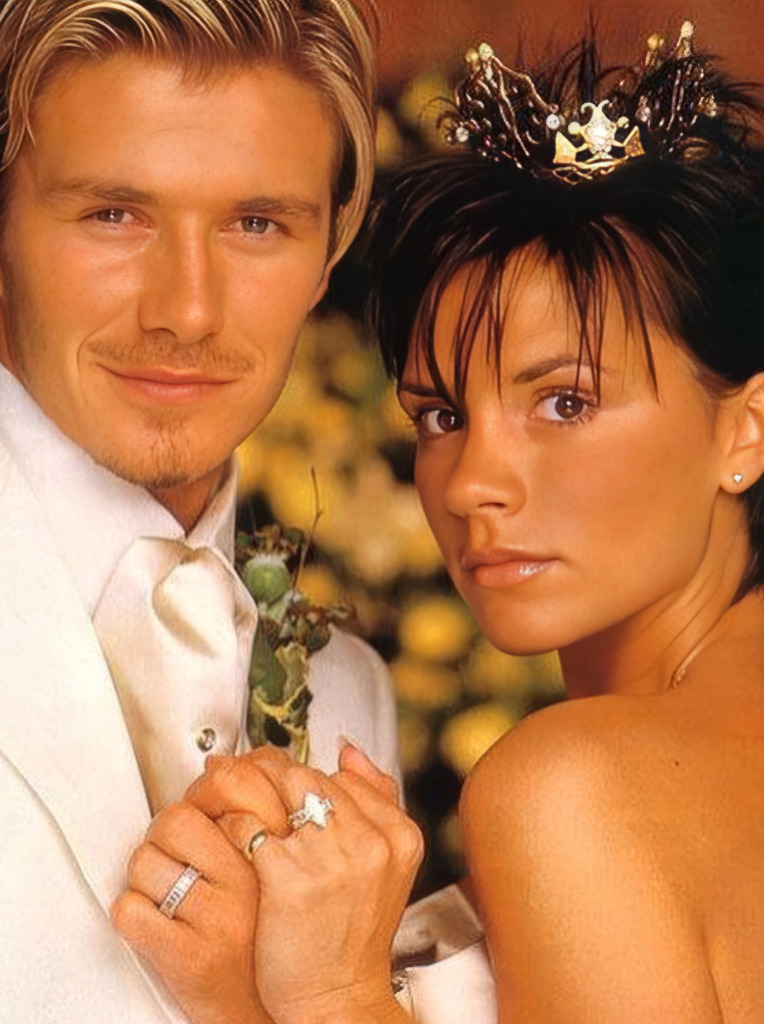
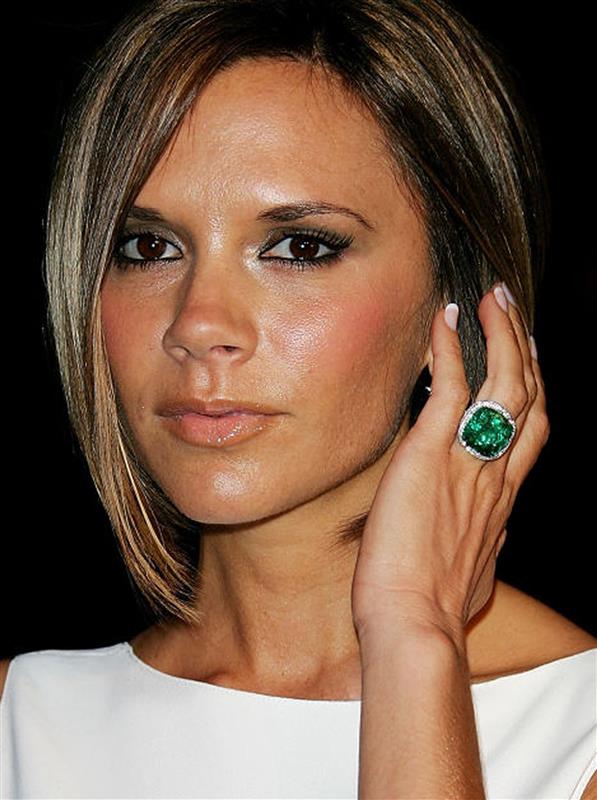
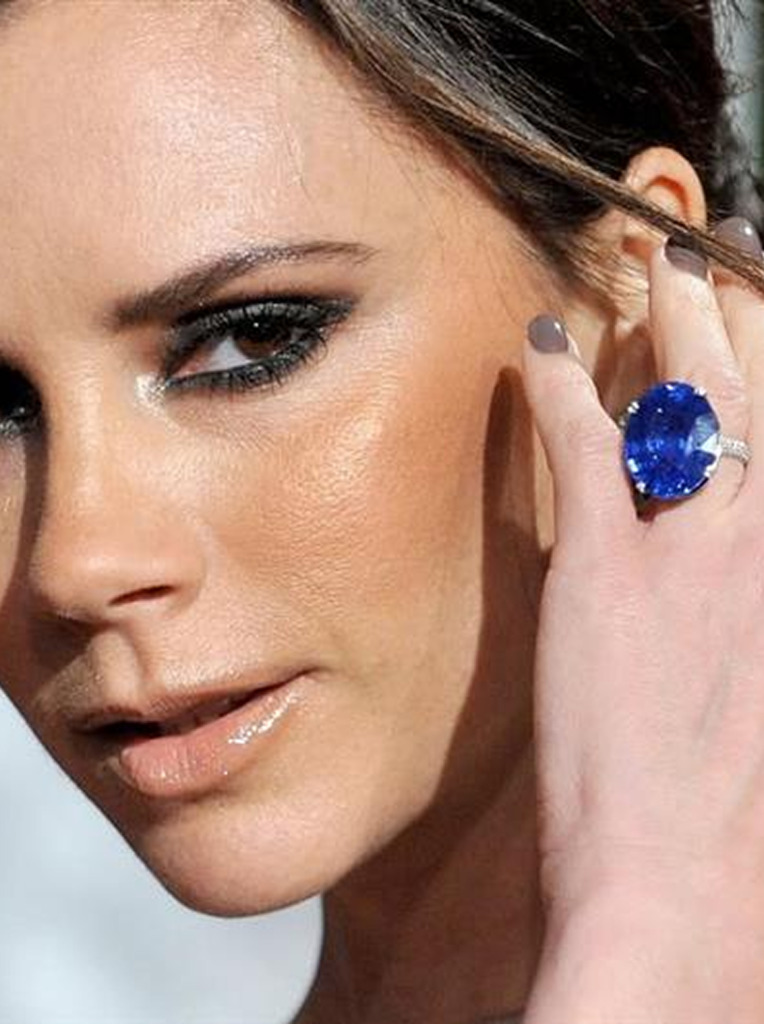
Some people redesign their engagement rings to stack seamlessly. Others add anniversary bands years later. Victoria Beckham has famously rotated and redesigned her engagement rings over decades, treating them as evolving pieces rather than fixed relics. The best approach is the one you will wear consistently. A ring tucked away in a box because it feels impractical does not fulfil its purpose.
How to stack engagement and wedding rings
Stacking is where symbolism meets styling. There is the traditional order — wedding band first, closest to the heart, engagement ring above it — but there is also proportion, silhouette and wearability to consider.
Wedding band first or engagement ring first?
Convention places the wedding band closest to the heart, with the engagement ring sitting above it. Visually, this creates a stable foundation and keeps the stack feeling intentional.
Reversing the order is less common but not incorrect. Some prefer the engagement ring closest to the hand for comfort, especially if the center stone sits high or the band is particularly delicate. Others choose the arrangement that simply looks more balanced on their finger.
There is no universal mandate. The right order is the one that feels most comfortable to you.
Design considerations for a seamless stack
A stack that looks effortless is usually carefully engineered.
- Flush-fit bands sit directly against the engagement ring without leaving a visible gap2. This works well with low-set solitaires and creates a clean, continuous line across the finger.
- Contoured or curved bands are designed to nest around a raised or uniquely shaped center stone. They prevent awkward spacing and help the two rings feel integrated rather than adjacent3.
- Ring guards or enhancers frame the engagement ring from both sides. They can add presence without increasing the center stone size and create the illusion of one piece4.
- Soldering the rings together turns two pieces into one unified band. This eliminates spinning and reduces wear between metals, but it also removes flexibility. It is a commitment in its own right.
Width and thickness also shift how a stack feels. Two slim bands can look modern and refined. A wider wedding band paired with a delicate engagement ring can feel grounded and architectural. Mixed metals introduce contrast; matching metals emphasizes cohesion.
Many of these choices reflect broader wedding trends, where couples are reinterpreting tradition through proportion, texture and tone rather than abandoning it entirely.
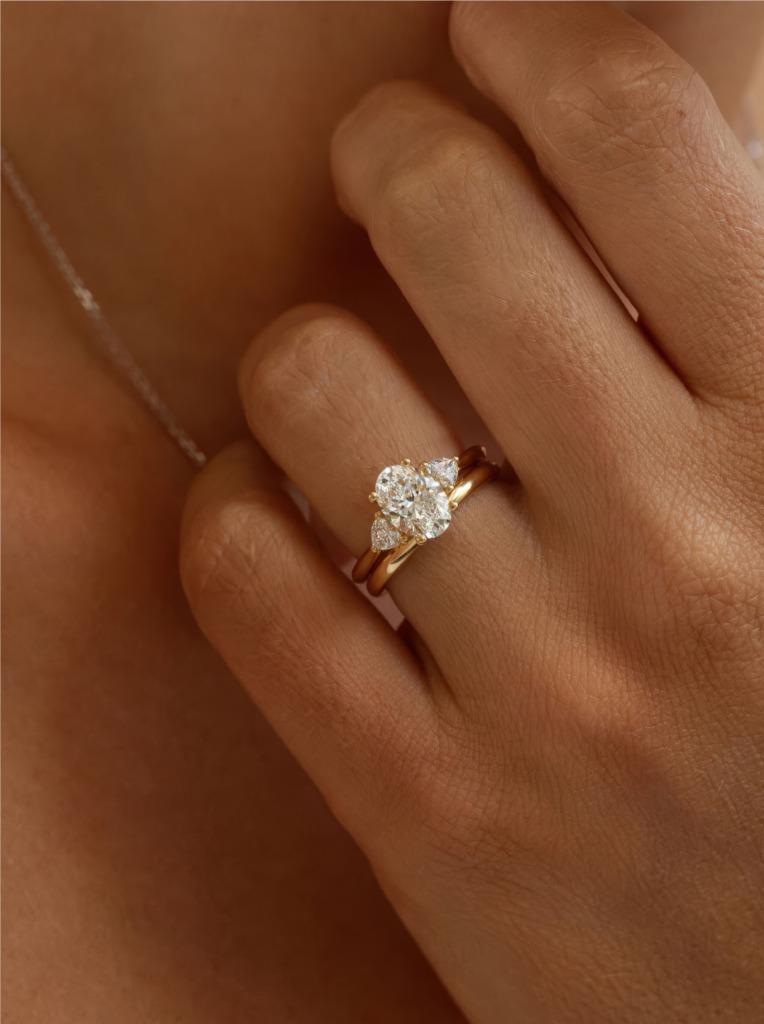
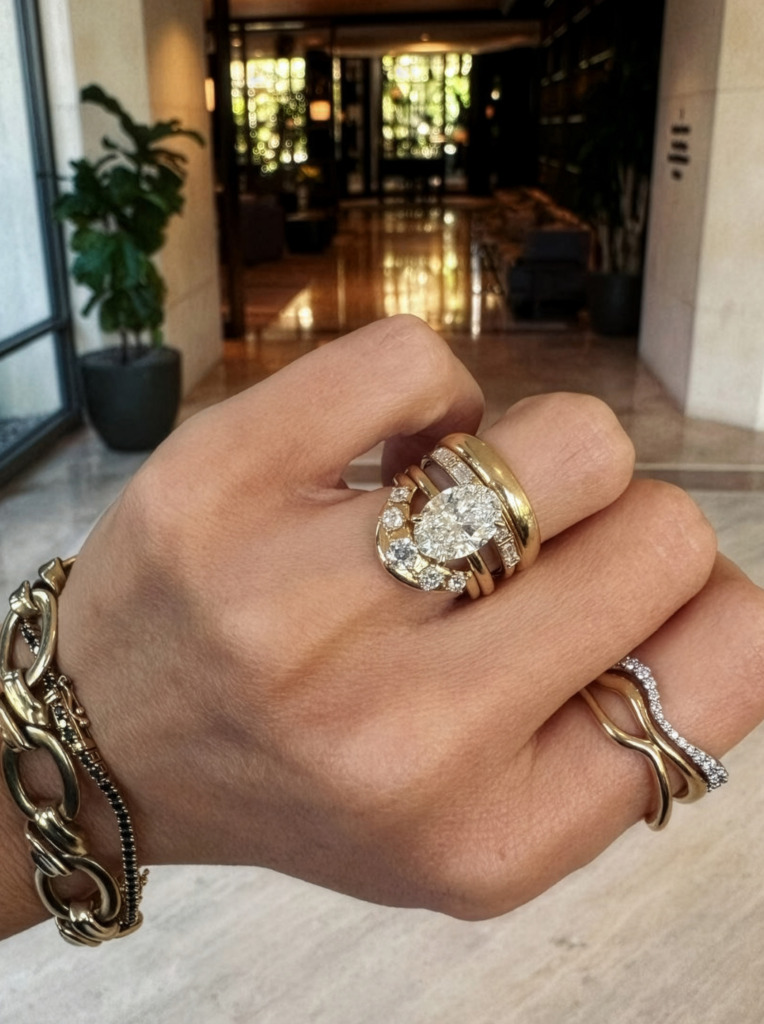
ADIF tip: Try both rings on together for several hours before final sizing. The combined width can change how they move over the knuckle. A stack that feels perfect for five minutes may feel different after a full day.
Personal expression within tradition
Stacking is also where individuality becomes visible.
For some couples, the wedding band is simple and the personality arrives later. It could be with an anniversary band, a redesign or an addition that marks a particular year.
Desert diamond eternity bands are a subtle way to introduce warmth into a traditional stack. Softer bridal tones like Dawn or Sunset Blush bring dimension without overpowering a classic engagement ring. Worn beside a white diamond solitaire, they create contrast that feels considered and chic.
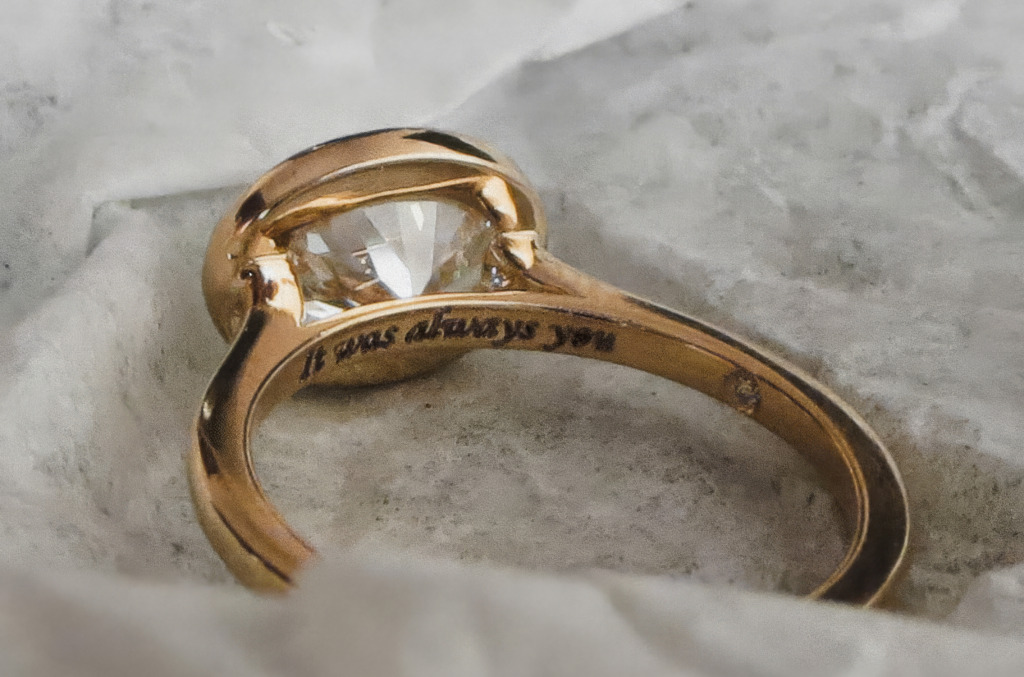
Engraving and customization can further enhance a stack. A date. A private phrase. Coordinates. A single word only the two of you understand. Engraved on the inside of the band, it shifts the ring from symbolic to intimate.
Some couples also play with finish rather than stone. A brushed gold band paired with a polished engagement ring. A slightly wider eternity band to rebalance proportions over time. Even the decision to add a Desert diamond band years later can feel like a reflection of how a relationship has matured.
The meaning is in the wearing
Tradition gives us a framework. The left hand. The fourth finger. The wedding band closest to the heart. But those conventions are starting points, not obligations.
Over time, the questions fade. You stop asking what hand does a wedding ring go on or whether the engagement ring should move after the ceremony. The rings settle into habit. They become part of your gestures, your photographs, your daily routine. They are there when you sign documents. When you hold someone’s hand crossing a street. When you raise a glass.
Natural diamonds endure in the same way. Formed under extraordinary pressure and carried forward across generations, they are chosen not just for brilliance but for staying power. How you wear an engagement ring and wedding band matters at the beginning. It feels symbolic. Worth discussing over dinner tables and before ceremonies. Years later, what matters more is that you are still wearing them. And that they still mean what they did the first day you put them on.
FAQs
In the United States, most men wear their wedding ring on the left ring finger, the same as women. In other countries and cultural traditions, the right hand is customary.
The choice often comes down to heritage and comfort. Some men prefer their non-dominant hand for practical reasons. Others intentionally mirror their partner’s placement.
There is no universal mandate. The meaning of the ring does not change with the hand.
Sources
- www.vogue.com/article/engagement-ring-finger-and-the-romantic-meaning-behind-it ↩︎
- www.lebrusanstudio.com/blogs/commitment/how-to-make-a-wedding-band-fit-perfectly-flush-to-your-engagement-ring/ ↩︎
- www.berlingerjewelry.com/blogs/berlinger-journal-blog/contoured-wedding-bands/ ↩︎
- www.engaged.robbinsbrothers.com/guide-to-engagement-ring-guards-and-wraps/ ↩︎


