
Getting engaged is pure adrenaline. Your phone buzzes nonstop; your left hand suddenly has its own fan club, and your brain is doing joyful cartwheels. Then the champagne settles; one very real thought tends to surface: “Okay. What now?”
This is your newly engaged checklist for what to do after getting engaged. The practical steps you need, from how to protect your natural diamond engagement ring to whether to resize right away, what to do about insurance, and how to avoid the most common early mistakes.
If you’re wondering what to do now that the ring is officially on your finger, this is a good place to start.
Newly engaged? Here are the essential steps to take next
First: breathe. Take a moment to soak it all in. You don’t need to “start planning” today. But there are a few early moves that make everything smoother, especially when it comes to the diamond engagement ring you’ll wear every day.
Think of this as your easy order of operations:
- Protect the ring (make sure it fits, get it insured and get your paperwork in order).
- Build a simple “ring file” (so you’re not scrambling later).
- Set a few planning guardrails for the big day (budget, guest count, key vendor timing).
- Then go back to celebrating.
Here are our engagement planning tips to reduce stress and save money and the advice you need on engagement ring care to keep your ring secure long-term.
Snap a ring selfie
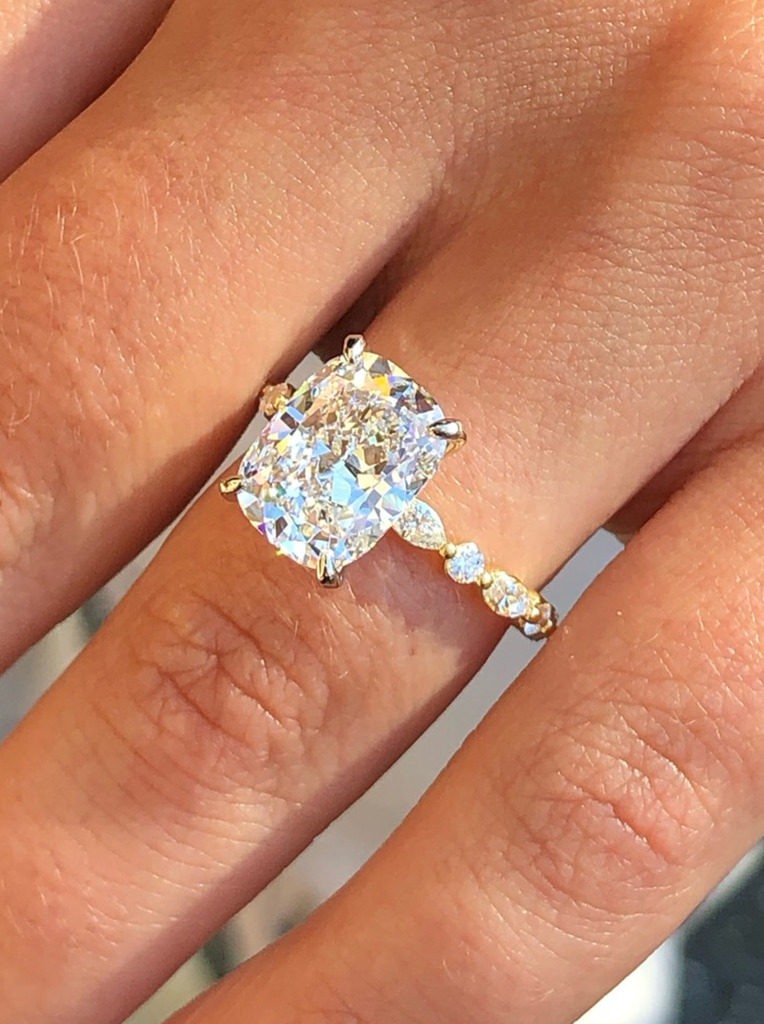
Snap your ring selfies for the all-important social post but don’t forget to take the photos that are useful too. Grabbing a few quick shots now could save a massive headache later for insurance, repairs or resale/upgrade conversations.
Here’s the quick photo checklist that covers all the key images you need:
- A clear close-up of the diamond from the top. Taken in good natural light.
- Side profile showing the setting and prongs.
- A shot of the full ring on your hand, as this helps to prove ownership.
- Any hallmarks or engraving inside the band, to identify your ring.
- The box, receipt and grading report.
Store these in a folder titled “Ring” in your phone and on a backed-up cloud drive.
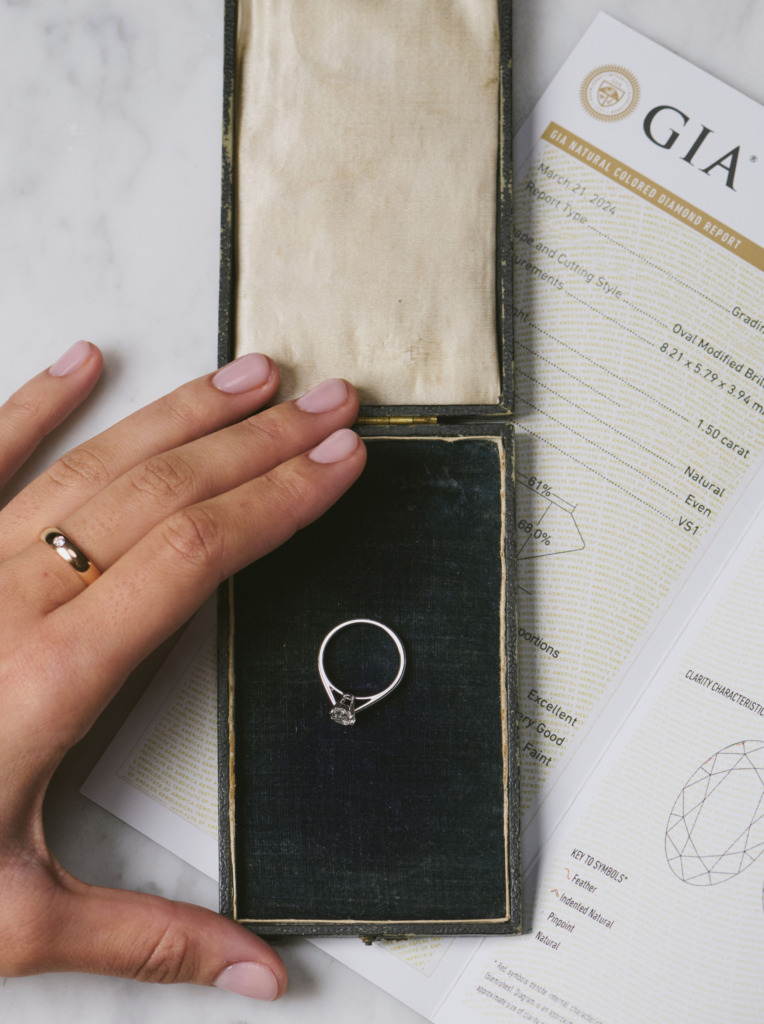
ADIF tip: A natural diamond engagement ring should come with a diamond grading report. Make sure to take a photo of this too. If it’s paper, scan it. Your future self will thank you.
Get your ring sized and insured
The two biggest risks with diamond engagement rings are improper fit and delayed insurance.
Why sizing matters
A perfect fit isn’t just about comfort, it’s about safety. A ring that spins can wear down prongs faster. A ring that’s loose is one cold day away from sliding off1. And a ring that’s too tight can be hard to remove in an emergency (or when your hands swell).
What most people don’t realize is that finger size changes across the day and year. Heat, travel, salt, hormones, workouts, and even alcohol can cause swelling2.
Take a smart approach to ring sizing:
- If your ring is secure and comfortable, but you’re not sure if it’s a perfect fit, wear it for a week and notice patterns before rushing to resize.
- If it slips when your hands are cold, that’s a red flag.
- If it feels tight after a long walk or flight, that’s normal.
ADIF tip: If you’re between sizes, ask a jeweler about sizing beads or a small “speed bump” inside the band. It can stabilize fit without needing to commit to a full resize immediately3.
Don’t skip insurance
If you do only one practical thing after that diamond engagement ring is slipped on your finger, make it this. Insurance is for the boring accidents: sinks, gyms, travel, cleaning days, vacations and that one moment you absentmindedly set the ring on a counter in a restaurant restroom.
Most losses happen in the first year after engagement4. You’re not used to wearing an engagement ring, so you are more likely to damage or lose it.
Here’s what insurance typically needs:
- A receipt or proof of purchase.
- An appraisal, this is often required over certain values.
- A diamond grading report/certificate.
- Photos and a detailed description of the ring.
If you’re missing anything, start by asking your jeweler. Many documents can be reissued.
ADIF tip: Set a calendar reminder to have your ring re-appraised every few years (or after major price shifts). Under-insuring is surprisingly common.
Compare your options
Some homeowners’ or renters’ policies offer jewelry add-ons, but you may prefer specialist jewelry insurance. The key is knowing what you’re covered for5. Does your insurance cover theft, damage and accidental loss? Are you insured when traveling abroad? Will the insurer replace your diamond engagement ring or offer a payout?
Take the time to compare quotes and always read the fine print.
Understand how ring replacement really works
No one likes to think about losing a ring, but understanding replacement terms before you need them makes a huge difference.
Insurance policies vary widely. Some offer cash payouts, while others replace the ring through approved jewelers. Replacement language such as “like-for-like” can differ when it comes to diamond quality, cut and setting details.
Before committing to a policy, ask:
- Will the replacement match your original diamond engagement ring characteristics?
- Can you choose or approve the jeweler?
- What happens if the exact diamond isn’t available?
- Is international replacement covered?
Knowing this upfront helps protect both the emotional and financial value of your ring.
Caring for your ring properly
Your natural diamond engagement ring is built to last, but it still needs looking after. From taking it off for spin class to booking the occasional check-up, here’s what you need to know about engagement ring care.
Know when to take it off
Workouts, cleaning, and swimming are all times to take your ring off. Chemicals, heat, and pressure can damage the metal or loosen the setting.
Don’t want to leave it behind entirely? Olivia Landau, founder of The Clear Cut, suggests slipping it onto a necklace for your workout so it stays close, but protected6.
ADIF tip: Keep a few jewelry pouches or ring bowls around the house so you always have a safe place to stash it.
A little cleaning goes a long way
Your natural diamond engagement ring picks up more grime than you’d think. Hand cream, makeup, sunscreen and even our skin’s natural oils can all dull your diamond’s shine over time.
This simple, at home cleaning routine can help restore your diamond’s sparkle:
- Mix warm water with a couple of drops of dish soap.
- Soak for 10-15 minutes.
- Use a very soft toothbrush or cotton tip to gently clean the setting.
- Rinse over a bowl (not the sink).
- Pat dry with a lint-free cloth and allow to air dry fully7.
Avoid using anything abrasive as it can damage the setting.
Book a check-up
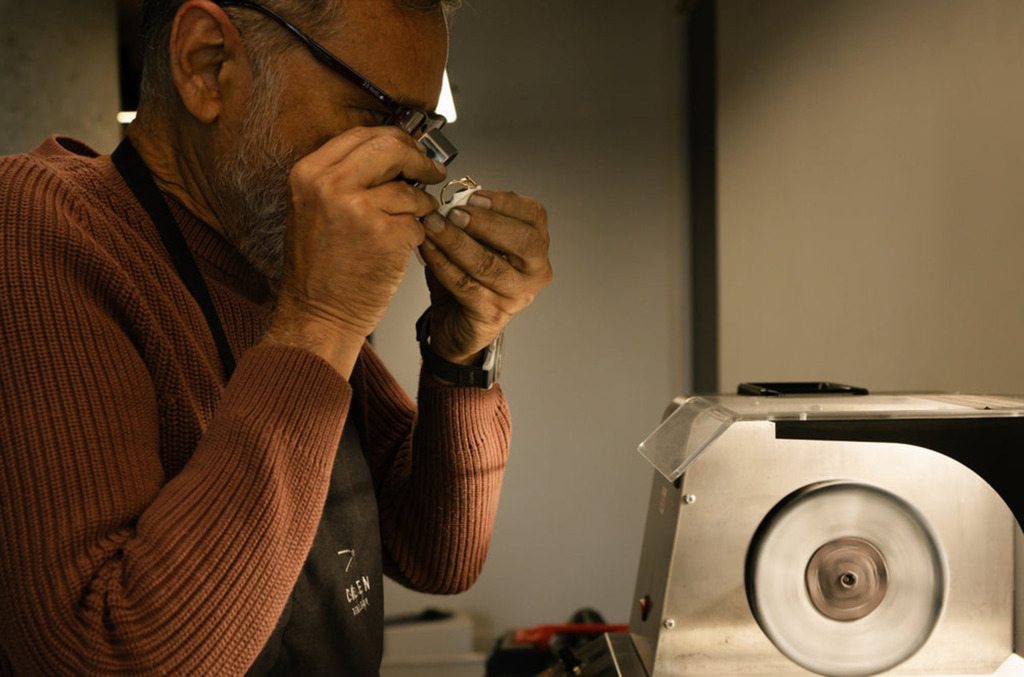
Once a year, take your diamond engagement ring to a jeweler for professional cleaning and a quick check that the diamonds are secure8.
ADIF tip: If you hear a faint rattle when you tap the ring close to your ear, take it off immediately and get it checked. That sound can mean a stone is loose.
Understand how your lifestyle affects your diamond engagement ring
Your engagement ring is designed to be worn, but how you live matters just as much as how it’s made.
Everyday habits will influence engagement ring care and long-term wear. Desk jobs, hands-on work, frequent travel, gym routines, even cooking and cleaning can all affect the setting and band over time. This doesn’t mean your ring is fragile, it just means you have to take care of it to help it retain its sparkle over a lifetime of wear.
Your ring may need extra care if you:
- Work with your hands, tools or heavy equipment.
- Lift weights or do high impact sports.
- Travel frequently and live out of a suitcase.
- Do a lot of housework or cooking.
If these apply to you, follow the simple strategies above to keep your ring safe and clean.
Also think about your ring style as high-set diamonds and pavé bands are more exposed to knocks and gradual loosening if worn during impact-heavy activities.
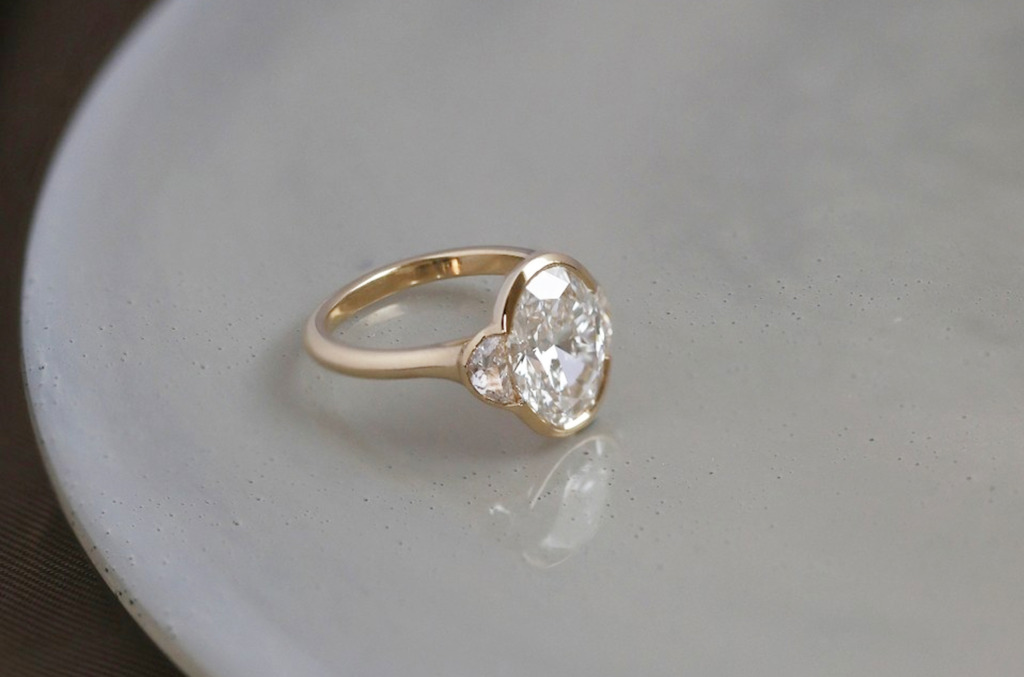
ADIF tip: The best diamond engagement rings are the ones you feel confident wearing every day. If you’re constantly worried about damage, you could consider restyling your ring into a more practical design. Round brilliant diamonds in a thick platinum band with a bezel setting is a great choice for durability9.
Know when your ring is at risk
Most damage or loss doesn’t happen during dramatic moments. It happens during transitions, when routines are disrupted and attention is elsewhere.
The highest-risk periods for diamond engagement rings tend to be:
- The first year of engagement, when wearing a ring is still a new habit.
- Travel-heavy periods, including vacations and honeymoons.
- Summer months, when heat, water, and swelling increase.
- Major life changes, such as moving house or renovating10.
Heat can make fingers swell, making rings harder to remove safely. Cold can do the opposite, increasing the risk of slipping off. Water, soap, and sunscreen all make diamonds easier to lose.
Before busy periods, double-check:
- Your ring resizing and insurance are up to date.
- You have a secure travel pouch.
- You know where your ring goes when it comes off.
ADIF tip: Take your ring off before packing or unpacking luggage. It’s one of the most common (and preventable) moments of loss11.
Deciding whether to resize or modify your diamond engagement ring
Getting engaged is magical, but sometimes the ring just isn’t the right fit. It’s not just the size that can be wrong, sometimes the design or style just doesn’t fit your personality or lifestyle. Many couples choose to slightly modify the engagement ring once they’ve lived with it for a while.
Common changes include:
- Resizing for comfort or security.
- Adding sizing beads instead of resizing.
- Reinforcing prongs.
- Slightly thickening the band for durability.
- Lowering a high-set diamond.
Unless your ring is uncomfortable or unsafe, it’s often smart to wait a few months before making changes. Daily wear reveals things you can’t predict at first glance: how it feels typing, how it sits next to a wedding band, or whether the setting catches on clothing.
If you do make changes:
- Photograph the ring again.
- Update your ring file.
- Notify your insurer, as modifications can affect ring resizing and insurance coverage.
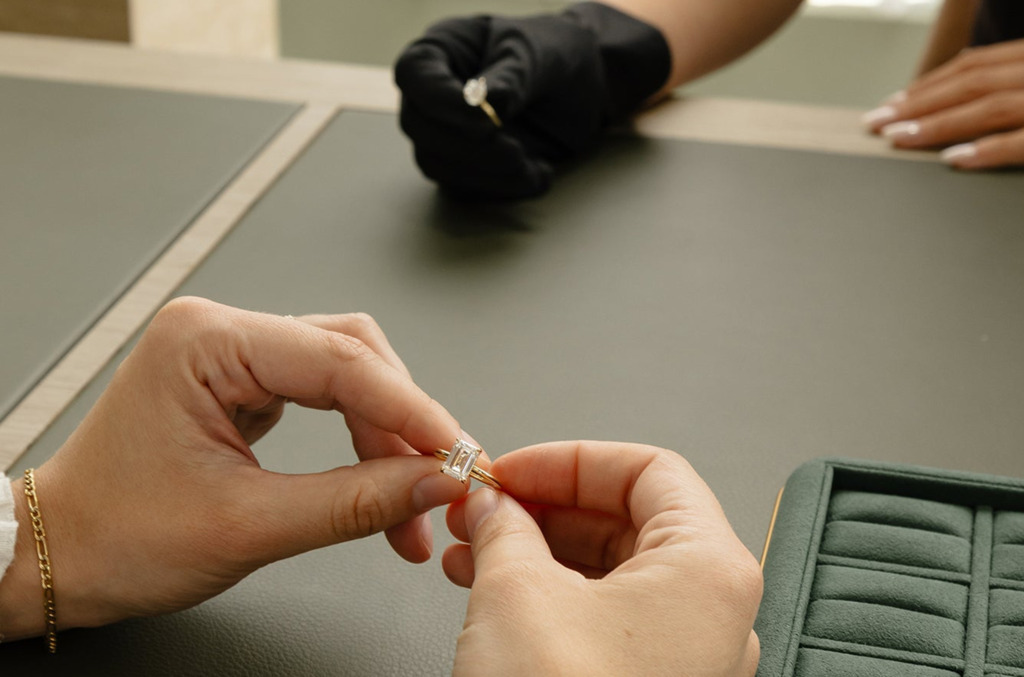
Make your engagement ring last a lifetime and more
Once the celebrations fade and wedding planning ramps up, it’s worth pausing. Your engagement ring is likely the most significant piece of jewelry you’ll ever own. It’s worn often and may one day be passed down.
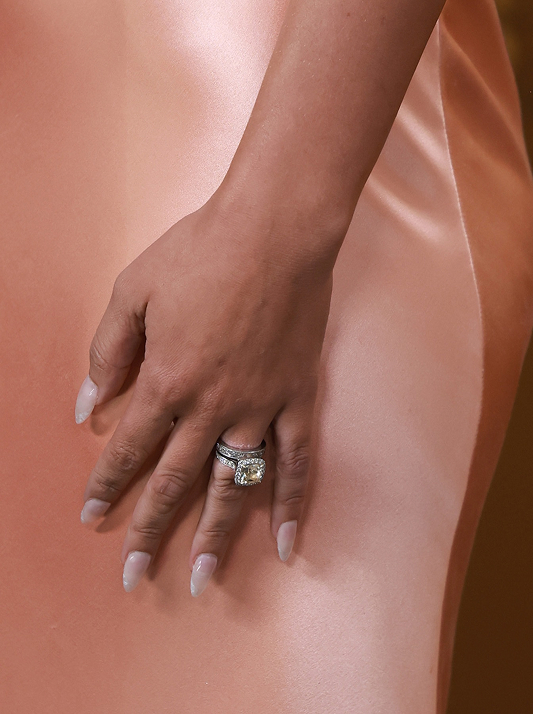
Caring for it doesn’t need to feel like a chore. A few smart habits, proper insurance, and regular checkups ensure your diamond continues to sparkle through every chapter that follows.
Sources
- www.theknot.com/wedding-planning-tips-to-get-organized/ ↩︎
- www.satinski.com/swollen-fingers-and-rings-easy-solutions/ ↩︎
- www.martinbuschjewelers.com/what-are-speed-bumps-or-sizing-beads-and-do-i-need-them/ ↩︎
- www.qreport.com.au/why-engagement-rings-get-lost-or-damaged-far-more-often-in-the-first-year/ ↩︎
- www.prinsandprins.com/how-to-insure-your-engagement-ring-protecting-your-precious-investment/ ↩︎
- www.vogue.com/engagement-ring-rules-care-how-to/ ↩︎
- www.michaelhill.com.au/jewellery-care-guides/engagement-rings/ ↩︎
- www.lozanosjewelry.com/how-often-should-i-have-my-engagement-ring-setting-and-diamond-checked/ ↩︎
- www.revediamonds.com/blog/the-most-durable-diamond-engagement-rings-for-active-lifestyles/ ↩︎
- www.brides.com/engagement-ring-risks/ ↩︎
- www.diamondsbyuk.co.uk/how-common-is-it-to-lose-a-wedding-ring/ ↩︎


