
Some natural diamonds stand apart not just for their size, but for what followed their discovery. Found by chance, cut with extreme risk, passed through royal collections, museums and vaults, these are diamonds whose histories are as striking as their scale.
Beyond their carat weight, these stones have shaped jewelry design, influenced royal tradition and left a lasting imprint on popular culture. They’ve been worn at coronations, targeted in audacious heists and transformed into icons that continue to define how we understand rarity and value.
Together, they form a record of the most extraordinary natural diamonds ever discovered, not as objects of spectacle alone, but as cultural touchstones whose impact reaches far beyond their origins.
Fascinating diamonds: from the Cullinan to the Star of Sierra Leone
From the Cullinan’s royal debut to the carbon-cloaked allure of the Sewelô, the world’s most extraordinary natural diamonds have a way of leaving a mark. Whether celebrated for their sheer scale, rare clarity, or curious backstories, these gems make an impact. They have shaped jewelry design, influenced royal tradition, cultural lore, and the way we define beauty itself. The diamonds we’ll explore include:
The Cullinan Diamond
The Koh-i-Noor Diamond
The Hope Diamond
The Excelsior Diamond
The Star of Sierra Leone
The Lesotho Legend
The Sewelô Diamond
The Millennium Star
The Cullinan diamond, 3,106 carats
When the Cullinan was unearthed in 1905, no one believed it was real. It was mistaken for a chunk of glass. Understandable, given that it weighed over 1.3 pounds. But once the dust settled, it was confirmed as a 3,106-carat diamond, the largest gem-quality rough diamond ever found1.
Named after mine chairman Sir Thomas Cullinan, the gemstone quickly became the stuff of legend. When the Transvaal government gifted it to King Edward VII, decoys were deployed to throw off potential thieves. The real diamond was slipped into a plain box and mailed to England, with no guards and no fuss; the world’s most valuable treasures traveled incognito.
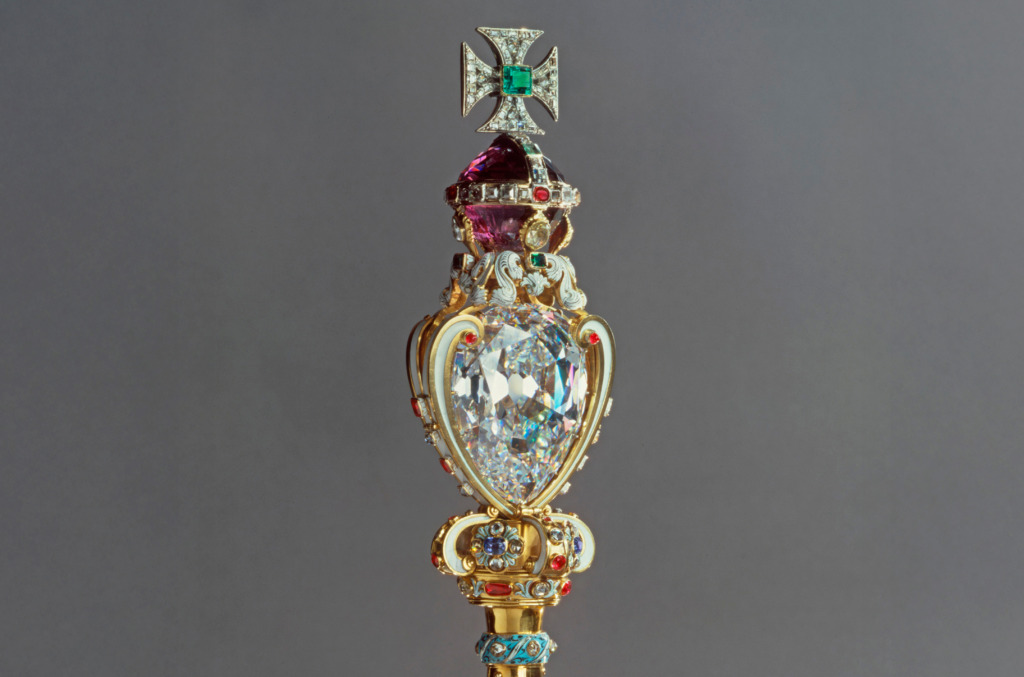
Master cutter Joseph Asscher studied the gemstone for months. One snapped blade later, he struck success, handcrafting nine major diamonds and 96 smaller ones, many of which still shine in the British Crown Jewels today2.
What happened to the Cullinan diamond?
Today, the biggest piece of the Cullinan sits in the golden Sovereign’s Scepter, the same one held by Queen Elizabeth at her 1953 coronation and by King Charles III in 20233. The Cullinan II rests in the Imperial State Crown, which is worn by the new monarch as they leave Westminster Abbey after their Coronation4. Every year, millions line up to glimpse the regalia, now housed in the Tower of London, a glittering link to centuries of tradition.
The Koh-i-Noor Diamond, 105.6 carats
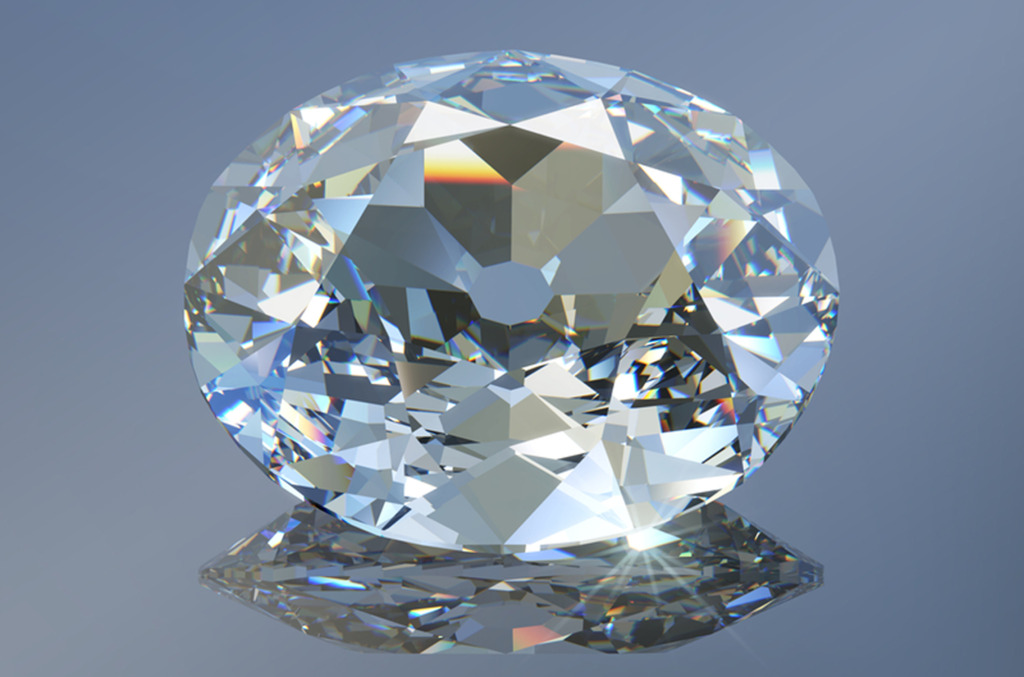
Few natural diamonds carry as much historical weight as the Koh-i-Noor. Today weighing 105.6 carats5, this colorless diamond has passed through centuries of empires, conquests and royal hands, becoming one of the most debated jewels in the world.
Its early history traces back to India, where it was likely discovered in the Golconda region and referenced in historical texts as early as the 14th century6. Over the centuries, the diamond moved through the Mughal Empire, Persian and Afghan rulers, and eventually into British possession following the annexation of Punjab in 18497.
In 1852, Prince Albert ordered the Koh-i-Noor to be recut in London, reducing it from an estimated 186 carats to its current size in an effort to increase brilliance8. The decision remains controversial, both for the dramatic loss of material and for what the diamond has come to symbolize. Today, it is set in the Queen Mother’s Crown and forms part of the British Crown Jewels, housed in the Tower of London9.
A diamond steeped in power and controversy
The Koh-i-Noor’s legend is inseparable from politics and power. Its name translates to “Mountain of Light10,” but its legacy is far from luminous. Over time, the diamond has become a focal point in ongoing discussions about colonial history and cultural restitution, with multiple countries laying claim to its return11.
Adding to its mystique is a long-standing belief that the Koh-i-Noor brings misfortune to any man who wears it, while favoring female rulers12. Whether coincidence or myth, the diamond has only been worn publicly by queens since it entered British royal hands.
Unlike other famous diamonds celebrated for glamour or spectacle, the Koh-i-Noor commands attention for a different reason. It stands as a reminder that natural diamonds are not just geological wonders, but objects shaped by human history, ambition and consequence.
The Hope Diamond, 45.52 carats
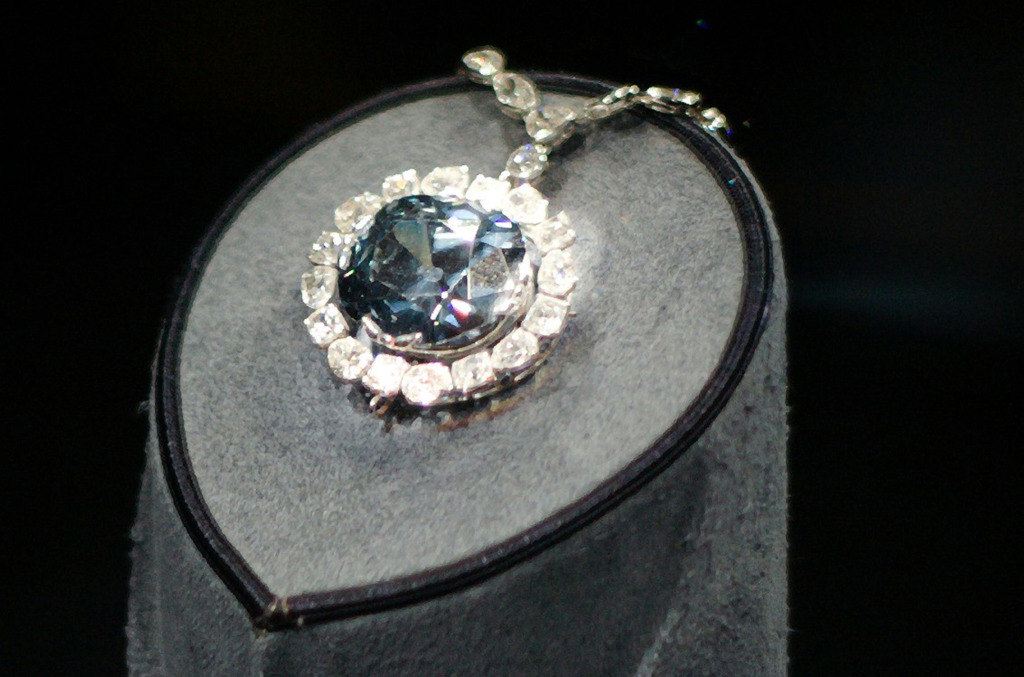
At 45.52 carats, the Hope Diamond dazzles with deep-blue brilliance, thanks to traces of boron in its crystal structure13, but what made it famous? Wild history follows this epic natural diamond like a shadow.
The gemstone’s story starts in 17th-century India, most likely at the Kollur mine. French gem merchant Jean-Baptiste Tavernier got his hands on a crudely cut, 112-carat blue diamond, which he later sold to Louis XIV. The king had it recut into a more refined 67-carat gem, the French Blue, and wore it on a ribbon around his neck during ceremonies14.
After vanishing during the chaos of the French Revolution, the diamond re-emerged decades later in 19th-century London, its recent history cloaked in mystery. It found a new home with collector Henry Philip Hope and his name has clung to it ever since15.
The Hope Diamond curse
Here’s where things get juicy. Legend has it that Tavernier stole the diamond from a sacred statue, prompting a curse that doomed every future owner.
Princess de Lamballe, a confidante of Marie Antoinette, reportedly wore it before her brutal death during the Revolution. Centuries later, American heiress Evalyn Walsh McLean bought the diamond from Pierre Cartier in 1912. She wore it to parties and even put it on her dog. Soon after, her son and daughter passed away, her husband left, and she died in debt.
Today, it lives at the National Museum of Natural History in Washington, DC, behind thick glass and under watchful eyes. Cursed or not, it’s the most visited gem in the world, and easily one of the most unforgettable natural diamonds ever found16.
The Excelsior, 995 carats
Before the Cullinan stole the spotlight, there was the Excelsior. Discovered in 1893 at South Africa’s Jagersfontein Mine, this frost-toned giant tipped the scales at 995.20 carats and quickly earned its name; Excelsior means higher in Latin. With its unusual loaf-like shape and record-breaking size, the Excelsior was the diamond world’s reigning heavyweight; at least for a while17.
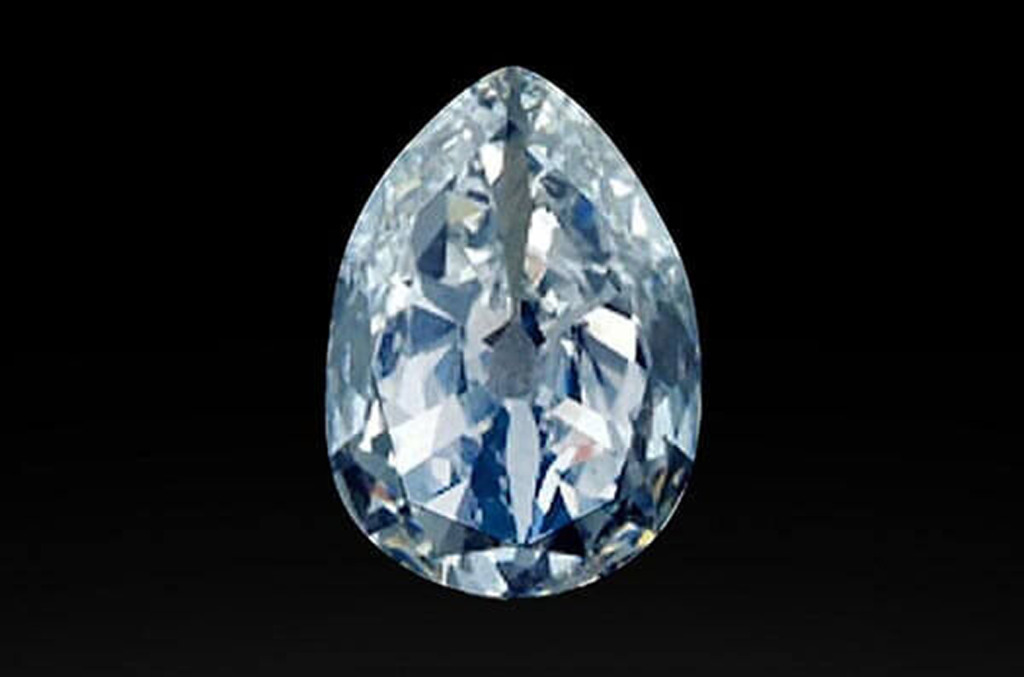
But instead of becoming a crown jewel, it was controversially chopped into 21 pieces. The biggest? A 69.68-carat pear-shaped gemstone, which is now owned by diamond collector Robert Mouawad18.
The bra that broke records
In 2003, the diamond made an unexpected cameo, dangling from Heidi Klum’s $11 million Victoria’s Secret Fantasy Bra19. As the glittering centerpiece, the Mouawad Excelsior Diamond showed that not all legendary gems live behind museum glass.

The Star of Sierra Leone, 969 carats
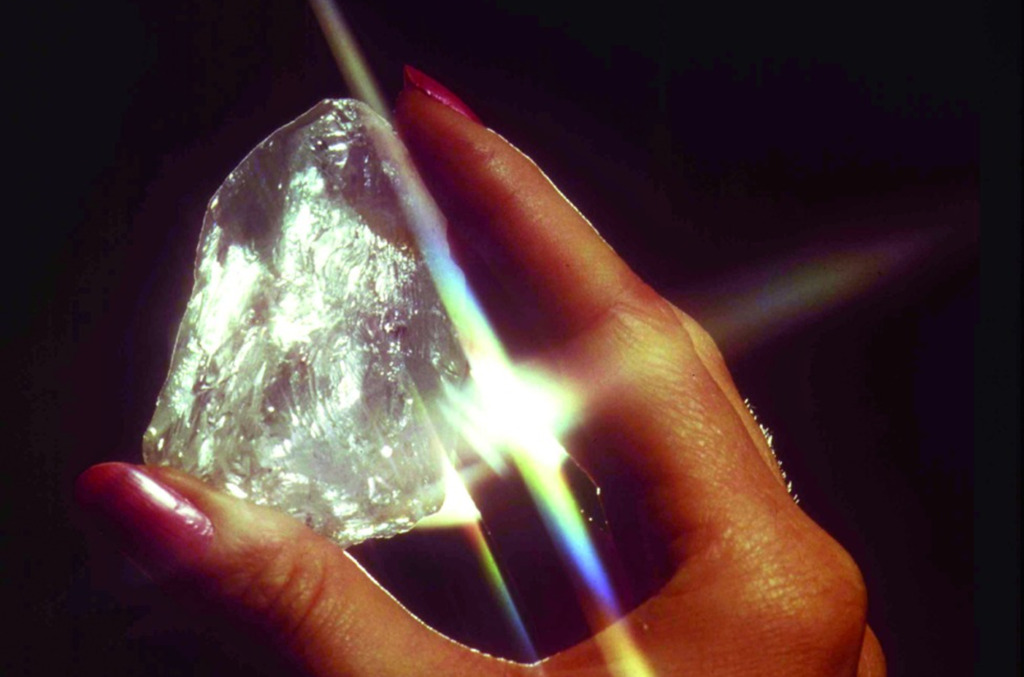
On Valentine’s Day, 1972, a miner in Sierra Leone’s Koidu district pulled something extraordinary from the riverbed, a 968.9-carat diamond, one of the largest alluvial diamonds ever discovered20.
The rough (snapped up by Harry Winston) was eventually divided into 17 gems with the largest becoming a 53.96-carat pear-shaped showstopper21. The Star of Sierra Leone has become more than just a geological marvel, it stands as a symbol of African provenance, craftsmanship and pride.
A brooch like no other
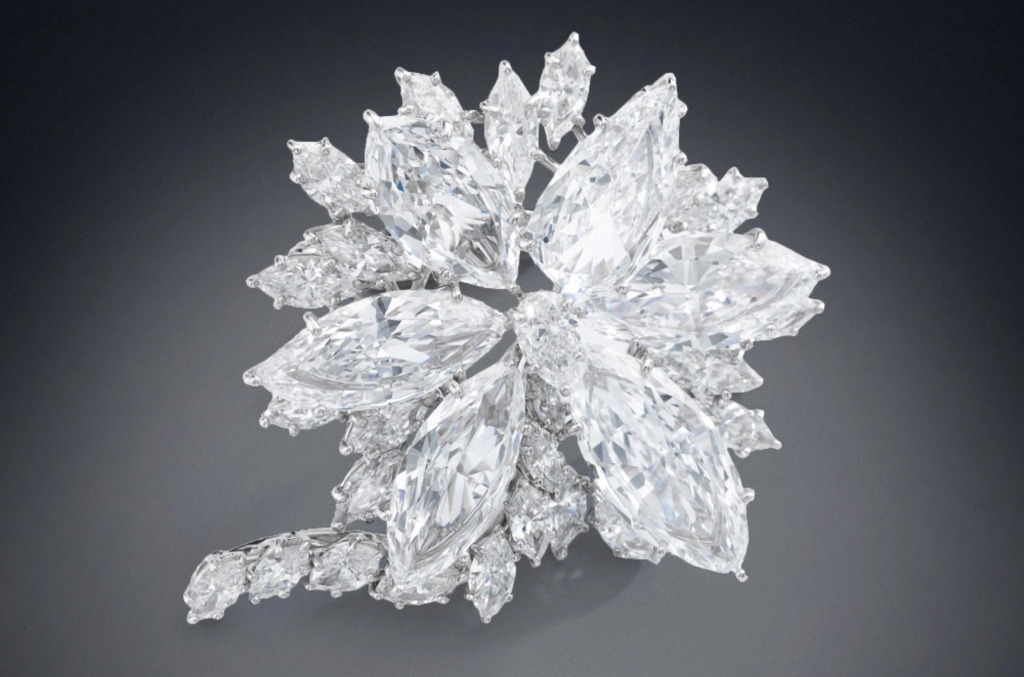
Six of the flawless cuts from the 17 gems were brought together in one unforgettable piece: the Star of Sierra Leone brooch. Designed in a floral motif, it featured a central pear-shaped diamond, framed by another pear and five marquise-shaped gems22.
The brooch quietly changed hands in 1975 and hasn’t resurfaced since23. Where is it now? No one really knows. But for those who’ve seen it, the memory is said to be hard to forget.
The Lesotho Legend, 910 carats
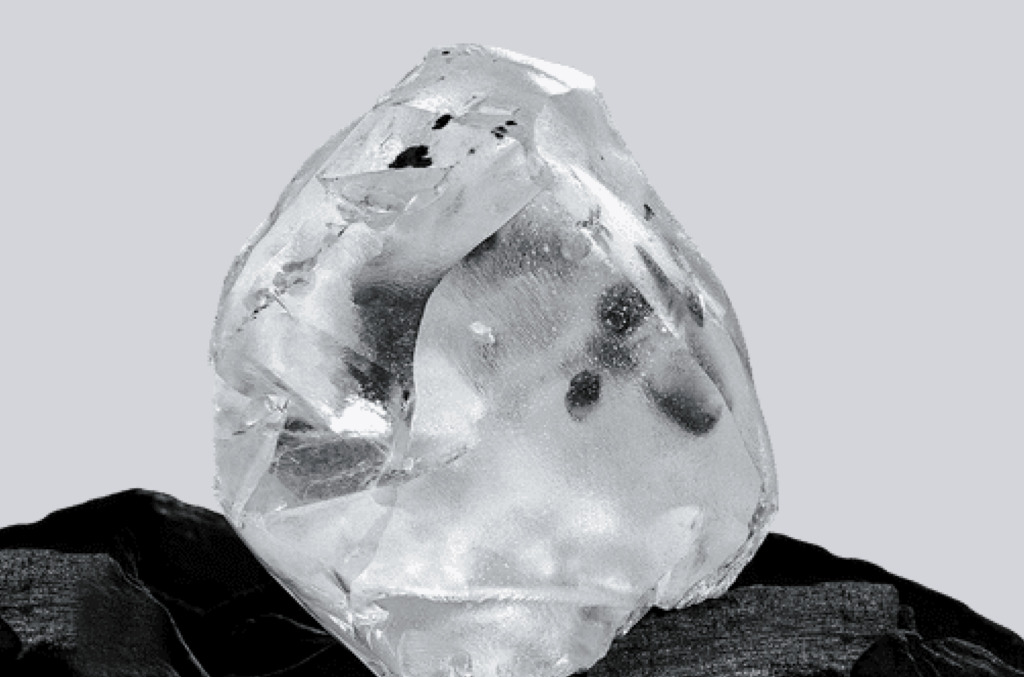
When the Lesotho Legend diamond was pulled from the Letšeng mine in 2018, at 910 carats, it was the fifth largest gem-quality rough diamond ever found24. But its size wasn’t the only talking point.
Its D color, Type IIa purity and luminous crystallization made it a once-in-a-generation find25, a diamond so clear, it appeared to be lit from within.
A legend recut
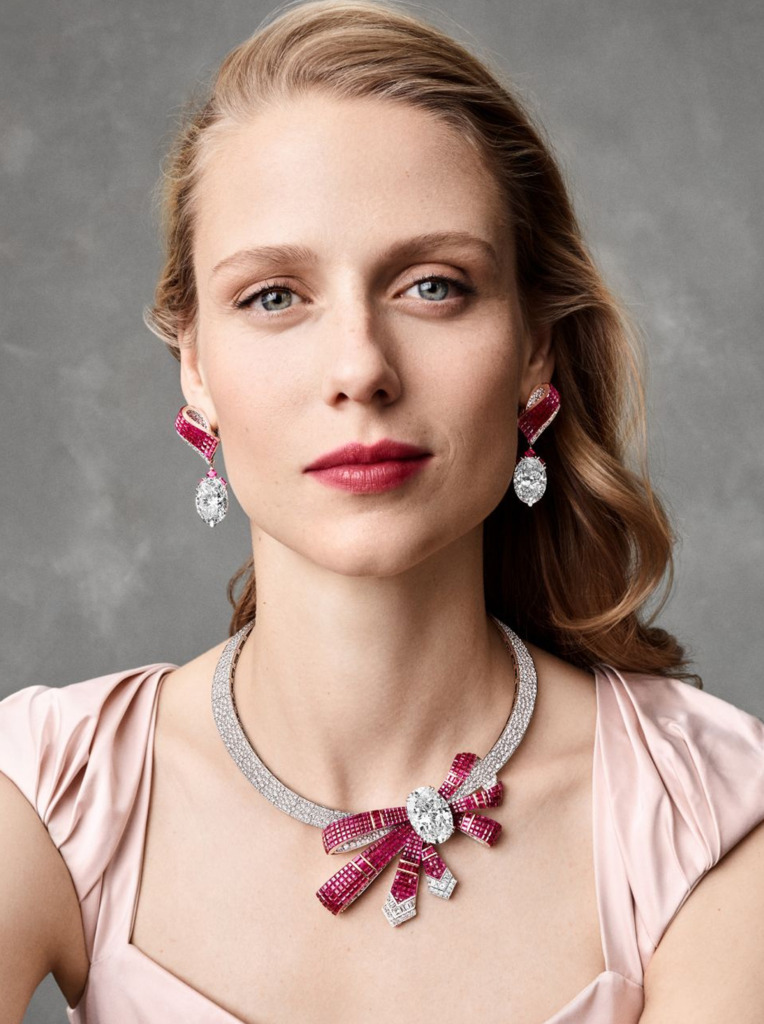
Naturally, Van Cleef & Arpels swooped in. In true haute joaillerie fashion, they partnered with master cutters to turn the Lesotho Legend into 67 glittering gemstones for their Legend of Diamonds high jewelry collection26, each one crafted to capture the drama of the original rough while channeling the Maison’s signature magic.
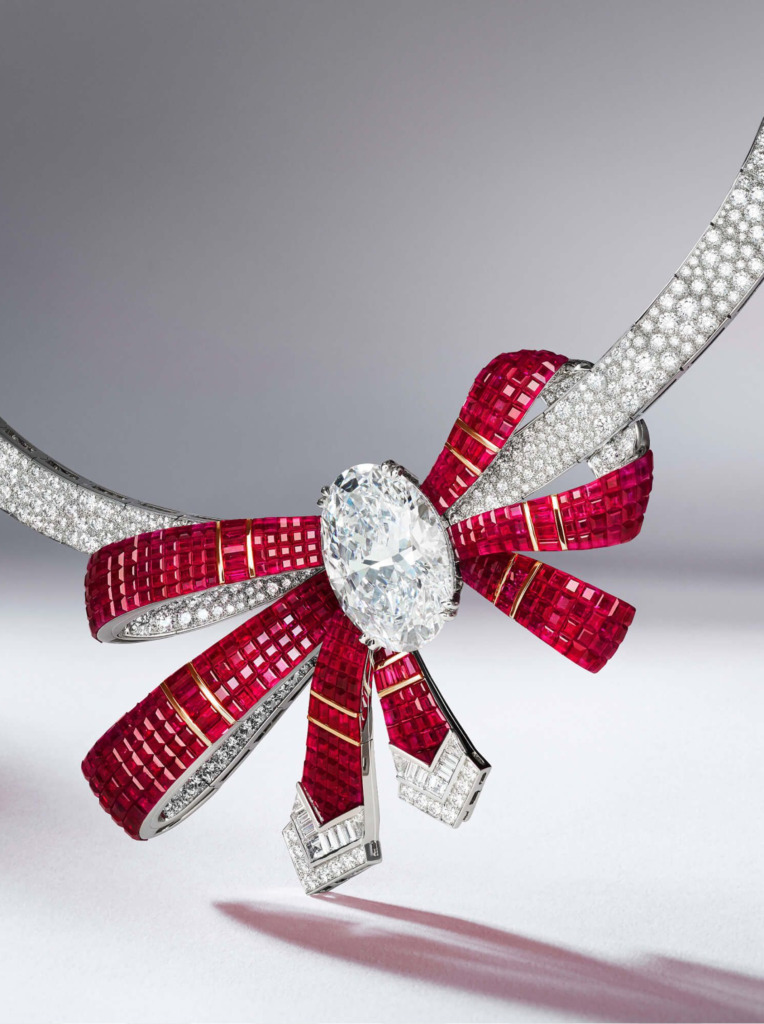
The Sewelô diamond, 1,758 carats
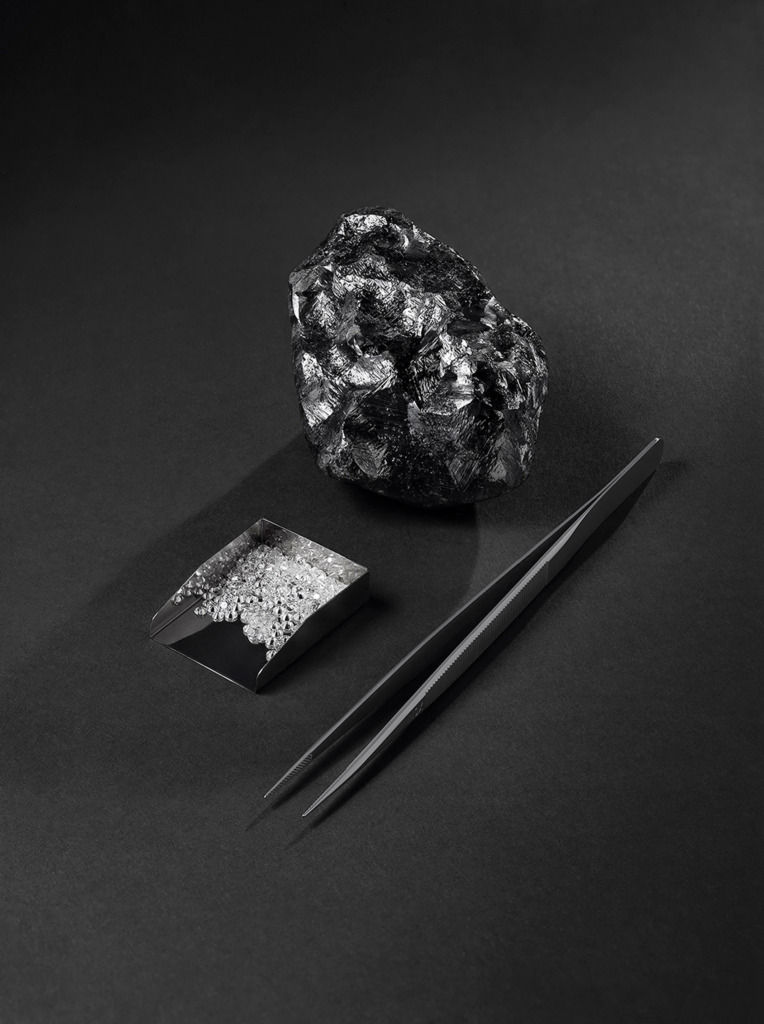
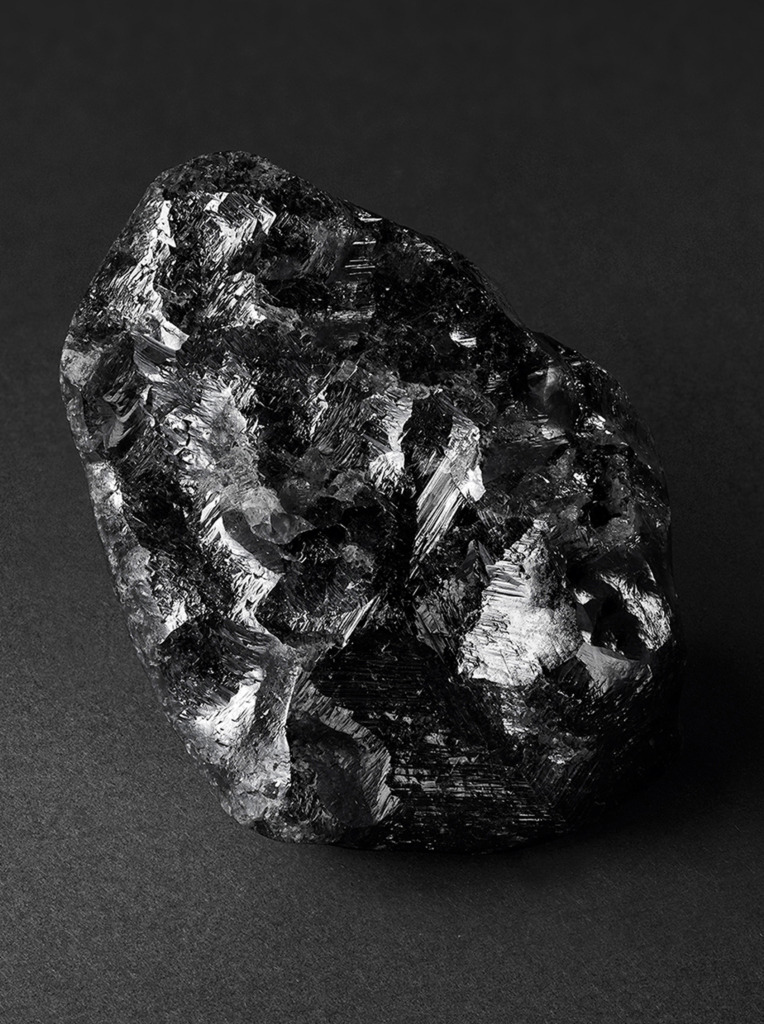
Discovered at Botswana’s Karowe mine in 2019, the 1,758-carat Sewelô is the second-largest gem-quality rough diamond ever found. Cloaked in a layer of black carbon, it looked more like a moon rock than a gemstone, but beneath that dark exterior was a surprising mix of ‘near-gem’ material and flashes of high-quality white diamond27. Its name reflects its mystique as it means ‘rare find’ in Setswana28.
From carbon cloak to couture sparkle
Louis Vuitton made headlines in 2020 when it snapped up the Sewelô, with a plan to turn its dark beauty into high jewelry29. For now, it remains untouched, a shadowy giant waiting to reveal itself.
The Millennium Star, 777 carats
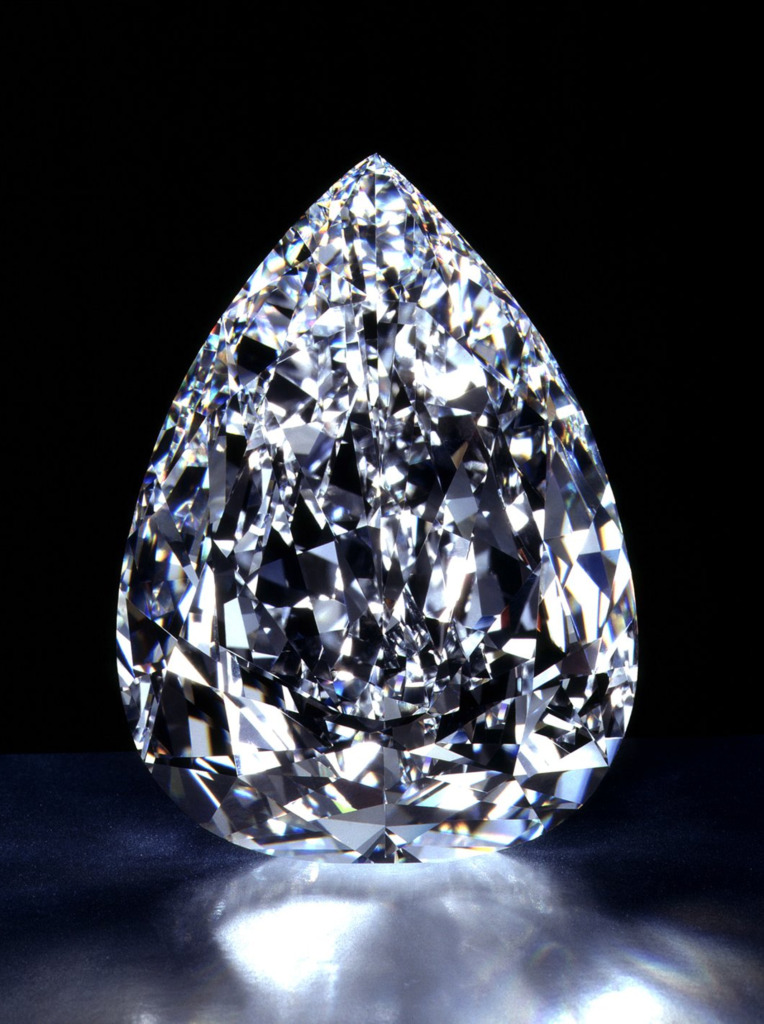
Flawless inside and out, the Millennium Star started as a 777-carat rough diamond. It was discovered in the Democratic Republic of Congo in 1990. After expert cutting, it became a 203.04-carat masterpiece, one of the most perfect diamonds ever shaped. Now owned by De Beers and graded D, it’s basically diamond royalty30.
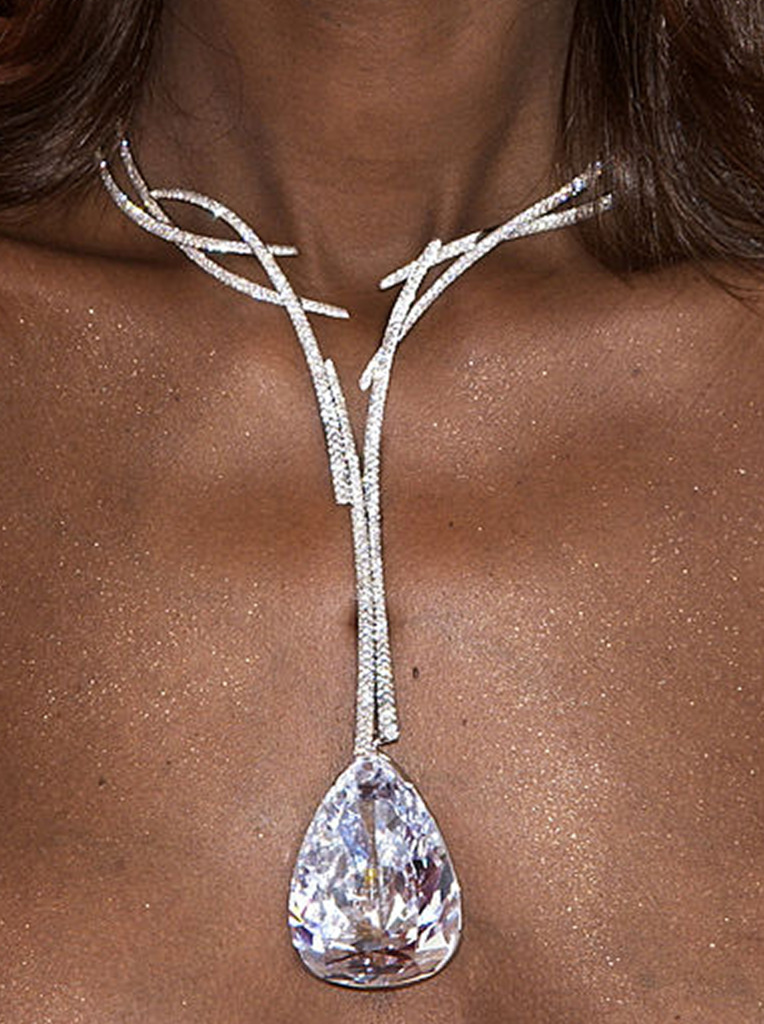
Heist at the Dome
The Millennium Star made its dazzling debut at London’s Millennium Dome in 2000, flanked by 11 rare blue diamonds.
Enter: one of the wildest heist attempts in British history. A gang led by Noel ‘Razor’ Smith tried to smash into the Dome with a JCB digger and snatch the gems, planning to escape via the Thames. But 200 undercover officers were already in place31. The raid was foiled, the were diamonds untouched, and the headlines were pure tabloid gold. JCB even took out full page ads declaring their digger was: “The only thing that worked to plan32”.
Why do natural diamonds continue to dazzle us?
It’s clear that there’s something extraordinary about natural diamonds. Their beauty and scale are undeniable, but it’s their story that sets them apart. Whether it’s the part they played in royal history, tragedies, heists or high fashion, each tale is uniquely captivating.
This is why diamonds continue to hold our fascination.
Owning a diamond is to possess a glittering relic of the past. One whose story began billions of years ago deep beneath the Earth. As precious items passed down through the generations, diamonds continue their story throughout the years, picking up new tales, and making a lasting impact, as they go.
Natural diamonds are woven so deeply into the fabric of human society, glittering from crowns, shining on the red carpet and glimmering behind glass in the world’s museums. This is what makes them so alluring and why we choose them time and again to mark the moments that really matter to us.
FAQs
Where was the most valuable diamond found?
“Most valuable” can mean different things when it comes to natural diamonds.
In terms of sheer size and material value, the Cullinan Diamond stands apart. Discovered in South Africa in 1905, the 3,106-carat rough remains the largest gem-quality diamond ever found and produced some of the most important stones in the British Crown Jewels.
From a historical and cultural perspective, the Koh-i-Noor Diamond is often cited as one of the most valuable diamonds in the world. Likely originating in India’s Golconda region, its worth is tied less to carat weight and more to centuries of royal ownership, political power and global significance.
Where are diamonds found in the United States?
In America, you can dig for diamonds and actually keep what you find. Although the Crater of Diamonds State Park in Arkansas is the only public site in the US where that’s possible. It’s also home to America’s largest recorded find, the Uncle Sam Diamond, a 40.23carat rough discovered in 192433.
Sources
- www.naturaldiamonds.com/historic-diamonds/star-of-africa-diamond/ ↩︎
- www.naturaldiamonds.com/historic-diamonds/star-of-africa-diamond/ ↩︎
- www.naturaldiamonds.com/historic-diamonds/star-of-africa-diamond/ ↩︎
- www.rct.uk/the-crown-jewels-coronation-regalia/ ↩︎
- www.britannica.com/Koh-i-noor/ ↩︎
- www.gia.edu/koh-i-noor-diamond-reading-list/ ↩︎
- www.cultureand.org/news/heritage-treasures-the-koh-i-noor-diamond/ ↩︎
- www.diamondbuzz.blog/the-koh-i-noor-diamond/ ↩︎
- www.diamondbuzz.blog/the-koh-i-noor-diamond/ ↩︎
- www.britannica.com/Koh-i-noor/ ↩︎
- www.britannica.com/Koh-i-noor/ ↩︎
- www.diamondbuzz.blog/the-koh-i-noor-diamond/ ↩︎
- www.naturaldiamonds.com/historic-diamonds/hope-diamond-history/ ↩︎
- www.si.edu/spotlight/hope-diamond/ ↩︎
- www.timcodiamonds.com/the-hope-diamond-a-journey-through-history-mystery-and-myth/ ↩︎
- www.capetowndiamondmuseum.org/education/hope-diamond-curse/ ↩︎
- www.capetowndiamondmuseum.org/top-8-largest-diamonds-in-the-world/the-cullinan-diamond/ ↩︎
- www.shimansky.com/learn-about-diamonds-famous-diamonds/ ↩︎
- www.naturaldiamonds.com/culture-and-style/victorias-secret-fantasy-bra/ ↩︎
- www.robbreport.com/worlds-biggest-diamonds/lesotholegend_diamond/ ↩︎
- www.capetowndiamondmuseum.org/top-8-largest-diamonds-in-the-world/ ↩︎
- www.sothebys.com/magnificent-jewels-and-noble-jewels/ ↩︎
- www.robbreport.com/969-carat-star-of-sierra-leone-diamond/ ↩︎
- www.robbreport.com/worlds-biggest-diamonds/lesotholegend_diamond/ ↩︎
- www.robbreport.com/worlds-biggest-diamonds/lesotholegend_diamond/ ↩︎
- www.vancleefarpels.com/the-lesotho-legend-an-exceptional-rough-diamond/ ↩︎
- www.robbreport.com/worlds-biggest-diamonds/ ↩︎
- www.lucaradiamond.com/lucara-announces-the-naming-of-the-1-758-carat-sewel-ocirc-diamond/ ↩︎
- www.robbreport.com/worlds-biggest-diamonds/ ↩︎
- www.capetowndiamondmuseum.org/top-8-largest-diamonds-in-the-world/ ↩︎
- www.naturaldiamonds.com/the-millennium-dome-raid-story-behind-the-de-beers-diamond-heist/ ↩︎
- www.earthmoversmagazine.co.uk/the-backhoe-loader-that-hit-the-dome-the-headlines/ ↩︎
- https://www.naturaldiamonds.com/rare/uncle-sam-diamond/ ↩︎


