
Long before diamonds were catalogued by carat or clarity, they were part of India’s cultural imagination. Found in riverbeds, traded along ancient routes and prized by royalty, natural diamonds were valued for more than their beauty alone.
India’s relationship with diamonds stretches back over 3,000 years1, making it the world’s earliest — and for centuries, only — major source of natural diamonds. This legacy still shimmers through history.
Below, we explore India’s natural diamond history, from the famed mines of Golconda to the Panna district in Madhya Pradesh and delve into the fables and folklore surrounding some of the world’s most celebrated (and notorious) diamonds, all discovered on Indian soil.
Where were diamonds found in India?
Historically, diamonds in India were discovered either in alluvial deposits on the surface or through shallow underground operations in three main regions: the “Southern group” (spanning Andhra Pradesh and Karnataka, including the historical Golconda region), the “Eastern group” (mainly in Orissa within the Aravalli Craton) and the “Northern Group” (covering parts of Madhya Pradesh and Maharashtra).2
Long before organised mining began, people would simply sift through river gravel or spot gems glinting in shallow waters. Over time, these early finds shaped the foundation of India’s diamond history, giving rise to trade routes, the discovery of legendary gems like the Koh-i-Noor and the Hope Diamond, and a reputation that still resonates far beyond the subcontinent.
Indian diamond mines and the rise of Golconda diamonds
Indian diamond mines, particularly those in the historic Golconda region, played a defining role in shaping the global trade of natural diamonds in the early days. These mines, spread across present-day Telangana and Andhra Pradesh, produced some of the world’s most celebrated gemstones. The Koh-i-Noor and the Hope Diamond are two such examples.
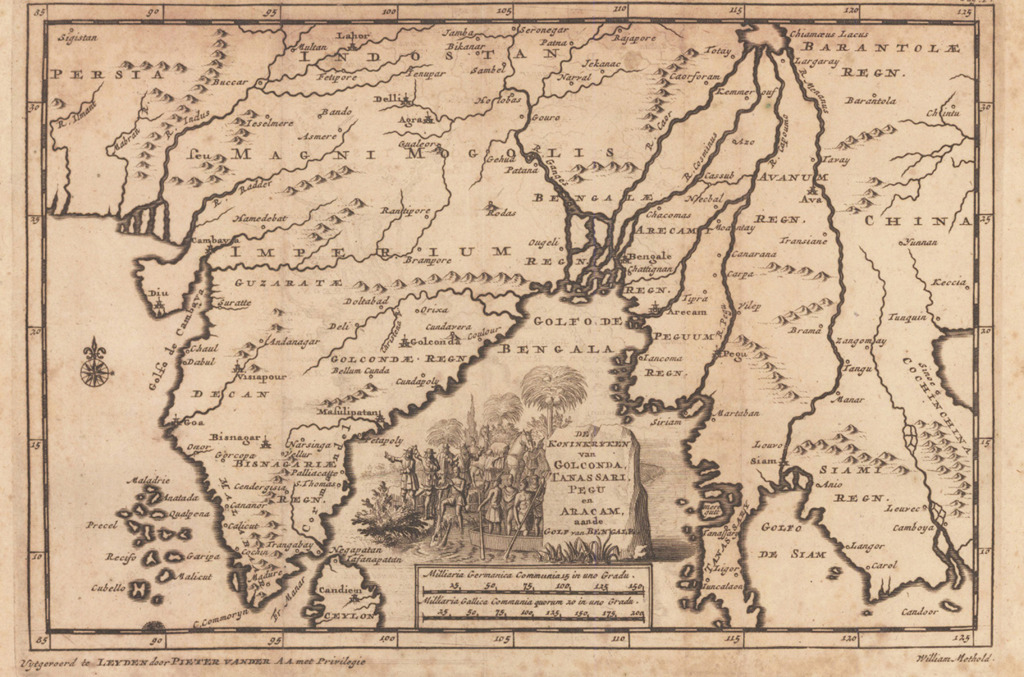
The journeys of French traveller Jean-Baptiste Tavernier, who visited the region in the 17th century, reveal the extensive network of trade routes that elevated India’s diamond belt to global recognition. His records highlight an intriguing anomaly: most prosperous trading destinations at the time were ports or cities in river valleys. Golconda was neither, yet it achieved remarkable wealth and influence thanks to its diamond trade.3
Soon enough, the story of Indian diamonds expanded far beyond geology, turning into one of global demand, royal fascination and flourishing trade routes. This transition of the Indian diamond mines into the broader world set the stage for the country’s lasting impact on global diamond history.
Diamonds, myths and ancient belief in India
India’s diamond history is steeped in myth. In some ancient beliefs, diamonds were thought to be celestial thunderbolts, sent to Earth by divine forces. In others, they appeared in stories of deep, hidden ravines filled with precious stones, fiercely guarded by snakes and sharp rocks.
These narratives weren’t simply poetic. They reflected how natural diamonds were associated with power and protection, valued for meanings that extended far beyond beauty. Such beliefs shaped how diamonds were revered, treasured and passed down through generations.
The legendary Golconda diamonds
“Golconda diamonds” refers to the exceptionally pure, often breathtakingly clear stones that once emerged from the historic mines of the Golconda region. These diamonds were of such unparalleled quality that over centuries, the name “Golconda” became synonymous with rarity, beauty and prestige. Many of the world’s most famous Indian diamonds began their journey here, even if their stories took them to shores thousands of miles away.
A single Golconda stone could hold entire chapters of history within it. Take for instance the Koh-i-Noor, which has passed through a host of emperors, dynasties and nations. The Hope Diamond is another well known Golconda diamond which showcases how a diamond is shaped not only by its geological past but by the people, places and experiences that come its way.
The history of the Koh-i-Noor diamond and other royal gemstones
The Koh-i-Noor diamond
The Koh-i-Noor has the most mysterious past among all the Golconda diamonds. A large diamond, valued at “half the daily expense of the whole world”, is mentioned in the memoirs of Babur (1483-1530), the founder of the Mughal empire in the Indian subcontinent. Babur’s diamond, thought to be the Koh-i-Noor, changed hands many times and was owned by various Indian and Persian rulers over the centuries.4
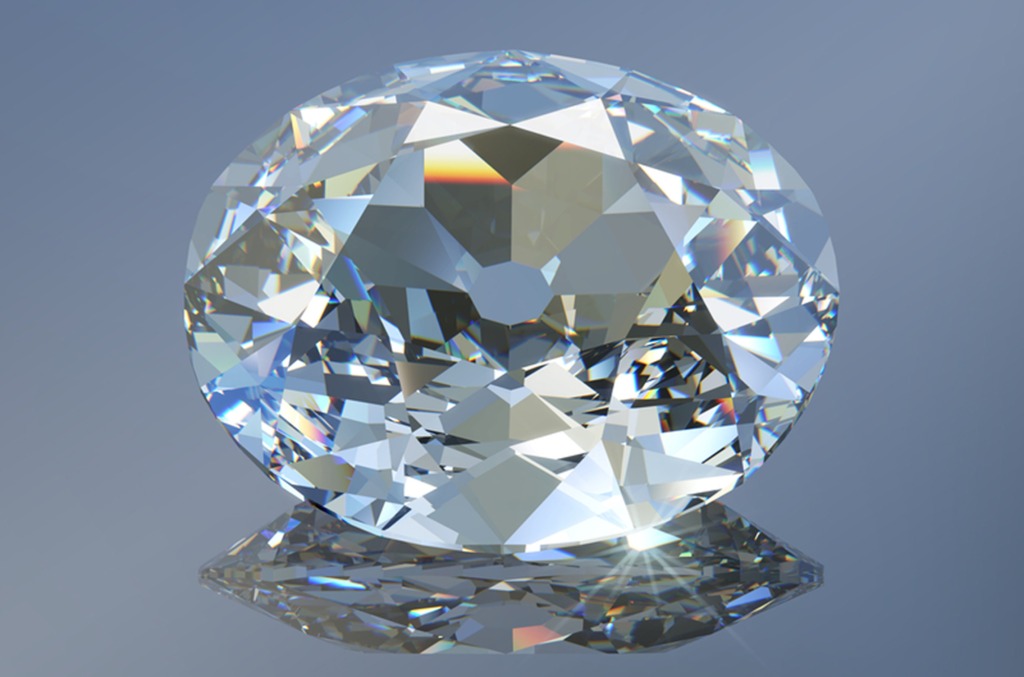
Legend says the Koh-i-Noor diamond brings bad luck to any man who wears it, so only a queen or queen consort has worn it since it came into British hands. Now, the Koh-i-Noor — an oval modified brilliant cut that weighs 105.60 carats — remains a part of the British Crown Jewels, on display in the Tower of London. Over the past several decades, repeated calls for the return of the Koh-i-Noor diamond have made it a potent symbol of power, loss and contested heritage.
The Daria-i-Noor diamond
Another of the Golconda diamonds shrouded in mystery, the Daria-i-Noor also has a legacy marked by royalty, power, loss and heritage. Often described as the sister of the Koh-i-Noor, the 26-carat gemstone with an oblong surface, is believed to have journeyed from the Golconda mines to the hands of Mughal, Maratha and Sikh rulers before vanishing from public view.5
The Daria-i-Noor diamond is set in the centre of a gold armlet surrounded by ten smaller diamonds, each weighing about five carats.6 Khwaja Alimullah, the first Nawab of Dhaka, bought the diamond in an auction in 1852. In 1908, his descendant Nawab Salimullah faced financial trouble and borrowed from the British colonial authorities, mortgaging his Dhaka estates along with the diamond and other treasures. This is, reportedly, what led to the diamond landing up in a bank vault in Bangladesh.
The Great Mogul diamond
Believed to be the largest diamond ever found in India, this 787-carat Golconda diamond was discovered in 1650. Tavernier described it in 1665 as a high-crowned rose-cut stone with a flaw at the bottom and a small speck within.7 Like the Koh-i-Noor and the Daria-i-noor diamond, it isn’t just spectacular to look at; it has a fascinating story behind it.
Nobody knows where the diamond presently is. Some believe that either the Orlov diamond or the Koh-i-Noor may have been cut from this stone after its loss following the assassination of its owner, Nader Shah, in 1747.
The Hope Diamond
The Hope diamond may be the most famous coloured diamond in the world. When Tavernier acquired the diamond, it was a 112-carat stone that he described at the time as a “beautiful violet.” The somewhat triangular stone was sold to King Louis XIV of France in 1668.8 The diamond was recut, set in gold and suspended on a neck ribbon which the king wore on ceremonial occasions.
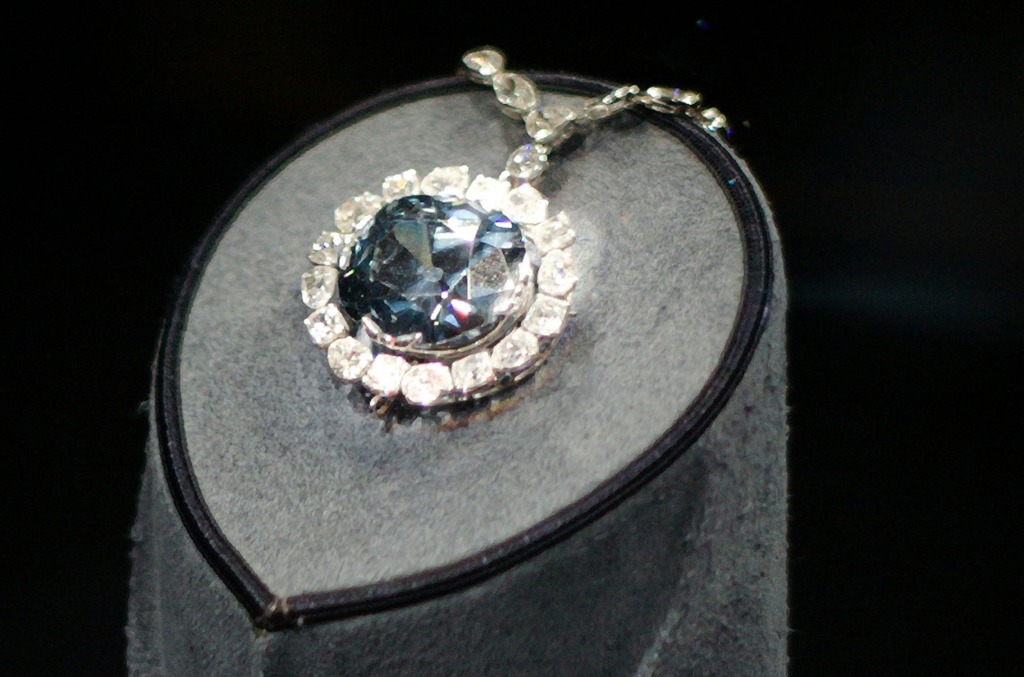
After changing many hands and journeying through many countries, it was purchased by Harry Winston Inc. of New York City, and was shown at many exhibits and charitable events across the world for a decade before being donated to the Smithsonian Institution in 1958.9 Today, the Hope Diamond — that now weighs 44.5 carats — remains on display at the Smithsonian Institution’s National Museum of Natural History in Washington, D.C.
From ancient source to modern centre: India’s diamond legacy today
India’s relationship with diamonds has evolved over the centuries. Many of the world’s most celebrated stones began their journeys in legendary mines such as Golconda, Kollur and Panna. Today, the country’s association with diamonds looks different, but remains just as significant.
India may no longer be the source of the most mined diamonds, but it has become the global heart of diamond cutting, polishing and trading. Surat in Gujarat is where rough gemstones arrive from all around the world to be transformed by the skilled hands of Indian artisans who chisel and polish the diamonds until they’re at their gleaming best.
The Indian diamond industry may have shifted its focus from underground mining to the exquisite craftsmanship of the country’s artisans, but its legacy remains.
How India’s diamonds continue to inspire new stories
The fabled tales of the Golconda diamonds and other famous Indian diamonds continue to shape the way modern diamond pieces are imagined and crafted.
It’s this seamless merging of the past and present that makes India’s diamond story so unique. The diamonds that we see today represent newer chapters in India’s inextricable association with natural diamonds, ones that are carefully shaped and moulded by creativity, craft and centuries of cultural memory.
Sources:
- Gia.edu/diamonds-ancient-india-reading-list ↩︎
- Gia.edu/diamonds-ancient-india-reading-list ↩︎
- Thehindu.com/news/cities/Hyderabad/char-kamans-charminar-golconda-historian-sanjay-subrahmanyam-jean-baptiste-tavernier/article26290456.ece ↩︎
- 4cs.gia.edu/en-us/blog/famous-diamonds-Koh-i-Noor/ ↩︎
- Firstpost.com/explainers/dariya-i-noor-diamond-history-bangladesh-bank-vault-13930598 ↩︎
- Moneycontrol.com/world/bangladesh-to-open-vault-believed-to-hold-dariya-i-noor-is-Koh-i-Noor-s-sister-diamond-actually-in-dhaka-article-13519441 ↩︎
- Britannica.com/topic/Great-Mogul-Diamond ↩︎
- Si.edu/spotlight/hope-diamond/history ↩︎
- Si.edu/spotlight/hope-diamond/history ↩︎


