
There are plenty of other stones (both natural and synthetic) that mimic the look of a diamond but never its spirit. And at first glance, it might be easy to mistake a white sapphire for a diamond. But a closer examination of the ‘white sapphire vs diamond’ question reveals many differences.
The two are vastly different, in terms of origins, durability and brilliance. And because it’s a diamond alternative stone, sapphire doesn’t quite have the emotional value that a natural diamond does, which makes the latter the ideal marker for occasions of sentimental significance.
If you’ve ever mixed up a sapphire with a diamond, you’re not alone. Here’s how to tell them apart.
Why it’s easy to confuse a white sapphire with a natural diamond
The answer to the question ‘Is white sapphire a diamond?’ is… a big no because typically, sapphire refers to the blue gemstone variety of the mineral corundum.
Sapphires come in every colour except red; the red gems are what we know as rubies.1 But gem-quality corundum (the family of gemstone that includes sapphires and rubies) is very rare.2 Most white sapphires found in the market today are lab-created, which makes them far more accessible.
Though both diamonds and white sapphires can appear as clear, brilliant gemstones, don’t be fooled — there’s a world of difference between the two. Sapphires’ ability to be synthesised with ease means they’re far more affordable as compared to rare natural diamonds.
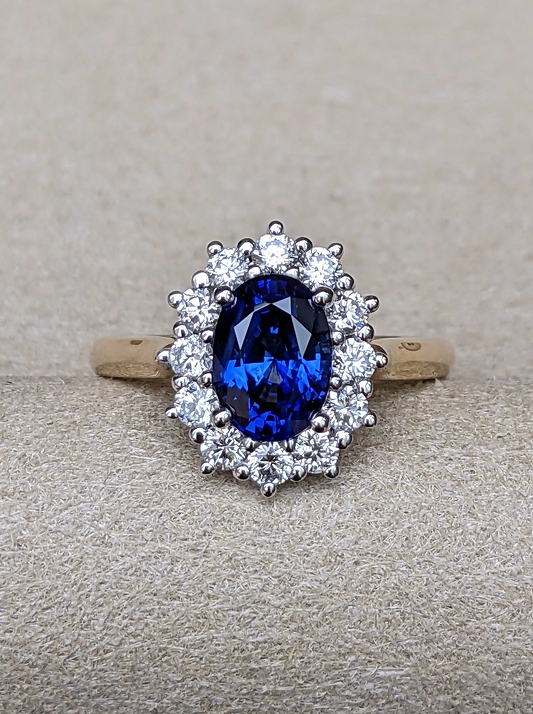
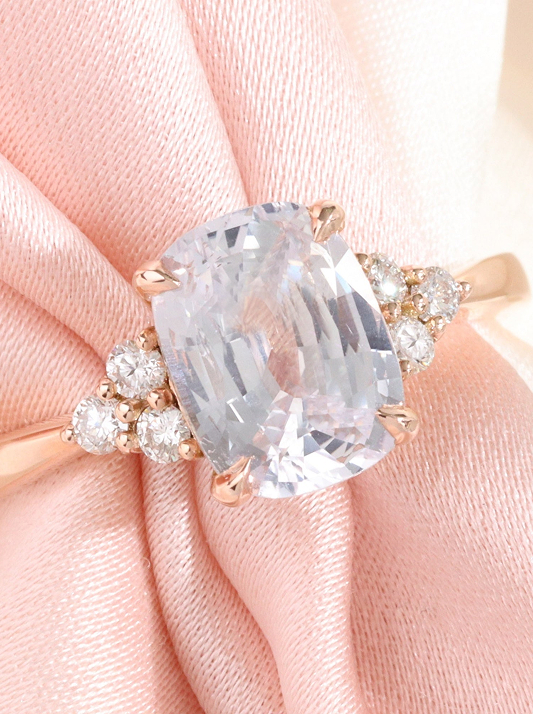
They may work for those looking for diamond alternative stones with budget constraints. But can they turn into objects of high cultural and emotional value like diamonds? Not quite.
White sapphire vs natural diamond: What sets them apart?
Composition and formation
Is white sapphire a diamond? It’s not, of course, but it’s easy to find yourself wondering about that because at first glance, they do look quite similar. Delve into their origin stories and you’ll discover just how not similar they are.
Natural diamonds are pure carbon and are formed as the result of extreme heat and pressure deep in the Earth’s mantle, a journey that takes billions of years.
Sapphires are formed in the Earth’s crust, but far closer to the surface. The crystallisation of corundum (aluminium oxide with the chemical formula Al2O3) in slow-cooling igneous or metamorphic rocks is what creates sapphires.3
Brilliance and sparkle
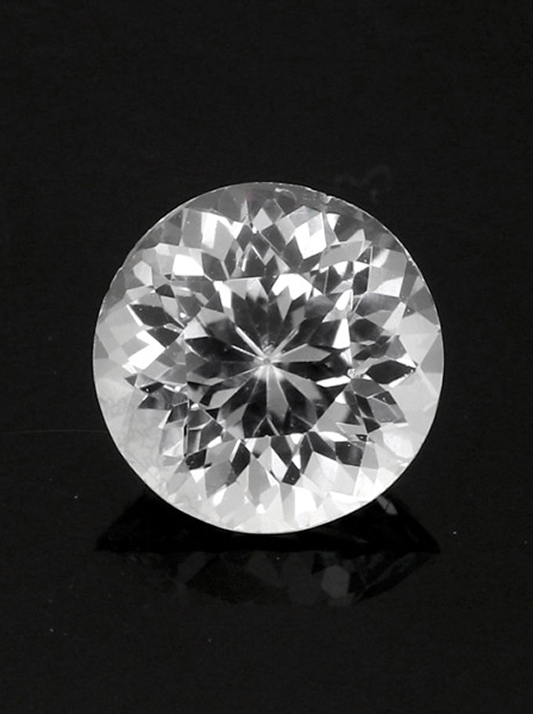
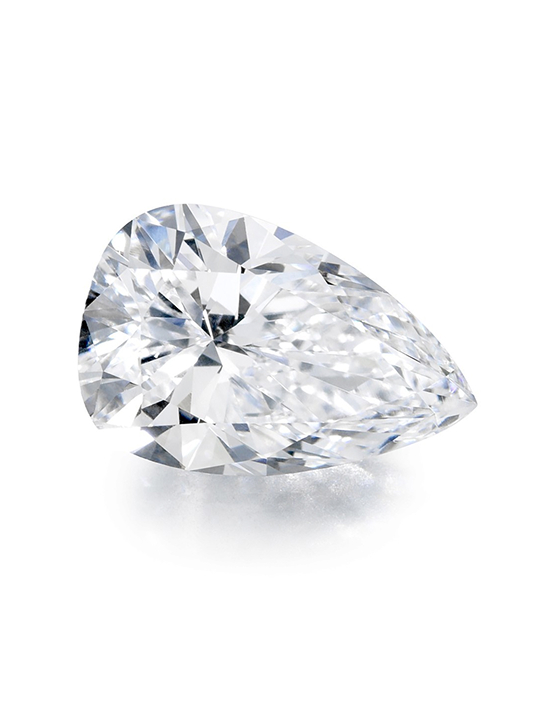
If you looked at both diamonds and white sapphires under the same light, you’d notice that the way they respond to light is rather different. This is because diamond sparkle vs white sapphire’s glow is determined by their differing refractive indexes and dispersion.
Diamond has a refractive index of 2.4 while sapphire’s refractive index is 1.7.4 Diamond’s high refractive index and dispersion results in the rainbow-like effect; sapphires, on the other hand, emit a soft glow because they have a more moderate rate of dispersion.
Hardness and durability
With a rank of 10 (the highest possible!) on the Moh’s scale — a tool that helps determine a mineral’s resistance to scratching or abrasion — diamonds are unmatched in terms of hardness and durability.
Sapphire (or corundum) ranks an impressive 9 on the scale but it is important to remember that the scale is not linear, meaning the difference in absolute hardness between consecutive numbers varies significantly — the jump from corundum (9) to diamond (10) represents a much greater increase in actual hardness than the difference between things like talc (1) and gypsum (2).5
Diamonds and sapphires are both impressive, but a sapphire will scratch far more easily than a diamond.
Clarity and colour
In terms of the clarity grading scale, diamonds are divided into six main categories and 11 grades in total. The most highly coveted on this scale are those graded ‘Flawless’ — these are the rarest of the rare with no inclusions or blemishes. On the other end of the scale are those graded ‘Included’, which will have imperfections but are stunning, nonetheless.
Sapphires tend to have inclusions that vary greatly from those found on diamonds. Among these are long, thin mineral deposits referred to as silk inclusions. Other clarity characteristics in sapphire are included mineral crystals, partially healed breaks that look like fingerprints, colour zoning and colour banding.66
How to be doubly sure about white sapphire vs natural diamond clarity? In India, the IOD (De Beers Institute of Diamonds), IGI (International Gemological Institute) and GIA (Gemological Institute of America) offer their services that a lot of jewellers make use of. Remember: never shy away from requesting for certification from reputable gemmologists!
Value and cost
When compared to natural diamonds, white sapphires cost only a fraction of the diamonds’ price. But it’s important to consider that natural diamonds come with a value that extends far beyond their price tags. Their strong symbolic worth turns them into treasured family heirlooms whose worth will endure for decades to come.
White sapphire vs natural diamond in engagement rings
Be it a classic round stone or an oval solitaire, there’s no beating the timeless charm of a natural diamond engagement ring. They’ll always be the most coveted choice for a day as meaningful as your engagement.
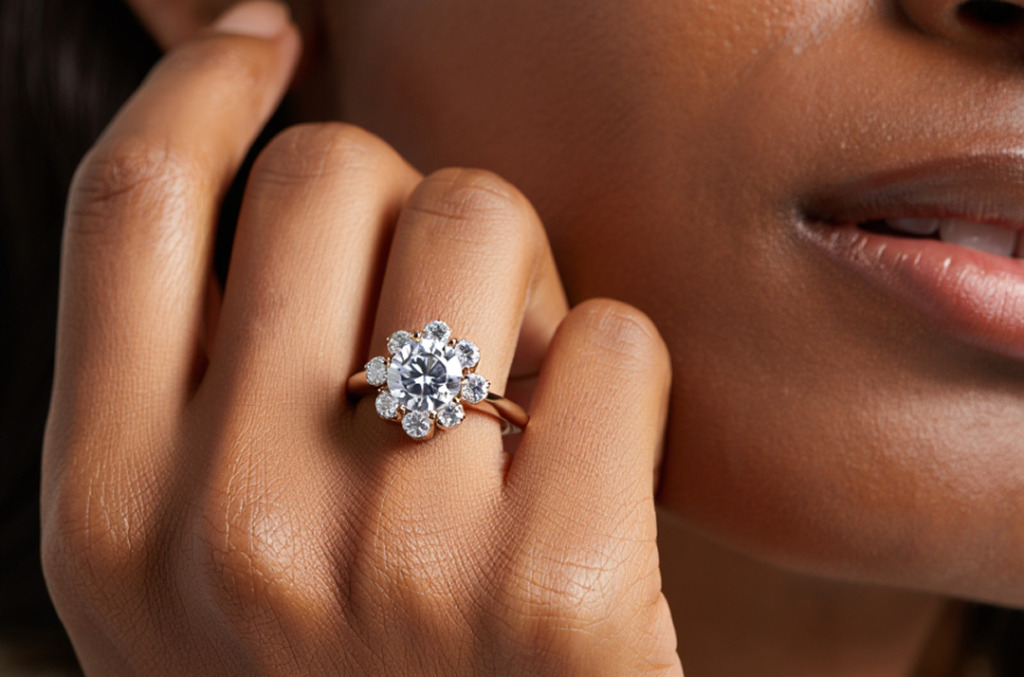
For those who are considering more budget-friendly choices and are willing to let go of the symbolism that natural diamonds offer, white sapphire engagement rings could work well. But keep in mind that you’d like your engagement ring to keep its sparkle for a long, long time, something that a sapphire can’t offer you.
If, like the Princess of Wales, Kate Middleton, you can’t quite make up your mind about getting a diamond engagement ring or one centred on a sapphire, go ahead and get one that includes both!
But if you’re like us (or Taylor Swift, or Priyanka Chopra Jonas), you know that a natural diamond ring is far more than just a ring. It’s a glittering little witness to your life’s most special moments.
Choosing between a white sapphire and a natural diamond
In the end, the key to addressing the question of white sapphire vs natural diamond value lies in figuring out which of the two gemstones fits your priorities best. The most important factors to mull over are sentiment, longevity, sparkle and sustainability.
Both diamonds and sapphires are beautiful in their own way but which one’s the right pick for you? Choose the one that most accurately reflects the story of your life.
- https://www.americangemsociety.org/birthstones/september-birthstone/sapphire-overview/ ↩︎
- https://www.gemsociety.org/article/lab-grown-sapphires/ ↩︎
- https://www.gemsociety.org/article/how-do-rubies-and-sapphires-form/ ↩︎
- https://www.gemsociety.org/article/table-refractive-index-double-refraction-gems/ ↩︎
- https://www.gemsociety.org/article/select-gems-ordered-mohs-hardness/ ↩︎
- https://www.gia.edu/sapphire-quality-factor ↩︎


