
Carat weight is often the first number people think about when choosing a diamond. Whether it’s an engagement ring, a pair of earrings or a classic tennis bracelet, it plays a visible role in how a diamond looks and how it’s valued.
But size and worth are rarely dictated by carat alone. Diamonds are about balance, and carat weight is just one part of a more nuanced equation where quality often matters more than scale.
To really understand a diamond’s beauty and worth, you need to look at how carat size corresponds with the cut, colour and clarity (the rest of the 4Cs) of the gem. The way these elements play together can shape everything from a diamond’s sparkle and its price tag, to how it makes you feel when you wear it.
In this guide, we’ll break down how diamond carat weight affects a natural diamond’s appeal and what exactly you need to know about it.
How diamond carat weight and size shapes perceptions
First things first. Carat refers to the weight, not the size, of a diamond. One diamond carat is equal to 200 milligrams1, so when you see a one-carat diamond, you’re looking at a gem that weighs roughly as much as a paperclip.
But carat weight gives you more than just a number to compare. It has a significant impact on a diamond’s price, although diamonds aren’t priced per carat in a straightforward way (carat is not the only factor contributing to a diamond’s price).
As carat weight increases, the price tends to jump, especially at milestones like 0.5, one carat or two carats.2 That’s because larger natural diamonds are much rarer, and, as you might imagine, rarity significantly influences the value.
It’s also worth remembering that carat refers to weight, not visual size. The same carat weight can look very different depending on how it’s used. A pair of diamond studs, a tennis bracelet and a ring with the same total carat weight will each create a completely different visual effect.
Diamond carat weight and pricing: How natural diamonds are valued
Since larger natural diamonds are rarer than smaller ones, they could cost up to three or four times more.3 But how much the value increases is also dependent on cut, colour and clarity.
Remember those key milestones or ‘magic sizes’ we mentioned a moment ago (round numbers like 0.5, one carat or 1.5 carats)? Diamonds that weigh just under those benchmarks can look nearly identical to the next tier that’s higher but come with a noticeably lower price tag based on its cut, colour and clarity.
What we mean by this is: the price difference between a diamond pendant worth 1 carat and another worth 0.90 carat might be quite significant but in terms of appearance, they would look nearly identical to most of us.
For anyone investing, choosing a gemstone without a rounded carat weight can be a smart way to maximise diamond value while spending less.
Why bigger isn’t always more beautiful in diamond jewellery
Polished diamonds graded over 30 points (around 0.3 carat) will come with a grading report from an independent institute such as the De Beers Institute of Diamonds (IOD), Gemological Institute of America (GIA) or the American Gem Society (AGS). This report assesses each diamond across the 4Cs (carat, cut, colour and clarity) and also confirms whether the gem is natural or lab grown.
Carat weight might be what’s listed on paper, but two diamonds with the exact same carat weight can look totally different, depending on their proportions, which is where cut comes in.
A shallow-cut diamond, for example, looks larger ‘face-up’, while a deeper-cut diamond can carry its weight below the surface. That’s why a well-cut 0.90-carat diamond can look nearly identical to a one-carat one, while holding a lower price tag.
How clarity and colour affect perceived diamond size and value
While carat and cut are vital for valuing a diamond, the other two Cs (clarity and colour) are just as important when you’re buying diamond jewellery.
First up: clarity. If a stone has obvious inclusions (small internal flaws), it can affect the light reflection and dull its twinkle. Even at a high-carat weight, that lack of brilliance can make a diamond seem smaller and less ‘alive’. In contrast, a slightly smaller diamond with a good clarity grade can be stunningly dazzling.
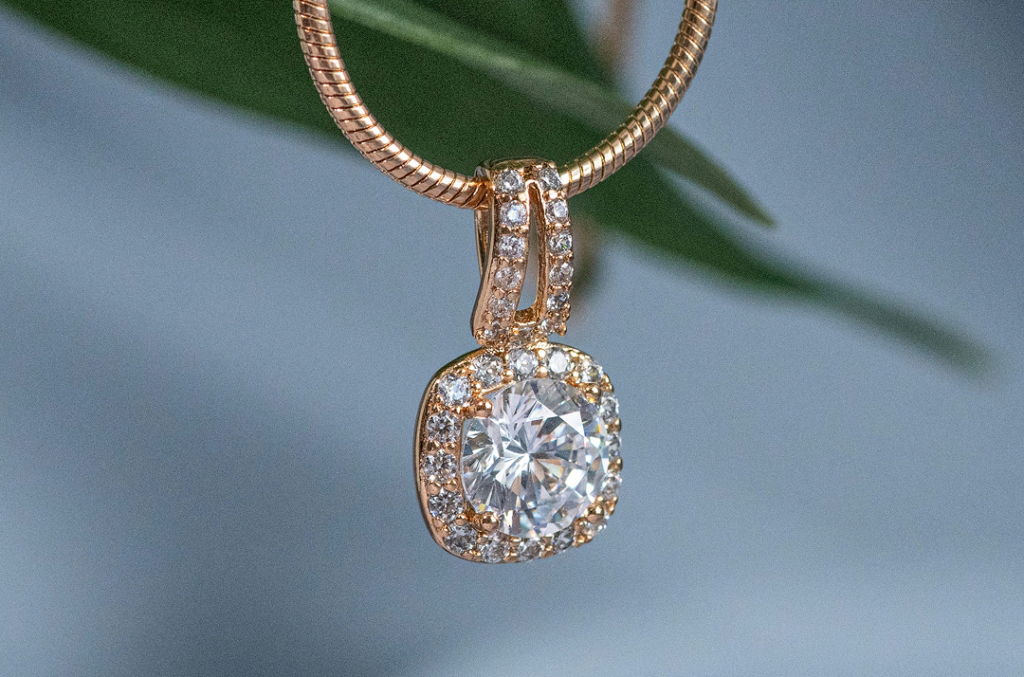
Then, there’s colour — or rather, the absence of it. Diamonds are graded from D (icy white) to Z (a visible yellow tint).4
The bottom line? Diamond carat size might be the thing you ask about first but don’t overlook clarity and colour when it comes to your diamond’s overall look.
Why diamond milestone carats hold emotional and symbolic meaning
By now, you’ll likely appreciate that natural diamonds aren’t just about numbers in a grading report. They carry deep meaning, emotion and provenance.
Milestone carats refer to the round-number weights that mark symbolic thresholds, such as one, two or five carats. These sizes are often seen as benchmarks of rarity and celebration, which is why they tend to attract the most attention and the highest demand.5
How to choose the diamond carat that’s right for you
Choosing a diamond is always personal, and carat weight is no exception. Whether you’re selecting a once-in-a-lifetime piece or thinking long term, it’s the balance between the 4Cs that ultimately shapes both beauty and value.
Practicality matters too. Think about how often you’ll wear the piece and the setting you’re drawn to, as both influence how a diamond’s size is experienced day to day.
In the end, the right carat is the one that fits your life and feels instinctively right. Trends may guide the conversation, but the final choice is always personal.
Sources:
- Graff.com/uk-en/guide-to-diamond-carat/ ↩︎
- Vandrakejewelers.com/blogs/jewelry-blogs/diamond-carat-weight-how-to-choose-the-right-size/ ↩︎
- Taylorandhart.com/diamond-guidance/diamond-basics/carat-weight/ ↩︎
- Gia.edu/gia-about/4cs-color/ ↩︎
- 4cs.gia.edu/en-us/blog/nine-things-about-diamond-carat-weight-you-need-to-know/ ↩︎


