
Whether it’s the gleaming diamond bracelet you’ve bookmarked as a future gift or the dainty studs you’ve been eyeing for everyday sparkle, it’s easy to be dazzled when you see a diamond. But not every stone has a crystal-clear backstory. And how can you even be sure it’s truly natural? Provenance and formation are often misrepresented — or worse, entirely fabricated.
Our guide to origin, authentication and diamond certification will help you shop smart and know if your gemstone is everything it claims to be.
The key differences between authenticity and provenance
The authenticity of a diamond relates to whether it’s a product of Mother Nature or laboratory-grown and thus entirely man-made.
The provenance of a diamond refers to its origin and traceability. For example, from what country did the diamond originate, from what mine was it recovered, and where was it cut or polished? Did the diamond come from Botswana? Was it polished and cut in a diamond hub like Surat? Awareness about sourcing also helps ensure it’s produced to the highest ethical standards.
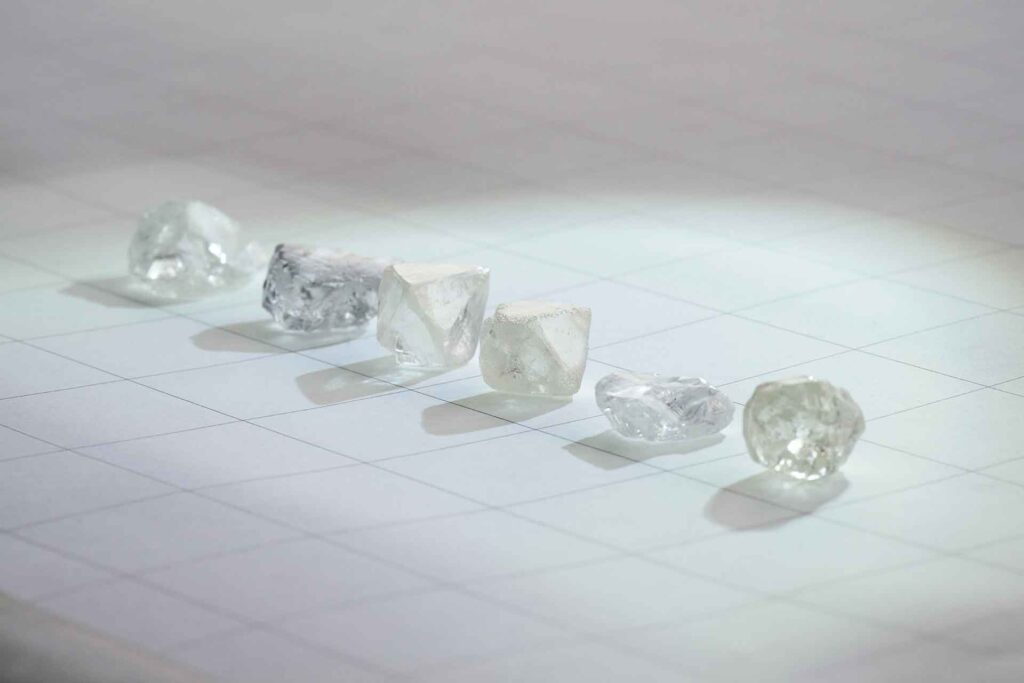
Determining diamond authenticity
Authenticating a diamond is vital for establishing its monetary and sentimental value. And as technological advances mean that laboratory-grown diamonds (also known as lab-grown diamonds, lab-created diamonds, LGDs and synthetic diamonds) are increasingly available, it’s more important than ever.
Reliable authentication methods
So, how do you determine that your diamond is authentic? Diamond certifications from reputable gemmological institutes such as Gemological Institute of America (GIA), De Beers Institute of Diamonds (IOD), International Gemological Institute (IGI) and Gemological Science International (GSI) are the most reliable standard. Professional gemmological testing methods like UV light tests and conductivity tests are helpful indicators too.
And if you have a trusted jeweller with the training and tools to assess your diamond, that can be a useful extra step alongside formal certification.
Documentation and verification of provenance
Before purchasing the diamond of your choice, ask for full provenance information and any accompanying documentation that traces the diamond’s origin and confirms its natural status. This can include mine location, cutting details, and ethical sourcing certifications. Seek out leading laboratories — cities like Mumbai, Bengaluru and Surat have many reliable options — who can conduct the verification.
Keep in mind though that the BIS Hallmark, which is widely used to determine the purity of gold and silver, cannot be used to authenticate diamonds.
Limitations of DIY tests
Simple tests that can be carried out at home, like magnification and the fog test, can be inconclusive or misleading when you’re trying to figure out if your diamond is truly natural or a lab-created stone.
How to know if your diamond is natural
When it comes to polished diamonds, most over a certain size (approx. 0.3 carat, also known as 30 points) have their own grading certificate. Also called a diamond grading report, this is issued by an independent gemmological institute, such as the GIA, GSI, IGI and IOD.
Smaller gems typically won’t have their own report, as it’s not cost effective. For example, a piece of jewellery or garment with tens or even hundreds of melees (diamonds weighing less than a fifth of a carat) would then require several reports!
A diamond grading report will clarify whether it’s natural or laboratory grown. And to ensure there’s no mix-up about which report refers to which diamond, most diamonds will have an inscription on either their girdle (the ‘waist’ of the diamond) or their table (the top face) that corresponds with its report. These inscriptions can sometimes even appear in Hindi and other regional languages.
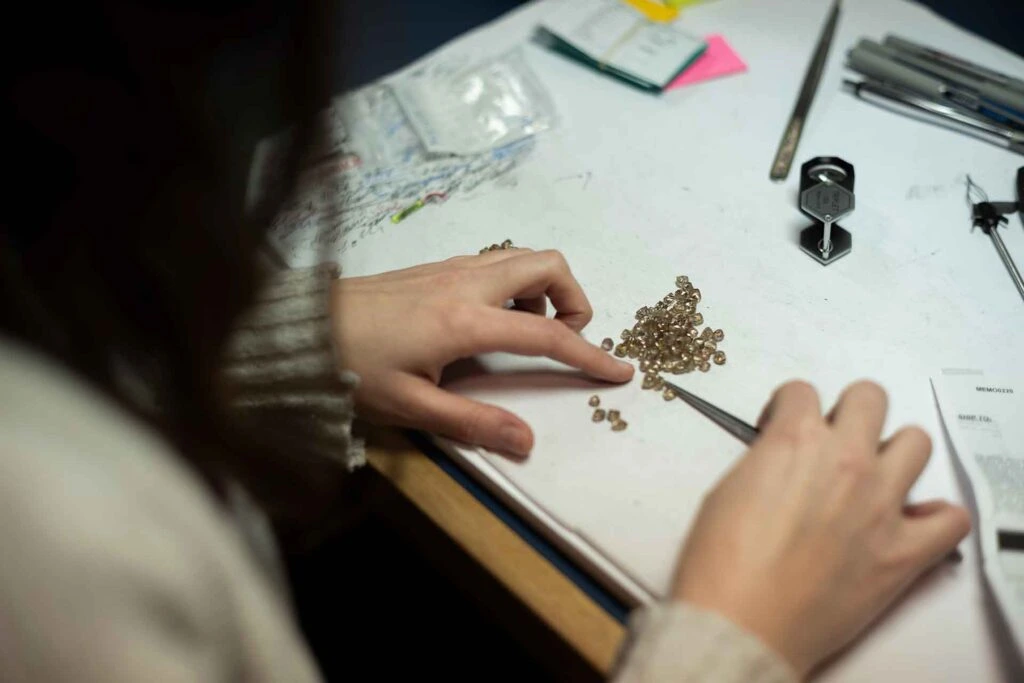
“A grading report will say whether it’s natural or lab-grown”
The Indian jewellery market may not always refer to diamonds in terms of carats; ‘points’ and ‘ratti’ are other terms that you may come across in the reports. To make diamond certification more accessible, several jewellers also provide digital certificates, especially for high-value items like engagement rings and mangalsutras.
Still concerned about your diamond certification? You can also send it directly to a gemmological institute for verification.
Other things to know about diamond certification and grading reports
Whether it’s a bridal Polki set or a delicate tennis bracelet, diamond certification should be a priority before you make any purchase.
Apart from stating whether a diamond is natural or lab-grown, gemmology institutes grade a diamond against a universal set of standards relating to the 4Cs, which determine its rarity and value. In some cases, a report can also provide information about the origin of a diamond.
A quick recap of the 4Cs….
Cut
A diamond’s cut grade is based on three things. Firstly, its proportions – the angles and sizes of the facets, which help the diamond reflect light in a way that makes it sparkle. Secondly, its polish – how smooth its surface is, which determines a diamond’s lustre and shine. And thirdly, its symmetry – how well the shape and facets line up with one another. The closer a diamond is to perfect symmetry, the better the cut grade.
Colour
The colour of a diamond is graded on a scale from D (completely colourless) to Z (pale yellow or brownish), with colourless being most valuable. However, fancy colour diamonds are still sought after because they’re incredibly rare and visually striking. The deeper the colour (whether it’s blue, pink or yellow), the more desirable the fancy diamond is.
Clarity
Clarity determines how visible internal features (lovingly referred to as ‘birthmarks’) appear under magnification. The fewer features a diamond has, the higher it will rate. Clarity is a measure of rarity: it’s an almost impossible job for Mother Nature to create a diamond with no inclusions.
Carat
Carat is a measure of diamond weight. One carat equals 0.2g. And while a diamond may weigh several carats, its value will depend on how it rates for the other Cs too. In the Indian market, ratti is an important measurement unit to be aware of. One ratti amounts to 0.12125g.
How do experts tell the difference between natural and lab-grown diamonds?
Experts can easily tell the difference between natural and lab-grown diamonds. While both are composed of pure crystalline carbon, the distinction lies not in their chemistry but in their story and formation — one shaped deep within the Earth over billions of years, the other created in weeks within a lab.
Because lab-grown diamonds are made in controlled environments rather than in nature’s depths, they often reveal subtle differences in growth patterns, trace elements and inclusions. Trained gemmologists and jewellers use advanced techniques such as Raman spectroscopy and photoluminescence to identify these variations with precision.
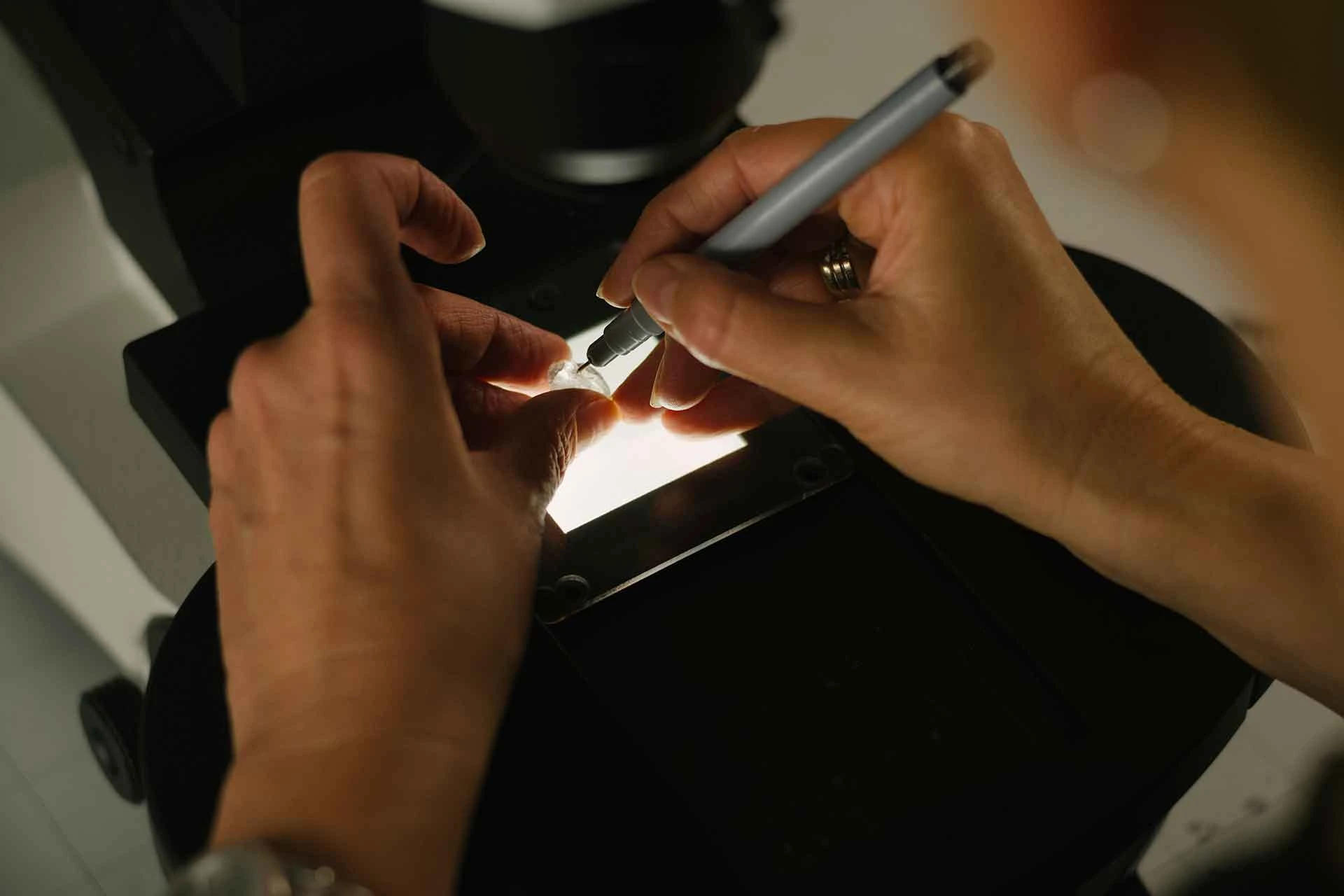
How to spot a fake diamond
There are a lot of other colourless gems that are simulants of natural diamonds (like moissanite, American diamonds (CZ) and zircon), but they do not possess the same chemical, physical and optical properties of a diamond. These are very easily identifiable through basic gemmological testing.
Diamonds are a brilliant heat conductor (heat moves through diamond five times quicker than it does through copper), whereas diamond simulants are not. Testing for thermal conductivity, a method trusted by jewellers and labs across the country, is a good way to weed out an impersonator. As most diamonds don’t conduct electricity (except for very rare blue diamonds), gemmologists will test for that, too.
That said, synthetic moissanite is an exception. This popular man-made simulant conducts both heat and electricity, which means more advanced testing is required to tell it apart from a natural diamond.
Avoid making purchases from online platforms without certifications (be extra cautious about festive season discounts) and unbranded shops. And don’t fall for testing methods like the glass scratch test — they’re myths!
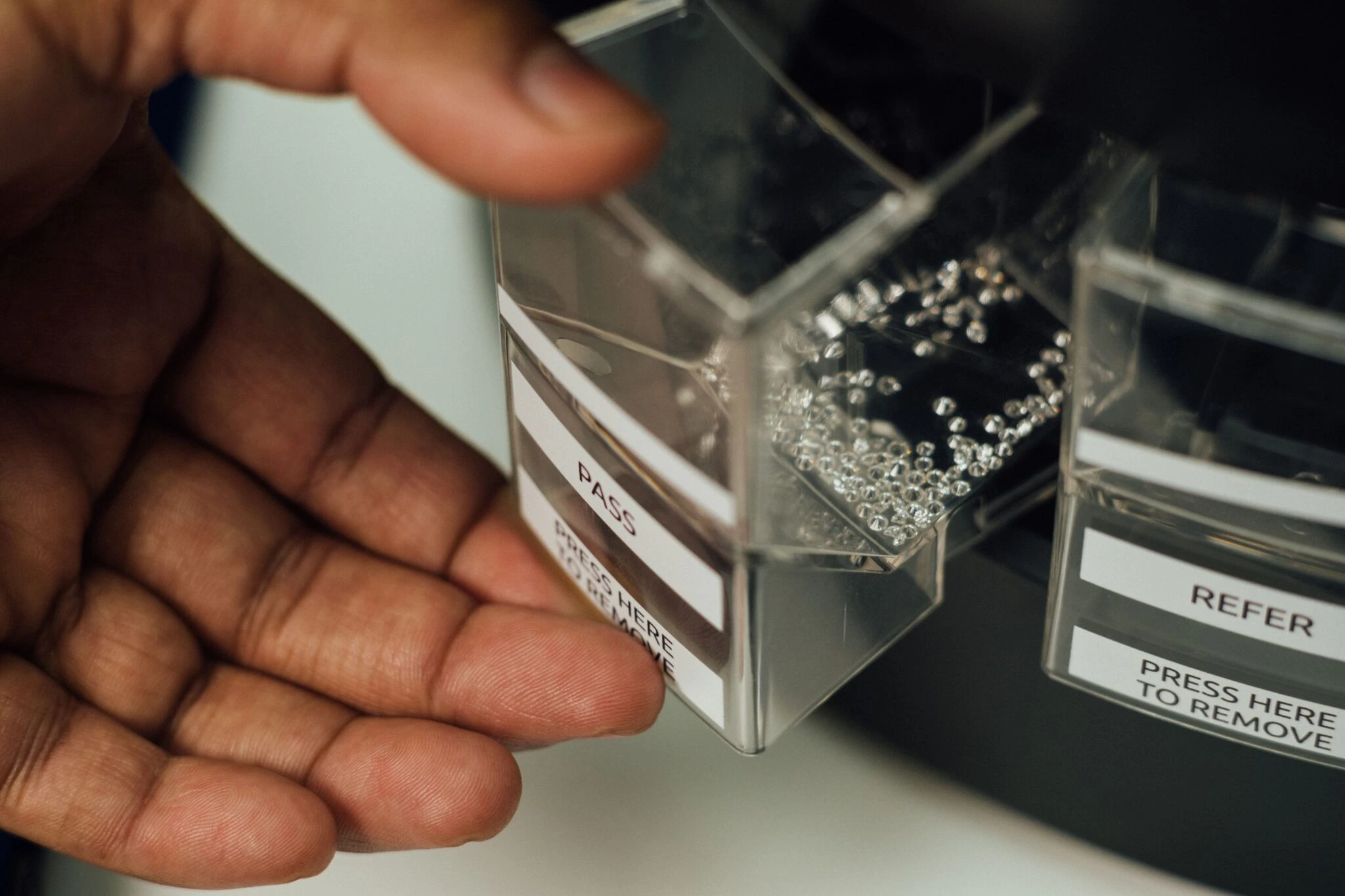
Red flags to spot when buying diamonds
When visiting a jeweller, don’t shy away from asking questions and requesting to see the paperwork. Indicators that could suggest something’s amiss include…
Vague details or reluctance to provide a certificate
Reputable jewellers will have the grading report for any larger diamonds (generally those over 30 points) they have in stock. Accept no excuses! Don’t just rely on the size, weight and appearance of the diamonds.
Prices that are too good to be true
Extremely low prices, especially around a festival? A good deal might not be what it seems. Enquire about reports and diamond certification even at stores that are very popular.
Reports issued by a non-reputable institute
A diamond certification should be issued by a leading gemmological body, such as the Gemological Institute of America (GIA), International Gemological Institute (IGI), De Beers Institute of Diamonds (IOD) and Gemological Science International (GSI). Jewellers may sometimes furnish unreliable in-house certificates. Ask them for reliable third-party certification.
Why diamond certification matters
The differences between natural diamonds and LGDs may not always be visible to the naked eye, but in terms of geological heritage, crystal structure and emotional value, the differences are vast.
When you’re purchasing a natural diamond, be it for everyday wear, as part of your wedding jewellery, or as an engagement ring that you hope will turn into a beloved family heirloom, you’re also creating a special sentimental connection with a one-of-a-kind gem. Diamond certification acts as proof of the quality and ethics related to your natural diamond, ensuring that you’re investing in conscious, conflict-free luxury.


