
Cheaper price tags, the promise of being more sustainable, ease of production… There are many reasons why interest in laboratory-grown diamonds (also called lab-grown diamonds, lab-created diamonds, LGDs and synthetic diamonds) has been on the rise.
But are all the claims true? Does easy accessibility in production and pricing make lab-grown diamonds the better choice? And what makes natural diamonds stand apart? The lab grown vs natural diamonds debate is more complex than you think.
Let’s dive into the main differences between LGDs and their natural counterparts.
How are lab-grown diamonds made?
At first glance, LGDs are as dazzling and brilliant as natural diamonds but come at a fraction of the cost. It’s no surprise that lab-grown stones’ popularity continues to surge, especially among younger customers who value the affordable price points.
Mass-produced in factories, they have the same chemical and optical properties as natural diamonds, but they’re created in an artificial environment and not by Mother Nature.
Generally, there are two different methods of producing lab-grown diamond alternatives.
The first is High-Pressure, High-Temperature (HPHT), widely used in places like the US, China and Singapore. This process attempts to recreate the geological conditions needed for natural diamonds to grow deep within the Earth — but in a factory, using powerful high-pressure presses.
A capsule containing a carbon source (graphite or synthetic diamond powder), a metallic solvent, and a tiny diamond seed is subjected to extreme pressures of 5–6 GPa (roughly the weight of an Eiffel Tower on a single fingernail) and temperatures of 1,300–1,600 °C, comparable to the heat inside a volcano. Sustaining these conditions for days requires substantial energy, which increases for higher-quality diamonds, and often doesn’t account for rejects or defects during production. The carbon dissolves in the molten metal and gradually crystallises onto the seed, forming a larger diamond.
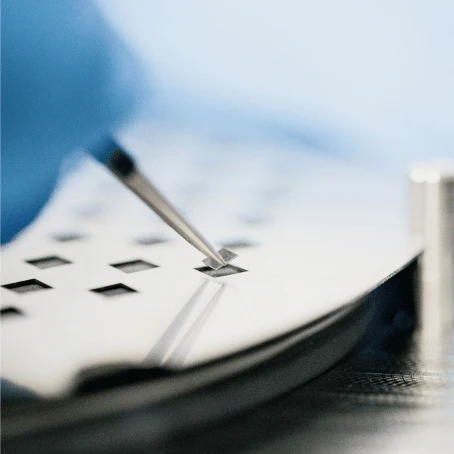
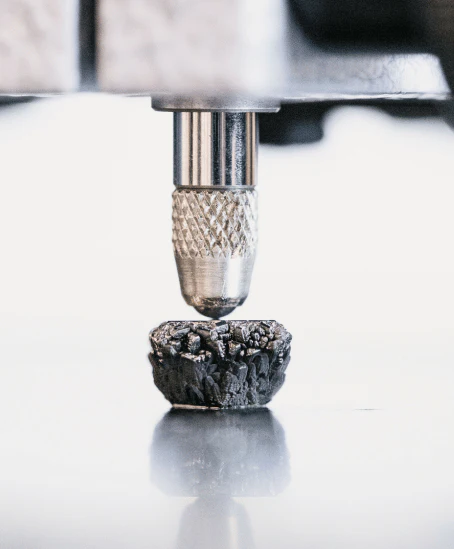
The second technique is Chemical Vapor Deposition (often shortened to CVD). This involves using chemical gases, such as methane, to produce crystals.
For CVD, a piece of synthetic diamond is placed in a vacuum chamber. A gas containing hydrogen and carbon is then pumped into the chamber, which in turn is heated using microwave energy. This heat causes the gas to ionise, with carbon atoms separating from it and gathering on the synthetic diamond in layers. This process is repeated over the course of a few weeks to create large gems.
“LGDs are mass-produced in factories”
What makes lab-grown and natural diamonds different?
In addition to lacking the same geological, mythical and sentimental resonance, LGDs also have scientific differences to natural diamonds, though these aren’t obvious to the untrained eye. These include:
The time they take to form
At the heart of all natural diamonds is a generous smattering of stardust. Why do we say that? Because research tells us that stardust from the galaxy accumulated in the core of the earth when it was formed 4.5 billion years ago. This stardust was the source of carbon that, when bonded under intense heat and pressure deep under the earth’s surface, crystalised into diamonds.
They were brought nearer to the planet’s surface by mighty volcanic eruptions millions of years ago. That counts as a cosmic miracle, doesn’t it?
The oldest dated natural diamonds are around 3.5 billion years old. Lab-grown options, on the other hand, can be made over a few days or weeks.
The shape of growth
Natural diamonds typically grow in an octahedral shape (like two pyramids stuck together base-to-base), whereas the crystals in HPHT diamonds grow in a more cube-like manner and those of CVD diamonds are formed in tab-like layers.
This difference in crystal growth structures can be spotted by gemmologists under high magnification. Expert jewellers will also be able to differentiate between the two.
Markers of clarity
Natural diamonds must endure a long and turbulent journey to the Earth’s surface, so they often end up having little imperfections. These unique features serve as miniscule birthmarks that make each natural diamond one-of-a-kind.
Lab-grown alternatives, because they’re controlled so closely by human-led production processes, rarely have any such unique markers. And those that do occur simply count as manufacturing defects.
How rare they are
Lab-created diamonds can be made on demand in large batches, whereas natural diamonds are a truly rare thing.
The world has a finite reserve of natural diamonds because, first and foremost, their supply comes from nature. Secondly, most are buried too deep for us to recover. The volcanic eruptions that carried the world’s natural diamonds to the surface won’t happen again in our lifetime.
Emotional and spiritual value of natural vs lab-grown diamonds
When a bride adorns herself with natural diamonds on her wedding day, or chooses a mangalsutra centred on one, she isn’t just choosing glittering gemstones. Rare and one-of-a-kind, these diamonds are symbols of eternal love and a treasure to cherish for a lifetime.
Imagine this: it’s that auspicious time of the year around Diwali, and you want to invest in a gemstone that you hope will eventually turn into a treasured family heirloom. Would you choose a natural diamond over an LDG? Highly likely. Why?
Born billions of years ago in the heart of the earth, natural diamonds are nature’s pièce de résistance, something that LGDs can’t ever replicate.
As per Vedic astrology, natural diamonds are closely linked to the planet Venus (or Shukra), which is known as the planet of love, luxury and prosperity. Rooted in ancient Indian mythology, diamonds were revered as divine blessings, believed to bestow strength, protection and clarity upon their wearers..
“Natural diamonds aren’t just treasured for their rarity but for the stories they carry”
How sustainable are lab-grown diamonds compared to natural diamonds?
Often, the factories and plants where lab-grown diamonds are manufactured, such as those found in India rely on fossil fuels like coal to operate. In addition, other mined materials like iron, nickel and cobalt are required too, making sustainability claims more complex to verify.
On the other hand, natural diamond mining supports entire rural communities, like those in Africa, where the mining sites even provide medical, housing and schooling services to local people. A large portion of these diamonds are then sent to India for cutting and polishing, in turn sustaining livelihoods of millions in hubs like Gujarat.

Are lab-grown diamonds really diamonds?
Chemical composition aside, lab-grown diamonds are synthetic creations and cannot be sold without their origin being disclosed, typically certified by International Gemological Institute (IGI). LDGs can’t be referred to or sold as ‘diamonds’ without the relevant prefix – laboratory-grown, laboratory-created, man-made or synthetic.
Most polished diamonds over 30 points (approx. 0.3 carat) will come with a grading report issued by an independent institute. This will state whether the gem is natural or lab-grown. Recently, the GIA updated how it grades LGDs, moving away from the traditional 4Cs and introducing simpler categories (‘premium’ or ‘standard’), so buyers can more easily understand the differences between natural and lab-grown stones.
Be it a natural diamond you’re interested in or a man-made LGD, always ask for disclosure. You don’t want to end up with a diamond that isn’t quite what you had in mind.


