
Contents
What are the 4Cs of diamonds and why do they matter
Cut: Revealing the diamond’s brilliance
Clarity: Nature’s unique fingerprint on every diamond
Colour: The subtle shades that define beauty
Carat: The diamond’s weight and what it really means
Choosing which of the 4Cs matter most to you
Common misconceptions about the 4Cs explained
Why the 4Cs tell only part of the story
Diamonds aren’t just a girl’s best friend, they’re symbols of love, light and style, with a serious habit of stealing the spotlight.
Priyanka Chopra — who effortlessly pairs Banarasi brocade saris with exquisite natural diamond chokers — would agree. So would Bollywood icon Shah Rukh Khan, who has made diamonds part of his signature charisma. Case in point: the stack of maximalist diamond chains he wore to the 2025 Met Gala.
And most recently, Samantha Ruth Prabhu’s much-talked-about portrait-cut diamond engagement ring has renewed everyone’s interest in distinctive, heritage-driven diamond styles.
But when it comes to choosing your own forever piece, where do you begin?
In determining a natural diamond’s value and brilliance, four factors are key: the 4Cs, which stand for cut, clarity, colour and carat. Whatever it is on your shopping list, understanding the 4Cs of diamonds means you can shop smarter and make your choice with confidence.
What are the 4Cs of diamonds and why do they matter
The 4Cs of diamonds – cut, clarity, colour and carat – aren’t just gemstone jargon, they’re the global standard for judging a diamond’s quality and monetary value. But it wasn’t always this clear.
Before the 4Cs, diamond grading or valuing was chaotic. Jewellers used vague terms like ‘without flaws’ or ‘like water’, making it hard for buyers to understand what they were really getting. Only carat weight had a consistent measure, dating back to the 1500s.1 This could lead to miscommunication, mistrust and uncertainty, especially for first-time buyers.
Enter Robert M. Shipley, founder of the Gemological Institute of America (GIA), who coined the term ‘4Cs of diamond quality’ in the 1940s to help his students (and the diamond industry) standardise the way we talk about diamonds.2
What started as an insider’s tool soon became a global rating system, with the 4Cs transforming diamond buying into a more transparent and trustworthy experience.
Slowly (but certainly!), education about the 4Cs of diamonds and diamond certification have been on the rise across the world. The presence of De Beers Institute of Diamonds (IOD), Gemological Institute of America (GIA) and International Gemological Institute (IGI) centres in cities like Surat, in Gujarat, and Mumbai have been helping spread greater awareness among Indian consumers as well, leading to more transparent purchases.
Cut: Revealing the diamond’s brilliance
Not to pick favourites, but it’s all about the cut.
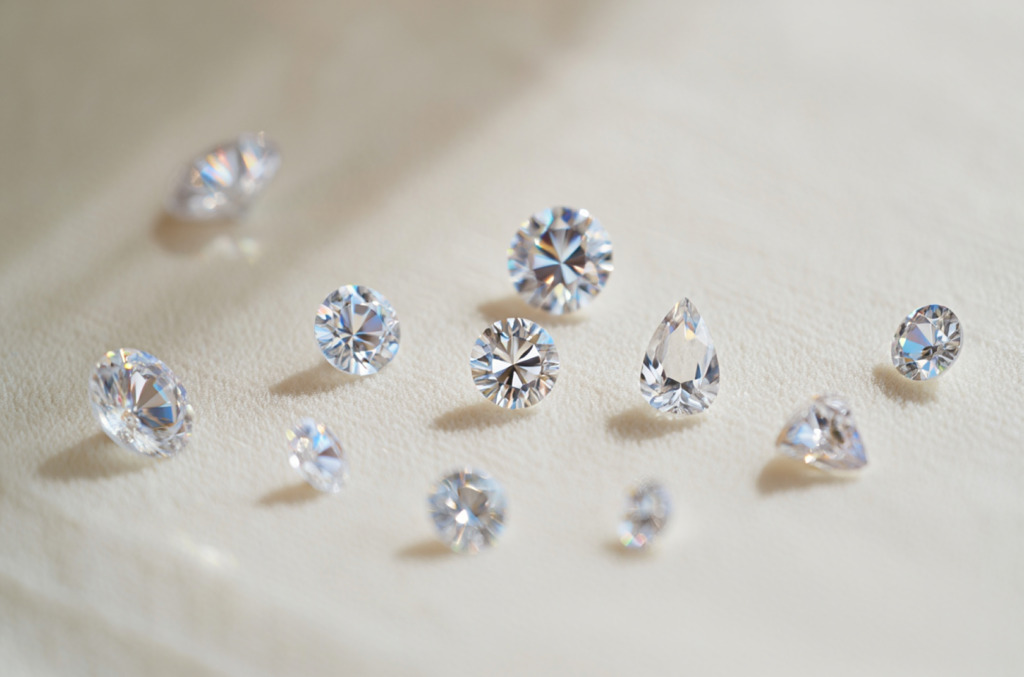
Often confused with shape (that’s the ‘silhouette’, like pear, heart, round etc.), a diamond’s cut refers to its proportions (the angles and sizes of the facets, which help the diamond reflect light) along with its polish (how smooth its surface is, which determines its shine) and its symmetry (how well the shape and facets line up with one another).
When executed to perfection, a well-cut diamond creates three effects: brilliance (white light reflections), fire (flashes of rainbow colour) and scintillation (that iconic sparkle when the diamond moves).
Even a diamond with top-tier clarity, with no inclusions or flaws whatsoever, can look lacklustre if it’s poorly cut. This is why gemmologists often rank cut as the most important of all the 4Cs.
For instance, your natural diamond ring might have flawless clarity but if the princess cut isn’t executed to perfection, the ring won’t turn out to be the looker you would like it to be. That’s not ideal, is it?
The quality of the diamond’s cut often outweighs carat size. You could have a rock of a natural diamond on your finger but if it isn’t cut to precision, it will fail to be at its brilliant best. Indian craftsmanship in terms of diamond cutting and polishing is unmatched. In fact, 90% of the world’s diamonds are handled in India, primarily in Surat.
Certification bodies like IOD and GIA grade cut on a scale from Excellent to Poor3, so it’s easy to know if your diamond is giving main character energy!
Clarity: Nature’s unique fingerprint on every diamond
Because natural diamonds are entirely organic, formed under intense pressure and heat deep within the Earth, it’s quite common for them to have what’s called ‘inclusions’ — internal blemishes or birthmarks.
These features, like small chips, feathering, graining and pinpoints, are the individual birthmarks of a natural diamond, meaning no two are ever the same.
The diamond clarity scale ranges from Flawless (F), where no imperfections are visible under 10x magnification, to Included (I1, I2, I3), where inclusions or flaws are more noticeable.4
Many diamonds graded Slightly Included appear completely flawless to the naked eye, especially once they’re set in a ring or necklace, as their inclusions can only be seen under a microscope.
While clarity can impact price and monetary value, it doesn’t necessarily affect a diamond’s beauty. Natural diamonds with inclusions can still sparkle, and their quirks simply add character. They make them authentic and one-of-a-kind.
So, when it comes to diamond clarity, don’t simply focus on finding ‘perfect’ — instead, look for what appeals to you personally. You’ll know it when you see it!
Colour: The subtle shades that define beauty
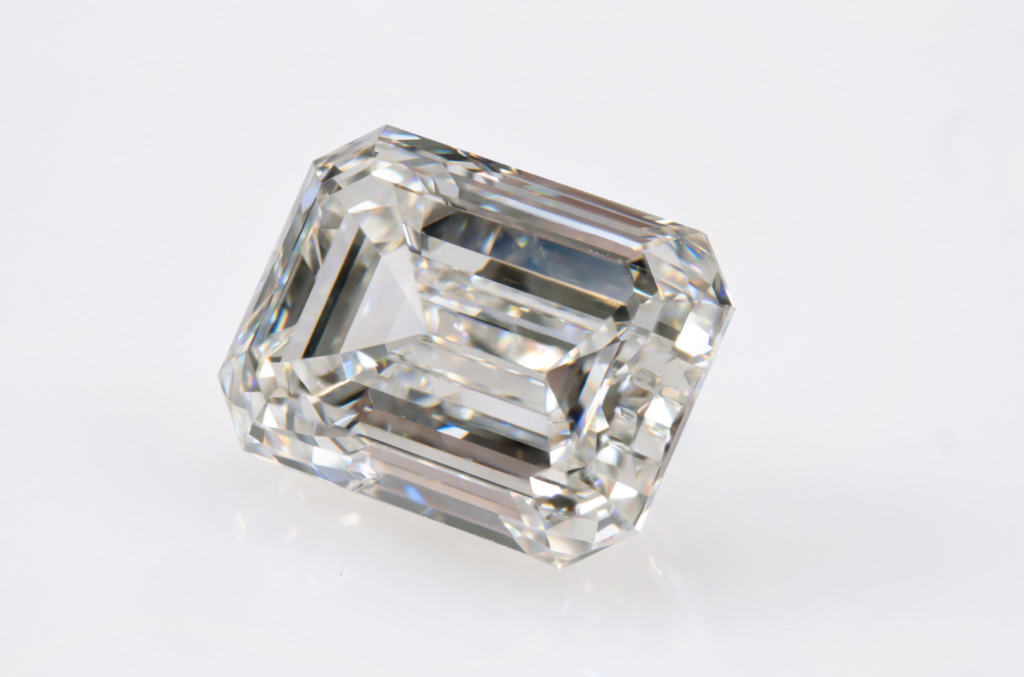
When people think of natural diamonds, they often picture something crystal clear and icy looking. The reality is, the colour of diamonds is a spectrum, and when we talk about diamond colour, we’re often talking about lack of colour. Typically, the less colour a diamond has, the rarer and more coveted it is.
To standardise the way diamond colour is assessed, grading labs developed the D-to-Z colour scale. It has 23 colour grades, starting at D (completely colourless) and ending at Z, spanning a spectrum of diamonds that have tiny hints of cream, ochre, grey or brown.
Evaluating diamond colour isn’t about guesswork; it’s science. Professionals compare each diamond to master stones under controlled lighting conditions to ensure precise grading. And while differences between grades can be incredibly subtle to the untrained eye, they can make a big difference in value. Diamonds that are graded D or near to it are very rare and valuable.5 Meanwhile, those graded G-J are far more accessible.
When buying a natural diamond, colour scale isn’t everything, though. In some settings, near-colourless diamonds ranked G–J can look just as stunning as ones ranked D–F, especially if they’re well-cut. That makes them a great choice for savvy buyers who want show-stopping beauty without eye-watering costs.
In Indian jewellery design, yellow and rose gold have long been cherished for their warmth and radiance — and near-colourless diamonds make the perfect complement. The gentle contrast between the golden hues and the diamond’s cool brilliance enhances both, creating pieces that feel timeless.
And who’s to say that creamier, golden-hued or even brown-coloured natural diamonds aren’t beautiful too? At the end of the day, it’s all down to personal taste.
Then we come to fancy coloured diamonds: these vibrant gemstones fall outside the traditional grading scale. From sunshine yellows to blush pinks and ocean blues, these natural rarities have become the choice of those who like their sparkle with a hint of personality. Even bridal jewellery is embracing the shift — a quiet rebellion against convention, told through colour.
The result of Mother Nature’s fascinating quirks, natural diamonds with colour, often get their unique colour from trace elements present during their formation. Blue diamonds, for example, get their tint from trace amounts of boron.6 Yellow diamonds owe their colour to nitrogen7 and pink diamonds get their colour from structural changes during formation.8
Carat: The diamond’s weight and what it really means
A diamond’s carat can often be mistaken for size; however, it’s actually a measure of weight. One metric carat equals 200 milligrams (about the weight of a paperclip). Ratti, a unit for gauging the weight of diamonds, is unique to India and varies slightly from the concept of a diamond’s carat — one ratti equals 180 milligrams.
For extra precision, each carat is split into 100 points (thus a 0.25ct diamond is called a ‘twenty-five pointer’). That’s why jewellers can describe stones down to the hundredth and even thousandth of a carat.
Due to their turbulent journey from the Earth’s mantle to a recovery site billions of years later, larger carat natural diamonds are very rare. The biggest natural diamond to so far be discovered is the Cullinan Diamond. Discovered in 1905 in South Africa, it weighed a whopping 3,106 carats in rough form.9
Don’t be fooled into thinking that, say, every one carat diamond always looks the same. A diamond’s visual size can vary based on its individual cut and proportions. A shallow cut could make a diamond appear larger on your finger for example, despite it being the same carat as a smaller-looking, deeper cut gemstone.
Diamonds that weigh round numbers, like 0.5, one or two carats, are considered ‘magic sizes’ due to their desirability (saying you have a one-carat diamond versus a 0.98-carat diamond sounds catchier!), but they often come with a hefty price tag.10 Yet a 0.98-carat or 1.99-carat diamond could look nearly identical in size to those pricey full-carat stones while costing less.
Carat preferences can vary greatly across regions — what’s considered a highly desirable natural diamond, in terms of size and weight, in London, for instance might not be as popular in Mumbai. The sentimental weight of occasions can also impact diamond carat preferences. A 1-2-carat solitaire could be ideal for weddings, but if somebody’s choosing to invest in a natural diamond on Dhanteras, their carat preferences may differ.
Much like colour and clarity, carat weight alone doesn’t always guarantee monetary value. Two diamonds of the same weight might differ hugely in price depending on a combination of the other Cs, especially cut. So don’t fall into the ‘bigger is better’ trap! A well-cut, lower-carat gemstone can outshine a heavier one that has a lower grading in the other Cs.
Choosing which of the 4Cs matter most to you
Not everyone shops for a diamond the same way: some are all about the sparkle, some focus purely on visual size, while others look for character. Depending on what you’re after, here are our buying tips…
How to get maximum sparkle on a smaller budget?
Start with an excellent cut. This has the biggest impact on how much your diamond sparkles. Then, opt for near-colourless options in the G–J range on the diamond colour chart, which look virtually the same as higher grades once set. For clarity, consider choosing VS diamonds instead of VVS; they appear just as flawless to the naked eye but offer better value. And if you’re working within a budget, be flexible on carat weight: diamonds just below the ‘magic numbers’ (like 0.90 ct instead of 1.00 ct) deliver the same visual impact at a friendlier price.
How to choose a diamond with unique character?
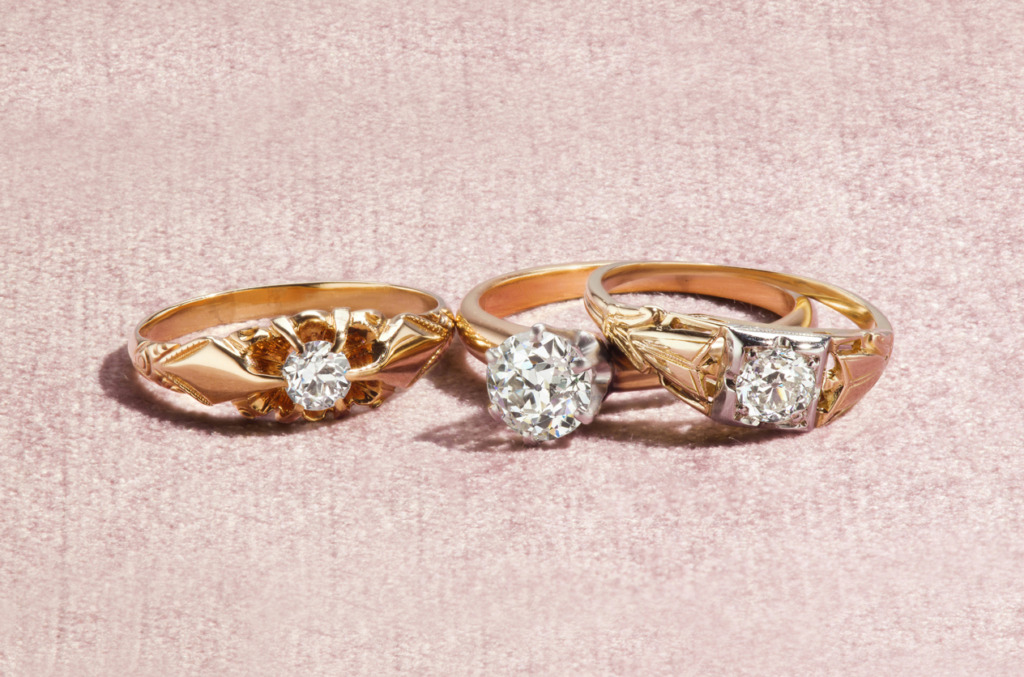
If you’re after something a little different, consider vintage or antique diamond cuts like old mine or rose cuts, which often come with unique visible inclusions (poetically described as ‘nature’s love notes’). A diamond with a one-of-a-kind inclusion or warm tint can make your piece feel super personal and special. Diamond clarity and colour may rank lower here, but does it matter when emotional value gets full marks?
Following your instincts when buying diamonds
Whether you’re celebrating love, honouring a memory, planning a surprise or self-gifting, your choice of natural diamond can reflect your personal style, values and the stories you want to tell. You don’t always need to analyse every detail; sometimes, instinct knows best.
Perhaps your bridal jewellery includes diamond bangles reminiscent of the slender gold ones your grandmother wore on her wedding day. Or maybe Kiara Advani’s pear-cut natural diamond ring, which she flaunted at the 2025 Met Gala, has inspired you to choose a similar silhouette for your own special celebration. Whatever you’re drawn to, let emotion guide you.
For buyers new to the 4Cs, a few tried-and-true combinations make starting your diamond journey easier. A balanced choice is an Excellent cut, G–J colour and VS clarity, which sparkles brilliantly while offering great value. If you prefer to prioritise the brightest hue, go for a Very Good cut with D–F colour and VS clarity (a subtle trade-off in cut grade keeps the stone dazzling). And for those who want near-perfect clarity, an Excellent cut with G–J colour and VVS clarity lets the diamond’s purity shine, even if the tone is slightly warmer. Whatever path you choose, always insist on certification from a trusted gemmological laboratory.
Common misconceptions about the 4Cs explained
If you come away with anything from this guide to the 4Cs, we hope it’s clarity (excuse the pun) on what they mean and a better understanding of how they affect the price, long-term value and visual appearance of natural diamonds.
Whether it’s upselling by a jewellery store or historic (and possibly a little outdated) notions about style and status, there are lots of myths about the 4Cs and what matters when buying a diamond. Let us help you separate fact from fake news…
Size isn’t the only sign of brilliance
While a higher carat weight might sound impressive, size alone doesn’t equal sparkle. A poorly-cut two carat diamond can look pretty dull next to a one carat diamond with an excellent cut. Brilliance, fire and scintillation are all driven by proportions, not just weight.
The beauty of imperfection in natural diamonds
Flawless diamonds are incredibly rare and priced accordingly. But often, inclusions in diamonds graded Slightly Included (SI1 or SI2) or Very Slightly Included (VS1 or VS2) are completely invisible to the naked eye. That means you could still land yourself a diamond that appears flawless without paying the ‘perfect’ premium. The presence of inclusions doesn’t make natural diamonds undesirable. In fact, it makes them more unique.
Why beauty isn’t limited to D-colour diamonds
D-colour is the top of the diamond colour grading scale, sure. But unless you’re comparing it under controlled lighting next to a master stone, you likely won’t spot the difference between a D and a G. Near-colourless diamonds (G–J) can offer also look colourless once set in jewellery, especially when set in yellow or rose gold.
Why the 4Cs tell only part of the story
The 4Cs of diamonds are important to be aware of when buying a diamond, so you’re not confused by industry jargon and understand how gemstones are priced. A diamond’s origin, craftsmanship and story also play a key part in its emotional and long-term value.
Let your knowledge of the 4Cs help you steer clear of myths like carat matters most or that D-coloured diamonds have an unmatched prestige and are therefore the best choice. Remember that the quality of the diamond’s cut can make a huge difference in terms of the diamond’s brilliance and will end up mattering a lot more than how much your natural diamond weighs.
Being a stickler for grading isn’t necessary either — take into considerations aspects like origin and craftsmanship. And never forget that if a natural diamond speaks to you on a deeper, more emotional level, it’s most likely the right choice for you.
Diamonds are far more than numbers on a grading report. Choose one that feels meaningful, aligns with your values and shines in all the ways that matter most to you.
Sources
- Gemological Institute of America, Understanding the 4Cs ↩︎
- Gemological Institute of America, Understanding the 4Cs ↩︎
- Gemological Institute of America, Understanding the 4Cs ↩︎
- Gemological Institute of America, Understanding the 4Cs ↩︎
- Gemological Institute of America, Diamond colour ↩︎
- Carnegiescience.edu, What makes diamonds blue? ↩︎
- Cape Town Diamond Museum, Top 10 facts about yellow colour diamonds ↩︎
- Alldiamond.co.uk, Pink fancy-coloured diamonds explained ↩︎
- Britannica, Cullinan Diamond ↩︎
- Gemological Institute of America, Diamond carat weight ↩︎


