
Choosing an engagement ring rarely starts with a checklist. It begins with a feeling. A ring you notice across the room, an image you keep coming back to, a style that just clicks. From there, things tend to spiral into questions about engagement ring styles and what actually sets them apart.
Because while it all looks effortless, there’s more going on than you might think. Engagement ring styles shape the overall look, whether you lean classic, vintage, or something more modern. Engagement ring settings get into the details. They decide how the diamond is held, how it catches the light and how it fits into real life, not just the proposal moment.
From the most recognizable engagement ring styles to the finer points of engagement ring settings, it’s a clearer way to land on what you actually like and what you’ll love long after the “yes.”
What are the different engagement ring styles?
Consider this your edit of the most defining engagement ring styles. Each one carries its own point of view; some feel rooted in tradition, others lean more modern, but all say something about the person wearing them.
Vintage and antique engagement ring styles
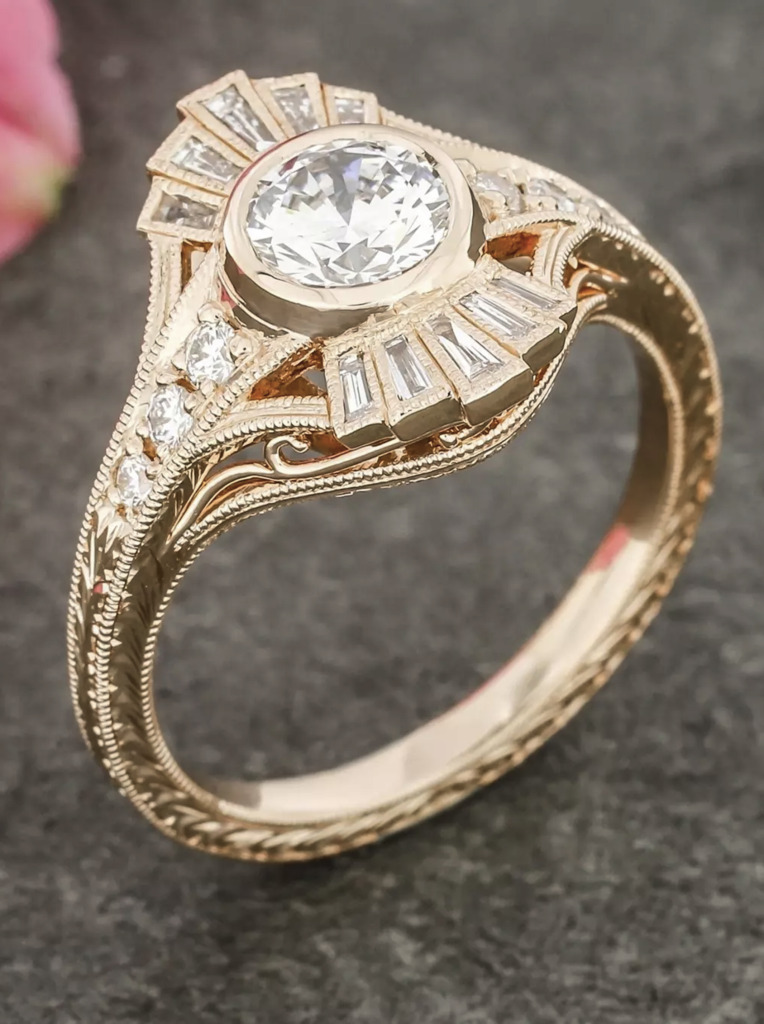
Vintage and antique engagement ring styles come with a built-in sense of character. Milgrain edges, fine filigree and hand-engraved details give them a softness you don’t often see in newer designs, shaped by influences from the Victorian, Edwardian and Art Deco eras.
The definitions are simple. Antique rings are over 100 years old, vintage spans roughly 20 to 99 years, and retro draws on mid-century design, reimagined today.
Many antique pieces were made by hand with diamond cutting techniques that give each natural diamond a less precise, more individual feel. That’s part of the appeal, and why collectors are drawn to them.
A vintage classic
Mary-Kate Olsen’s engagement ring leans fully into vintage design. Thought to date back to the 1950s, it centers on a 4-carat European cut natural diamond, framed by calibre-cut sapphires and intricate detailing. A diamond-set basket and delicate golden petals give the setting a soft, floral edge.
An antique standout
Milla Jovovich chose something far less expected, an antique 19th-century engagement ring set with three diamonds. It’s a clear departure from more classic celebrity styles, leaning instead into something more individual. Set in yellow gold, the ring features three diamonds arranged in a row in pink, yellow and white. Smaller diamonds extend along the band in a soft, leaf-like pattern, adding detail without overwhelming the center.
New nostalgia
Taylor Swift’s ring isn’t antique, but it’s designed to feel like one. Hand-engraved filigree and an old mine-cut natural diamond reflect the shift towards newly made designs with antique character.
That shift is showing up across fashion and interiors, with “vintage maximalism” searches up 260% and “art deco vintage” rising by 805%. As jeweler Stephanie Gottlieb puts it, “antique stones possess a character that is irreplaceable.” Even when newly made, designs like this hold onto that idea.

ADIF tip: Choosing between antique, vintage, retro or antique-inspired comes down to how you want the ring to look and live day to day:
- Antique (100+ years old): one-of-a-kind pieces with true history, often featuring hand-cut natural diamonds and intricate craftsmanship
- Vintage (20 – 99 years): similar character, slightly more refined, with design influences from specific eras like Art Deco or mid-century
- Retro (1940s – 1960s inspired): bolder, more structured styles, often with chunkier settings and a stronger design presence
- Antique-inspired (newly made): the look of an antique ring with modern construction, ideal if you want that detail with more durability
The difference shows in the details, but the decision usually comes down to whether you want something with a past or something new that feels like it has one.
Classic engagement ring styles
Some engagement ring styles don’t shift with trends. They stay relevant because the design is clear, balanced and considered.


The forever favorites
Solitaire settings, pavé bands and round brilliant natural diamonds sit at the core of this look. It’s the symmetry of a round brilliant that gives it that unmistakable light and clarity, which is why it’s remained a constant. As Olivia Landau notes, round brilliants “never go out of style” and don’t rely on trends.
There’s still room to personalize within the classic engagement ring category. Three-stone rings add meaning, traditionally symbolizing a couple’s past, present and future, while halo settings bring extra light without shifting the overall feel.
As they say, you can’t beat the classics. Just look at Camila Mendes’ engagement ring. Set on a classic yellow gold solitaire band, her round brilliant natural diamond feels intentionally understated, letting the gem take center stage without distraction.
These are the styles you don’t have to rethink.

Image: Instagram (@people_styles)
ADIF tip: If you’re choosing a solitaire, prioritize the 4Cs of diamonds, especially cut. A round brilliant should always have an Excellent or Very Good cut, it’s what gives the natural diamond its brightness, fire and that signature sparkle.
One of a kind, by design
Think unconventional silhouettes, east-west settings, mixed metals or asymmetrical designs that shift the entire look. Unique rings often start with the diamond itself. Rose cuts, Asschers, old mine and old European cuts bring a softer, more individual feel, while rarer shapes like trillion, kite or shield cuts add a sharper edge.
Personalization plays a bigger role here. Engravings, heirloom natural diamonds or multi-stone designs all add layers of meaning. It’s less about following tradition, more about creating something that feels entirely your own.
Even the most iconic rings lean this way. Jacqueline Kennedy’s toi et moi engagement ring paired a 2.88-carat diamond with a 2.84-carat emerald, set side by side on a diamond-accented band. It broke from convention at the time, but that contrast is exactly what makes it feel so relevant now.


ADIF tip: Unique designs don’t have to happen all at once. Jacqueline Kennedy reset her ring in 1962, adding diamonds to frame the original gems. The flashier design reflected her new role as First Lady of the United States, showing how a ring can evolve with you over time.
Modern engagement ring styles
Modern engagement ring styles favor clean lines and sculpted shapes, where the design feels sharp, intentional and lets the natural diamond do what it does best.

Sculpted, structured and current
Bezel settings, east-west placements and sleek bands in platinum or white gold define the foundation, but the shift now is in scale. Chunkier gold rings are leading the charge here, with bold, sculpted settings that give the ring a stronger presence. There’s a sense that the metal is doing more, framing the diamond with confidence rather than fading into the background.
That move isn’t just aesthetic. Heavier settings offer durability, something that matters for a piece worn every day. It also comes down to wearability. “People want high style… something minimal with a twist, or bold but can blend with their other pieces,” as jewelry designer Lorraine West puts it.
You see that balance in the details. A bezel-set natural diamond feels clean but protective. An east-west setting shifts a familiar cut into something more unique. Even a thicker band can completely change the tone, making a classic diamond feel more current. These details also make it easier to style alongside your everyday diamond jewelry, something West pointed out as a growing priority.
From Miley Cyrus’ sculptural gold setting to Dua Lipa and Zendaya spotlighting bezel and east-west designs, the shift is clear. Modern styling is about reworking the familiar, adjusting proportion, setting or orientation to reshape how a classic diamond is worn.


Nature and floral engagement ring styles
Some engagement ring styles lean into something softer. Nature-inspired engagement rings take cues from flowers, plants and other elements of nature, think vine-like bands and floral halos that feel almost grown rather than made.

A softer kind of statement
A natural diamond, shaped by nature itself, pairs naturally with floral design. Add filigree, petal motifs or winding bands dotted with diamonds, and the look feels straight out of a botanical garden.
These nature-inspired details often carry meanings such as growth and connection, adding another layer to the design. Floral motifs have been part of fine jewelry for centuries, from ancient designs shaped around lotus flowers and laurel leaves to the more intricate, symbolic styles of the Victorian era.
It also reflects why answers to questions like “do natural diamonds hold value” go beyond price. True value often comes from what a piece comes to represent over time, and what it means to you. Natural diamonds only add to that, formed over millions to billions of years, with a sense of history already built in. And with nature and floral-led designs, that meaning deepens, adding something more unique, with a touch of whimsy and a bit of personality.
There’s range within this style. Some designs lean vintage, others more modern, and even a hint of filigree can shift the tone. Take Katy Perry’ engagement ring, where a vivid ruby is framed by a floral halo of diamonds with delicate milgrain detailing.
This is a style that’s detail-driven, but still easy to wear.

Luxe engagement ring styles
Luxe designs lean into scale, brilliance and detail, from elongated cuts to fancy color diamonds that catch the light from every angle.

More is more, done right
It’s not just about size, it’s about how everything comes together. Craftsmanship, diamond quality and metal choice all play a role in creating that high-impact finish. Even the largest gems can rely on design to reach their full potential. You see it in Georgina Rodríguez’s engagement ring, where an estimated 37-carat center diamond is flanked by two oval side gems, amplifying the scale and adding even more presence.
Elongated cuts, from oval and marquise to more niche shapes like the moval, create a flattering, lengthening line on the finger. They also tend to appear larger than other diamonds of the same carat weight, making them a natural choice for someone who wants to make a statement.
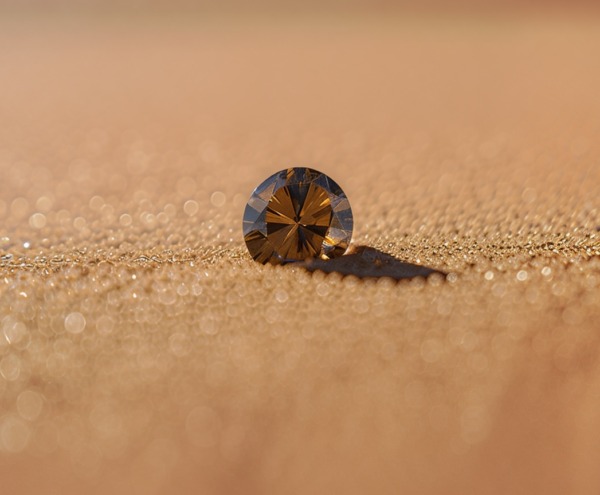
That same desire for something truly luxe carries through in color. Designers are increasingly drawn to fancy color diamonds, particularly softer, champagne and yellow, Desert diamond tones. As Jessie Thomas notes, the contrast between yellow gold and yellow diamonds feels especially soft and striking.
Paired with gold, those warmer tones feel rich, luminous and just a little indulgent, exactly what you want from a luxe design.

What are the most popular engagement ring styles?
Some styles never fall out of favor. Solitaires are still the classic, with round brilliant natural diamonds leading the charge thanks to their unmatched light and symmetry. That said, oval cuts are having a moment, thanks in part to celebs like Hailey Bieber, Jasmine Tookes, Phoebe Dynevor and Molly-Mae.
But there’s a shift happening. Personality is starting to take the lead, with vintage-inspired designs and personalization adding more individuality into the mix. From Camila Mendes’ timeless solitaire to Miley Cyrus’ more sculptural take, every celebrity proposal feels like a reminder that it’s less about following one style and more about choosing what feels like you.

What is an engagement ring setting?
An engagement ring setting is the part of the ring that holds the center diamond or gemstone in place. It’s the foundation, shaping not just how the gem is secured, but the overall look, feel and structure of the ring.
The setting influences everything from sparkle to how the ring wears day to day. And while the design frames the gem, it works hand in hand with the 4Cs of diamonds, which determine how that gemstone actually performs once set.
Types of engagement ring settings
Consider this your breakdown of the most important settings. Each one shapes how a natural diamond sits, shines and wears over time.
High vs. low setting engagement ring
Regardless of style, most engagement rings fall into two profiles: high or low. It’s a subtle detail, but one that completely changes how a ring looks, feels and wears day to day.

High setting
A high setting lifts the center gem above the band, creating space between the diamond and the ring. That extra height allows more light to pass through, which can enhance sparkle and make the diamond appear larger. It also pairs easily with a wedding band, sitting flush without much adjustment.
It’s a concept perfected by the six-prong Tiffany Setting, introduced in 1886, which raised the diamond to maximize light, brilliance and overall presence. Cathedral settings build on this, with arched shoulders that rise up to support the center gem, adding both height and structure.
The trade-off is practicality. Higher settings are more exposed, which means they’re more likely to catch on fabrics or take the impact of everyday wear.
Low setting
A low setting keeps the diamond closer to the band, sometimes sitting almost flush. The result feels more secure, more comfortable and easier to wear every day, especially if you’re hands-on or constantly on the move.
The downside is that with less light reaching the gem, sparkle can feel more subtle. Pairing with a wedding band can also require a curved or custom fit.
Subtle structural details still matter. A gallery rail, the bar beneath the centre stone that connects the prongs, adds extra stability and helps keep everything aligned over time, without changing how the ring looks from above.
The difference, at a glance
Ultimately, it comes down to balance. A higher setting leans into visibility and sparkle, while a lower setting prioritizes wearability and ease.
Through the history of diamond engagement rings, preferences have shifted over time, moving between more elevated, ornate designs and lower, more practical settings.
ADIF tip: Understanding how placement affects light is key. We recommend consulting a diamond clarity guide to see how a setting can change the way your diamond performs.
Engagement ring setting styles chart
A quick breakdown of the details that shape how a ring looks and feels.

How to choose an engagement ring style
Choosing an engagement ring is part instinct, part lifestyle. Start with your personal style; what you already wear is usually the best guide.
Think about daily wear, too. Lower settings or bezel designs suit more hands-on lifestyles, while higher settings allow for more detail. Trying styles on makes all the difference.
Shape and metal also shift the look. Some cuts elongate the finger, while metals like yellow gold or platinum change the overall tone. Don’t forget how it will sit with a wedding band.
There’s also meaning behind it. Engagement rings often overlap with how you’d choose any other diamond gift ideas, chosen as much for what they represent as how they look. And when it comes to proposal planning, the best choice is always the one that feels personal.
Ultimately, go with what feels right.

Finding the one
An engagement ring is never just a piece of jewelry. It holds personal style, shared moments and everything that comes next. The setting, the cut, the details, they all shape the look, but they also shape how the ring fits into everyday life.
Trends will always evolve, from vintage-inspired designs to more modern, sculptural settings, but the right ring doesn’t rely on any of that. Think of this as a starting point, not a rulebook. It comes down to what feels natural to wear, what reflects your style, and what fits into how you live.
That balance between beauty and practicality is what makes a ring last. It’s not just about how it looks now, but how it wears over time, how it feels years later, and how it becomes part of your story.
FAQs
Diamond color shapes the overall tone. Colorless gems feel crisp and classic, while warmer tones suit vintage styles or yellow gold. Fancy colors add an even more expressive edge.
A flawless diamond is rare and highly prized, often elevating more luxe designs. That said, slightly lower clarity grades can look just as beautiful, so it comes down to priorities and budget.
Diamond history still shapes design today. Vintage and classic styles carry that sense of history, adding meaning beyond the ring itself.
Diamond shapes define the look. Round feels classic, cushion leans vintage, while oval and marquise bring a more modern, elongated feel.
Diamond size and value affect proportion and balance. Larger gems stand out in simpler settings, while smaller ones can be enhanced with halo or pavé details.
Sources
- rusticandmain.com/blogs/journal/retro-antique-or-vintage-a-guide-to-timeless-engagement-ring-styles ↩︎
- naturaldiamonds.com/diamond-engagement-rings/natural-diamond-rings/antique-engagement-rings/ ↩︎
- taylorandhart.com/blog/mary-kate-olsen-engagement-ring-design/ ↩︎
- laurelleantiquejewellery.com/blogs/our-blog/celebrities-who-opted-for-an-antique-engagement-ring/ ↩︎
- elledecor.com/celebrity-style/a65910071/vintage-style-trend-2025/ ↩︎
- whowhatwear.com/uk/timeless-engagement-ring-trends/ ↩︎
- 4cs.gia.edu/en-us/blog/how-to-select-round-diamond-engagement-ring/ ↩︎
- people.com/jackie-kennedy-engagement-ring-everything-to-know/ ↩︎
- people.com/jackie-kennedy-engagement-ring-everything-to-know/ ↩︎
- nationaljeweler.com/articles/14726-engagement-ring-trends-2026-what-s-in-and-why/ ↩︎
- naturaldiamonds.com/engagement-rings/floral-ring-guide/ ↩︎
- taylorandhart.com/blog/katy-perry-engagement-ring/ ↩︎
- voguearabia.com/article/georgina-rodriguez-engagement-ring-according-to-a-jewellery-expert/ ↩︎
- naturaldiamonds.com/engagement-rings/elongated-diamond-cuts/ ↩︎
- thezoereport.com/fashion/2026-engagement-ring-trends/ ↩︎
- theknot.com/content/the-knot-engagement-ring-stats/ ↩︎
- taylorandhart.com/ring-guidance/engagement-ring-settings/ ↩︎
- tiffany.com/engagement/engagement-rings/platinum-diamond-engagement-rings/ ↩︎
- sohadiamondco.com/blogs/education/12-parts-of-an-engagement-ring-anatomy-common-terms/ ↩︎
- shop.kenanddanadesign.com/pages/high-set-rings-vs-low-set ↩︎
- kenanddanadesign.com/pages/high-set-rings-vs-low-set/ ↩︎
- sohadiamondco.com/blogs/education/12-parts-of-an-engagement-ring-anatomy-common-terms/ ↩︎


