
Answer
Fancy color diamonds are natural diamonds with a deeply saturated color that falls outside the traditional D-to-Z color scale. Their hues can include pink, blue, green, yellow, orange, purple and exceptionally rare, red, with color created by trace elements or changes in the diamond’s crystal structure during formation. The GIA grades them according to hue, tone and saturation, with the strength and purity of their color playing a major role in value.
Key takeaways
Natural diamonds can reveal color in extraordinary ways, and fancy colored diamonds are among the rarest examples. Found in saturated pinks, blues, greens, yellows and reds, they sit beyond the traditional D-to-Z diamond color scale.
Only one in 10,000 diamonds displays fancy color, making these naturally colored diamonds exceptionally rare. And when that color reaches the most intense grades, rarity increases again: GIA estimates that only one in every 25,000 diamonds displays intense color.
And while the traditional 4Cs of diamonds (that’s cut, clarity, carat and color) still all matter, fancy color diamonds are valued slightly differently to those that fall within the D-Z scale, which covers colorless to light yellow, brown and gray hues. In these diamonds, intensity and evenness of color can matter more than clarity or size, for example.
What is a fancy color diamond?
A fancy color diamond is one that shows noticeable saturated color beyond the typical white or near-colorless range. While most diamonds are graded on how little color they have on a diamond color chart from D (completely colorless) to Z (Desert diamonds (opens in a new window) in shades from Sunlit White diamonds (opens in a new window) to Sunset Brown diamonds (opens in a new window)), fancy color diamonds fall outside that realm altogether. But instead of being seen as flaws, these colors are the main attraction.
The GIA, which sets the standard for diamond grading, looks at three things when they assess a fancy color diamond. The diamond’s hue (the spectral color, such as blue or violet), its tone (how light or dark it is) and its saturation (how intense the color appears).
It’s worth noting that not all colored diamonds are natural. Color can be introduced into a diamond through treatments such as irradiation or high-pressure high-temperature (HPHT) processing, and lab-grown diamonds can also be produced in specific colors by controlling trace elements during growth.
Natural fancy color, by contrast, forms over billions of years through geological processes that can’t be replicated or accelerated. This is why certification matters: a GIA grading report confirms whether a diamond’s color is natural or treated. When in doubt, checking that you’re buying a real diamond (opens in a new window) with verifiable natural color is always the right first step.
Color intensity matters significantly to value. A Fancy Vivid diamond commands dramatically higher prices than a Fancy Light of the same size and origin. The jump isn’t subtle. At auction, Fancy Vivid grades can be worth multiples of equivalent Fancy grades, because that depth of natural color is extraordinarily rare.
Understanding the fancy color grading system
The fancy color grading system focuses on how visible and intense the diamond color (opens in a new window) is. The GIA use nine main grades to describe the depth and richness of color:
- Faint: barely noticeable color
- Very Light: a soft wash of color
- Light: more obvious, but still subtle
- Fancy Light: a clearly visible color, though not deep
- Fancy: a medium strength color
- Fancy Intense: a strong color
- Fancy Vivid: a bright, bold and highly saturated color (the most valuable)
- Fancy Deep: rich, darker tones of a color with less saturation
- Fancy Dark: a saturated color combined with a darker tone
Perhaps unsurprisingly, in this part of the diamond market, the value of diamonds often rises with a diamond’s intensity and uniformity of color. For example, a Fancy Vivid pink diamond is typically worth much more than a Fancy Light pink of the same size and clarity simply because the color ‘pops’ more.
What gives fancy colored diamonds their vibrant hues?
Despite their rarity, natural diamonds are found in a surprising range of colors, including yellow, brown, pink, blue, green, orange, purple, gray and red (the rarest of them all). Most diamonds also show what’s known as ‘secondary hues’ or modifiers, which are graded with two descriptors, e.g. orangey-pink or greenish-blue which add depth and nuance to their beauty. Those fancy color diamonds without modifiers are rarer still.
Where does diamond color come from?
A mix of trace elements, natural irradiation and intense geological conditions are responsible for the different elements or distortions in a diamond’s crystal structure that create each color.. For example:
- Nitrogen causes yellow or brown hues by absorbing violet blue light. These colors are among the more ‘common’ fancy diamonds and can be incredibly beautiful when deeply saturated.
- Boron produces blue diamonds by absorbing deep red light. The presence of boron can create extraordinary blue hues seen in some of the world’s rarest diamonds.
- Natural irradiation over the course of millions of years can turn the surface of a diamond green by altering its atomic structure, though intense green diamonds are exceptionally rare.
- Stress-induced distortions deep in the Earth’s mantle can cause a slip in the diamond’s crystal lattice, on an atomic scale, resulting in brown, pink or red tones. These are some of the most sought-after fancy diamonds around. Pure red diamonds are exceptionally rare.
Rare and exotic diamond colors
Rarity, intensity and provenance combine to determine which hues are most coveted and most valuable. Here’s what sets each one apart:
Red diamonds
The rarest diamond color of all. Fewer than 30 true red diamonds are known to exist anywhere in the world, and most weigh under one carat, proving that color in this instance is the dominant value factor. Their color comes from plastic deformation of the crystal lattice (the same mechanism as pink diamonds, but at a far more extreme degree). The Moussaieff Red, at 5.11 carats, is the largest known red diamond ever certified by the GIA and appeared in the Smithsonian’s 2003 Splendor of Diamonds exhibition. It was discovered in the Argyle Mine in Western Australia, which closed in 2024, making existing specimens even more significant..
Blue diamonds
Blue diamonds owe their color to boron, a trace element so scarce in the Earth’s mantle that its presence in a diamond is genuinely anomalous. They belong to the Type IIb classification, representing less than 0.1% of all natural diamonds. The 45.52-carat Hope Diamond, currently held at the Smithsonian Institution, is the most famous example: deep blue, historically cursed according to legend, and priceless by any modern valuation.
Green diamonds
Natural green diamonds are colored by radiation, specifically, exposure to uranium or thorium in surrounding rock over millions of years, which displaces carbon atoms and creates light-absorbing vacancies in the lattice. Crucially, this radiation often affects areas close to the surface of the diamond, meaning cutters may work carefully to preserve evidence of its natural color. Many ‘green’ diamonds on the market have been treated to introduce color artificially; a grading report confirming natural color origin is particularly important when buying a green diamond. The 41-carat Dresden Green, held in Saxony’s Green Vault, is one of the largest and finest naturally green diamonds ever found.
Pink diamonds
Pink diamonds are among the most sought-after at auction and in private diamond jewelry collections. Their color is caused by plastic deformation during formation. These are structural distortions in the crystal lattice that alter how light is absorbed. The Argyle Mine in Western Australia was responsible for over 90% of the world’s pink diamond supply before its 2024 closure, which has driven prices for existing specimens sharply upward. The Pink Star, a 59.60-carat Fancy Vivid pink, set the world auction record for any gemstone when it sold for $71.2 million at Sotheby’s in 2017. Lily Collins’ pink-hued rose-cut natural diamond engagement ring, designed by Irene Neuwirth, is a modern example of how distinctive color and an unusual cut can work beautifully together.
Orange diamonds
Orange diamonds are rarer than most buyers expect. Pure orange (without brown or yellow modifiers) is among the most difficult natural colors to achieve. The cause is a combination of nitrogen and structural defects in the lattice. The Pumpkin Orange, a 5.54-carat Fancy Vivid orange purchased by Harry Winston and worn by Halle Berry at the 2002 Academy Awards, remains one of the most famous examples. Pure orange at high intensity can command prices comparable to blue, making it an increasingly serious collector category.
Purple diamonds
Purple diamonds are exceptionally rare and not fully understood scientifically. Their color is thought to result from plastic deformation combined with hydrogen impurities, though the exact mechanism remains a subject of gemological research. Most purple diamonds originate from Siberia’s Mir Mine or Australia’s Argyle Mine. True purple without modifying red or pink tones is extremely scarce; the Supreme Purple Star, an estimated 2 to 5 carats and one of the most remarkable gems in private circulation, is thought by some experts to be the finest known example — though it has never been publicly auctioned or certified.
Yellow and champagne diamonds
Yellow diamonds are the most commercially available of the fancy colors, caused by nitrogen atoms that absorb blue and violet light. Fancy Light grades are subtle and warm; Fancy Vivid (think the 128.54-carat Tiffany Yellow Diamond) is an intense canary that commands serious premiums.
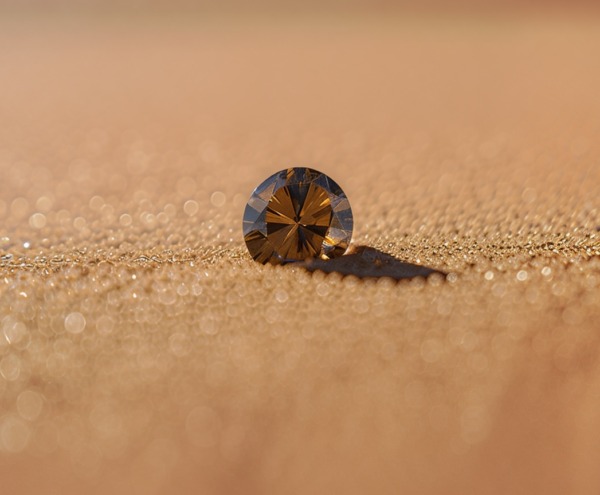
Champagne diamonds share the same nitrogen-and-pressure origin but lean warmer, into golden-brown Desert diamond shades. Their earthy warmth has made them increasingly desirable to buyers who want something distinctive. Scarlett Johansson’s toffee-colored Desert diamond engagement ring is one memorable celebrity example of the warm, earthy tones that make these natural diamonds so distinctive.
Why fancy color diamonds are rare and valuable
It’s all down to the conditions they were created in millions, if not billions, of years ago. Fancy color diamonds are incredibly rare because the geological conditions needed to produce visible, vibrant color happen in only a small – tiny even – fraction of natural diamond formations. According to GIA, only one in 10,000 diamonds shows enough natural color to be classified as ‘fancy’ and fewer than one in every 25,000 diamonds reach the level of intensity required for higher grades.
Understandably, value is closely tied to this scarcity and recent auctions suggest collector demand is anything but waning. Take major recent sales like the 15.51-carat Fancy Vivid Yellow diamond ring that sold for $1.1 million at Phillips, or the Fancy Pink diamond weighing 5.03 carats which achieved $2.9 million at Bonhams.
Some of the most famous diamonds in history are fancy colored, including the Hope Diamond, a 45.52-carat deep blue diamond, which is one of the most famous examples; the Dresden Green, weighing an impressive 41 carats and one of the few natural green diamonds of that size ever discovered; and the Graff Pink, a 24.78-carat Fancy Intense pink, sold for an incredible $46 million in 2010.


Are fancy color diamonds a good investment?
Fancy color diamonds are exceptionally rare, which has made them particularly sought-after among collectors looking for long-term value. Exceptional examples have achieved significant prices at auction, particularly when color, size and provenance align.


But that doesn’t mean every colored diamond is a guaranteed investment. There are often other factors at play too, such as the individual characteristics of the diamond, its size, certification, provenance and market demand, which can all play a role in determining its overall value. Every natural diamond is one-of-a-kind, with characteristics shaped by its unique journey to the surface. For anyone considering a fancy color diamond, independent grading and provenance are both worth paying close attention to.
Choosing a fancy colored diamond
When it comes to buying a fancy colored diamond, it’s helpful to look beyond color (although color is naturally a major part of their appeal. Here’s what to consider:
- Get a report. Always choose diamonds graded by a reputable authority like the GIA. This confirms the color is natural, as well as detailing the diamond’s hue, intensity and origin.
- Prioritize color intensity. The more saturated and evenly distributed the color, the more valuable the diamond tends to be, as a rule.
- Factor in shape and size. Certain cuts, including radiant cuts, can help intensify the appearance of color, while shapes such as cushion and oval can also showcase color beautifully. Larger diamonds with strong color are significantly rarer, too.
- Verify origin and provenance. Ask what documentation is available to verify the diamond’s provenance and confirm its natural color origin.
- Choose with meaning. Rather than following trends, try to pick a diamond that reflects your personal style, or marks a meaningful milestone in a way that feels ‘you’. That way, you won’t regret your purchase, even if the market fluctuates.


Fancy colored natural diamonds are much more than just a high-value investment or an eye-catching trend to jump on board with. Their extraordinary rarity and vivid natural color give them an appeal that goes well beyond passing trends, whether you’re drawn to pink, blue, yellow or the warm tones of a Desert diamond.
FAQs
Are fancy color diamonds natural or treated?
Fancy color diamonds can be natural or treated. In a natural diamond (opens in a new window), color develops during formation through trace elements, natural radiation or changes in the crystal structure. Some diamonds are treated after mining to alter or enhance their color, which is why an independent grading report confirming natural color origin matters.
How are fancy color diamonds graded?
GIA assesses fancy color diamonds (opens in a new window) according to hue, tone and saturation. The resulting diamond color grade describes the strength and appearance of the color, with classifications including Fancy Light, Fancy, Fancy Intense and Fancy Vivid.
What is the rarest fancy diamond color?
Red is considered the rarest fancy diamond color, with pure natural red diamonds exceptionally scarce. For anyone investing in diamonds long term (opens in a new window), rarity can influence desirability and value, but color intensity, size, quality, provenance and purchase price should also be considered.
Fancy color diamonds vs. colorless diamonds: what’s the difference?
Colorless natural diamonds are graded on the D-to-Z scale according to the relative absence of color, while fancy color diamonds are prized for the presence and intensity of color. When looking at colorless natural diamonds and how they compare (opens in a new window) to fancy color diamonds, the key distinction is that less color is often considered rarer, and therefore more valuable, in the former, while stronger color can increase the rarity and value of the latter.
Are lab-grown fancy color diamonds real?
Certified lab-grown diamonds (opens in a new window) are manufactured in controlled environments and can be produced in a range of colors. Adding color in a laboratory environment may provide more options but it removes the rarity and value of color in diamonds when compared to the saturated color found naturally in real diamonds. Natural fancy color diamonds form deep within the Earth, where rare geological conditions create their color over immense periods of time, while lab-grown diamonds are manufactured rapidly and can be produced repeatedly.
What should I look for when buying a fancy color diamond?
Look for independent grading that confirms natural color origin, then consider hue, intensity, cut and provenance. The most prized colors include pinks, blues, greens, and reds; in fancy color diamonds, color is always the dominant marker of value. Diamond cutters have also discovered that mixed cut diamonds can intensify yellow color diamonds when viewed from the top (opens in a new window). When considering how natural diamonds hold value (opens in a new window), rarity and quality are important factors, particularly with exceptional fancy color diamonds. Ultimately, choose a diamond whose color and character you’ll want to live with for years to come.
Sources
- https://www.diamonds.pro/education/fancy-color/ ↩︎
- https://www.gia.edu/fancy-color-diamond/buyers-guide/ ↩︎
- https://www.gia.edu/gia-news-research/value-factors-design-cut-quality-colored-gemstone-value-factors/ ↩︎
- https://www.diamondportfolio.com.au/investor-centre/what-to-buy/pink-diamond/ ↩︎
- https://www.leibish.com/en-gb/blogs/diamonds/what-are-the-rarest-diamond-colors ↩︎
- https://www.naturallycolored.com/diamond-education/colored-diamonds-color-combinations/ ↩︎
- https://www.sothebys.com/en/articles/how-colored-diamonds-get-their-hue/ ↩︎
- https://www.gemsociety.org/article/most-expensive-diamond-colors-with-prices/ ↩︎
- https://www.gemsociety.org/article/most-expensive-diamond-colors-with-prices/ ↩︎
- www.capetowndiamondmuseum.org/fancy-color/red-diamonds/ ↩︎
- www.carnegiescience.edu/news/what-makes-diamonds-blue-boron-oceanic-crustal-remnants-earths-lower-mantle ↩︎
- www.gia.edu/gems-gemology/spring-2018-natural-color-green-diamonds-beautiful-conundrum ↩︎
- www.naturaldiamonds.com/historic-diamonds/ctf-pink-star-diamond/ ↩︎
- www.naturaldiamonds.com/science-of-diamonds/pumpkin-diamond/ ↩︎
- www.naturaldiamonds.com/science-of-diamonds/purple-diamonds/ ↩︎
- www.leibish.com/blogs/diamonds/the-supreme-purple-star-the-king-of-all-purple-diamonds/ ↩︎
- https://www.gia.edu/gia-news-research-worlds-fascination-fancy-colored-diamonds/ ↩︎
- https://galeriemagazine.com/auction-yellow-diamond/ ↩︎
- https://www.bonhams.com/press_release/26579/ ↩︎
- https://www.naturaldiamonds.com/historic-diamonds/diamond-color-famous/ ↩︎
- Gemological Institute of America (GIA), “Understanding Diamond Treatments”, https://4cs.gia.edu/en-us/diamond-treatments/ (opens in a new window), accessed 15 September 2026.


