
Answer
Before buying a diamond necklace, decide how you want to wear it, then consider the style, length, setting and budget. For the diamonds themselves, use the 4Cs of cut, color, clarity and carat weight to compare quality. If the necklace has a significant center diamond, ask for an independent grading report. For multi-diamond designs, check the total carat weight rather than assuming it refers to each diamond.
Key takeaways
What are the different types of diamond necklaces?
Diamond necklaces range from pendants to designs that place diamonds around the neckline. The main styles include solitaire and halo pendants, tennis necklaces, station necklaces, and layered designs.

Credit: @JadeTrau (Instagram)
Pendant styles
A solitaire pendant suspends a single diamond from a chain, making it an easy everyday option. A halo pendant frames a center diamond with smaller diamonds for added sparkle. Pendants can also be completely bespoke, using diamonds to create a multitude of designs ranging from simple initials to personal motifs such as hearts, horseshoes or lucky clovers.
Necklace styles
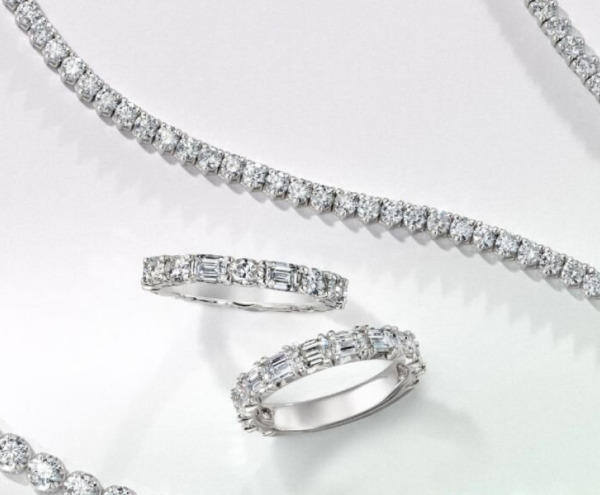
Tennis and station necklaces spread their diamonds along the length of the chain, so the sparkle travels with you rather than resting in one spot. Tennis necklaces set diamonds side by side, creating a continuous line, while station necklaces space diamonds along a fine chain and work particularly well in layered looks.
Chain and setting types
Chain and setting choices affect how a diamond necklace looks, sits and wears. Fine cable and curb chains keep the focus on a pendant, while more substantial chains become part of the design. Prong settings expose more of the diamond, while bezel settings surround its edge with metal for a clean, secure finish.

What diamond shapes are trending in necklace design?
Emerald, pear and mixed diamond styles are bringing more personality to necklace design in 2026. At the VMAs, Dakota Johnson updated her Messika High Jewellery diamond collar with an estimated four-to-five-carat emerald-cut diamond (opens in a new window) pendant. At the Oscars, Anne Hathaway’s Bvlgari necklace centered an 8.02-carat pear-shaped yellow diamond among pear, round and step-cut diamonds.
That individuality translates easily to everyday diamond jewelry (opens in a new window). Vogue Business reports a growing appetite among younger consumers for pieces that feel meaningful and expressive. A pear, oval or emerald-cut natural diamond pendant is one way to make a classic solitaire feel more personal, while mixed shapes can give tennis and station necklaces a less uniform look.

Credit: @Bvlgari (Instagram)
The 4Cs: at a glance
For a pendant, cut has a particularly visible impact on how the diamond interacts with light. Color and clarity can be balanced against budget, while carat weight measures weight, not how large a diamond looks. Its proportions also influence its face-up size.
Reading a grading report
For a necklace with a significant center diamond, ask whether it has an independent grading report confirming its natural origin and quality. For tennis and other multi-diamond necklaces, ask what quality documentation is provided for the finished piece and how the smaller diamonds were screened for natural origin.
How do buyers assess diamond quality?
Quality should be judged in the context of the necklace. A solitaire puts one natural diamond firmly in focus, while tennis and station necklaces also depend on how consistently the diamonds are matched.

Credit: @JadeTrau (Instagram)
What should buyers avoid when purchasing a diamond necklace?
Don’t focus on the diamonds and overlook the necklace itself. Check that the settings hold each diamond securely, that the chain sits smoothly and that the clasp closes securely. For an everyday necklace, consider whether the weight, length and setting feel comfortable enough for all-day wear.

FAQs
What necklace length is best?
The best necklace length depends on where you want the diamond to sit. Shorter chains keep a pendant closer to the collarbone, while longer lengths place it lower on the chest and can work well for layering. Consider the neckline you wear most often and where you want your natural diamond (opens in a new window) to fall.
How important is diamond certification?
For a necklace with a significant individual diamond, an independent grading report provides important information about its natural origin and quality. It records characteristics including the 4Cs of diamonds (opens in a new window), while documentation for multi-diamond necklaces can vary depending on the size and setting of the diamonds.
What metals pair best with diamonds?
Platinum and white gold create a bright setting that keeps the focus on the diamonds, while yellow and rose gold bring warmer contrast. The right choice comes down to personal style, durability and how the metal works with the diamonds, particularly their color.
Are diamond necklaces good gifts?
Yes. A natural diamond necklace can mark anything from a birthday or anniversary to a personal milestone, and unlike a ring, there is no sizing guesswork beyond choosing the chain length. They’re also easy to personalize, making them a great diamond gift idea (opens in a new window) for those who love unique or bespoke pieces.
Sources
- Gemological Institute of America (GIA). “5 Things to Ask Your Jeweler Before Buying a Diamond.” https://4cs.gia.edu/en-us/blog/5-things-to-ask-your-jeweler-before-buying-a-diamond-3/ (opens in a new window), accessed 1 October 2026.
- The Diamond Collective, “A Diamond Necklace for Every Style and Occasion”, https://thediamondcollective.world/diamond-jewelry/diamond-necklace-for-every-style-and-occasion/ (opens in a new window), accessed 1 October 2026.
- Gemological Institute of America (GIA). “GIA Guide to Engagement Ring Settings”, https://4cs.gia.edu/en-us/blog/guide-to-ring-settings/ (opens in a new window), accessed 1 October 2026.
- ELLE “The Story Behind Dakota Johnson’s Spectacular $350,000 VMAs Diamond Collar”, https://www.elle.com.au/fashion/dakota-johnson-diamond-necklace-vmas-expert-details (opens in a new window), accessed 2 October 2026.
- Vogue “Holy Diamonds! The 21 Best Jewelry Moments at the 2026 Oscars”, https://www.vogue.com/slideshow/2026-oscars-best-jewelry-moments-diamonds (opens in a new window), accessed 2 October 2026.
- Vogue Business “What does Gen Z want from jewellery?”, https://www.vogue.com/article/what-does-gen-z-want-from-jewellery (opens in a new window), accessed 2 October 2026.
- Gemological Institute of America (GIA). “Quality is in the Cut”, https://4cs.gia.edu/en-us/diamond-cut (opens in a new window), accessed 2 October 2026.
- Gemological Institute of America (GIA). “The Weight of Precision”, https://4cs.gia.edu/en-us/diamond-carat-weight (opens in a new window), accessed 2 October 2026.
- Gemological Institute of America (GIA). “Jewelry Reports” https://www.gia.edu/gem-lab-service/jewelry-report-service (opens in a new window), accessed 2 October 2026.


