
The steps of the Metropolitan Museum of Art have seen a lot. Sculptural gowns that look like they belong in a gallery. Looks that sparked conversations about gender, power and identity. And Met Gala jewelry that told stories reaching back centuries with natural diamonds pinned, layered and draped with as much intention as the garments they accompanied. Every first Monday in May, the world watches fashion do what it has always done best: speak volumes.
This year, the Met Gala theme, “Costume Art”, makes the argument of whether or not fashion can be classified as art explicitly. Fashion is art. The body is the canvas. And for those who understand how natural diamonds function on a red carpet, 2026 is a particularly significant moment.
But to understand why this year matters, it helps to know how the whole thing began.
How did the Met Gala start?
The Met Gala, formally called the Costume Institute Benefit, has a more modest origin than its current spectacle suggests. Fashion publicist Eleanor Lambert founded it in 1948 as a fundraiser for the Metropolitan Museum of Art’s newly established Costume Institute.
The Costume Institute itself has an origin story of its own. Irene Lewisohn was a New York philanthropist who, with her sister Alice, helped found the Neighborhood Playhouse School of the theatre. It was here she met Aline Bernstein, a pioneering set and costume designer who became the first woman admitted to the United Scenic Art Union. Both believed costume was a serious art form.
In 1937, they organized the Museum of Costume Art on Fifth Avenue; Bernstein served as its first president. By the time of its merger with the Met in 1946, the collection had grown from 493 garments to approximately 8,000. The Costume Institute’s research library still bears Lewisohn’s name today.
Because it was the only curatorial department at the Met required to fund its own operations, the Gala was the lifeline from the start (though for its first two decades it bore little resemblance to what it would become). Venues like the Rainbow Room at Rockefeller Center hosted what was essentially a high-society charity dinner. That changed in the early 1970s.

Why does the Met Gala have a theme?
Diana Vreeland and the birth of the dress code
When Diana Vreeland, former editor of American Vogue, joined the Costume Institute as a consultant in 1972, she transformed the event’s DNA. She moved it into the Met itself, introduced more elaborate decor and, most significantly, created the practice of matching the evening’s theme to the museum’s annual exhibition.
The first themed Gala came in 1973, honoring “The World of Balenciaga”. Early themes such as “Romantic and Glamorous Hollywood Design”, “Vanity Fair: A Treasure Trove” and “La Belle Époque” drew from cultural history rather than spectacle. Vreeland also opened the guest list to Met Gala celebrities: Elizabeth Taylor, Andy Warhol, Bianca Jagger, Diana Ross, Cher. The event became a party rather than a dinner. Fashion became entertainmentvii. As Vreeland herself once put it: “Fashion must be the most intoxicating release from the banality of the world.”

Anna Wintour and the modern era
Anna Wintour took over as chair in 1995, moving the Gala from December to the first Monday of May and systematically elevating the ambition of its themes. Under her stewardship, the Gala became what it is today: an invitation-only event capped at roughly 650 to 700 guests, with individual tickets now priced at $75,000 and tables starting at $350,000x. In 2025, it raised nearly $31 million in a single evening – a new fundraising record for the Costume Institute.
The theme isn’t just atmosphere, it’s a directive. Guests are expected to respond to it, and the best looks in Met Gala history are the ones that understood exactly what they were saying. Not everyone thinks the shift toward full theatrical dressing is a triumph. Designer Tom Ford has been characteristically direct, saying, “The only thing about the Met that I wish hadn’t happened is that it’s turned into a costume party. [It] used to just be very chic people wearing very beautiful clothes going to an exhibition”. It’s a fair observation and yet the looks that genuinely engage with a theme, rather than simply perform it, remain the ones that endure.

How Met Gala themes evolved
From tuxedos to theatrical dressing
For much of its history, the Met Gala was attended in ball gowns and black tie. The exhibition theme informed the décor, not the dress code. That began to shift in 2004, when “Dangerous Liaisons: Fashion and Furniture in the 18th Century” invited guests toward more elaborate, costume-driven interpretation. Amber Valletta’s Marie Antoinette-meets-punk look, which paired a nude corset by Maggie Norris Couture with an 18th-century hairstyle became a marker for what Met Gala fashion could be when guests really committed.


The themes that defined a generation
From there, ambition grew. “Punk: Chaos to Couture” in 2013. “China: Through the Looking Glass” in 2015. “Heavenly Bodies: Fashion and the Catholic Imagination” in 2018, which drew 1.65 million visitors, becoming the most successful Costume Institute exhibition in history. “Camp: Notes on Fashion” in 2019. Each theme pushed Met Gala outfits further, transforming fashion from entertainment to fashion as argument, concept and cultural commentary.


The 2026 Met Gala theme explained: what is “Costume Art”?
This year’s Met Gala 2026 show, curated by British art curator Andrew Bolton, places fashion in direct dialogue with more than 5,000 years of art from the Met’s own collection. Paintings, sculptures and antiquities will be presented alongside historical and contemporary garments. “What connects every curatorial department and what connects every single gallery in the museum is fashion, or the dressed body,” says Bolton. “It’s the common thread throughout the whole museum.”
The goal, as Bolton describes it, is not hierarchy but equivalency. “When you juxtapose a garment with an artwork, another meaning comes about. Something else happens. It’s as if one plus one equals three.” The Costume Art Met Gala exhibition opens on May 10 and runs through January 2027. It will be the inaugural show in the Met’s new Condé Nast Galleries, a nearly 12,000-square-foot space that becomes the permanent home of the Costume Institute’s annual spring show.
The dress code: “Fashion Is Art”
Guests are encouraged to wear garments that could stand as art in their own right. These could be pieces made in collaboration with visual artists, archival works referencing a specific movement, or new creations that use the body as a living canvas. Expect silhouettes drawn from art history, artist collaborations and antique diamond styles worn with the same intention as the clothes they accompany. As Bolton puts it, the aim is to “put an end to the rather obsolete ‘Is Fashion Art?’ debate once and for all.”
The best natural diamond jewelry looks at the 2026 Met Gala
Natural diamonds dominated the 2026 Met Gala red carpet and were the conceptual anchor of some of the night’s most considered looks. From Golconda provenance to diamonds sewn into fabric, here are the standout moments.
Beyoncé’s Met Gala 2026 jewelry: Chopard Queen of Kalahari necklace
Beyoncé’s return to the Met after a decade away was always going to draw attention; the diamond jewelry matched the moment. She wore Chopard’s Queen of Kalahari necklace, named after a 342-carat rough diamond that yielded 23 gems for the Garden of Kalahari collection. Jay-Z completed the look with a vintage natural diamond brooch by Briony Raymond, worn at the collar rather than the lapel.


Rihanna’s Met Gala 2026 Desert diamonds: Glenn Spiro Golconda earrings
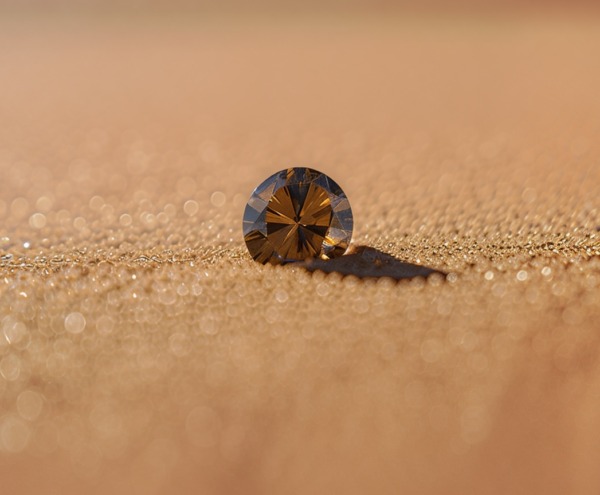
Rihanna set the tone for the Desert diamonds trend early. She wore old Moghul Golconda fancy brown-yellow diamond earrings by Glenn Spiro: two pear-shaped natural diamonds totaling 51.9 carats, from the same historic Indian region that produced the Hope Diamond and the Koh-i-Noor. The choice brought centuries of diamond provenance directly onto the “Costume Art” carpet.


Doja Cat’s Met Gala 2026 diamonds: Leviev Diamonds floral earrings
Doja Cat’s 2026 Met Gala look was a study in deliberate restraint. The Saint Laurent nude latex gown (hooded, draped and completely monochromatic down to her shoes and nails) created a canvas with nowhere to hide. Against that, her Leviev Diamonds floral-shaped earrings in warm-toned natural Desert diamonds were the only point of contrast on the entire look. A newly blonde Doja made the Desert diamond choice land differently than it might have on anyone else.


Emma Chamberlain’s Met Gala 2026 jewelry: Chopard yellow and white diamonds
Emma Chamberlain was one of the night’s most talked-about looks before she’d even made it up the steps. Her custom Mugler gown, created with Chicago artist Anna Deller-Yee, was hand-painted using traditional fine art materials across 40 hours of work and four days of drying time. A literal work of art worn as a dress. Against the Van Gogh-inspired swirls, her Chopard yellow and white diamond earrings were the right call: warm natural diamonds that echoed the gown’s color without competing with it. A quiet Desert diamond moment on one of the loudest looks of the night.


Sabrina Carpenter’s Met Gala jewelry: Old Hollywood diamonds for fashion’s biggest night
Sabrina Carpenter’s custom Dior look, designed by Jonathan Anderson, was created entirely by celluloid film strips taken from the 1954 Billy Wilder film “Sabrina”, starring Audrey Hepburnxix. The rhinstone-encrusted tulle dress was completed with a diamond headpiece featuring the film’s title card at the forehead. Her Chopard chandelier earrings played into the Old Hollywood reference naturally: the kind of diamonds Hepburn herself might have worn.

Simone Ashley’s Met Gala 2026 jewelry: De Beers London Arpeggia
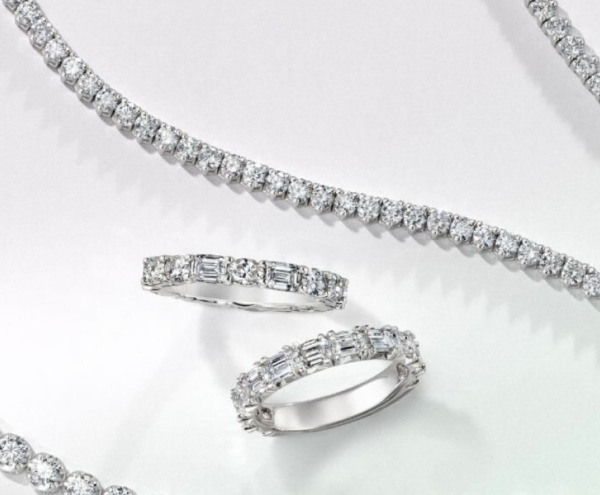
Fresh off The Devil Wears Prada 2, Simone Ashley wore a Stella McCartney dress made entirely of draped silver chains. De Beers London Arpeggia natural diamond jewelry added to the metallic look: Three Line Diamond Earrings in 18K white gold (9.12 carats), a Five Line Diamond Bracelet (15.92 carats) and Three Line Diamond Bracelet (9.50 carats) in 18K white gold, an Allegria Diamond Eternity Band in platinum (3.70 carats) and an Arpeggia Three Row Diamond Ring (1.64 carats). The diamonds weren’t an accessory to the dress. They were the look.

Isha Ambani’s Met Gala diamonds: 150 carats of old mine-cut gems
Isha Ambani wore her own collection: approximately 150 carats of old mine-cut natural diamonds, including a three-strand necklace and chandelier earrings. Most significantly, natural diamonds were sewn directly into the bodice of her sari, each marking a specific moment in her life. The result was a look that took the theme at its word: jewelry as personal history, worn as art.


Cara Delevingne’s Met Gala 2026 ring: De Beers London Forces of Nature
Cara Delevingne’s Ralph Lauren look played the classic front-to-back reveal: sleek black turtleneck from the front, then a fully sheer back with an embroidered peacock snaking up from the train to her shoulder. Against that drama, her De Beers London Forces of Nature High Jewelry ring (marquise yellow natural diamonds set as eyes) was a Desert diamond detail that rewarded a closer look.


Romeo Beckham’s Met Gala 2026 debut look: Carats on carats
Making his Met Gala debut, Romeo Beckham arrived in a classic black-on-black Burberry ensemble and wore a suite of De Beers London natural diamonds to complete his look. The edit included a Talisman Cocktail Diamond Ring in 18K white gold (5.92 carats), two pairs of Classic Emerald-Cut Diamond Stud Earrings in platinum, three diamond line bracelets totaling over 36 carats and a stack of eternity bands.

Met Gala 2026: the jeweler-as-artist trend
Not every standout natural diamond moment on the 2026 carpet was about color. Zoë Kravitz’s oversized diamond flower earrings by Jessica McCormack and Chase Sui Wonders’ Jean Schlumberger by Tiffany & Co. Sea Fan earrings both made the case for form over flash: pieces that treat the jeweler’s craft as its own kind of art, which, on a “Costume Art” carpet, is exactly the point.
Met Gala jewelry: how natural diamonds function as artistic tools
On any Met Gala red carpet, the most considered looks treat natural diamond jewelry as the narrative core of an outfit, not an addition to it. Met Gala jewelry carries weight, combining diamond history, craft, rarity and intention. The best moments aren’t about scale or price. They’re about what a specific piece says in a specific context.
Iconic Met Gala diamond moments
2016
Uma Thurman pinned a historic Cartier peacock brooch to her Ralph Lauren gown. It was a special commission from 1948, nearly eight inches tall, set with more than 90 carats of natural diamonds, making its Met Gala red-carpet debut almost seven decades after it was created.
That same night, Sarah Jessica Parker wore an antique natural diamond rivière necklace from Fred Leighton. Madonna wore more than 400 carats of natural diamonds as body chains and hair jewelry against a black lace Givenchy ensemble, a Met Gala diamond necklace moment that remains one of the most extravagant in the event’s history.

2022
For the “Gilded Glamour” theme, Billie Eilish wore a cache of early 20th-century natural diamond brooches, necklaces and rings from Fred Leighton, all in platinum. These weren’t just beautiful antique diamonds, they were as researched as the gown itself.

2023
Dua Lipa wore the Tiffany & Co. Lucida Star diamond necklace, a D-color natural diamond of more than 100 carats making its first-ever red-carpet appearance. Nicola Peltz Beckham layered an exceptional Harry Winston piece borrowed from her mother. The gem was once owned by the socialite Evalyn Walsh McLean, who had also owned the Hope Diamond before Harry Winston acquired her entire collection in 1949.


2025
Natural diamond brooches became the defining Met Gala jewelry looks of the evening. Rihanna wore Art Deco Bulgari double diamond brooches alongside a Cartier diamond brooch. Pharrell Williams wore a Tiffany & Co. Coronation Ring featuring fancy color diamonds of more than 20 carats, while Colman Domingo wore Boucheron’s Iceberg necklace.

What “Costume Art” means for Met Gala diamonds in 2026
For the Met Gala 2026 Costume Art theme, the potential is significant. Natural diamond formation begins deep beneath the earth’s surface in a process that takes millions to billions of years. This unique structure mirrors the same permanence found within great art. It’s a material with centuries of history in royal adornment, high jewelry and arresting artworks. When fashion argues that it belongs alongside art, natural diamonds are one of the strongest cases it can make.
What natural diamonds bring to fashion’s biggest night
The Met Gala is fashion’s most intellectually stimulating evening. It asks guests to have an argument, take a position, make a choice that holds up under scrutiny. The Met Gala iconic looks that endure are the ones that say something.
Natural diamonds have appeared at every significant moment in this event’s history not because they’re valuable, but because they’re irreplaceable. From the Oscars jewelry moments earlier this year to the Met steps in May, the conversation about natural diamonds on the red carpet reflects modern diamond trends that go far beyond aesthetics: permanence, provenance and the kind of meaning that time only deepens.
Sources
- www.voguearabia.com/article/eleanor-lambert-the-woman-who-created-the-met-gala ↩︎
- www.metmuseum.org/essays/dress-rehearsal-the-origins-of-the-costume-institute/ ↩︎
- www.metmuseum.org/essays/dress-rehearsal-the-origins-of-the-costume-institut/e ↩︎
- www.vogue.com/article/everything-you-need-to-know-about-the-met-gala-video/ ↩︎
- www.voguecollege.com/articles/london/the-evolution-of-the-met-gala/ ↩︎
- www.people.com/style/timeline-of-met-gala-themes/ ↩︎
- www.harpersbazaar.com/culture/features/a775/diana-vreeland-bazaar-years-0911/ ↩︎
- www.voguecollege.com/articles/madrid/anna-wintour-the-icon-who-shaped-the-met-gala-and-redefined-fashion/ ↩︎
- www.vanityfair.com/style/story/ahead-of-the-met-gala-2025-costume-institute-raises-record-dollar31-million/ ↩︎
- www.independent.co.uk/life-style/fashion/tom-ford-met-gala-costume-anna-wintour/ ↩︎
- wwd.com/fashion-news/fashion-scoops/feature/met-gala-history-how-it-turned-from-fundraiser-to-fashions-biggest-night/ ↩︎
- www.nylon.com/articles/iconic-met-gala-looks/ ↩︎
- www.metmuseum.org/press-releases/costume-institute-spring-2026/ ↩︎
- www.voguescandinavia.com/articles/met-gala-2026-everything-you-need-to-know/ ↩︎
- www.metmuseum.org/press-releases/costume-institute-spring-2026/ ↩︎
- www.apnews.com/article/met-gala-fashion/ ↩︎
- www.people.com/sabrina-carpenter-wears-film-strip-dress-met-gala-/ ↩︎
- www.naturaldiamonds.com/ae/culture-and-style-ae/best-met-gala-natural-diamond-jewellery-ever/ ↩︎
- www.naturaldiamonds.com/ae/culture-and-style-ae/best-met-gala-natural-diamond-jewellery-ever/ ↩︎
- www.vogue.com/article/dua-lipa-met-gala-2023 ↩︎
- www.naturaldiamonds.com/culture-and-style/rihanna-met-gala-jewelry/ ↩︎
- www.naturaldiamonds.com/culture-and-style/2025-met-gala-jewelry/ ↩︎


