
The history of natural diamonds stretches from ancient India and Rome to royal courts and modern red carpets. India was the world’s primary diamond source for over 1,000 years, before advances in cutting transformed how diamonds were worn and valued. Their cultural significance has evolved too, from ancient symbols of protection and power to expressions of status, love and style today.
Key takeaways
Why people have long treasured natural diamonds
Scientists estimate the oldest natural diamonds are between 3.5 billion and 90 million years old, formed long before any human civilization existed to prize them.
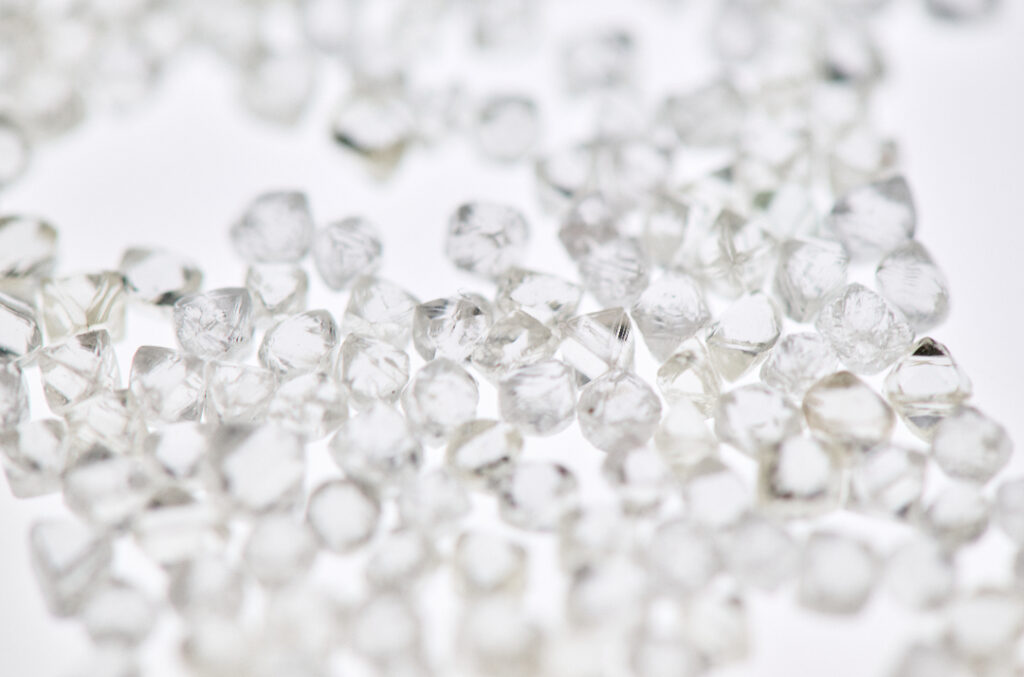
According to Courtney Ann Stewart, art historian, gemologist and curator at The Metropolitan Museum of Art, one of the first known references to a diamond appeared in 1st century CE Rome. At the time, diamonds were kept in their raw octahedral form (picture the shape of the diamond in a deck of cards) to preserve their carat weight and natural purity.
India was the world’s primary diamond source for over a thousand years, supplying gems that traveled along early trade routes to Persia, Rome and eventually Europe. That journey from Indian riverbeds to royal treasuries is where the cultural weight of natural diamonds began to build.
Formation and cosmic origins of natural diamonds
Even today, the science behind natural diamond formation carries a sense of the cosmic. They form from carbon deep in the Earth’s mantle, roughly 140 to 200 kilometers below the surface, under temperatures exceeding 2,200°F and pressure that has no surface equivalent. That process takes between one and 3.3 billion years. Rare volcanic events then carry them upward through kimberlite pipes (the geological formations responsible for almost every natural diamond ever recovered).
It’s no coincidence that early civilizations connected natural diamonds to stars and sunlight. In Egyptian culture, gems were associated with divine energy and solar worship. The science, it turns out, wasn’t so far from the mythology: the natural diamond formation process unfolds over geological timescales that dwarf the entirety of human history.
The cultural significance of diamonds
Long before they were graded or valued by carat, natural diamonds carried meaning. Their physical properties alone were enough to generate reverence. In those early days, diamonds were called ‘adamas,’ a Greek word meaning ‘unconquerable’ or ‘indestructible’. Attempts to test that durability were inventive. “Plenty of old texts insisted diamonds could be softened in goat blood,” explains Stewart. Others depicted diamonds in pots of fire, trying to prove their indestructible nature.
Diamond mythology and ancient beliefs
In Roman culture, natural diamonds were worn as amulets believed to offer protection and divine power, particularly in battle. In Greek culture, they were thought to be the tears of gods or fragments of fallen stars, even Plato spoke of their celestial origins. According to Greek mythology, stars were the children of Eos, goddess of dawn, and Astraios, father of the stars, giving natural diamonds an otherworldly lineage that cultures across the ancient world seemed to independently arrive at. In India, diamonds were associated with the planet Venus in Vedic astrology, symbolizing harmony and prosperity, a spiritual connection that shaped how they were traded and worn for centuries.
When were diamonds first cut?
For most of their early history, natural diamonds were worn exactly as they came: raw and uncut in their natural octahedral form. Diamond cutting was considered spiritually taboo in some cultures (it was believed that altering a diamond diminished its sacred power). That began to change in India around the 14th century, where craftsmen developed the first techniques for polishing diamond surfaces, producing what became known as the point cut.
From there, the evolution was gradual but transformative. The table cut followed (a flattened top surface that better reflected light). Then the rose cut, with its domed top and flat base, designed to catch candlelight. By the 17th century, the brilliant cut had emerged, the style that would define diamond jewelry for the next four centuries. Each advance revealed something new: that the value of a natural diamond wasn’t just in its rarity, but in what a skilled hand could draw out of it. Understanding what diamond cutting is helps explain why the 4Cs of diamonds — cut, color, clarity and carat — became the universal language of diamond quality.
Why royalty and diamonds are forever entwined
According to legend, natural diamonds were once nearly impossible to find. Stewart points to ancient Turkish texts describing a dramatic mining tale: deep valleys filled with venomous snakes were said to guard the precious gems. Brave men would toss chunks of meat into the valley, hoping diamonds would stick to them, before vultures swooped down to carry the meat (and the diamonds) to higher ground.
As trade routes connected East and West, the status of natural diamonds grew with them. One of the most famous diamonds in history, the Koh-i-Noor, first emerged in records linked to India’s legendary Kollur mines. Its name translates to ‘Mountain of Light’ and its path through Persian, Afghan, Indian, Sikh and British royal hands reads less like provenance and more like a history of the world.
The Koh-i-Noor: history’s most contested royal treasure
The facts around the Koh-i-Noor are complex and hotly debated. Some trace the diamond back to 3200 BCE, though other records connect it to Sultan Babur of the Mughal Empire in the 16th century. Either way, it passed through dynasties and empires for centuries before Iranian ruler Nader Shah seized it during the 1739 sacking of Delhi. It later landed with Afghan and Sikh rulers before the British took possession following the annexation of Punjab in 1849.
Today, the 105.6-carat natural diamond — it originally weighed 191 carats — sits among the British Crown Jewels, recut and reshaped, but no less significant for everything it has witnessed.

The Sancy: a symmetrical powerhouse
France, too, boasts an impressive regal diamond legacy. The Sancy diamond, a pale yellow, shield-cut jewel, was one of the first known diamonds to be cut symmetrically – a dramatic turning point in the evolution and style of diamond culture.
Originally mined in India, the gemstone got its name from Nicholas Harlay de Sancy, a French financier and ambassador. Legend has it King Henry III borrowed the diamond to cover a bald spot on his crown – a look we’d truly love to see, non?
Still, King Henry III couldn’t keep it forever, and eventually, the Sancy made its way into the French royal collection, to be worn by Louis XV at his 1722 coronation. While its journey wasn’t quite as dramatic as the Koh-i-Noor’s, it remains one of Europe’s most cherished royal diamonds. You can admire it in person at the Louvre in Paris.
The Cullinan: the giant that shaped a crown
Perhaps the most famous royal diamond of all time, the Cullinan, came from South Africa. Discovered in 1905 at the Premier Mine in the Transvaal region, this breathtaking blue-white gemstone weighed in at a staggering 3,106 carats, making it the largest rough diamond ever found. In fact, its clarity and size were so extraordinary at the time that it ended up being gifted by South Africa to England as a gesture of political goodwill and unity. We wish we had friends that generous!
The enormous responsibility of cutting the Cullinan went to renowned Dutch jeweler Joseph Asscher. With extreme precision, he managed to transform the rough diamond into nine spectacular large gemstones and nearly a hundred smaller ones. Some of the most celebrated cuts now live in the British Crown Jewels, including the Sovereign’s Sceptre, the elegant ceremonial staff held by kings and queens during formal royal occasions.
Modern cultural relevance: how natural diamonds still define star power
The cultural authority natural diamonds built over centuries didn’t fade, it shifted. For the past hundred years, the people most associated with success and influence have worn natural diamonds to say so. Notorious B.I.G.’s Jesus Piece in the ’90s, Marilyn Monroe’s jewels in “Gentlemen Prefer Blondes”, Rihanna’s nine-carat pear-cut diamond toe ring at a pre-Met Gala party in 2023…
At the 2026 Met Gala, Lewis Hamilton wore a vintage Briony Raymond diamond hat brooch and white diamond stud earrings. At the 2025 Oscars, Scarlett Johansson wore a pear-shaped diamond necklace from De Beers London’s Alchemist of Light High Jewelry collection. Timothée Chalamet and Colman Domingo have both worn natural diamonds at major events in 2025 and 2026, with the Natural Diamond Council projecting young men as one of the fastest-growing segments of natural diamond buyers in 2026.

Gen Z is now the fastest-growing buyer segment overall, with a preference for distinctive cuts and pieces that carry a story. Selena Gomez’s marquise-cut natural diamond and Taylor Swift’s antique old mine cut shaped what couples chose in 2025. For bridal jewelry (opens in a new window), the natural diamond remains the standard, not by tradition alone, but by active choice.
A history still being written
Natural diamonds were objects of reverence before anyone knew how to cut them, status symbols before there were red carpets to wear them on, and symbols of commitment before the tradition had a name. That continuity isn’t coincidence. It’s what happens when something genuinely irreplaceable accumulates the weight of human history.
FAQs
What is the history of natural diamonds?
The recorded history of natural diamonds (opens in a new window) reaches back thousands of years, with early references in India and ancient Rome. India remained the world’s primary diamond source for over a millennium, before evolving cutting techniques helped transform their role in jewellery, royalty and culture.
What role do diamonds play in heritage jewelry?
Diamond jewels (opens in a new window) have become part of cultural and royal heritage, often passing through generations and historic collections. The Koh-i-Noor, Sancy and Cullinan show how significant diamonds became closely associated with royalty, status and defining moments in history.
How old are natural diamonds?
Natural diamonds can be between 90 million and 3.5 billion years old. Natural diamond formation (opens in a new window) happens deep within the Earth’s mantle under extreme heat and pressure, before volcanic activity carries the gems towards the surface.
Why are diamonds associated with milestones?
<H3> Why are diamonds associated with milestones?
Natural diamonds, compared to other gems (opens in a new window), remain a go-to for marking milestones thanks to their rarity, durability and cultural association with love, from engagements and weddings to other significant occasions.
How do celebrity engagements influence diamond trends?
<H3> How do celebrity engagements influence diamond trends?
Celebrity proposals (opens in a new window) can bring particular diamond cuts and settings into focus, introducing styles to a wider audience. High-profile engagement rings often inspire interest in distinctive shapes and designs, helping influence the choices couples make for their own rings.
How did diamonds become associated with engagement rings?
The history of diamond engagement rings (opens in a new window) forms part of diamonds’ evolution from symbols of status and power to expressions of love and commitment. As diamond cutting developed, their cultural role expanded, eventually becoming closely connected with bridal jewelry.
What makes historic diamonds so significant?
Historic diamonds often carry stories shaped by royalty, politics and changing ownership. Diamonds such as the Hope Diamond (opens in a new window), the Koh-i-Noor, Sancy and Cullinan illustrate how individual gems can become significant cultural and historical objects.
Do natural diamonds represent legacy?
Natural diamonds can represent legacy through heirloom diamonds (opens in a new window) passed between generations, carrying family stories and personal meaning with them. Historic gems show this on a grander scale, acquiring cultural significance as they move through generations, royal families and collections.
Are certain diamond cuts linked to specific cultures?
Some diamond cuts have strong links to particular places and periods. Old mine cut diamonds (opens in a new window), recall Georgian and Victorian jewelry, while point-cut diamonds became popular in 14th-century Europe and even appeared in the crest of Florence’s influential Medici family.
Are natural diamonds associated with craftsmanship?
Natural diamonds have a strong connection to craftsmanship. The biggest diamonds in the world (opens in a new window) can demand exceptional skill to plan and cut, with each decision balancing carat weight, proportions and the character of the original gem. Understanding how cut affects brilliance (opens in a new window) also shows how craftsmanship has evolved to reveal a diamond’s light.
Sources
- Natural Diamond Council. History of Diamonds. https://www.naturaldiamonds.com/science-of-diamonds/history-of-diamonds/ Date accessed: 2 September 2026. ↩︎
- Courtney Ann Stewart, De Beers History of Diamonds talk in May 2025 ↩︎
- www.gia.edu/diamond-history-lore ↩︎
- www.capetowndiamondmuseum.org/about-diamonds/formation-of-diamonds/ ↩︎
- www.capetowndiamondmuseum.org/about-diamonds/diamonds-through-the-ages/ ↩︎
- www.smithsonianmag.com/history/true-story-koh-i-noor-diamondand-why-british-wont-give-it-back-/ ↩︎
- www.britannica.com/topic/Koh-i-noor/ ↩︎
- Baunat.com, The Sancy Diamond: one of the loveliest diamonds in the world ↩︎
- Royal Collection Trust, The Cullinan Diamond ↩︎
- Royal Collection Trust, The Cullinan Diamond ↩︎
- www.naturaldiamonds.com/diamond-reports-natural-diamond-trends-2025/ ↩︎
- Gemological Institute of America (GIA). Diamond History and Lore. https://www.gia.edu/diamond-history-lore (opens in a new window). Date accessed: 2 September 2026.
- Gemological Institute of America (GIA). Diamond Reflections. https://www.gia.edu/gems-gemology/fall-2024-diamond-reflections (opens in a new window) Date accessed: 3 September 2026.
- Carat Diamonds. Old Mine Cut Diamond Guide. https://www.caratdiamonds.com/blogs/education/old-mine-cut-diamond-guide (opens in a new window) Date accessed: 4 September 2026.
- he Metropolitan Museum of Art. Indian Diamonds: The Benjamin Zucker Family Collection. https://www.metmuseum.org/perspectives/indian-diamonds-benjamin-zucker-family-collection (opens in a new window) Date accessed: 4 September 2026.


