
In conversations circulating this summer, Baron Davis and Mo Bamba keep returning to the same idea: that nothing worth having comes with a shortcut. The phrase has started to travel beyond the two basketball stars, showing up in the way people talk about effort and authenticity more broadly.
Davis, a two-time NBA All-Star turned media entrepreneur, has spent decades wearing bespoke diamond jewelry (opens in a new window) sourced entirely on his own terms. Bamba, a decade younger and still active in the league, grew up watching Davis’s generation set the terms for what authenticity looked like on and off the court. Not long after Vegas hosted another NBA Summer League, an offhand comment between the two turned into a phrase that speaks volumes, to jewelry and well beyond it.
‘Champions aren’t made in labs’
It started with a simple distinction from Davis: “What you choose to wear is a representation of your personality, your brand”. He’s been particular for years about who he works with and where his natural diamond (opens in a new window)s are sourced from. A decision he has traced back to the idea that “champions can’t be manufactured in labs.” Bamba agrees and Davis gestures the diamonds he wears: “You can’t get this in a lab.”
It’s a small claim, but the two spent the rest of the conversation building a case for it, and the case ended up being less about jewelry than about everything jewelry stands in for.
What it takes to become a champion
Davis has never been interested in the idea of ‘finished’: “It’s hard to value things that haven’t gone through the process,” he said. “If you’re not trying to get to excellence, you’re never going to get there. There’s never a perfect basketball player. We’re always striving, and we’re not cutting corners.” The more you cut corners, he added, the more complacent you get, and the less likely you are to make it.


Credit: Mo Bamba & Warriors Instagram
How natural diamonds form, and why the comparison holds
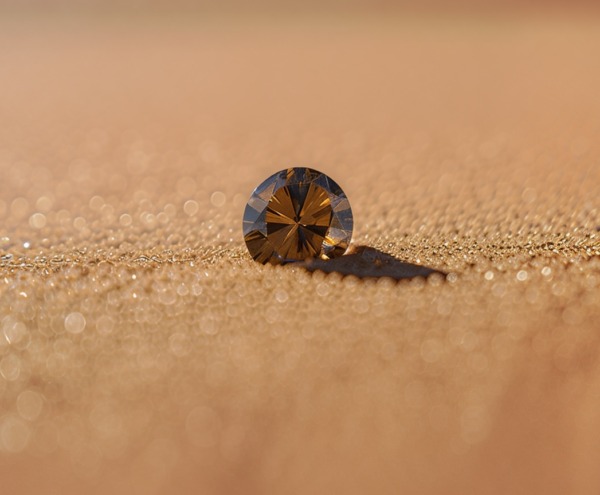
Bamba has spent recent seasons watching the league’s newest players arrive with a different kind of polish. “It’s crazy to see how raw talent is developing now,” he says. “Kids know how to Pro Step, Euro Step, run a triple threat. It’s amazing to watch.” Raw talent becoming a finished player, Davis argued, isn’t so different from the slow work of natural diamond formation (opens in a new window), the same pressure and time that turns a rough stone into something worth wearing.
The African diamond story running through it
For Davis, the metaphor runs deeper than performance. “The flex is being able to trace your history back to where you started,” he says, drawing a direct line between personal history and a diamond’s own traceable origin. “Being African-American, I always look to Africa and think, we’ve got diamonds, we’ve got gold, we’ve got minerals,” he added. “We were ordained for this.” Bamba, reflecting on his Nigerian-American heritage, put the same thought more simply. “It’s in you before it’s on you.”

Why jewelry with a story matters more than jewelry with a price tag
The conversation kept circling back to permanence, too; jewelry not as an investment but as inheritance. “How do you pass down a lab diamond,” Davis asks, “when they can just make more?” Bamba thought of friends who’d kept a grandmother’s or great-grandmother’s ring for decades, sometimes longer. “It’s their family jewel,” he says. “Being able to pass that down through generations speaks volumes.” Davis puts a finer point on it. “Jewelry has a story,” he says. “If it doesn’t have a story, it’s not real.”
Davis has been designing his own pieces since his playing days, always working with jewelers on diamonds sourced to his own specifications rather than buying what already existed. He isn’t alone in that instinct.
Across the league and NBA courtside jewelry (opens in a new window), players have increasingly turned to custom jewelry as a way of putting something specific and personal into permanent form. Ja Morant’s diamond logo pendant, built by jeweler Icebox in white gold and set with more than 32 carats of natural diamonds, was designed around his own initials, a piece with no equivalent anywhere.


Credit: Nicekicks Instagram
LeBron James’ Light-up Lion pendant, set with 35 carats of natural diamonds in 130 grams of 14-karat gold, works the same way. It’s a nod to a nickname James has carried since his earliest playing days, created from scratch around what the piece honored. None of these are family jewels yet. But a family jewel has to start somewhere.

Credit: Thearon W. Henderson (Getty Images)
What ‘champions aren’t made in a lab’ really means
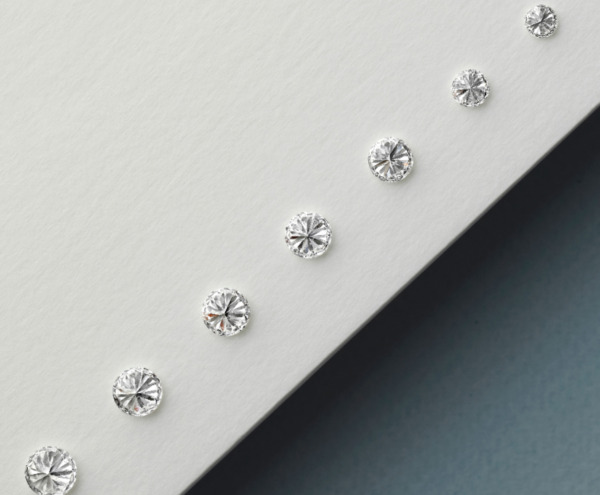
By the end, the phrase that started the conversation had come to mean something bigger than either player probably intended. Champions aren’t made in a lab. Neither are real diamond (opens in a new window)s. A natural diamond takes real time and real pressure to form, deep underground over billions of years with nothing to rush it along. An NBA champion is built the same way: through repetition, resistance and years of work that most people never see and that no shortcut can replicate. That parallel is likely why a conversation that began with two men talking about what they wear ended up being about what they’d been through to earn it.
Sources
- Natural Diamonds. “NBA Jewelry: The Most Incredible Diamonds Worn By Players.” https://www.naturaldiamonds.com/culture-and-style/nba-jewelry-looks/ ↩︎
- Natural Diamonds. “NBA Jewelry: The Most Incredible Diamonds Worn By Players.” https://www.naturaldiamonds.com/culture-and-style/nba-jewelry-looks/ Accessed 3 August 2026 ↩︎


