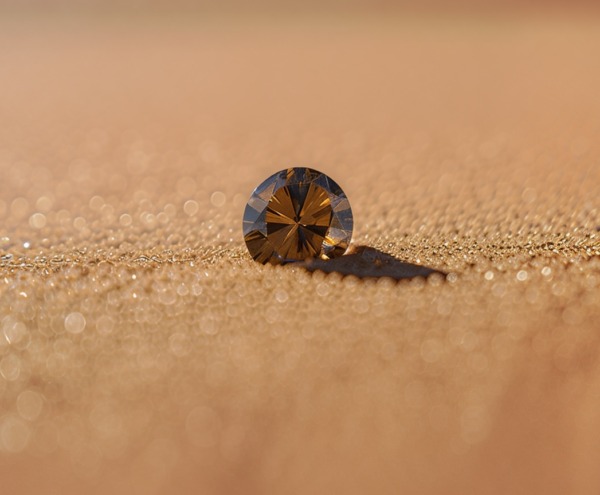
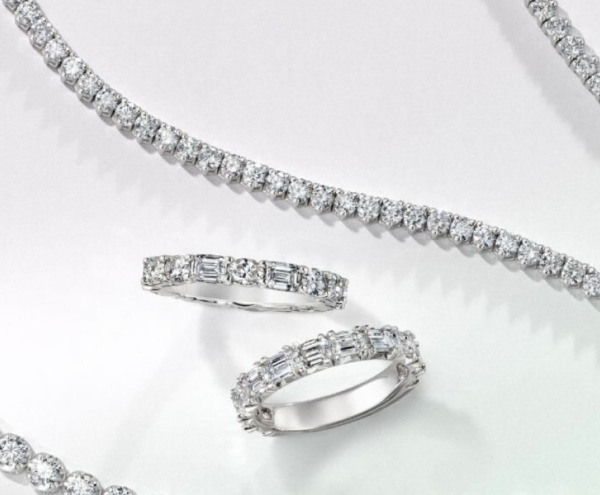
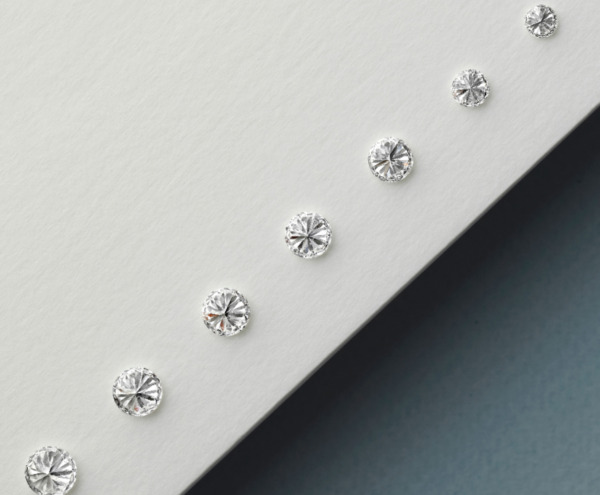

Shape and cut are two different things, though the terms are often used interchangeably. Shape is the outline of the diamond (think round, oval, emerald, pear) and defines how it looks on the hand. Cut refers to how the diamond is faceted and polished, which controls how light moves through it and how much it sparkles. Two diamonds with the same shape can look entirely different depending on the quality of the cut.
Diamond cut vs diamond shape

Diamond shape

Diamond cut
The outline and silhouette of the diamond.
How the diamond’s internal facets are cut and arranged to reflect the light.
How the diamond looks on the hand, its overall presence and perceived size.
How light moves through the diamond and how much it sparkles.
Round, oval, pear, marquise, emerald, cushion, Asscher, heart, radiant.
Brilliant, step, mixed, vintage/antique.
Not formally graded; chosen based on personal style.
Graded by the GIA from Excellent to Poor.
Shape names like “emerald” or “cushion” often include the word “cut,” but these refer to the shape, not the faceting style.
A diamond described as “brilliant cut” is being described by its faceting, not its outline.
Understanding the difference between diamond cut and shape is what turns browsing into buying with confidence. Both play a distinct role in how a diamond looks and performs, and the two are more connected than most people realize.
Why diamond cuts and shapes matter
It’s easy to focus on just one, but shape and cut work together. One defines the style; the other decides how that style performs in light.
Cut also plays a role in how we perceive diamond size and value (opens in a new window); a well-cut natural diamond (opens in a new window) can look brighter and more sparkly, even if it’s smaller. Shape, meanwhile, reflects personal style and trends, giving you room to choose something that feels like you.

How diamond shape affects appearance
Shape defines how a diamond presents on your hand, from its overall silhouette to how large it appears at a glance.
Round feels balanced and classic, while sharper diamond shapes (opens in a new window) like princess or emerald create a more structured, graphic look. Elongated shapes, including oval and marquise, can subtly lengthen the finger and often give the impression of a larger diamond.
Shape trends shift with changing tastes, from celebrity influence to what feels fresh in the moment. In 2025, the round brilliant continued to lead, accounting for 62% of diamond jewelry sales. Oval has dipped slightly from 16% to 14%, while marquise and emerald diamonds are gaining ground, showing 12% and 7% year-over-year growth. It points to a growing interest in elongated silhouettes that feel distinctive but still easy to wear.
There’s no single “best” choice. Round may be the most popular but the right shape is the one that suits your style.
How diamond cut affects appearance
Cut is where the diamond comes to life. It refers to the precision of the facets, their angles, depth and symmetry. It’s also what determines a diamond’s light performance (how effectively it captures, moves and returns light to the eye).
A well-cut diamond reflects light back through the top, creating three distinct effects:
- Brightness: the overall white light you see face-up
- Fire: the dispersion of that light into flashes of spectral color
- Scintillation: the sparkle pattern that shifts as the diamond or the light moves.
A poorly cut diamond can look noticeably dull, even in a strong shape.
This is why two diamonds with the same shape can feel completely different. Cut quality defines how lively the diamond appears and plays a key role in its overall appeal. It’s also where buyers are becoming more selective. Many couples are prioritizing overall quality and light performance, choosing diamonds that look brighter and more consistent across different lighting, especially for something as important as an engagement ring.
Popular diamond shapes
Shape is the most personal diamond decision you’ll make. It defines the silhouette, influences how the diamond sits on the hand and sets the tone for everything else. Here’s what to know about each one.

Why so many diamond shapes have “cut” in their name
Cushion cut, emerald cut, princess cut, Asscher cut… several of the most recognized diamond shapes are commonly referred to with the word “cut,” and it’s one of the most persistent points of confusion in diamond buying.
The word “cut” has long been used loosely in the diamond industry as a catch-all term for a diamond’s overall character, and over time it became embedded in the names of certain shapes. But in each case, what it describes is the shape or outline of the diamond, not the faceting style applied to it. An “emerald-cut” diamond has an emerald-shaped outline; the faceting style is a step cut. A “cushion cut” has a square or rectangular outline with rounded corners; the faceting varies between brilliant and mixed. The princess cut is the exception: here, the name refers to both the shape and its specific faceting pattern together.
Round diamond
The round remains the benchmark. It’s been the most popular diamond shape for over a century, and for good reason. It’s the only shape to receive an official GIA cut grade, and the round brilliant, its signature faceting style, is the standard against which all other cuts are measured. That combination of 57 or 58 precisely arranged facets and a perfectly symmetrical outline is what gives the round its exceptional brightness and fire.
It’s also one of the most versatile options. Whether set in a simple solitaire or something more detailed like a halo or pavé band, the round shape adapts easily to different styles.
There’s a practical side too. Round diamonds are particularly good at masking inclusions and softening color, which means they can still look bright and clean even at slightly lower grades.
The round, in the spotlight
Camila Mendes’s engagement ring is a classic round brilliant diamond set on a yellow gold solitaire. It’s a simple pairing, but that’s the point. The clean setting allows the diamond to do all the work, showing just how effective the round shape is when it comes to pure sparkle.
Oval diamond
The oval shape has become a modern favorite. Its elongated shape flatters the hand, creating a subtle lengthening effect. It also balances strong sparkles with a softer, more fluid outline than a round.
As a brilliant-cut shape, it’s designed for brightness and fire. Proportion matters here; a balanced length-to-width ratio keeps the oval looking refined rather than too round or too narrow.
One detail to watch out for is the bow-tie effect. It refers to a faint shadow across the center of the gem; most ovals have some version of it, but a well-cut diamond keeps it minimal for a more even sparkle.
Oval diamonds tend to disguise inclusions well, giving you more flexibility on clarity without affecting what you see day to day.
The oval, in the spotlight
Hailey Bieber’s engagement ring helped bring the oval back into focus. A 6 to 10 carat oval diamond on a simple gold band, clean and minimal, with all the attention on the gem, a look that’s influenced countless rings since.
Pear diamond
The pear shape has a teardrop outline, with a rounded end and a pointed tip. This shape helps the diamond sit longer on the finger, which can make both the finger and the diamond appear more elongated.
It combines elements of oval and marquise shapes, so you get a softer curve with a defined point.
It’s also flexible in how it’s worn. Some people prefer the point facing down towards the fingertip for a lengthening effect, while others wear it facing up for a slightly different look.
When choosing a pear, symmetry matters. Both sides should match evenly, otherwise the diamond can look off-center once set. Like other elongated shapes, it can show a bow-tie shadow across the middle, so cut quality is important. The pointed tip is also more vulnerable, so it’s best paired with a setting that protects it.
The pear, in the spotlight
Cardi B’s pear engagement ring is impossible to miss. It features an 8-carat pear-shaped diamond, framed by a double halo, including rare pink diamonds, with two additional pear gems on either side.
Marquise diamond
The marquise is instantly recognizable. Its long, tapered shape with pointed ends gives it a sharp, distinctive look.
It also shows more surface area from the top, which can make it feel more prominent on the hand compared to other shapes of the same carat.
Look for good symmetry and a minimal bow-tie shadow through the center to keep the light even. The pointed ends are more delicate, too, so a setting that protects them is worth considering.
The marquise, in the spotlight
Selena Gomez’s engagement ring features a sleek marquise diamond set low on the finger, paired with a pavé band that adds subtle sparkle. The low setting keeps the diamond close to the hand, making it more practical for daily wear while still allowing the shape to stand out.
Emerald diamond
The emerald is all about clarity and structure. Its rectangular shape with cropped corners uses a step cut (long, parallel facets arranged in tiers), which creates a clean, mirror-like effect rather than the high sparkle of a brilliant cut.
Instead of lots of shimmer, you get broader flashes of light. The long, linear facets draw the eye across the gem, giving it a more refined, pared-back look.
Proportion matters here. A balanced length-to-width ratio, usually between 1.3 and 1.5, keeps the shape looking clean and even. Because of its open surface, inclusions and color are more visible, so quality becomes more important than with other shapes.
The emerald, in the spotlight
Beyoncé’s engagement ring features one of the most iconic modern emerald diamonds. Designed by Lorraine Schwartz, the 24-carat diamond is set simply to highlight the gem. Bold in size, but clean in design, it shows how this shape relies on clarity and presence rather than sparkle alone.
Princess diamond
Its square shape with pointed corners gives it a clean, geometric feel, while still delivering plenty of sparkle.
Like the round, it’s a brilliant-cut shape, so it’s designed to reflect light well. That means you get strong brightness and fire, but with a more structured outline.
It also has a practical advantage. Because of how it’s cut from the rough diamond, it often offers more visible size for the price compared to round diamonds of the same carat.
When choosing one, pay attention to symmetry and corner protection. The pointed edges are more delicate, so a setting that secures them is important. Thanks to its faceting, it can hide inclusions fairly well, though slight color can be more noticeable than in round shapes.
The princess, in the spotlight
Gwen Stefani’s engagement ring leans into the shape’s clean lines. Featuring a large square diamond set with trapezoid side gems, the design feels bold but still classic, proof that this shape can sit comfortably between modern and timeless.
Cushion diamond
With its square or rectangular shape and rounded corners, the cushion sits somewhere between a round and a princess, giving a gentler, more relaxed look.
Some cushions are more square, others slightly elongated, which changes how they sit on the hand. The faceting can also vary, from “chunky” styles with larger flashes of light to “crushed ice” finishes that feel more glittery.
Because of those larger facets, color and clarity can be a bit more visible than in round shapes, so it’s worth paying attention to quality if you want a cleaner look.
The cushion, in the spotlight
Zendaya’s engagement ring shows how the pillowy cushion shaped diamond can be styled in a more unexpected way. Set east-west on a yellow gold band, the elongated shape shifts the usual look, giving the diamond a different presence on the hand without losing its softness.
Heart-shaped diamond
The heart is the most expressive of all diamond shapes. Its meaning is clear but achieving that shape is anything but simple.
A variation of the round brilliant, the heart shape relies on precision. The two halves need to match perfectly, with a clean cleft and a defined point. If the symmetry is off, it’s immediately noticeable.
Sparkle is there, but it depends heavily on the cut. A well-cut heart will reflect light evenly, while a poorly cut one can look patchy. Size matters too. Smaller gems can lose definition, so the shape tends to work better at larger carat weights where the outline is clear.
The heart, in the spotlight
Lady Gaga’s engagement ring put the heart shape firmly back on the map. Designed by Lorraine Schwartz, it featured an 8-carat heart-shaped diamond set on a pavé band.
A hidden detail made it even more personal: “T <3 S” set in diamonds inside the band, a nod to Stefani (Lady Gaga) and her then partner Taylor Kinney.
Asscher diamond
Elizabeth Taylor owned one of the most famous Asscher diamonds, the Krupp Diamond. At 33.19 carats, it became one of the most recognizable gems in the world and helped cement the Asscher’s association with bold, statement jewelry.
Radiant diamond
The radiant has a rectangular or square outline with cropped corners, making it look similar to an emerald at first glance. The difference is in the cut. Where the emerald uses a step cut for a clean, mirror-like effect, the radiant uses a mixed cut (brilliant-style facets on the crown with step-cut elements beneath), which produces a much more intense sparkle for its shape.
That combination of a structured outline and high light performance is what makes the radiant distinctive. It suits those who want the geometry of a rectangular shape without sacrificing brilliance. As with cushion diamonds, the faceting style can vary between stones, so it’s worth comparing a few to find the light performance you prefer.
The radiant, in the spotlight
When Ben Affleck proposed to Jennifer Lopez in 2002 with a 6.1-carat radiant-cut pink diamond from Harry Winston, the ring became one of the most talked-about pieces of jewelry of its era. The couple didn’t make it to the altar, but the ring made a compelling case for the radiant shape. Its rectangular outline gave the rare pink diamond full surface exposure, letting the color show evenly and intensely across the face of the gem.


Popular diamond cuts
While shape gets most of the attention, cut style is what defines how a diamond interacts with light. Broadly, there are three main types, each with a distinct look.
Brilliant cut
Brilliant cuts are designed for sparkle. Their facets radiate outwards, reflecting light back through the diamond to create brightness, fire and that signature shimmer.
The round brilliant is the classic example, but many other shapes, like oval, pear and cushion, use a modified brilliant cut to achieve a similar effect.

Step cut
Step cuts take a more structured approach. Their long, parallel facets create a clean, mirror-like effect rather than high sparkle.
You’ll see this in shapes like emerald and Asscher. Instead of lots of shimmer, they give broader flashes of light and highlight the diamond’s clarity and geometry.

Mixed cut
Mixed cuts combine elements of both. Typically, they use brilliant-style facets on top with step-cut elements underneath.
The result is a softer, more scattered “crushed ice” effect, often seen in modern cushion or radiant shapes, where the sparkle feels more diffused.

Vintage diamond cuts
Vintage diamonds are returning to the spotlight, especially for those drawn to softer, less uniform sparkle. They also tie into the appeal of heirloom diamonds, with growing interest in repurposing existing gems, particularly among Gen Z.
Rose-cut diamond
The rose cut dates back to the 15th century and is instantly recognizable for its flat base and domed top. With fewer facets, it gives off a soft, diffused glow rather than high sparkle. It was originally designed to shine under candlelight, which explains its more understated look today.

Old European-cut diamond
The Old European cut was popular from the late 1800s to early 1900s and is the direct predecessor to the modern round brilliant. It features a higher crown, smaller table, and larger culet, which creates broader, more gradual flashes of light rather than sharp sparkle.

Old mine-cut diamond
The Old Mine cut is one of the earliest brilliant styles, often cushion-like in shape with a higher profile and chunkier facets. Because these diamonds were cut by hand, they tend to have slight irregularities, giving each gem a more individual, less uniform appearance.

Vintage cuts, in the spotlight
Taylor Swift’s old mine-cut engagement ring (opens in a new window), designed by Travis Kelce with New York jeweler Artifex Fine Jewelry, has brought renewed attention to these styles. As designer Steph Mazuera notes, “Taylor’s ring is very much in step with the desire for individuality and artistry in engagement rings,” reflecting a shift towards diamonds that feel more personal and less uniform.

How to choose the best diamond shape for your engagement ring
Choosing a diamond comes down to how shape and cut work together on your hand. Here’s what to consider:
- How you want it to look on your hand: Different shapes change how a ring looks when worn. Elongated shapes like oval, pear or marquise can create a longer line across the finger, while round, cushion or princess shapes feel more compact and balanced.
- Setting: The style of setting changes how a shape reads on the hand. A bezel, which encases the diamond in metal, softens the outline and offers more protection. Prong settings lift the diamond and let more light in, which suits brilliant cuts particularly well. A pavé band or halo adds sparkle around the diamond. It’s worth thinking about how all of these elements work together before committing to a shape.
- Light performance: This is where cut matters. If you want maximum sparkle, brilliant-cut shapes will give you that bright, lively effect. If you prefer something more understated, step cuts offer a cleaner, more subtle reflection of light.
- Appearance and budget: Elongated shapes tend to appear larger than their carat weight. A well-cut smaller diamond will often outperform a larger one with a weaker cut.
ADIF tip: Try different shapes on. What works on paper can feel completely different on your hand. You may find a round doesn’t suit you, while an elongated shape creates the look you prefer. Try a few options until one feels right.
Diamond cut vs shape: why both matter when choosing a diamond
Shape is the decision you make once. It sets the style, the silhouette, the first impression. Cut is what you’ll notice every day…every time the light catches it, every time someone asks to see it up close. Most people choose a shape and settle for a cut. The diamonds worth keeping are the ones where neither was an afterthought.
FAQs
Choosing the right carat for engagement rings
When thinking about the ideal size diamond for an engagement ring, carat is only part of the picture. Shape and cut both influence how large a diamond actually looks.
Elongated shapes like oval, pear or marquise can appear bigger than their carat weight, while round or cushion shapes may feel more compact. Cut also plays a role. A well-cut diamond reflects more light, which can make it look brighter and more noticeable, even at a smaller size.
If you’re balancing budget and appearance, it’s worth considering slightly lower carat weights with a stronger cut, or choosing a shape that gives more visual spread.
Why are diamonds the most meaningful gift?
Diamonds carry meaning, but it’s the details that make them personal. Choosing a shape that reflects someone’s style, and a cut that brings out the best in the gem, turns it into something more than just jewelry.
When thinking about diamond gift ideas, it’s this combination that matters. A diamond chosen with intention, from its outline to how it sparkles, becomes something that lasts beyond the moment it’s given.
How to plan the perfect proposal?
Good proposal planning starts with understanding what engagement ring they’ll love wearing every day. Shape is often the easiest place to start. Think about whether they lean towards classic styles or something more distinctive.
Cut comes next. If they love sparkle, focus on brilliant cuts. If they prefer something more understated, step cuts offer a cleaner look.
It’s also worth considering how the ring will sit on their hand and what styles they already wear. Getting those details right is what makes the moment and the ring feel considered from the start.
Sources
- www.4cs.gia.edu/en-us/blog/gia-diamond-cut-grade-six-things-to-know/ ↩︎
- www.naturaldiamonds.com/engagement-rings/diamond-trends-2025/ ↩︎
- www.4cs.gia.edu/en-us/blog/gia-diamond-cut-grade-six-things-to-know/ ↩︎
- www.4cs.gia.edu/en-us/blog/gia-diamond-cut-grade-six-things-to-know/ ↩︎
- www.naturaldiamonds.com/diamond-engagement-rings/diamond-shape/round-engagement-rings/ ↩︎
- www.naturaldiamonds.com/diamond-engagement-rings/diamond-shape/oval-engagement-rings/ ↩︎
- www.naturaldiamonds.com/diamond-engagement-rings/diamond-shape/oval-engagement-rings/ ↩︎
- www.naturaldiamonds.com/diamond-engagement-rings/diamond-shape/pear-shaped-engagement-ring/ ↩︎
- www.ritani.com/blogs/news/7-famous-pear-shaped-diamond-engagement-rings/ ↩︎
- www.naturaldiamonds.com/diamond-engagement-rings/diamond-shape/marquise-engagement-ring/ ↩︎
- www.lindseyscoggins.com/blogs/the-rough/our-favorite-celebrity-emerald-cut-engagement-rings-17-similar-styles-to-shop/ ↩︎
- www.naturaldiamonds.com/diamond-engagement-rings/diamond-shape/princess-cut-engagement-rings/ ↩︎
- www.taylorandhart.com/blog/gwen-stefanis-fabulous-engagement-ring/ ↩︎
- www.naturaldiamonds.com/diamond-engagement-rings/diamond-shape/cushion-cut-diamond/ ↩︎
- www.naturaldiamonds.com/engagement-rings/zendayas-engagement-ring/’ ↩︎
- www.naturaldiamonds.com/culture-and-style/heart-shaped-diamonds/ ↩︎
- www.taylorandhart.com/blog/lady-gagas-engagement-rings-diamond-hearts-pink-sapphires/ ↩︎
- www.naturaldiamonds.com/diamond-engagement-rings/diamond-shape/asscher-cut-diamond/ ↩︎
- www.naturaldiamonds.com/engagement-rings/radiant-cut-diamond-guide/ ↩︎
- www.vrai.com/journal/post/guide-to-diamond-types-and-cuts/ ↩︎
- www.vrai.com/journal/post/guide-to-diamond-types-and-cuts/ ↩︎
- www.vrai.com/journal/post/guide-to-diamond-types-and-cuts/ ↩︎
- www.naturaldiamonds.com/culture-and-style/vintage-jewelry-gen-z/ ↩︎
- www.naturaldiamonds.com/engagement-ring-guide/rose-cut-diamonds/ ↩︎
- www.vrai.com/journal/post/old-european-cut/ ↩︎
- www.naturaldiamonds.com/engagement-rings/old-mine-cut-diamond/ ↩︎
- www.elle.com/culture/celebrities/a65902644/taylor-swift-cushion-cut-diamond-engagement-ring-explained/ ↩︎


