
The ring that launched a thousand searches. Taylor Swift’s old mine cut diamond from Travis Kelce has reignited a conversation about vintage diamond cuts, antique diamond shapes and the enduring appeal of diamonds that carry a sense of history.
With a sparkle that reads as warm, romantic and unmistakably individual, the old mine cut is having a moment that feels less like a trend and more like a homecoming.
What’s the design of Taylor Swift’s engagement ring?
Designed in collaboration with Kindred Lubeck of Artifex Fine Jewelry, Swift’s ring is exactly what you’d expect from someone who has always treated aesthetics as a form of self-expression. At its center sits an elongated old mine cut diamond, bezel-set in glowing yellow gold and finished with delicate filigree, the kind of fine lace-like metalwork that belongs to another century but feels entirely current here. Estimated at 8 to 10 carats, the diamond has a warmth to its sparkle that the yellow gold setting only amplifies.
The couple’s engagement announcement on August 26 sent the internet into the kind of frenzy that only a Swift moment can produce. But beyond the romance and the viral proposal photographs taken beneath a pink and white flower arch, it was the ring itself that told the more interesting story. The choice of an old mine cut over a contemporary brilliant wasn’t accidental, it’s a statement about character, provenance and the kind of beauty that doesn’t chase trends. Understanding why diamonds are used for engagement rings starts to make even more sense when you see what a well-chosen diamond actually looks like.
Old mine cut diamonds as a category share these qualities: antique proportions engineered for candlelight, a softness of sparkle that modern precision cuts don’t replicate and a sense that the gem has lived through something. They’re the antithesis of uniformity, which is precisely what makes them compelling.

What are the key characteristics of an old mine cut diamond?
First popularized in the 18th century, these vintage diamond cuts are immediately recognizable to anyone who knows what to look for. Hand-cut long before modern precision tools existed, old mine cuts were designed to give diamonds their most captivating quality in candlelight, when Georgian and Victorian society wore its finest jewels. The name itself references the original diamond mines of Brazil and India; when African mining began to dominate production in the 1800s, diamonds cut in the older style became known simply as ‘old mine cut.’
Often described as the original cushion cut, the old mine cut has 58 facets, a squarish silhouette with rounded corners and proportions that differ from any modern cut in ways that are both visible and meaningful. Here’s what defines it:
Shape
The old mine cut has a squarish outline with softly rounded corners, sitting somewhere between a cushion and a square. It’s wider than it is deep in appearance, with a generous body that gives it visual presence without the hard geometry of a princess cut. The irregularities inherent in hand-cutting mean no two old mine cut diamonds are identical, which is part of the appeal of antique diamond shapes.
Facets
Fifty-eight facets, hand-cut to guide light rather than maximize its return. Where a modern brilliant is engineered for measurable light performance, the old mine cut produces something more diffuse and romantic: a glow rather than a flash. The facets of an old mine cut are larger and less precisely angled than those of a contemporary cut, which gives the diamond a softer, more organic visual quality.
Culet
The culet is the bottom facet at the very tip of the diamond and in old mine cuts it’s notably large. When viewed from above, the cutlet of an old mine cut appears as a small circle at the center of the stone, a detail that’s considered a hallmark of antique diamonds and a visual marker that immediately distinguishes them from modern cuts.
Sparkle
Old mine cut sparkle is candlelight in gemstone form. It’s warm, soft and deeply flattering. It moves differently from a modern brilliant, producing broad flashes of light rather than the precise, high-contrast scintillation of a contemporary cut.

Diamond shapes for old mine cut-inspired engagement rings
The old mine cut sits within a broader family of antique and vintage-inspired diamond shapes, each with its own character and history. For buyers drawn to the aesthetic of Swift’s ring, there are several directions worth exploring:
- Cushion cut: The modern cushion cut is the old mine cut’s direct descendant, sharing its rounded corners and larger facets but cut to contemporary proportions. It delivers more light return than a true antique cut while retaining the soft, pillow-like silhouette. Cushion cuts have been consistently popular for engagement rings, most famously worn by Priyanka Chopra, Chrissy Teigan and Meghan Markle (whose trilogy ring features a cushion-cut center stone).
- Old European cut: The old European cut bridges the old mine cut and the modern round brilliant chronologically and aesthetically. Rounder than the old mine cut and with a slightly smaller culet, it produces a similar warmth of sparkle but in a more circular outline. It’s a natural choice for buyers who love the look of vintage diamonds but want a silhouette closer to the contemporary round.
- Rose cut: Flat-bottomed with a domed, faceted top, the rose cut predates the old mine cut and produces a very different quality of light. More soft, diffused and gentle. It sits low on the finger and has a distinctive antique character that suits simple, delicate settings.
- Asscher cut: A square step cut with deeply cropped corners and concentric square facets, the Asscher has a geometric, Art Deco character that shares the old mine cut’s vintage credentials. Its open facets reward high clarity grades and produce a hall-of-mirrors effect entirely unlike the old mine cut’s warm glow.
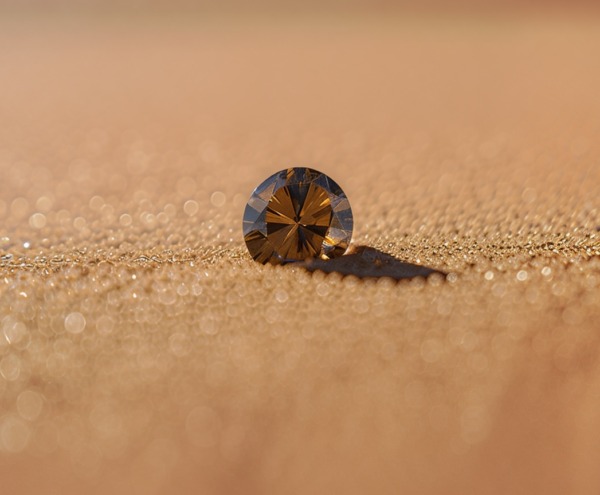
For those drawn to diamonds that carry genuine geological character alongside their vintage aesthetic, Desert diamonds offer something distinct. Named for the warm, earthy landscapes their color palette evokes, Desert diamonds form through the same incredible natural processes as any other natural diamond. Their tones, ranging from soft Sunlit White diamonds to rich Sunset Brown diamonds, make them a natural companion to yellow gold settings and antique-inspired details. Sunset Blush or Dawn Desert diamonds are particularly beautiful when bezel-set with filigree detailing.
Old mine cut vs. modern diamonds
The revival of celebrity old mine cut diamonds in engagement rings isn’t simply nostalgia. It reflects a broader cultural shift toward authenticity, individuality and provenance in fine jewelry.
The technical differences between old mine cuts and modern diamonds are meaningful:
- Table: Old mine cuts have a smaller table (the flat top facet) than modern brilliants, which contributes to their domed profile and softer light output.
- Crown height: The crown is significantly higher in an old mine cut, creating a more pronounced profile and a deeper, warmer play of light.
- Culet: Modern brilliants have a pointed culet or no culet at all. Old mine cuts have a visible, circular culet, one of their most distinctive identifying features.
- Symmetry: Modern cuts are precisely engineered for symmetry; old mine cuts were hand-cut, so natural irregularities are part of their character rather than flaws.
- Sparkle quality: Modern brilliants maximize measurable light return. Old mine cuts produce a warmer, softer glow that performs differently across lighting conditions, particularly in low light.
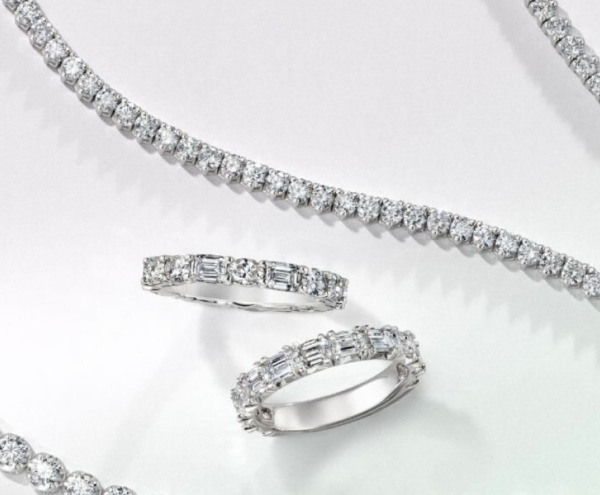
For buyers considering an old mine cut engagement ring or bridal piece, the current moment is a compelling one. The appetite for vintage-inspired fine jewelry is at its highest point in a generation and the influence of rings like Swift’s has moved old mine cut diamonds from specialist interest to mainstream desirability. Bridal jewelry that carries genuine history and individual character is a different category from a ring that simply looks beautiful.
FAQs
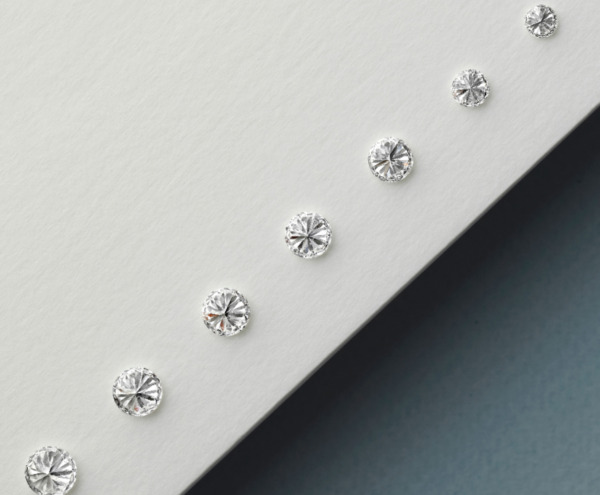
The round brilliant cut produces more measurable light return than any other diamond shape, engineered specifically to maximize fire, brilliance and scintillation through 58 precisely angled facets. The old mine cut, by contrast, doesn’t compete on these metrics: its sparkle is softer and warmer, optimized for candlelight rather than precision. Understanding how diamond cutting affects light performance makes the distinction between these two kinds of beauty much clearer.
Old mine cut diamonds work particularly well when mixed with contemporary settings rather than isolated in purely period pieces. A hand-cut antique diamond in a clean, minimal yellow gold bezel, as in Swift’s ring, feels entirely current. Stacking an old mine cut solitaire with modern pavé bands creates a contrast that’s deliberate and sophisticated. For collectors building over time, antique diamond styles ground a jewelry collection in history while the contemporary pieces around it stay fresh.
The 4Cs of diamonds apply to old mine cuts, but with important nuances. Cut grade is assessed differently for antique diamonds: the GIA doesn’t assign a standard Excellent-to-Poor cut grade to old mine cuts because their proportions fall outside the modern grading framework.
Color is more visible in old mine cuts than in modern brilliants, partly because of the larger facets and the warmer quality of their light, so buyers often find that a slightly lower color grade looks entirely beautiful in this style. Clarity inclusions are similarly more visible through the open facets, though the warm light quality tends to be more forgiving than a step cut. Carat weight reads differently too.
Old mine cuts often appear smaller than their weight suggests because their depth is proportionally greater. Understanding all four characteristics in the context of antique diamonds produces a more informed and ultimately more satisfying choice.
Sources
- www.4cs.gia.edu/en-us/blog/old-mine-cut-diamond-guide/ ↩︎
- www.naturaldiamonds.com/engagement-rings/candlelight-diamonds/ ↩︎
- www.4cs.gia.edu/en-us/blog/old-mine-cut-diamond-guide/ ↩︎
- www.vrai.com/journal/post/old-mine-cut/ ↩︎
- www.naturaldiamonds.com/engagement-rings/old-mine-cut-diamond/ ↩︎
- www.naturaldiamonds.com/engagement-rings/old-mine-cut-diamond/ ↩︎
- www.4cs.gia.edu/en-us/blog/old-mine-cut-diamond-guide/ ↩︎
- www.vogue.com/article/antique-cushion-cut-engagement-rings-guide/ ↩︎
- www.theknot.com/content/priyanka-chopra-engagement-ring/ ↩︎
- www.thezoereport.com/p/chrissy-teigens-engagement-ring-comes-with-a-hilarious-backstory/ ↩︎
- www.countryandtownhouse.com/style/jewellery-and-watches/meghan-markle-engagement-ring-history/ ↩︎
- www.naturaldiamonds.com/engagement-rings/old-european-cut-diamonds/ ↩︎
- www.naturaldiamonds.com/engagement-ring-guide/rose-cut-diamonds-guide/ ↩︎
- www.naturaldiamonds.com/engagement-rings/asscher-cut-ring-guide/ ↩︎
- www.shopvale.com/blogs/in-the-know/what-is-an-old-mine-cut-diamond-the-complete-guide/ ↩︎
- www.diamondbuzz.blog/old-mine-cut-diamond-guide/ ↩︎


