

Answer
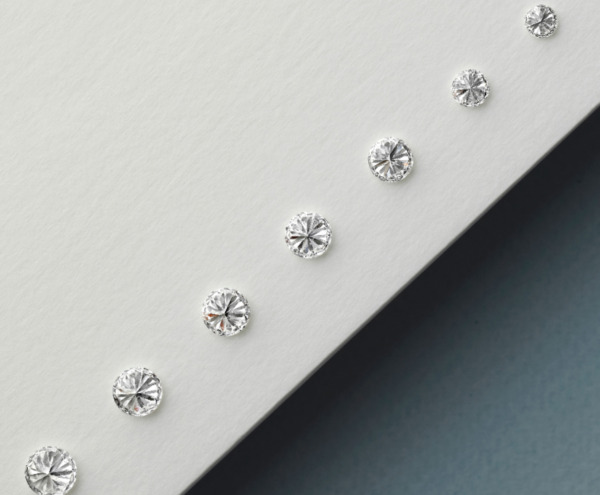
Yes. Every natural diamond is unique because no two gems follow exactly the same journey beneath the Earth’s surface. Formed over millions to billions of years, each diamond develops its own pattern of crystal growth, inclusions and trace elements, leaving behind a geological fingerprint that cannot be replicated. While two natural diamonds may appear identical at first glance, their internal characteristics make each one completely one of a kind.
Key takeaways
Every natural diamond carries visible evidence of the conditions in which it was formed.
Diamond clarity and color are two of the 4Cs that help make every natural diamond unique.
Grading reports record each diamond’s unique features, giving each gem its own identifiable profile.
A natural diamond’s individuality is part of what makes it meaningful to own and pass on.
What actually makes a natural diamond unique?
Every natural diamond reflects the conditions in which it is formed. Tiny variations in temperature, pressure and surrounding minerals influence how the crystal grows, creating subtle differences that cannot be recreated. Those natural variations are what make each diamond distinct long before it is discovered or cut.

How do gemologists prove a diamond’s uniqueness?
Every natural diamond (opens in a new window) has its own identifying profile. Using magnification and specialist grading tools, gemologists examine a diamond’s internal and external characteristics before documenting their findings in a grading report. As part of this process, the 4Cs of diamonds (opens in a new window), are assessed, with diamond clarity (opens in a new window) is determined by the size, number, position and nature of a diamond’s inclusions, while diamond color reflects the trace elements and natural conditions present during formation. Together, these characteristics help distinguish one natural diamond from another.

Why do inclusions make every diamond one of a kind?
Inclusions are often described as imperfections, yet they’re among the most fascinating features of a natural diamond. Some appear as tiny crystals, while others resemble feathers or fine needles, each revealing something different about the gem’s growth. For geologists, they offer rare insights into the Earth’s mantle. For many collectors and wearers, they’re part of what gives a natural diamond its individual character.

Does a natural diamond’s uniqueness influence its value?
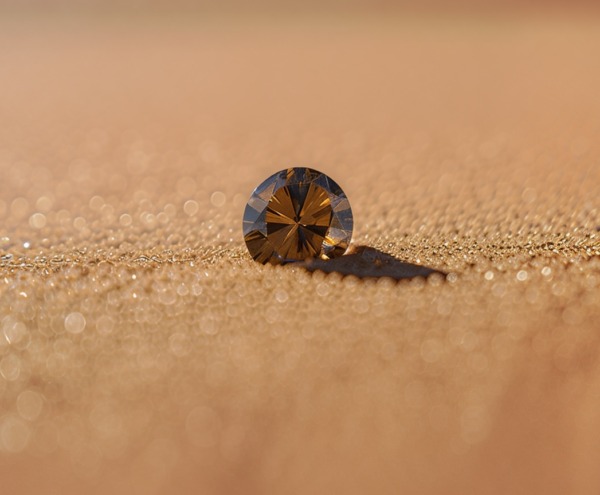
A natural diamond’s uniqueness gives it value beyond its appearance. Its individual combination of color, clarity and natural origin means no two gems are ever exactly alike. Desert diamonds (opens in a new window) are a perfect example, with naturally occurring colors shaped by trace elements and geological conditions that make each gem unique.

How natural diamonds are as unique as you are
Just like human life, the birth of natural diamonds is extraordinarily improbable, relying on a precise combination of elements to make it possible. As a product of the earth, each natural diamond is completely unique, its characteristics one-of-a-kind thanks to a formation process that cannot be replicated in a lab.
This is why we choose diamonds to represent the most meaningful moments of our lives; a message that has been captured perfectly in this video from diamond company De Beers that sums up our desire for “something with a story as unique as our own”. We couldn’t have put it better ourselves.
FAQs
What are diamond inclusions?
Diamond inclusions are natural features trapped inside a diamond as it forms deep within the Earth. They can appear as tiny crystals, feathers or pinpoint marks and are created by the geological conditions surrounding the growing diamond. For a deeper explanation, see our diamond clarity guide. (opens in a new window)
Can two natural diamonds ever be exactly the same?
No. While two natural diamonds can appear remarkably similar, no two share exactly the same combination of inclusions, trace elements and crystal growth patterns.
How long does it take for a natural diamond to form?
Natural diamond formation (opens in a new window) began between one and three billion years ago, deep within the Earth’s mantle under intense heat and pressure. Their slow natural formation is one of the reasons every natural diamond develops its own distinctive characteristics over time.
Is Flawless the highest diamond clarity grade?
Flawless (FL) is the highest diamond clarity (opens in a new window) grade, with no inclusions or blemishes visible under 10x magnification.
Do natural diamonds hold value?
You may wonder whether natural diamonds hold value (opens in a new window). Historically, natural diamonds have appreciated by an average of around 2 to 3% per year over the past 50 years. Beyond financial considerations, many families also value natural diamonds for their rarity, sentimental significance and ability to be passed down through generations.
Sources
- www.igi.org/the-journey-of-natural-diamonds-from-earth-to-elegance/ ↩︎
- www.gia.edu/diamond-quality-factor/ ↩︎
- www.rapaport.com/magazine-article/flawed-but-beautiful-why-gemologists-love-diamond-inclusions/ ↩︎
- www.naturaldiamonds.com/science-of-diamonds/how-are-diamonds-formed/ ↩︎
- www.prinsandprins.com/arent-laboratory-grown-diamonds-identical-to-natural-diamonds/ ↩︎
- www.gia.edu/diamond-quality-factor/ ↩︎
- www.naturaldiamonds.com/diamond-jewelry/diamond-value/ ↩︎


