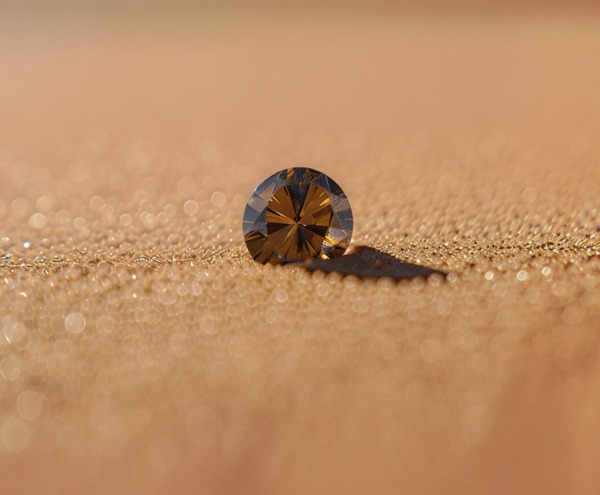

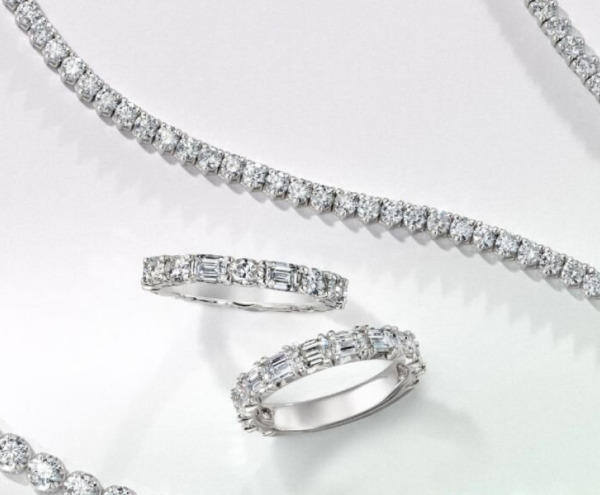
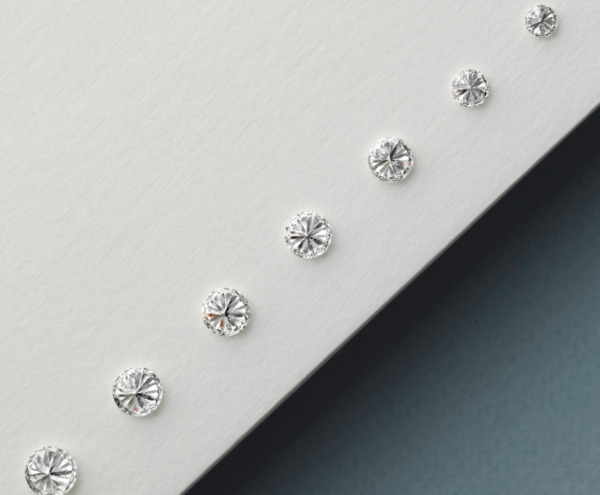

Natural diamonds can have long-term investment potential, with rarity, quality, and provenance among the factors that influence market value. Their supply is finite, shaped by geological processes that took place millions to billions of years ago. Each natural diamond is completely unique, and as individual diamonds vary considerably, the 4Cs (clarity, carat, cut and color), provenance and market demand all matter when considering value.
Key takeaways
Interested in the long-term value of natural diamonds (opens in a new window)? Rarity is part of the equation. Every natural diamond is one-of-a-kind, shaped by a geological journey that began millions to billions of years ago. With a finite natural supply, that rarity has helped natural diamonds retain their desirability and value over time.
Prices naturally fluctuate according to factors including carat weight, cut, clarity, color and market demand, but the longer-term picture is compelling. Natural diamond prices have increased by an average of around 2-3% annually over the past 50 years. While individual diamonds will perform differently, this history helps explain why rarity, quality, and provenance all play a role when considering long-term value.
Why are natural diamonds rare?
To understand their investment appeal, let’s talk about how natural diamonds are formed in the first place.
Natural diamond formation (opens in a new window) took place deep within the Earth under immense heat and pressure before powerful volcanic eruptions carried them towards the surface. They were eventually discovered by humans, first in ancient India.
Many natural diamonds are between 90 million and 3.5 billion years old; formed long before humans existed. That extraordinary geological history is part of their appeal to buyers and collectors. When considering lab-grown diamonds vs natural diamonds (opens in a new window), their very different origins are one of the key distinctions: natural diamonds form deep within the Earth, while laboratory-grown diamonds (also called LGDs) are manufactured on mass in controlled environments.
As natural diamonds can only be found in certain parts of the world, inlcuding major diamond-producing countries such as Botswana, Canada, Russia and South Africa, they’re exceptionally rare and finite.

The power of uniqueness in natural diamond investments
No two natural diamonds are exactly the same. Each has its own combination of characteristics, shaped by its journey to the Earth’s surface. For particularly rare natural diamonds, that individuality can contribute to extraordinary demand at auction.
A good example of this is the CTF Pink Star, which holds the record for the most expensive pink diamond ever sold at auction. It sold for HK$553 million (US$71.2 million) at Sotheby’s Hong Kong in April 2017. Pink diamonds are incredibly rare; the now-closed Argyle mine in Western Australia was a particularly important source, supplying more than 90% of pink diamonds in the marketplace, according to GIA research, despite pink diamonds comprising less than 0.1% of the mine’s total annual production.
Auction records such as the CTF Pink Star show how rarity, provenance, and individual characteristics can influence market value. However, desirability takes many forms. Natural diamonds across the D-to-Z color scale, from colorless through to light yellow or light brown, and those with visible inclusions can be as desirable due to their unique color characteristics.

What past trends reveal about natural diamond investment potential
If you’re looking at natural diamonds from an investment perspective, it’s worth looking at how demand has evolved.
“Historically, demand has been driven by factors such as total private consumption and the size of the middle class in different countries. As the world economy has grown over the past century, so has the demand for polished diamonds,” Bain & Company has previously reported.
More recent research points to continued consumer appetite. De Beers’ 2025 US Diamond Acquisition Study found that natural diamonds remained the most desired luxury jewelry product among the US consumers surveyed, while non-bridal purchases accounted for 75% of demand value.
That expanding role beyond engagements and weddings offers a useful context for understanding the market for natural diamonds today.
Things to keep in mind when investing in natural diamonds
Whatever your reason for investing in diamond jewelry, it’s important to do your homework and be clear about your end goal.
If you’re considering the future resale value of a diamond piece, examine the characteristics of the individual diamond alongside wider market demand. Carat weight, color, clarity, cut, rarity and provenance can all influence market value, but their importance will vary from one natural diamond to another.
For an individual natural diamond, an independent grading report can provide important information about its characteristics, while auction results and reputable market data can help build a broader picture of demand.
A natural diamond with a grading certification is always more likely to be more valuable when reselling compared to an uncertified diamond.

Why the 4Cs matter when investing in natural diamonds
If you’re new to the 4Cs of diamonds, (opens in a new window) they stand for carat weight, color, clarity and cut. All four play a role in not just appearance but also long-term diamond investment potential.
Graded on individual scales, the 4Cs are crucial in determining a diamond’s value as they collectively describe a natural diamond’s characteristics and allow diamonds to be assessed and compared consistently.
Diamond cutting (opens in a new window) determines how a diamond’s proportions and facets interact with light, directly influencing its brilliance and sparkle. These four metrics also help buyers understand the characteristics documented in a grading report.
Desirability goes beyond these grading metrics.
Natural diamonds across the D-to-Z color scale, including those with subtle warm hues, and diamonds with visible inclusions can be desirable in their own right. Each carries characteristics shaped by its unique geological journey.
Why grading reports matter when buying diamonds
If you’re buying a natural diamond as an investment, with the possibility of reselling it in the future, having an independent grading report can provide important documentation of its characteristics.
Reputable gemological laboratories such as the Gemological Institute of America (GIA) issue grading reports that assess characteristics including the 4Cs. These reports should always be verified directly with the laboratory that issued them.
Some graded diamonds also carry a report number inscribed on the girdle, allowing the diamond to be matched to its grading report.
LGDs can also be assessed by gemological laboratories, although reporting methods vary. GIA, for example, currently classifies eligible laboratory-grown diamonds as either Premium or Standard rather than applying the same D-to-Z color and clarity terminology used for natural diamonds.

FAQs
Why do natural diamonds retain value?
Natural diamonds are finite and every diamond has its own combination of characteristics. Diamond size and value (opens in a new window) can be related, as larger natural diamonds are generally rarer but carat weight is only one factor. Cut, color, clarity, provenance, rarity and market demand can all influence value.
Do natural diamonds increase in value over time?
Natural diamond prices have appreciated over the long term, although individual results vary. How well natural diamonds hold value (opens in a new window) depends on the characteristics of the individual diamond, its rarity and provenance, as well as wider market demand.
Do natural diamonds carry heritage value?
Natural diamonds can carry significant heritage value through their provenance, particularly when connected to notable owners, designers or moments in history. At auction, documented provenance can add to the story and desirability of an individual diamond, while exceptional characteristics such as the highest diamond clarity (opens in a new window) grades can influence market value.
Are larger natural diamonds disproportionately rare?
Yes. Larger natural diamonds (opens in a new window) are found less frequently than smaller diamonds, which means rarity generally increases with carat weight. Carat alone does not determine value, however, as cut, color, clarity, provenance and other individual characteristics also play a role.
How does cutting era affect natural diamond desirability?
Diamond cutting (opens in a new window) reflects both technology and changing tastes. Antique cuts such as Old Mine and Old European cuts have distinctive proportions and light patterns associated with their era, while modern cuts are shaped using more precise contemporary techniques. Which appeals most ultimately comes down to the individual diamond and the buyer.
Sources
- Natural Diamond Council (NDC), “Diamond Value”, https://www.naturaldiamonds.com/diamond-jewelry/diamond-value/ (opens in a new window), accessed 16 September 2026.
- Gemological Institute of America (GIA), “Exceptional Pink to Red Diamonds: A Celebration of the 30th Argyle Diamond Tender,” Gems & Gemology, Winter 2014, https://www.gia.edu/gems-gemology/winter-2014-pink-to-red-diamonds-30th-argyle-diamond-tender (opens in a new window) accessed 16 September 2026.
- Bain & Company and Antwerp World Diamond Centre (AWDC), The Global Diamond Industry: Lifting the Veil of Mystery, 2011, p. 46. https://media.bain.com/Images/PR_BAIN_REPORT_The_global_diamond_industry.pdf (opens in a new window), accessed 16 September 2026.
- De Beers Group, “Diamond Report,” https://www.debeersgroup.com/~/media/Files/D/debeers-v2/documents/news-insights/reports-and-results/the-diamond-report-edition-1/de-beers-group-the-diamond-report-1.pdf (opens in a new window), accessed 16 September 2026.
- Gemological Institute of America (GIA), “Laboratory-Grown Diamond Services,” https://www.gia.edu/gia-news-press/updated-laboratory-grown-diamond-services-to-launch-october-1 (opens in a new window) , accessed 16 September 2026.


