


Answer
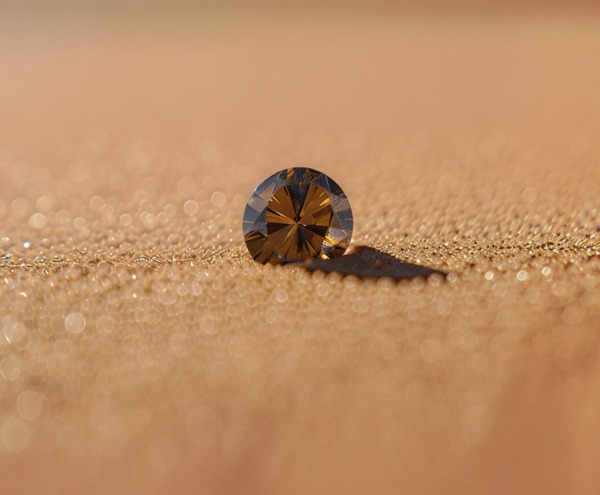
Yes. Each natural diamond is unique because it forms deep within the Earth under its own set of geological conditions. Crystal growth, trace elements and internal characteristics preserve a record of that journey. Natural diamonds can share the same 4Cs grades while having different characteristics, including distinctive inclusion patterns. These distinctions help identify individual diamonds.
Key takeaways
What causes natural diamonds to be unique?
A natural diamond (opens in a new window) is the extraordinary result of a geological process that takes place deep within the Earth’s mantle. As a diamond develops, differences in depth, pressure, temperature, surrounding minerals and trace elements can influence its characteristics. These subtle changes create an individual record of its formation.

Credit: @De Beers (Instagram)
The role of crystal growth in diamond formation
Natural diamonds form as carbon crystallizes under Earth’s surface. This crystal growth happens in stages as conditions fluctuate, creating internal growth zones that GIA compares to the rings of a tree. Each zone preserves a record of different periods in a diamond’s formation, including changes in its growth environment.
How diamonds form under heat and pressure
Natural diamonds form between 140 and 200 kilometers below Earth’s surface. Here, crushing pressure and intense heat create the conditions needed for carbon to crystallize. Most of the natural diamonds we see today formed between one and 3.3 billion years ago. This combination of time, depth, heat and pressure contributes to the individual formation history of every natural diamond.
What are diamond inclusions?
Inclusions are minute internal characteristics found in natural diamonds. Tiny mineral crystals, microscopic fractures and even fluids can become trapped or develop as the diamond forms. Their size, number, position, nature and relief help determine a diamond’s clarity grade.
Most natural diamonds contain inclusions, but many are too small to see with the naked eye. Gemologists map the placement and combination of the characteristics to help identify individual diamonds.

Credit: @gemmologyobsession (Instagram)
Types of diamond inclusions
Inclusions come in various forms. Crystals are minerals contained in the diamond, while minute crystals appear as pinpoints when magnified. Feathers are tiny internal fractures, and internal graining can present as lines or curves. These characteristics develop naturally during the diamond’s formation.
How do gemologists identify individual diamonds?
Similar to a fingerprint, a diamond’s distinctive characteristics can aid in identification. A GIA Diamond Grading Report will include proportions, measurements and the 4Cs, along with a diagram mapping the location of its inclusions and blemishes.

Diamond grading and clarity assessment
Understanding what’s the highest diamond clarity (opens in a new window) starts with how gemologists assess inclusions and blemishes. Gemologists examine a diamond’s inclusions and blemishes under 10X magnification. They assess size, nature, number, position and relief. Together, these characteristics determine a diamond’s clarity grade.
Using inclusion maps for identification
A clarity plot maps inclusions and blemishes. Below the flawless diamond (opens in a new window) grade, GIA states that no two diamonds have the same combination and placement of clarity characteristics, making these maps useful for identification.
Can two diamonds ever be identical?
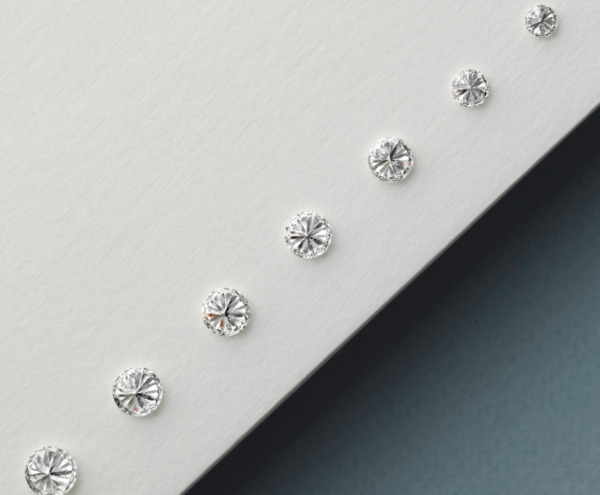
The 4Cs describe a diamond’s grading characteristics rather than every physical characteristic. Two natural diamonds can share the same 4Cs grades without being identical.

Credit: @happyjewelers (Instagram)
How does natural diamond uniqueness compare to lab-grown diamonds?
Natural and lab-grown diamonds share many chemical and physical properties, but their origins differ. Natural diamonds develop through geological processes over immense periods of time, while lab-grown diamonds are manufactured using HPHT or CVD methods. Lab-grown diamonds can also have individual characteristics, but their growth patterns can carry markers of the manufacturing process.
FAQs
What causes diamond inclusions?
Inclusions can form during a natural diamond’s growth as minerals become trapped or microscopic fractures and other internal features develop. Learn more about how these characteristics are assessed when grading a flawless diamond. (opens in a new window)
How are diamonds formed naturally?
Natural diamond formation (opens in a new window) occurs as carbon crystallizes under intense heat and pressure below the Earth’s surface.
Can two diamonds have identical characteristics?
Two natural diamonds can share the same 4Cs of diamond grades (opens in a new window) without being identical. Their measurements, proportions and microscopic characteristics distinguish one from another.
What are diamond fingerprints?
A diamond fingerprint is a distinctive pattern of characteristics that can help identify an individual diamond. These natural characteristics can also contribute to a diamond’s visual character, making each one a distinctive addition to a diamond jewelry collection. (opens in a new window)
How do gemologists identify individual diamonds?
When identifying a real diamond (opens in a new window), a gemologist will examine its proportions, measurements, clarity and inscriptions.
Sources
- ADIF. How natural diamonds are formed underground over billions of years.
https://adiamondisforever.com/about-diamonds/how-natural-diamonds-are-formed-over-billions-of-years/
Accessed September 8, 2026 - ADIF. How natural diamonds are formed underground over billions of years.
https://adiamondisforever.com/about-diamonds/how-natural-diamonds-are-formed-over-billions-of-years/
Accessed September 8, 2026 - ADIF. How natural diamonds are formed underground over billions of years.
https://adiamondisforever.com/about-diamonds/how-natural-diamonds-are-formed-over-billions-of-years/
Accessed September 8, 2026 - GIA. Methods and Challenges of Establishing the Geographic Origin of Diamonds.
https://www.gia.edu/gems-gemology/fall-2022-geographic-origin-diamonds (opens in a new window)
Accessed September 8, 2026 - ADIF. How natural diamonds are formed underground over billions of years.
https://adiamondisforever.com/about-diamonds/how-natural-diamonds-are-formed-over-billions-of-years/
Accessed September 8, 2026 - GIA. Diamond Quality Factors. https://www.gia.edu/diamond-quality-factor (opens in a new window)
Accessed September 8, 2026 - GIA. Diamond Inclusions Defined. https://4cs.gia.edu/en-us/blog/diamond-inclusions-defined/ (opens in a new window)
Accessed September 8, 2026 - GIA. Seven Things You Need to Know About Diamond Clarity. https://4cs.gia.edu/en-us/blog/seven-things-to-know-about-diamond-clarity/ (opens in a new window)
Accessed September 8, 2026 - GIA. Unrivaled expertise in every grading report.
https://4cs.gia.edu/en-us/types-gia-reports/ (opens in a new window)
Accessed September 8, 2026 - GIA. Diamond Quality Factors. https://www.gia.edu/diamond-quality-factor (opens in a new window)
Accessed September 8, 2026 - GIA. Seven Things You Need to Know About Diamond Clarity. https://4cs.gia.edu/en-us/blog/seven-things-to-know-about-diamond-clarity/ (opens in a new window)
Accessed September 8, 2026 - GIA. Diamond Quality Factors. https://www.gia.edu/diamond-quality-factor (opens in a new window)
Accessed September 8, 2026 - GIA. HPHT and CVD Diamond Growth Processes: Making Lab-Grown Diamonds.
https://www.gia.edu/hpht-and-cvd-diamond-growth-processes (opens in a new window)
Accessed September 8, 2026 - GIA. Introduction to Diamond Clarity: What are Inclusions and Blemishes
https://4cs.gia.edu/en-us/blog/introduction-to-diamond-clarity-inclusions-and-blemishes/ (opens in a new window)
Accessed September 8, 2026


