
The mesmerizing sparkle of a natural diamond often steals the spotlight, but there’s so much to admire – and learn – about its color.
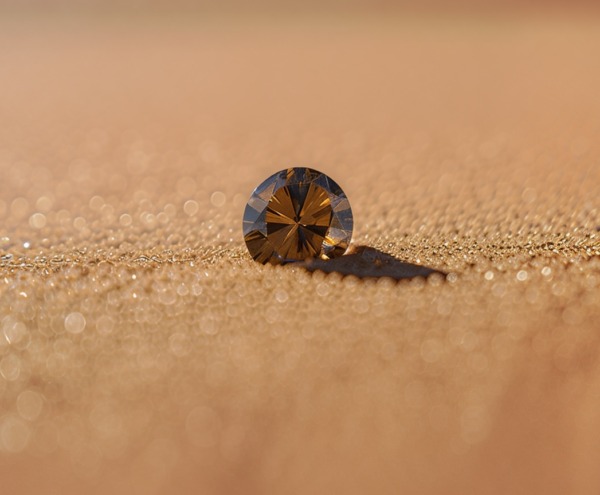
Like size and shape, diamond color is broad, spanning the full rainbow spectrum. Just look at Scarlett Johansson’s spectacular engagement ring from Colin Jost – an 11-carat, toffee-colored desert diamond on a distinctive brown band, designed by American jeweler James de Givenchy of TAFFIN. Unconventional? Sure. Unforgettable? No question.
From vivid reds to golden champagnes to sky blues, natural diamond color isn’t just about visual appeal – or, as many often presume, some kind of man-made trickery. These shades are the result of a billion-year alchemy beneath the Earth’s surface, giving each gem a distinctive hue that’s a true geological one-off.
In the jewelry world, color can directly affect a diamond’s grade and price. Color is one of the 4Cs of diamonds (alongside cut, clarity and carat weight), which help to determine a diamond’s overall value and quality, so doing your homework on the topic is no bad thing if you’re interested in buying.

The science behind natural diamond color formation
Understanding natural diamonds form is the key to understanding their color. Natural diamonds begin their journey deep within the Earth, typically about 140 to 200 kilometers beneath its surface, over the course of one to three billion years. Under intense heat and pressure, carbon atoms bond in a crystalline structure to form diamonds. But it’s not just carbon that gets caught up in the process, the introduction of trace elements is what gives diamonds their colors.
Nitrogen is the most common trace element and gives diamonds a yellow or brown hue, like the iconic 128.54-carat yellow Tiffany Diamond most famously worn by Audrey Hepburn while promoting Breakfast at Tiffany’s.
Boron typically creates blue gemstones, such as the mesmerizing Laguna Blu Diamond that Priyanka Chopra Jonas wore around her neck to the 2023 Met Gala.

Irregularities and distortions in the structure (also called crystal lattice) of a diamond can scatter light in ways that produce shades of pink or red. Vivid green colors in diamonds is often caused by natural radiation.
Because each natural diamond forms under slightly different conditions (even when formed in the same geographic location), no two will exhibit color in exactly the same way.
Color in diamonds doesn’t mean imperfection. Color, in fact, is what makes some diamonds incredibly rare – only one in 10,000 carats shows fancy color. And for gems with super rich, intense hues, you’re looking at odds closer to one in 25,000.
In early 2026, that rarity showed up in the form of a 41.82-carat natural blue diamond recovered from South Africa’s Cullinan Mine. The diamond falls into the Type IIb category, which represents less than 0.1 percent of all natural diamonds.
Understanding the diamond color spectrum
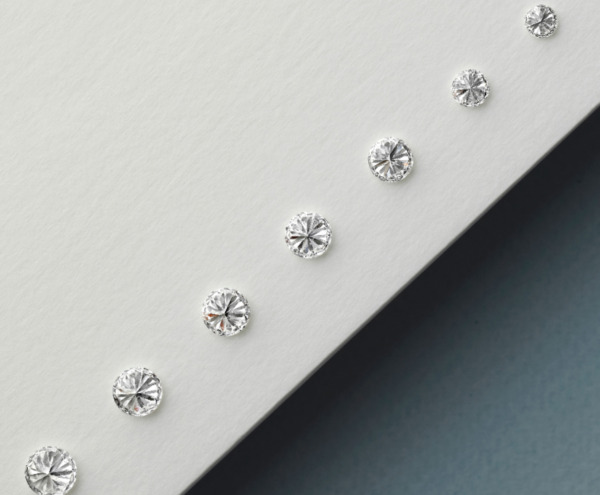
On the GIA’s D-to-Z diamond color scale, which applies to white or colorless diamonds, D is the highest grade, given to completely colorless gems, and Z is the lowest grade, given to those showing a light yellow or brown tint. The closer a diamond is to D, the rarer and more expensive it is.
The diamond color chart helps standardize grading, but within each grade exists a world of subtle variation, and, of course, what you lean towards is a personal choice. Some people seek the best diamond color grade according to the scale (D or E), opting for a gem that’s strikingly bright white. Others prefer warmer hues from the desert diamond color pallete (G to M), picking diamonds that are cream, honey and champagne in color. These can feel more mellow, romantic or vintage in their look — a reminder that the color of diamonds you choose says as much about personal taste as it does about grading.

What are fancy colored diamonds?
Fancy color diamonds, which fall outside the D-to-Z scale, are even more prized. Graded using a separate classification system, these unique gems come in shades of pink, blue, green, red, yellow and brown.
And while rarity plays a significant role, the value of fancy color diamonds is ultimately determined by a combination of factors like its shade, saturation, size and market demand.


What’s the most valuable color? Among the rare diamond colors, red diamonds are typically the least common, but it’s vivid blues that often top sales charts in terms of price per carat, followed closely by pinks.
What sort of bids do fancy diamonds fetch at auction? Big ones. The 5.11-carat Moussaieff Red sold for $8 million in 2001, while, in 2016, the 14.62-carat Oppenheimer Blue fetched $57.5 million at Christie’s and the 59.60-carat Pink Star brought in a record-breaking $71.2 million at Sotheby’s in 2017.
Do lab-grown diamonds have color?
Laboratory-grown diamonds (also called LGDs) are created in factories using High Pressure High Temperature (HPHT) or Chemical Vapor Deposition (CVD) methods, over a few weeks. Because the process happens quickly in a highly controlled setting, the results tend to be consistent (as in, you can predict what they’ll look like before they’ve been made, essentially). LGD batches often have similar color, clarity and structure, with less variation from one to the next.
They can technically be produced in specific colors like pink, blue or yellow, for example, by adding trace elements or using post-growth treatments. But unlike natural diamonds, whose color is shaped over billions of years, the contrast between lab grown diamonds vs natural diamonds is nowhere more apparent than in color: laboratory-grown color lacks the one-of-a-kind character and irresistible allure that nature spectacularly creates all by itself. Sometimes shades of synthetic diamonds can look fake, neon or oversaturated.
What to consider when choosing a diamond color
Deciding on the best diamond color for you isn’t about choosing the most valuable or following trend cycles. It’s about finding a shade that complements your individual style, complexion and feels authentic to you.
Some helpful pointers for picking a color are…
- The surrounding metal and lighting can dramatically affect how a diamond appears. Cooler tones in the D–F range, for example, look most striking set in white gold or platinum. Warmer hues from G to J are brought out beautifully by yellow or rose gold settings.
- Skin tone also plays a role: warmer diamond colors are known to particularly complement olive or deeper skin tones, while cooler gems are considered to often pop against fairer complexions.
- What a diamond is paired with also plays a part, as diamond facets (its flat surfaces) act like tiny mirrors. A diamond with subtle warmth may appear more colorless surrounded by bright accent stones that reflect white light.
Whatever color you end up leaning towards, have fun finding it and making a statement with it. And who says you have to be limited to just one – rainbow jewelry collection, anyone?
FAQS
More than most buyers realize. The history of celebrity proposals is partly a history of diamond color: Scarlett Johansson’s toffee-colored desert diamond made warm browns suddenly desirable; Jennifer Lopez’s 6.1-carat fancy pink from Ben Affleck did the same for vivid pinks. Royal choices move more slowly but tend to last longer — the champagne hues of certain vintage pieces reappear in new commissions decades on. What unites all of it is the stone itself: a natural diamond whose color is unlike any other on Earth.
Rarity in diamond shape works differently to rarity in color. Where color rarity is geological, shape rarity is partly a function of demand and cutting economics. Diamond shapes that waste more rough crystal during cutting (rounds, hearts) cost more to produce. Shapes that require exceptional skill to execute well (marquise, pear, heart) are rarer still in high-quality gems. Antique cuts (old mine, old European, rose cut) usually exist only in surviving period jewelry or in diamonds recut from historical pieces, which makes fine jewelry examples genuinely scarce. The heart shape is arguably the rarest in contemporary production. It accounts for less than 2% of diamond shapes on the marketii but “rarest” is a slippery category in any market shaped by fashion.
Diamond cutting determines how light travels through a gem, and light is what brings color to life. A well-cut diamond with a warm G or H grade can appear luminous and richly toned; the same color in a poorly cut stone can look flat or dull. Step cuts (emerald and Asscher) tend to showcase color most vividly: their long, open facets hold light in broad flashes that draw out depth and warmth. Brilliant cuts (round, oval, cushion) produce more scintillation, which animates color differently. A fancy yellow in a brilliant cut will dance; in a step cut, it glows. Neither is better. They’re just different expressions of the same gem, which is why seeing a diamond in person, under different lighting, is a very important when considering a purchase.
The geological forces behind a natural diamond are permanent. A vivid yellow diamond passed down from a grandmother arrives looking exactly as it did when it was first set. That stability is a significant part of what gives a natural diamond its diamond value across generations: it cannot fade, shift, or be replicated on demand. Fancy colors add another dimension — a family’s distinctive pink or green diamond becomes part of its identity in a way few objects can. The rarer the color, the more irreplaceable the piece.
Sources
- Instyle.com, Celebrity colored stone engagement rings ↩︎
- Gemsociety.org, Most expensive diamond colors ↩︎
- Gia.edu, Diamond quality factor ↩︎
- Gia.edu, The 4Cs: color ↩︎
- Cape Town Diamond Museum, Formation of diamonds ↩︎
- Gia.edu, Naturally colored yellow and orange diamonds ↩︎
- Qz.com, Why are blue diamonds blue ↩︎
- Vogue.co.uk, Priyanka Chopra Jonas’ blue diamond necklace at the Met Gala 2023 ↩︎
- Gia.edu/doc/GG-SP18-Breeding.pdf ↩︎
- Gia.edu, The magic of colored diamonds ↩︎
- Gia.edu, The magic of colored diamonds ↩︎
- www.rapaport.com/news/petra-unearths-42ct-blue-diamond-from-cullinan-mine/ ↩︎
- Gia.edu, The 4Cs: color ↩︎
- Diamonds.pro, D color grade diamonds ↩︎
- Gemsociety.org, Most expensive diamond colors ↩︎
- Gemsociety.org, Most expensive diamond colors ↩︎
- Cape Town Diamond Museum, Facts about red diamonds ↩︎
- Forbes.com, Oppenheimer blue diamond sells for world auction record ↩︎
- Naturaldiamonds.com, Pink Star diamond ↩︎
- Gemsociety.org, Lab-grown diamond production methods ↩︎
- Diamonds.pro, Lab-created pink diamonds ↩︎
- Gia.edu, Engagement ring setting metals ↩︎
- Skinbeautybar.com, The-best diamond colors for your skin tone ↩︎
- Gia.edu, Diamond color: seven things you need to know ↩︎
- leondiamond.com/blogs/diamonds/how-diamond-shape-affect-price ↩︎


