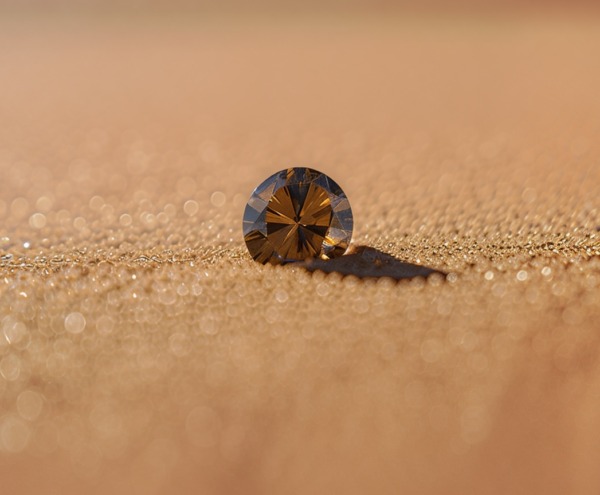
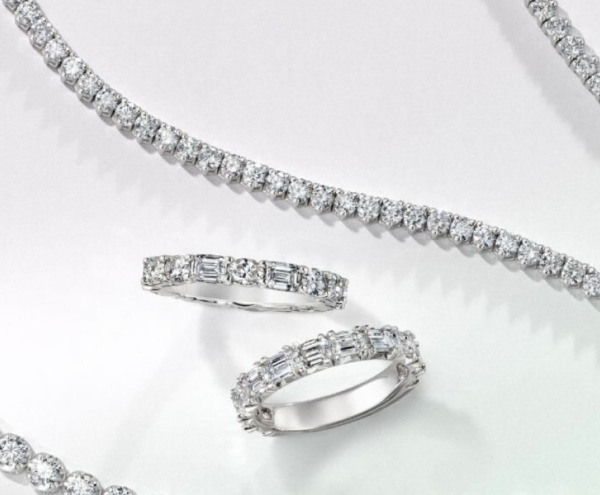
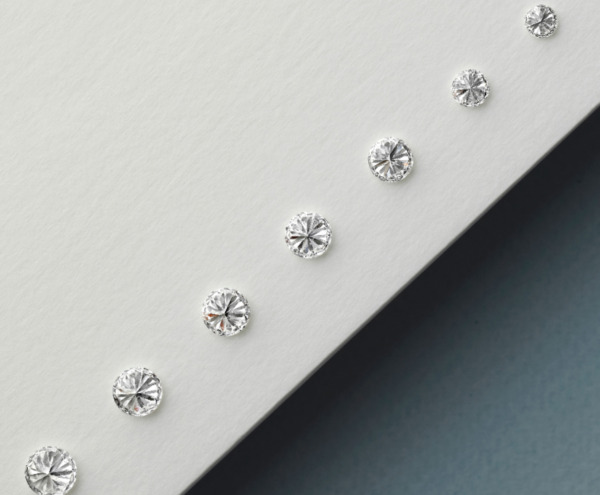

Natural diamonds do not change color or degrade over decades of everyday wear. Their color is fixed within a rigid carbon lattice formed over billions of years, making them resistant to heat, UV light and normal chemical exposure. These qualities make them as wearable and beautiful on a fiftieth anniversary as they are on a first. A natural diamond passed down over decades as an heirloom looks and holds up exactly as it did the day it was set.
Color and long-term wear in natural vs lab-grown diamonds
| Factor | Natural diamond | Lab-grown diamond (LGD) |
| Is the color guaranteed for life? | Yes. Color forms over billions of years and is locked into the atomic structure of the gem permanently. | Mostly. LGDs are generally color stable, but a subset of CVD-created diamonds can shift color under UV light. |
| Can it withstand wear over time? | Yes. Diamonds are the hardest naturally occurring substance on Earth. They will not degrade with wear. | Yes. LGDs share the same hardness and durability under normal conditions. |
| Does the color have an origin story? | Yes. Every natural diamond’s color is the result of a specific geological event. No two are identical | No. Color in lab-grown diamonds is either incidental to the manufacturing process or introduced through post-growth treatment. |
| Does it gain meaning with age? | A natural diamond worn for decades or passed between generations carries a provenance that deepens over time. | A lab-grown diamond is stable and wearable, but its story begins at the point of manufacturing. |
Do diamonds change color over time? It’s a question many buyers ask, particularly when comparing natural diamonds with lab-grown alternatives. Color is one of the 4Cs of diamonds and plays a major role in a diamond’s beauty, making long-term stability an important consideration. The good news is that a diamond’s color (opens in a new window) is remarkably stable. Here’s what can affect its appearance over time and the key differences between natural and lab-grown diamonds.
Natural diamond formation and color stability
Do you know how natural diamonds are formed? Around 4.5 billion years ago, stardust from the galaxy accumulated in the core of the Earth. It was this source of carbon that, when bonded under intense heat and pressure hundreds of kilometers deep, then crystallized and formed diamonds.
The origins of natural diamonds
These incredible gemstones were then brought to the planet’s surface by powerful volcanic eruptions millions of years ago and became lodged in pipe-like rocks. Even today, most are sadly buried far too deep for us to recover.
Why diamonds are so stable
The secret to a natural diamond’s remarkable stability is its structure. Its carbon atoms are bonded together in a rigid tetrahedral lattice, making it not only the hardest naturally occurring substance on Earth but also one of the most stable.
Understanding diamond color grading
Color is one of the 4Cs of diamonds. The GIA’s diamond color scale is used to assess the color of diamonds, grading white diamonds from D (colorless) to Z (light yellow or brown). Diamonds with stronger natural hues are known as fancy color diamonds and are graded using a separate system based on hue, tone and saturation.

White diamonds
White diamonds are graded on the GIA’s D to Z scale, with D representing colorless diamonds and Z showing a noticeable yellow or brown tint. D to F diamonds are the rarest because they contain little to no nitrogen.
Yellow diamonds
Yellow fancy color diamonds get their warm hue from nitrogen impurities. The more nitrogen present, the richer the yellow color.
Pink diamonds
Pink diamonds owe their color to intense pressure during natural diamond formation, which changes the crystal structure rather than adding trace elements.
Blue diamonds
Blue fancy color diamonds get their striking hue from trace amounts of boron and are among the rarest natural diamonds
Rare cases where diamonds temporarily change color
There are a few rare exceptions. Chameleon diamonds, an exceptionally rare type of natural diamond, are typically grayish yellow-green. When heated to over 300°F or exposed to light after a prolonged period in the dark, they temporarily change to yellow. The effect usually lasts around 15 minutes, although some chameleon diamonds continue to emit a yellow glow, known as phosphorescence, for up to an hour.
The science behind pink and Argyle diamonds
Pink diamonds, particularly the coveted Argyle diamonds, have their own fascinating characteristics. They are photochromic, meaning their color can fade under ultraviolet (UV) light before returning under visible or blue light. They are also thermochromic. At temperatures above 1,472°F, their color can shift towards a more purplish tone. These rare optical properties are another reminder of the remarkable conditions under which natural diamonds form.
Lab-grown diamond production and color stability
If you’ve ever wondered what a lab-grown diamond is (opens in a new window), the answer starts with how it’s made. Despite the name, most lab-grown diamonds (LGDs) aren’t created in small laboratories but are produced at scale in industrial manufacturing facilities using high-pressure or chemical vapor deposition (CVD) technology.
These carefully controlled processes create gems with a stable crystal structure, helping their color remain consistent under normal wear.
How lab-grown diamonds are made
LGDs are produced using advanced technology rather than natural geological processes. Today, manufacturers use two main methods to grow them: High Pressure High Temperature (HPHT) and Chemical Vapor Deposition (CVD).

High Pressure High Temperature (HPHT)
High Pressure High Temperature (HPHT) recreates the intense heat and pressure needed for diamond growth. Carbon is exposed to these conditions until it crystallizes into diamond.
What is chemical vapor deposition (CVD)?
Chemical Vapor Deposition (CVD) uses carbon-rich gases, such as methane, inside a vacuum chamber. As the gases are heated, carbon atoms separate and gradually build up layer by layer to form a diamond.
Do lab-grown diamonds change color over time?
For the vast majority of LGDs, the answer is no. There are, however, a few notable exceptions. Some CVD-made pink-gray diamonds with high silicon content can temporarily shift to a cooler, bluish tone when exposed to ultraviolet (UV) light. This rare photochromic effect is similar to one observed in certain natural Argyle pink diamonds.
Diamond color treatments and enhancements
Not every diamond gets its color naturally. Some natural diamonds and LGDs are treated after formation or growth to enhance or alter their color. Most modern color treatments, including HPHT and irradiation, are considered permanent.
Temporary surface coatings are different. Although uncommon in high-quality diamonds from reputable retailers, they can wear away over time and affect a diamond’s appearance.
ADIF tip: Before buying, ask whether a diamond’s color is natural or treatment-enhanced, and check that any treatments are clearly disclosed on the diamond’s grading report.
Reasons your diamond may look like it has changed color
If your diamond looks different than it used to, the cause isn’t always a change in the diamond itself. These are some of the most common explanations:
- A build-up of oils, lotions or everyday grime, which can leave a white diamond looking dull, cloudy or slightly discolored.
- Different lighting conditions, which can affect the way a diamond reflects light and make its color appear warmer or cooler.
- A new setting, particularly yellow gold, which can make a colorless diamond appear creamier or more yellow. Platinum, white gold and silver settings tend to preserve an icy-white appearance.
Does diamond color grading change over time?
diamond’s color grade isn’t expected to change over time. That’s why a grading report from a trusted gemological laboratory, such as the GIA, remains a reliable record of its color.
Natural vs lab-grown diamonds: Is one more color stable?
When it comes to color stability, natural and LGDs perform remarkably similarly. In both, color is determined by the diamond’s atomic structure, making permanent color changes highly unlikely under normal conditions.
There are a handful of rare exceptions. Some CVD-grown pink-gray diamonds can temporarily shift to a bluish tone under ultraviolet (UV) light, while certain natural diamonds, including chameleon and Argyle pink diamonds, can also display unusual photochromic properties. For the vast majority of diamonds, however, color remains stable for life.

Why color stability still matters when choosing a diamond
Whether you choose a natural or lab-grown diamond, the evidence is reassuring. Under normal conditions, a diamond’s color is built to last, with only a handful of rare exceptions linked to specific diamond types or treatments. More often, any perceived change comes down to lighting, everyday build-up or the setting rather than the diamond itself.
When choosing a diamond, focus on quality, craftsmanship and a trusted grading report rather than concerns about long-term color stability. For many buyers, a natural diamond’s lasting color is just one part of its appeal, alongside a geological journey that began millions to billions of years beneath the Earth’s surface.

FAQs
How do diamonds survive generations of wear?
A natural diamond (opens in a new window) is the hardest naturally occurring substance on Earth, making it exceptionally durable for everyday wear. With proper care and regular inspections, it can be worn and passed down through generations.
Do older diamonds become more desirable?
Older diamonds can become more desirable when rarity, craftsmanship, provenance or historical significance contribute to diamond value (opens in a new window). Demand ultimately depends on the individual gem, its quality and market interest.
What maintenance do diamonds require?
A real diamond (opens in a new window) should be cleaned regularly with mild soap and warm water, while its setting should be checked periodically by a jeweler. Proper care helps preserve its brilliance and condition over time.
How do vintage diamonds compare to new diamonds?
Both have their own appeal. Antique diamond styles (opens in a new window) often showcase historic cutting techniques and distinctive craftsmanship, while modern diamonds are typically cut to maximize brilliance and light performance.
Does diamond clarity influence the way we perceive color?
Yes. While clarity doesn’t change a diamond’s color, inclusions can affect how light passes through the gem, making it appear less bright. A diamond clarity guide (opens in a new window) can help you understand how clarity and color work together.
How does diamond cut affect the appearance of color?
A well-executed diamond cutting (opens in a new window) process maximizes light return, helping a diamond appear brighter and, in some cases, whiter.
Why is choosing the right carat important alongside color?
Carat weight can influence how noticeable color appears, particularly in larger diamonds. If you’re deciding what size diamond for an engagement ring (opens in a new window) is right for you, consider all 4Cs to find the best balance of diamond carat (opens in a new window), color, cut and clarity.
Do certain diamond shapes highlight color more than others?
Yes. Elongated shapes, such as oval or pear cuts, can make color more noticeable than round brilliant diamonds.
Sources
- www.gia.edu/gia-news-research/difference-between-natural-laboratory-grown-diamonds/ ↩︎
- www.pursuit.unimelb.edu.au/articles/diamonds-the-hard-facts/ ↩︎
- www.wtamu.edu/~cbaird/sq/2013/12/17/why-do-diamonds-last-forever/ ↩︎
- www.sothebys.com/en/articles/how-colored-diamonds-get-their-hue/ ↩︎
- www.sothebys.com/en/articles/how-colored-diamonds-get-their-hue/ ↩︎
- www.sothebys.com/en/articles/how-colored-diamonds-get-their-hue/ ↩︎
- www.sothebys.com/en/articles/how-colored-diamonds-get-their-hue/ ↩︎
- www.gia.edu/gems-gemology/fall-2014-labnotes-irradiated-cvd-synthetic-diamond/ ↩︎
- Cape Town Diamond Museum. Mohs scale of hardness. https://www.capetowndiamondmuseum.org/mohs-scale-of-hardness/. Date accessed: 29 July 2026. ↩︎
- Natural Diamond Council. Old diamonds guide. https://www.naturaldiamonds.com/culture-and-style/old-diamonds-guide/. Date accessed: 29 July 2026. ↩︎
- Diamonds.pro. Antique diamond cuts. https://www.diamonds.pro/education/antique-diamond-cuts/. Date accessed: 29 July 2026. ↩︎
- www.adc.com.au/understanding-diamond-clarity-vs-colour-key-insights/ ↩︎
- www.ilacollection.com/blogs/news/how-the-shape-of-a-diamond-visually-affects-diamond-color/ ↩︎
- www.ilacollection.com/blogs/news/how-the-shape-of-a-diamond-visually-affects-diamond-color/ ↩︎


