
Some people are drawn to natural diamonds while shopping for a ring. Others want to know if they’re a good investment or just want to understand what makes them so enduring. This guide covers it all: how natural diamonds form, what makes them valuable, how they’re graded, and how to care for one, starting with the fact that shapes everything else… a natural diamond is pure carbon, crystallized underground over billions of years, and no two are ever the same.
Key takeaways
Origins and formation of natural diamonds

What exactly is a natural diamond?
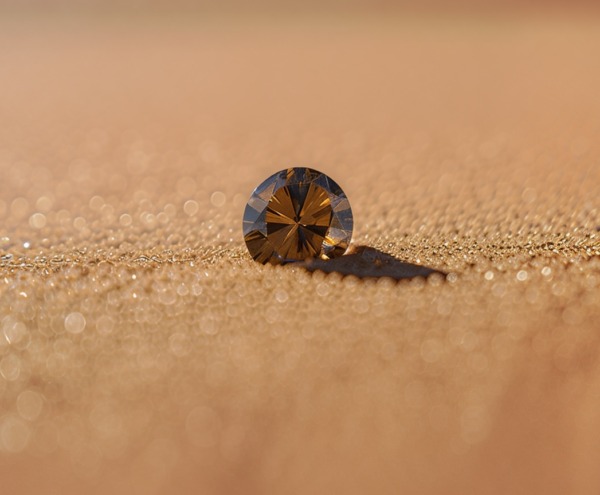
A natural diamond (opens in a new window) is a crystal of pure carbon, formed by the earth under extreme heat and pressure over one to three billion years, with no human role in the process. According to GIA, diamond is the hardest substance found in nature, and because no two form under identical conditions, each of them is genuinely one of a kind.
How are natural diamonds formed?
Natural diamonds form 90 to 125 miles below the earth’s surface, where carbon crystallizes under extreme heat and pressure. The process of natural diamond formation (opens in a new window) takes one to three billion years, and the finished gems only reach the surface through rare volcanic eruptions that carry them up in kimberlite pipes.
What are the differences between a natural diamond and a lab-grown diamond?
A natural diamond forms underground over one to three billion years, carrying a history that begins long before it ever reaches a jeweler’s bench. A lab-grown diamond (opens in a new window) is grown in a factory over a matter of weeks, using one of two methods, high-pressure high-temperature (HPHT) or chemical vapor deposition (CVD). What differentiates natural diamonds from a lab-grown is time itself. It’s a piece of the earth’s own past that is given rather than made. It’s authentic, unique and comes with a meaningful story born of the earth.
Where do natural diamonds come from?
Natural diamonds are found in a small number of countries with the right geology. Botswana, Russia, Canada, South Africa and Australia are among the largest sources, and each region’s diamonds carry subtle characteristics tied to the specific conditions under which they formed.
Are natural diamonds rare?
Yes, according to the GIA, only a small fraction of what forms in the Earth’s mantle ever reaches the surface intact, and only a portion of that is gem quality. Diamond-bearing deposits are also geologically rare in themselves, found in a small number of locations worldwide, which limits supply at the source.
The value and authenticity of natural diamonds

Why are natural diamonds more valuable than lab-grown diamonds?
Scarcity, uniqueness and authenticity are the difference. A natural diamond took billions of years to form and only a limited number are found each year, while lab-grown supply keeps expanding with production capacity, a gap that continues to shape diamond value (opens in a new window).
How can I tell if a diamond is natural?
The most reliable way is with a grading report from the GIA or IGI, which states origin directly rather than leaving it to guesswork. Both labs use detection technology built to confirm whether a gem is a real diamond (opens in a new window) that is natural in origin, or one grown in a lab.
What are the 4Cs of a natural diamond?
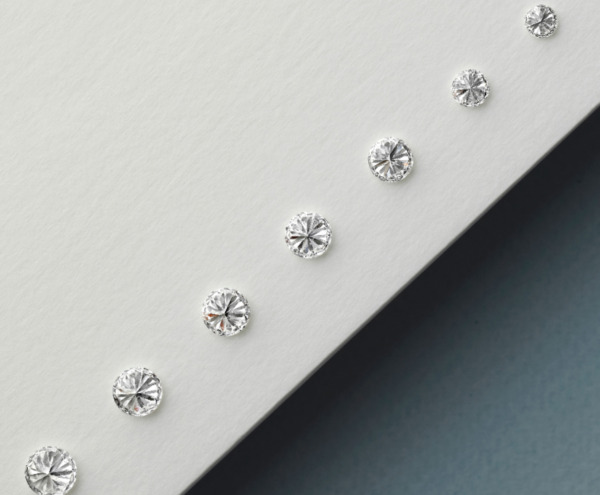
Cut, color, clarity and carat weight make up the diamond jewelry (opens in a new window) They were developed by GIA in the 1940s and remain the global standard for grading. Cut has the greatest impact on how a diamond performs in light, though all four work together to shape a gem’s character.
Do natural diamonds hold their value over time?
Generally, yes. Anyone investing in diamonds long-term (opens in a new window) is really betting on one thing: fixed supply against rising demand. A 2011 report by Bain & Company found that between 1982 and 2010, polished diamond prices appreciated by an average of 2% a year. More recently, Natural Diamond Council data drawn from over four million jewelry transactions found the average price of natural diamond jewelry rose 10% in 2025 alone.
What’s the difference between diamond cut and diamond shape?
Shape describes a diamond’s outline, think round, oval or pear. That’s what makes diamond cut vs shape (opens in a new window) one of the most misunderstood distinctions in the industry: names like pear cut or emerald cut actually describe shape, not the diamond’s cut grade. Actual cut is something separate and refers to the proportions, symmetry and facet arrangement that determine how well a diamond reflects light.
What are natural fancy-colored diamonds, and why are they so rare?
Fancy-colored diamonds show visible hue where a white diamond would look colorless. Color in natural diamonds is caused by trace elements or shifts in the crystal lattice during formation. According to the GIA, fewer than 1 in 10,000 polished diamonds show any color at all, which is what drives demand for fancy color diamonds (opens in a new window).
Ethics, responsibility and sustainability

Are natural diamonds ethically sourced today?
Today’s natural diamond industry operates under strict international standards that track and verify each gem from source to retailer, increasingly supported by blockchain technology that documents its full journey. Independent labs including GIA, HRD and IGI add another layer of accountability, issuing documentation that confirms both a diamond’s characteristics and its legitimacy before it ever reaches a buyer. Traceability is part of what makes ethical diamonds (opens in a new window) verifiable rather than just claimed.
Why have natural diamonds remained symbols of love, strength, and commitment for centuries?
A natural diamond takes billions of years and immense pressure to form, that history is part of what it has always represented: a bond meant to endure the same way. The tradition of marking commitment with a diamond dates to 1477, when Archduke Maximilian of Austria gave Mary of Burgundy the first recorded diamond engagement ring, a custom that still defines bridal jewelry (opens in a new window) today.
Care, maintenance and longevity of natural diamonds

How should I clean and care for natural diamond jewelry?
When it comes to diamond care (opens in a new window), warm water, a few drops of mild dish soap and a soft toothbrush handle most day-to-day buildup. Skip chlorine and household abrasives, both can wear down the metal in a setting and leave ultrasonic or steam cleaning to a professional jeweler.
Why do people choose natural diamonds for fine jewelry?
For many, it comes down to permanence. A natural diamond outlasts trends, ownership and even generations, which is hard to say about most things people buy. That staying power is a big part of what draws people to diamond jewelry (opens in a new window) built to be worn for decades, then passed on rather than replaced.
What types of jewelry best showcase natural diamonds?
Solitaire settings and pieces with fewer, larger gems let a natural diamond’s character carry the design rather than compete with it. Beyond rings, diamond shapes (opens in a new window) with strong geometry (emerald and Asscher cuts especially) work well in pendants and drop earrings where the stone catches light from multiple angles.
How do natural diamonds compare to other gemstones?
Natural diamonds and how they compare (opens in a new window) to other gems comes down to hardness above all: they measure 10 on the Mohs scale compared to 9 for sapphire and ruby, 7.5 to 8 for emerald, and as low as 2.5 for pearl. That gap is what lets a natural diamond hold its polish and edges for decades of daily wear, long after a softer gem would show it.
What are the best settings for a natural diamond engagement ring?
There’s no single best setting, it depends on individual lifestyle. Prong settings lift a diamond up and let in the most light; a classic choice for anyone who wants maximum sparkle. Bezel settings wrap the stone in a protective rim of metal instead, better suited to active hands or a more minimal, modern look. Halo and pavé settings add extra brilliance around a smaller center diamond, while a solitaire keeps all the attention on the gem itself. Trying different engagement ring styles (opens in a new window) on side by side is the clearest way to see how each setting changes a diamond’s look on the hand.
Should my wedding band match my natural diamond engagement ring?
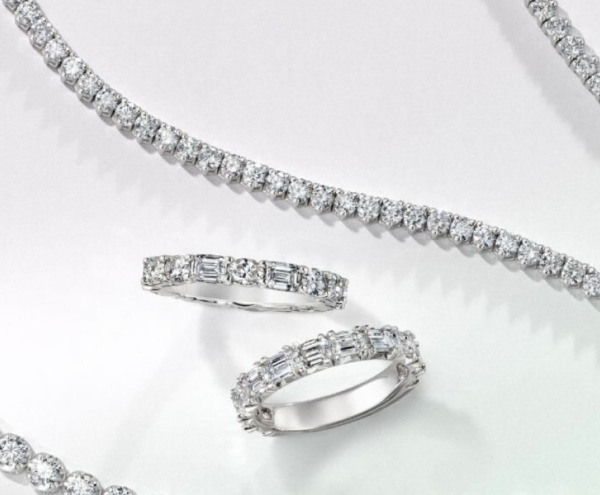
Not necessarily. Matching metal tones keeps the pairing cohesive, but the two pieces don’t need to be from the same designer or era to work well together. Building a diamond jewelry collection (opens in a new window) over time and mixing pieces bought for different occasions is increasingly how people wear natural diamonds day to day.
Sources
- GIA. The Extraordinary Backstory of Natural Diamonds. https://www.gia.edu/gems-gemology/fall-2024-diamond-reflections. Accessed July 21, 2026. ↩︎
- GIA. More than the Mohs Scale: Understanding Gem Durability. https://4cs.gia.edu/en-us/blog/more-than-mohs-scale-gem-durability/. Accessed July 21, 2026. ↩︎
- GIA. Kimberlites: Earth’s Diamond Delivery System. https://www.gia.edu/gems-gemology/summer-2019-kimberlites-earths-diamond-delivery-system. Accessed July 21, 2026. ↩︎
- GIA. The Extraordinary Backstory of Natural Diamonds. https://www.gia.edu/gems-gemology/fall-2024-diamond-reflections. Accessed July 21, 2026. ↩︎
- Natural Diamond Council. Natural Diamonds vs Lab Grown Diamonds. https://www.naturaldiamonds.com/natural-diamond-types-and-alternatives/lab-grown-diamonds/. Accessed July 21, 2026. ↩︎
- Natural Diamond Council. Discover Natural Diamonds: Where Are Diamonds Found? https://www.naturaldiamonds.com/natural-diamond-types-and-alternatives/where-are-diamonds-found-origins/. Accessed July 21, 2026. ↩︎
- GIA. The Extraordinary Backstory of Natural Diamonds. https://www.gia.edu/gems-gemology/fall-2024-diamond-reflections. Accessed July 21, 2026. ↩︎
- Natural Diamond Council. Discover Natural Diamonds: Where Are Diamonds Found? https://www.naturaldiamonds.com/natural-diamond-types-and-alternatives/where-are-diamonds-found-origins/. Accessed July 21, 2026. ↩︎
- Natural Diamond Council. What Affects Diamond Value? https://www.naturaldiamonds.com/diamond-jewelry/diamond-value/. Accessed July 21, 2026. ↩︎
- GIA 4Cs. Understanding the 4Cs of Diamond Quality. https://4cs.gia.edu/en-us/4cs-of-diamond-quality/. Accessed July 21, 2026. ↩︎
- Bain & Company. The Global Diamond Industry: Lifting the Veil of Mystery. https://www.bain.com/contentassets/dab98eb7f88c4bbf8b9c3e48b816c362/pr_bain_report_the_global_diamond_industry.pdf. Accessed July 21, 2026. ↩︎
- Natural Diamond Council. Natural Diamond Trends: A 2025 Overview. https://tools.prnewswire.com/en-us/live/20823/release/20260212EN87024. Accessed July 21, 2026. ↩︎
- GIA 4Cs. Guide to Diamond Shapes for Engagement Rings. https://4cs.gia.edu/en-us/blog/guide-diamond-shapes-engagement-rings/. Accessed July 21, 2026. ↩︎
- GIA. The Magic of Colored Diamonds. https://www.gia.edu/gia-news-research-worlds-fascination-fancy-colored-diamonds. Accessed July 21, 2026. ↩︎
- Natural Diamond Council. Uncover the Real Story Behind Your Natural Diamond. https://www.naturaldiamonds.com/in/diamond-facts-info/uncover-the-real-story-behind-your-natural-diamond/. Accessed July 21, 2026. ↩︎
- National Geographic. The History of Diamond Engagement Rings. https://www.nationalgeographic.com/premium/article/diamond-engagement-rings-history-marketing. Accessed July 21, 2026. ↩︎
- GIA 4Cs. How to Clean Your Diamond Jewelry. https://4cs.gia.edu/en-us/blog/how-to-clean-your-diamond-jewelry/. Accessed July 21, 2026. ↩︎
- GIA. More than the Mohs Scale: Understanding Gem Durability. https://4cs.gia.edu/en-us/blog/more-than-mohs-scale-gem-durability/ ↩︎


