
Every relationship is built on a series of defining moments. The first time you realized this was serious. The trip where something shifted. The ordinary Tuesday that somehow became a memory you’ve both kept. A marriage proposal sits at the top of that list, and for good reason: it’s the moment you ask someone to make every future moment with you. Getting there thoughtfully is worth every bit of the planning it takes.
Natural diamonds have marked moments like this for centuries, not because of convention, but because of what they represent: something formed under extraordinary conditions, permanent, and genuinely one of a kind. Like the bond they’re given to celebrate. Understanding what diamonds represent is a good place to start when thinking about the ring, the moment, and the meaning you want to carry into this next chapter.
Step-by-step guide to planning a proposal
Proposal planning doesn’t have to be overwhelming. Broken down into clear steps, it’s a process that moves from intention to execution with room for personality at every stage. Here’s how to approach it.
Talk about marriage with your partner first
Before a single detail is planned, the most important step is making sure you’re both ready. A proposal lands differently when both partners have, at some point, talked openly about wanting to get married. That doesn’t mean scripting the question in advance, but it does mean knowing that a yes is a genuine possibility before you’re down on one knee. That conversation, however casual, is the foundation everything else rests on.
The ‘perfect’ proposal isn’t necessarily a grand cinematic gesture. It’s one that’s tailored to the two of you: the kind of love you have, the way you communicate it, the moments that have mattered most. Start by asking yourself what your partner actually values. Are they drawn to intimate, private moments or do they come alive in company? Would they want a surprise or would being in on it make the moment feel more theirs?
Pay attention to the clues already available to you: saved posts, offhand comments, conversations with close friends. If you want to be sure, a few subtle questions dropped into the right moment can open doors without giving anything away.
Choose the right engagement ring
Figuring out how to choose a diamond engagement ring is one of the most symbolically significant parts of proposal planning. The ring will be worn every day, so it needs to feel personal, not just impressive.
Consider your partner’s style honestly. Do they gravitate toward the timeless or the distinctive? A classic solitaire, with a single natural diamond at its center, remains the most enduring choice for a reason: it lets the gem speak for itself. A halo setting, where a central stone is encircled by smaller diamonds, adds brilliance and visual presence. But if your relationship has its own particular spirit, a more bespoke design with custom details can carry that in a way a standard setting simply can’t.
If you’re not ready to choose alone, or your partner would genuinely prefer to be involved, there are options. Some couples shop together after the proposal, with a placeholder ring used for the moment. Friends or family who know your partner’s style can also be invaluable at this stage, especially if you’re navigating bridal jewelry choices for the first time.
Engagement ring budget is another practical consideration that deserves honest thought. The 4Cs of diamonds (cut, color, clarity and carat) give a clear framework for understanding where value sits and how to allocate a budget wisely. Cut quality, in particular, has the greatest impact on how a diamond performs in light and a well-cut gem at a moderate carat weight will often look more impressive than a larger, poorly cut stone.
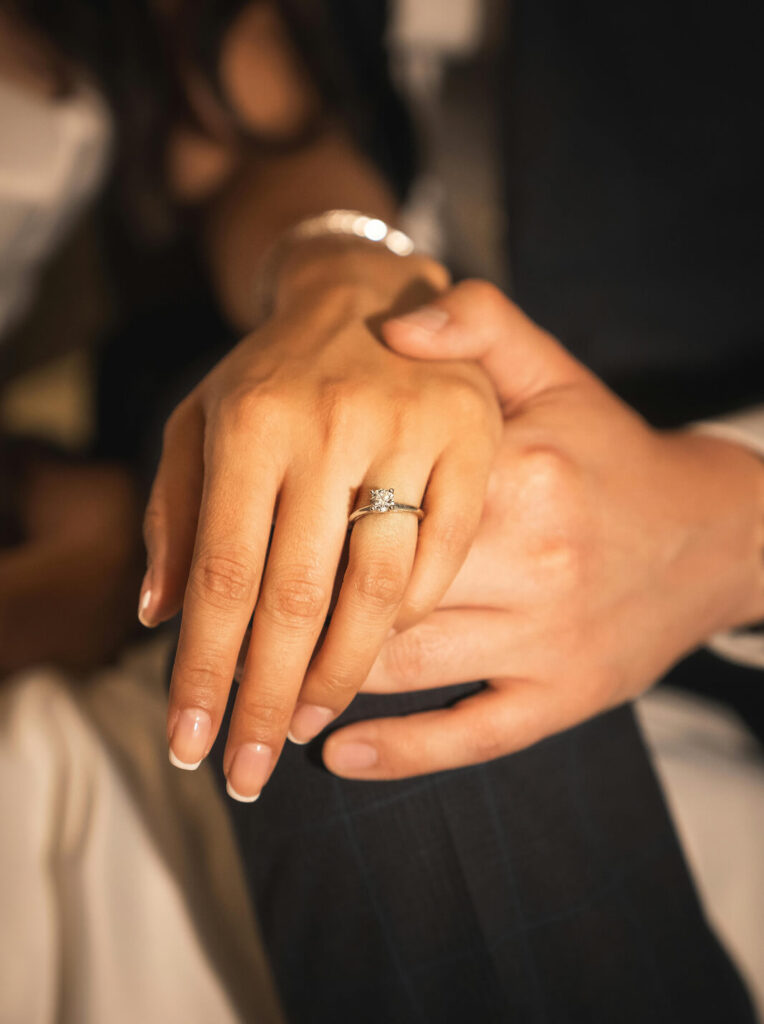
Protect your diamond engagement ring
Once you have the ring, protecting it before the proposal is a step that’s easy to overlook and genuinely important. A natural diamond engagement ring is both financially significant and emotionally irreplaceable and the weeks between purchase and proposal are a surprisingly vulnerable window.
Engagement ring insurance is worth taking out as soon as the ring is in your possession. Most specialist jewelry insurers can cover loss, theft and accidental damage, and the cost is modest relative to the peace of mind it provides. Store the ring securely in the interim, away from anywhere it might be stumbled upon, and if your proposal involves travel, keep it in your carry-on rather than checked luggage.
Decide on the proposal timing
Timing shapes the atmosphere of a proposal more than most people account for. The same question asked on a quiet Sunday morning at home lands completely differently from one asked at the top of a mountain at sunset. Neither is wrong, but the choice should be intentional.
Think about the seasons and what they mean to you both. A proposal tied to a particular time of year, a winter trip, a summer anniversary, a birthday, carries an extra layer of significance that becomes part of the memory. Some of the most memorable celebrity proposals have drawn as much meaning from their timing as their setting. Check weather forecasts if you’re proposing outdoors, confirm any bookings, and factor in your partner’s schedule so that they arrive at the moment in the right state of mind, not exhausted or distracted.
Choose the perfect proposal location
Location does a significant amount of emotional work in a proposal. The right place amplifies everything: the ring, the words, the moment. Start with sentimentality. Is there somewhere you both return to in conversation? A place you visited early in the relationship that marked a turning point? A city your partner has always wanted to see?
Once you have a shortlist, apply a practical filter. Consider privacy, particularly if your partner would find a public proposal stressful rather than joyful. Think about crowd levels at the specific time you’re planning, weather reliability for outdoor settings and accessibility if you’re involving guests or a photographer. The most romantic location is the one that lets the moment breathe without logistical interference.
Set the vision for your proposal
Before you get into details, it’s worth establishing a clear sense of what you actually want this moment to feel like. That clarity is what makes the difference between a proposal that’s impressive and one that’s genuinely moving.
Elaborate romantic proposal ideas can be a distraction. Inspiration drawn from your shared memories is far more useful. If your partner loves grand gestures, could you fly them to the place you first traveled together? If you both value privacy and simplicity, a perfectly chosen evening at home with their favorite meal might be everything. Think about the emotional register: heartfelt and quiet, or joyful and surprising? Once you know the feeling, the details follow naturally.
The proposals that stay with people are the ones layered with specificity: an inside reference that makes them laugh, a detail from an early date that only you two would recognize, a ritual that’s been entirely yours.
Plan the extra details
The details are where a good proposal becomes an unforgettable one. A photographer positioned discreetly to capture the moment without disrupting it. A playlist that means something specific. Flowers from a place you both associate with something happy. These touches don’t require an event planner: they require knowing your partner well, which you already do.
Think about what else might belong in the moment. A pet who’s been part of your life together. Heirloom diamonds that connects the proposal to something larger than the two of you. A handwritten letter to give alongside the ring, something tangible they can return to. If you’re considering a custom ring or personalized jewelry to accompany the moment, diamond jewelry designed specifically for your partner is among the most considered choices you can make.
For couples drawn to a diamond with its own distinctive character, a Desert diamond is worth serious consideration. They carry a warmth and individuality that sets them apart.
Decide who to involve
Some proposals are most powerful when they’re entirely private. Others gain something from the presence of people who matter. If involving others feels right, the key is making sure their participation enhances the moment rather than diluting it.
If your partner loves being surrounded by the people they love, a gathering that reveals itself after the question has been asked can work beautifully: the proposal itself stays intimate then the celebration follows. Friends and family can also be useful allies in the planning stage, helping you navigate your partner’s preferences, keeping the secret, and providing a decoy plan if a surprise element matters. Just keep the circle small enough that the logistics remain manageable.
Prepare what you’ll say
The words matter and being nervous about them is entirely normal. In fact, that vulnerability is worth leaning into. A proposal that sounds polished but impersonal is far less affecting than one that’s honest, even if the delivery isn’t perfect.
Think back to the beginning. The early days when things were new and slightly precarious. How quickly your partner started to feel like certainty. The way they show up for you when it counts, and the particular quality of the future you can picture with them in it. Write a few sentences down to anchor yourself, then leave room for the moment to take over. Letting your emotions show is not a weakness in a proposal. It’s the point.
Finalize the plan
In the final days before the proposal, the task is confirmation, not creation. Everything significant should already be decided. This stage is about making sure the logistics are airtight so that nothing competes with the moment itself.
Confirm any bookings. Check in with anyone involved. Make sure the ring is somewhere secure and accessible. If a photographer is part of the plan, brief them on exactly what you need. Run through the sequence of events once in your head and identify anything that could introduce friction. Then let it go. The proposal doesn’t need to be flawless: it needs to be present.
The ring itself is the centerpiece of the moment, and a natural diamond carries a significance that no other diamond gift quite replicates. When the moment arrives, that significance speaks for itself. The emotional value of diamonds is real and lasting, a daily reminder worn on the hand of the person who said yes.
Pop the question and celebrate
When the moment comes, take a breath and be in it. Everything you’ve planned has led here, and the person in front of you is the entire reason. Say what you mean. Ask the question.
Once you’re engaged, take a moment before anything else to simply be together. These early minutes are private and unrepeatable and they deserve to be savored before the wider world enters.
When you’re ready to share the news, think about the order. Tell your closest family and friends before it goes anywhere public. Video calls are a genuinely joyful way to share the moment when distance is involved and your partner will want to show off the ring. A celebration in the days or weeks following, whether dinner for two or something larger, extends a moment that deserves more than a single evening.
A natural diamond engagement ring is among the most meaningful heirloom diamonds you can give: something that will be worn, admired, and passed down long after the proposal a cherished memory.
Proposal planning checklist
A timeline takes the complexity out of proposal planning and replaces it with forward momentum. Here’s what to focus on, and when.
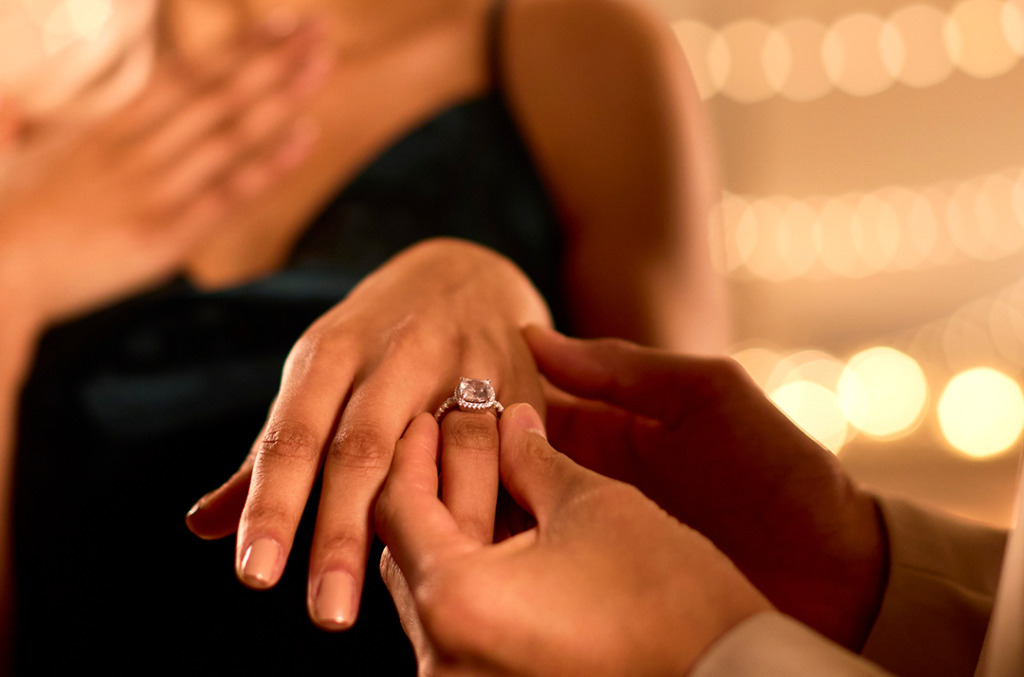
3 to 6 months before the proposal
- Have an honest conversation with your partner about the future and gauge where you both are.
- Establish the kind of proposal that would mean the most to them: intimate or celebratory, surprise or shared.
- Begin ring research: explore styles, understand the 4Cs, and set a realistic budget.
- Start a shortlist of potential locations based on sentiment and practicality.
- Identify any friends or family you might want to involve and begin building that circle of trust.
1 to 2 months before the proposal
- Purchase the ring and arrange insurance immediately.
- Book the location and any associated reservations, restaurants, transport, accommodation.
- Confirm the date and time, checking weather and your partner’s schedule.
- Arrange a photographer if you want the moment captured professionally.
- Begin thinking about the personal details: music, a letter, any meaningful props.
- Brief anyone involved in the plan and assign them their roles.
1 to 2 weeks before the proposal
- Rehearse what you plan to say, without over-scripting it.
- Confirm all bookings and reconfirm with anyone involved.
- Prepare any props, gifts, or additional details.
- Check the ring is secure and that you know exactly where it will be on the day.
- Build in a contingency: know what your backup plan is if the original setting doesn’t work.
Day of the proposal
- Do a final check: ring, location, any props, communication with participants.
- Give yourself more time than you think you need to get where you’re going.
- Stay calm and flexible: if something small shifts, adapt without stress.
- Be present when the moment arrives. The planning is done.
- Ask the question.
- Take time together before telling anyone else.
Expert tips for a memorable proposal
Proposal planning can feel daunting, but the most memorable proposals are rarely the most elaborate ones. They’re the most considered. A few principles that make the difference:
- Personalize everything you can. The details that will stay with your partner are the ones that could only have come from you.
- Prioritize their comfort level. A proposal your partner finds overwhelming or out of character will always be remembered that way, regardless of how much planning went into it.
- Have a backup plan. Weather changes. Venues close unexpectedly. A quiet alternative you’ve thought through in advance means nothing can derail the moment entirely.
- Capture it thoughtfully. If photos or video matter to you, arrange for them in a way that doesn’t intrude on the moment itself.
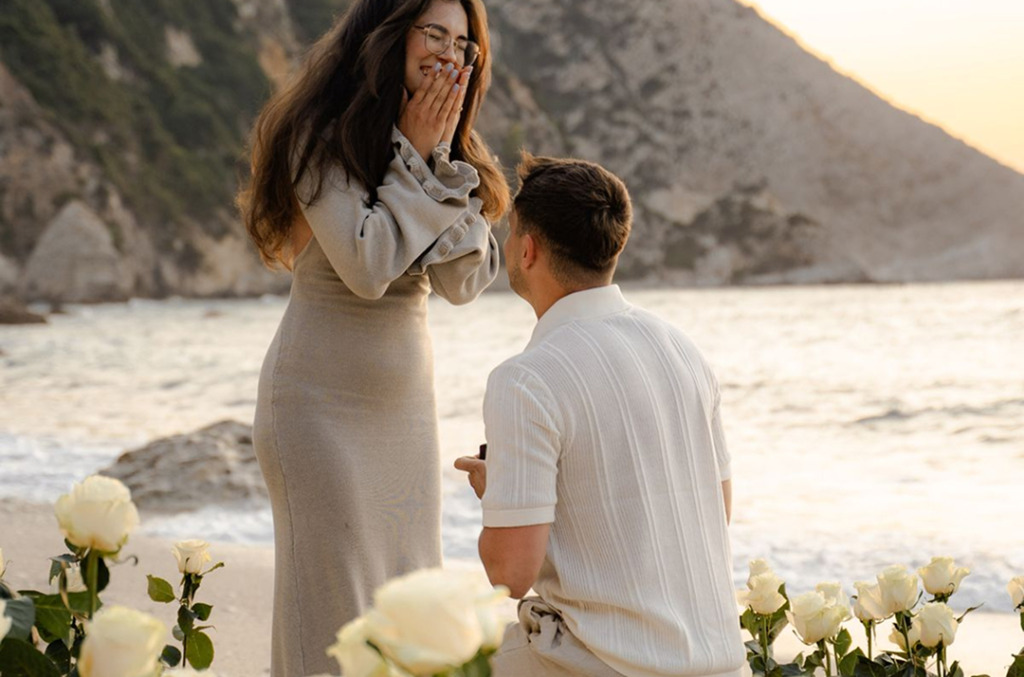
Above all, resist the pull toward perfection. The proposal doesn’t need to be flawless. It needs to be real. Leave room for spontaneity, because that’s often where the most memorable moments actually happen.
FAQs
Diamond color is graded on the GIA’s D-to-Z scale, where D is completely colorless and Z carries a visible yellow or brown tint. In practical terms, the difference between adjacent grades (say, G and H) is nearly imperceptible to the naked eye, but it can meaningfully affect price. For most engagement ring settings, a color grade in the G-to-I range offers an excellent balance of visual quality and value 1
Color also interacts with metal choice: a warmer-toned diamond (J or K) can look particularly beautiful in yellow or rose gold settings, where the warmth is complementary. For couples drawn to something genuinely distinctive, natural fancy-colored diamonds sit entirely outside the D-Z scale, valued for the intensity and rarity of their hue. The full picture of how the color of diamonds affects value and rarity is worth understanding before making a final decision.
Cut governs how a diamond performs with light: its brilliance, fire and scintillation. A poorly proportioned diamond looks flat regardless of its size; an excellently cut gem commands attention whatever its carat weight2. Prioritizing an Excellent cut grade and adjusting carat accordingly typically produces a more impressive ring for the same budget. The relationship between diamond carat and cut quality is one of the most valuable things a first-time buyer can understand.
Clarity grades a diamond’s internal inclusions and surface blemishes from Flawless (FL) to Included (I3). For most buyers, VS1 to SI1 offers excellent visual quality without paying a premium for characteristics invisible to the naked eye3. Step cuts like the emerald or Asscher reveal inclusions more readily than brilliant cuts, so clarity matters more in those settings. A good diamond clarity guide helps calibrate what to prioritize within a given budget.
Natural diamond color spans a wide spectrum, from colorless to near-colorless grades and into the fancy color category: pinks, blues, yellows and greens each valued for the rarity and intensity of their hue. Desert diamonds, with their warm earthy palette, bring their own quiet distinctiveness.
Natural diamonds have been objects of desire and symbolism for millennia: worn as talismans in ancient cultures, exchanged in royal betrothal rings from the 15th century, and adopted as the near-universal symbol of marriage commitment through the 20th century. What makes that resonance durable isn’t convention. It’s the fact that a natural diamond is genuinely irreplaceable, formed over billions of years under conditions that will never be precisely recreated. The depth of why diamond history (opens in new window) is rooted in fame and reverence connects every proposal to something far older than the moment itself.


