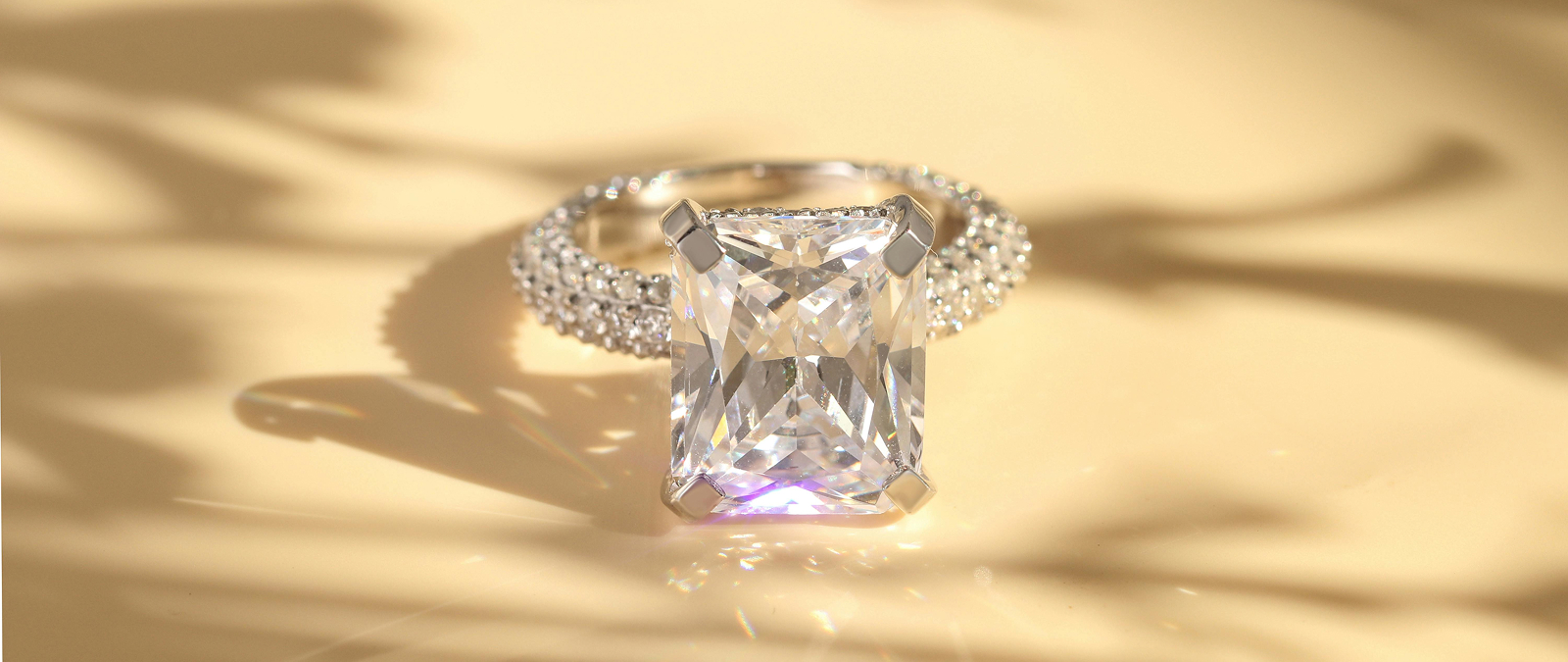
The world’s fascination with natural diamond engagement rings is, by no means, a modern-day affair. Take a closer look at the history of diamond engagement rings and you’ll learn that natural diamonds have served as just about the most romantic declaration of love and commitment imaginable for centuries – and for good reason.
While today, diamonds are, undoubtedly, the world’s most highly coveted gemstones, what turned them into the go-to choice for engagement rings specifically? Were they always so closely linked to bridal tradition? From Renaissance-era ladies to Elizabeth Taylor’s 10 (yes, 10!) famous engagements1, natural diamonds have proudly glinted on the hands of women through the centuries. Here’s how it all came about…
The origins of engagement rings
Were engagement rings always anchored in love and devotion? Not exactly. And they weren’t always crafted from diamonds either. As noted by the Gemological Institute of America (GIA) the earliest-documented engagement rings date back to Ancient Rome and were worn by women as a marker of a ‘business contract’ or to showcase mutual love and obedience2 (thankfully times have changed to be much more romantic). As per the GIA, these early engagements rings were inspired by those worn by Egyptian pharaohs. The circular shapes represented eternity and reflected the shape of the sun and the moon, celestial bodies central to Egyptian worship.
While gold eventually emerged as the metal of choice (the ruins of Pompeii reveal that gold betrothal rings existed as early as 79 CE)3, engagement rings sported in Ancient Rome were also created from materials like bronze, ivory, iron and even bone. While the legacy of engagement rings in cultural history dates back centuries, it was only in 850 CE that the engagement ring was given an official meaning when Pope Nicholas I declared that it represented a man’s intent to marry4. That decision set the stage for modern-day interpretations of the engagement ring’s purpose as a symbol of love, fidelity and eternity.
When diamonds became part of the engagement tradition
So when did diamonds come into it? Well, it’s believed that the world’s first diamond engagement ring was presented by the Archduke Maximilian of Austria, to Mary of Burgundy, his wife-to-be, in 14775. A painting by Niklas Reiser from c. 15006 shows Mary wearing a solitaire on her right hand.
While the Archduke played a crucial role in the history of diamond engagement rings, he wasn’t the only Renaissance-era man who chose to showcase his romantic commitment with a diamond. Diamond engagement rings soared in popularity during the Renaissance period, playing an important part in marriage contracts among European royalty and aristocracy.
It meant diamonds soon came to denote the idea of rarity, eternity, resilience and strength – values still associated with the lifelong commitment of marriage today.
How diamonds gained global mass appeal
Diamond engagement rings began to appear in the US in the mid 1800s7 but wasn’t until the late 1800s that diamond mines were discovered in the Cape Colony8(modern-day South Africa). This led to a dramatic increase in the supply of natural diamonds, making them more accessible globally.
In 1947, a stroke of marketing genius altered the history of natural diamond engagement rings forever with the De Beers Group’s revolutionary ‘A Diamond is Forever’ campaign9. Simple yet profound, it helped cement that long-held association between natural diamonds and love. The campaign proved to be so impactful in fact, that the number of brides in the US who received diamond engagement rings jumped from 10% in 1939 to 80% in 1990.10
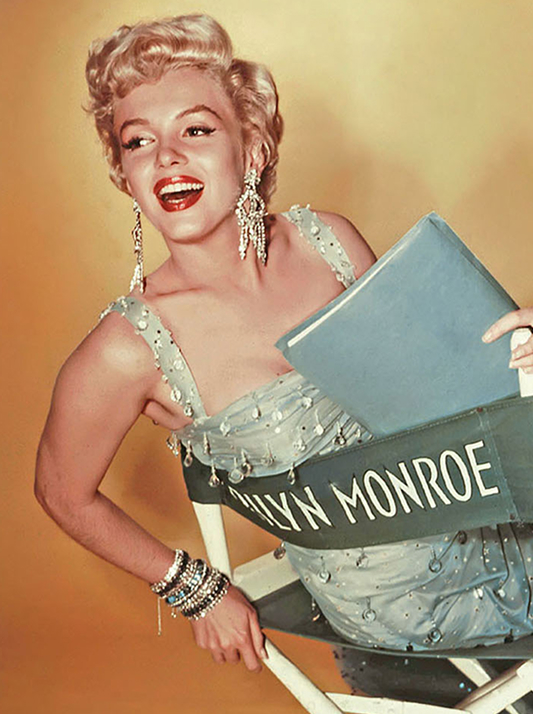
It helped too, that Hollywood had also begun to endorse diamonds at the time, helping catapult the gemstone to the highest halls of fame and establishing diamonds not just as a status symbol, but a lasting, tangible asset. Case in point? Marilyn Monroe’s iconic performance of the song ‘Diamonds are a Girl’s Best Friend’ in the 1953 classic film ‘Gentlemen Prefer Blondes’11.
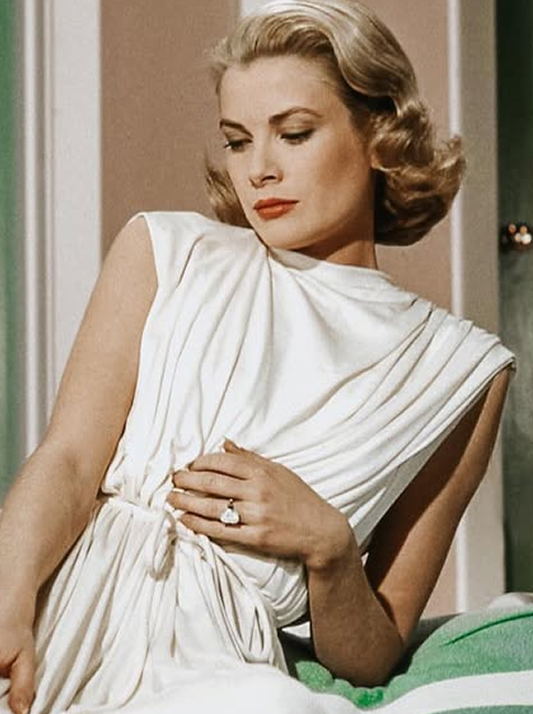
Grace Kelly’s emerald-cut diamond engagement ring, which she flaunted in her 1956 (final) Hollywood film ‘High Society’12 was pretty hard to forget, too. Rather than wear a ’prop’ ring when playing socialite bride-to-be Tracy Lord, Kelly insisted on wearing her very own engagement ring from Prince Rainier III of Monaco (a dazzling 10.48 carat diamond flanked by two baguette diamonds). It meant audiences saw the star effectively play out her own transition into aristocracy on screen.
Enduring appeal: why tradition still matters today
While engagement ring trends undoubtedly change – with elements like unconventional cuts and unique settings, for example, becoming more popular in recent years – natural diamonds, unsurprisingly, show no signs of waning when it comes to popularity.
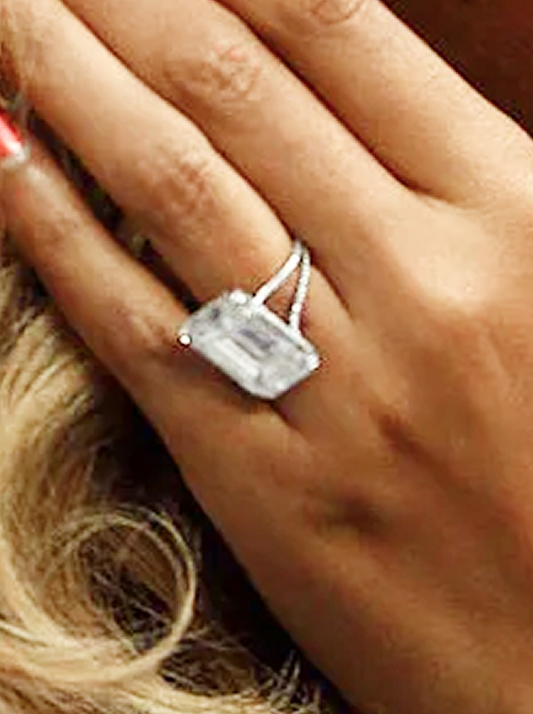
Take Zendaya and Tom Holland. Holland is said to have proposed to the style icon with a glorious five-carat cushion-cut natural diamond engagement ring13 that turned all heads at the 2025 Golden Globe Awards. With an east-west setting, the button-back style perfectly balances timeless vintage appeal with modern flair (what else would we expect to see on the finger of the Gen-Z trailblazer?).
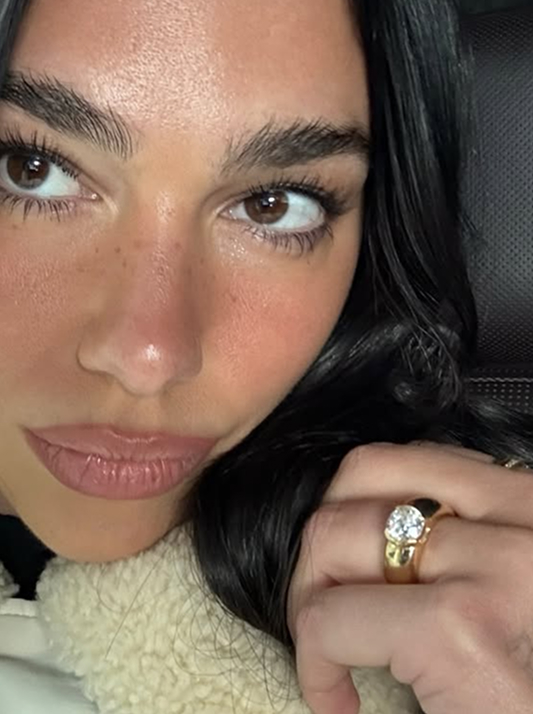
Another recent big-hitter that got everyone talking was Dua Lipa’s chunky, sculptural engagement ring, given to her by her actor partner, Callum Turner. The modern yellow gold cigar band14 heroes a beautiful round-brilliant or old European cut (the jury’s still out) natural diamond, estimated to be between two to four carats, which is elegantly half-set, with open sides.
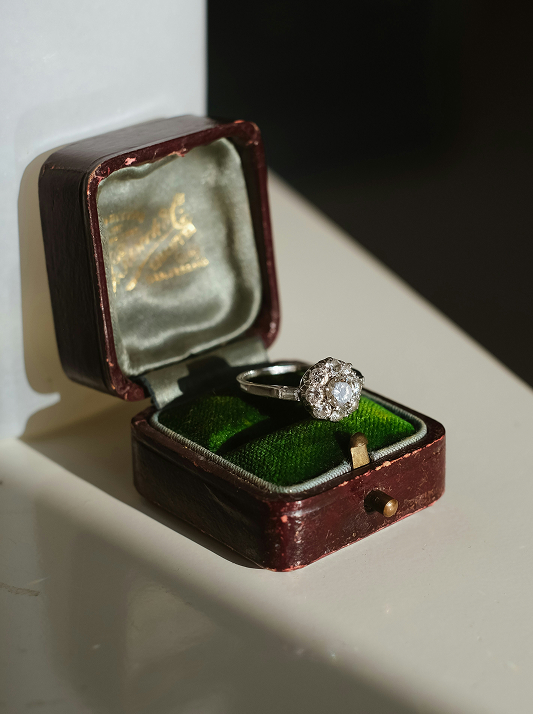
Of course, passing down precious jewelry as family heirlooms has been a cherished tradition through the decades too, and today’s couples still seemingly recognize its sentimental power. A wonderful way to honor the past while celebrating the future, natural diamond engagement rings that pass through families and generations remind us that natural diamonds are an enduring symbol of love – and not solely in the romantic sense, either.

The future of a timeless tradition
Today more than ever, couples rely on their choice of ring to help tell their unique shared story and personal values. From multi-stone silhouettes and mixed metals to chunkier, thicker bands and sculptural shapes, many modern engagement rings are unafraid to break tradition. But trends have also led to a revival of nostalgia-driven designs of natural diamond engagement rings, along with heirloom and vintage pieces.
With so much choice available, choosing the right ring – one that authentically mirrors your tastes, union and shared story – has arguably never been important. And when you opt for a natural diamond engagement ring, it means you’re not just celebrating your union and finding that magical ‘forever’ kind of love (though that’s certainly worth toasting) but continuing a beautifully romantic tradition that dates back centuries, spanning countless other love stories, too. Pretty special, when you think about it, right?
Sources
- wwd.com, Elizabeth Taylor Engagement Rings Details ↩︎
- gia.edu, History Engagement Ring ↩︎
- brite.co, Engagement Ring History ↩︎
- samuelsonsdiamonds.com, History of the Diamond as an Engagement Ring ↩︎
- stanleysjewellers.co.uk, A History of Engagement Rings ↩︎
- researchgate.net, Niklas Reiser Mary of Burgundy ↩︎
- elle.com, Engagement Rings History ↩︎
- capetowndiamondmuseum.org, South African Diamond History ↩︎
- naturaldiamonds.com, History of Engagement Rings ↩︎
- gia.edu, Origin of Wedding Rings ↩︎
- wikipedia.org, Diamonds Are a Girls Best Friend ↩︎
- crisscut.stevenstone.co.uk, The Secret Engagement Ring Grace Kelly Received ↩︎
- lilyarkwright.com, Zendaya and Tom Holland’s Engagement Ring ↩︎
- queensmith.co.uk, Dua Lipa’s Chunky Band Engagement Ring ↩︎


