
Why are diamonds used for engagement rings? It’s a question worth asking seriously, because the answer isn’t simply tradition. A natural diamond is one of the few objects on earth that combines geological rarity, physical permanence and genuine emotional weight into a single piece of jewelry. When it sits on your finger every day for the rest of your life, those qualities stop being abstract and start mattering enormously.
Why are diamonds used for engagement rings?
Since the 15th century, a natural diamond has been the gem of choice for marking a commitment. That’s because no other gemstone truly matches what a natural diamond engagement ring represents: something formed under conditions so extreme that nothing else survives them, worn by someone who has chosen to make an equally permanent promise.
The combination of symbolism, practicality and rarity that a natural diamond offers is genuinely unmatched. It carries meaning before it’s ever given and it’s built to be worn through everything. Understanding what a lab grown diamond is clarifies just how different that geological origin really is and why it matters beyond chemistry. Asking do natural diamonds hold value beyond their brilliance is the right question and the answer has never been simply about sparkle.
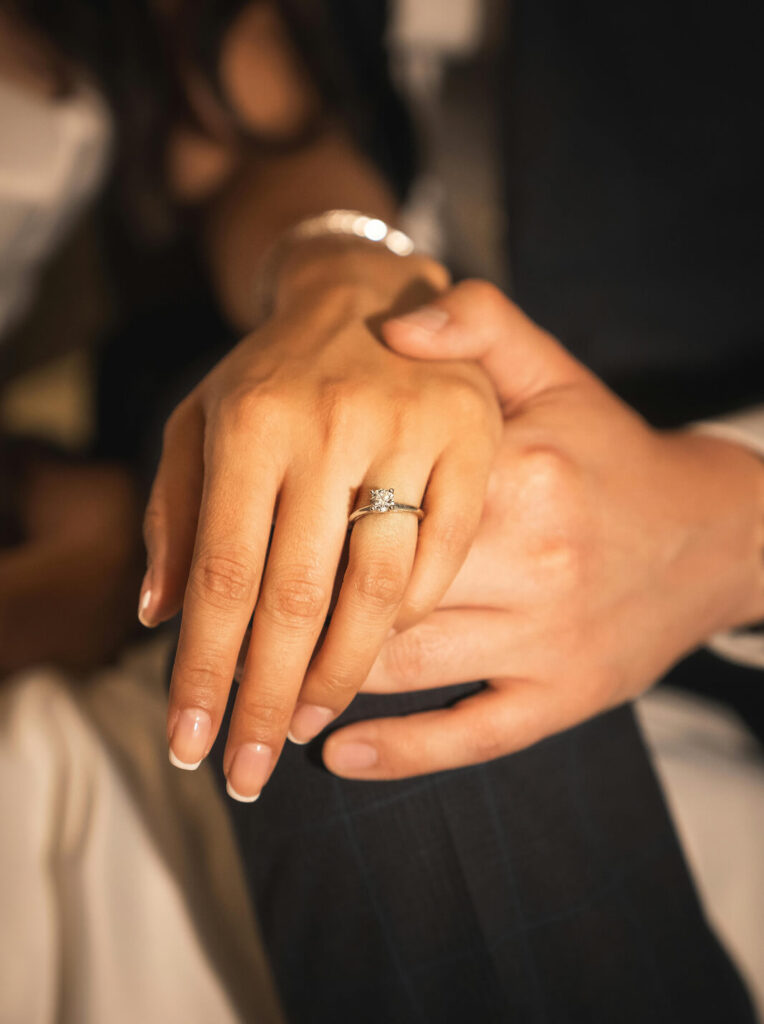
Diamond symbolism: enduring love, strength and commitment
Long before anyone knew how to cut a facet, natural diamonds were objects of reverence. Every civilization that encountered them attributed significance to them, not as decorative objects, but as carriers of meaning: strength, protection, permanence, love. That cross-cultural intuition wasn’t coincidence. The process of natural diamond formation takes billions of years, under ferocious heat and pressure 140 to 300 kilometers below the Earth’s surface, propelling each gem upward through volcanic eruptions before it is ever discovered. That journey of survival mirrors exactly what we hope a great love will be.

Diamond practicality: durability and everyday wear
A diamond scores 10 out of 10 on the Mohs hardness scale, which makes it the hardest natural material on Earth. In practical terms, this means a natural diamond engagement ring can be worn through every day of a life, across decades, without scratching, dulling, or losing its diamond brilliance. No other gemstone comes close. Sapphires and rubies score 9, emeralds considerably lower at 7.5 to 8. Both can scratch with daily wear in ways a diamond simply won’t.
For a ring worn and exposed to daily activity, hardness isn’t a luxury, it’s a prerequisite. A natural diamond requires minimal maintenance to keep it performing as it did the day it was given, which is part of why investing in diamonds long-term makes such clear sense. The full picture of natural diamonds and how they compare to other precious stones only reinforces what the hardness scale already tells you.

Diamond rarity and value: a precious connection
Natural diamonds are a finite resource. They can only be found in certain geological formations in specific parts of the world, with the major producing regions being Botswana, Canada, Russia and South Africa. The conditions required to produce a gem-quality diamond are so specific, and so rare, that the supply is genuinely limited in a way that no manufactured alternative can replicate. The history of diamonds is, in large part, a history of that scarcity and the reverence it generates.
That rarity is inseparable from the symbolism. Giving someone a natural diamond is giving them something that cannot be made again. The diamond value it holds, both emotional and financial, reflects that permanence. A natural diamond engagement ring doesn’t just mark the beginning of a commitment. It carries it forward.
The symbolism of diamond engagement rings
Diamonds have accumulated meaning across every major civilization that encountered them, and that accumulated weight is part of what makes them so potent as a symbol of commitment. The history of diamond engagement rings stretches back far further than most people realize. The full depth of why natural diamonds have a diamond history rooted in fame and reverence is worth understanding before you choose a gem.
Ancient Greece: ‘adamas’ and the unbreakable gem
The Ancient Greeks didn’t know what diamonds were made of, but they understood something essential about them, that they couldn’t be broken. ‘Adamas’, the Ancient Greek word for diamond, literally meant unconquerable. They attributed the stone to the gods, imagining it as crystallized divine tears or fragments of fallen stars, and associated it with qualities they most admired: endurance, strength and immortality. For a civilization built around ideals of heroic resilience, it was the perfect stone.
Rome: Cupid’s arrows and the power of love
Roman mythology placed diamonds at the very center of desire. Cupid’s arrows, it was said, were tipped with diamond fragments, which is why their wounds didn’t heal. The stone’s association with love in Roman culture went beyond metaphor; it was physically credited with the power to generate and sustain feeling. The idea that a diamond has something to do with how love moves between people is, in this sense, very old.
India: spiritual significance and protection
In Ancient India, diamonds were considered among the most powerful spiritual objects available to a person. Emperors wore them for protection against evil and misfortune, and the gems were believed to channel divine energy toward their wearer. The Sanskrit word for diamond, ‘vajra’, meant both thunderbolt and diamond, connecting the stone with the most powerful natural force imaginable. India was also the world’s first and, for centuries, only source of diamonds, which gave them an additional weight of rarity and prestige that no other culture could quite replicate.
A brief history of diamond engagement rings
Royalty and early traditions
The first recorded diamond engagement ring was given in 1477, when Archduke Maximilian of Austria presented Mary of Burgundy with a ring set with thin, flat diamonds in the shape of an ‘M’. It set a precedent that European royalty would follow for centuries. The rings became increasingly elaborate across the Renaissance and into the Georgian and Victorian eras, when the discovery of diamond deposits in South Africa made the gems more accessible, though no less desirable. The history of diamond jewelry runs through every court and culture that prized beauty, permanence and power.
The 20th century and the ‘A Diamond Is Forever’ campaign
In 1947, De Beers’ advertising agency N.W. Ayer created the most successful advertising slogan in history: ‘A Diamond Is Forever.’ It cemented a cultural association between natural diamonds and permanent commitment that already had five centuries of royal precedent behind it and brought it into every living room. The campaign didn’t invent the idea that diamonds belong in engagement rings. It made it universal. The result is a tradition now embedded so deeply in the culture that it has outlasted every counter-movement against it. For an understanding of why bridal jewelry with natural diamonds still reigns, the history is as relevant as anything happening now.
How diamonds became the standard for proposals
The shift from elite symbol to cultural norm happened gradually, accelerating through the 20th century as diamond supply increased and middle-class prosperity grew. By the 1960s and 70s, natural diamond engagement rings had moved from aspiration to expectation across much of the Western world, and in subsequent decades that expectation spread globally. What began as a 15th-century gesture by Austrian royalty is now the shared language of commitment in cultures as distinct as Japan, India and the US.
Shape, cut, and style: choosing a ring that fits
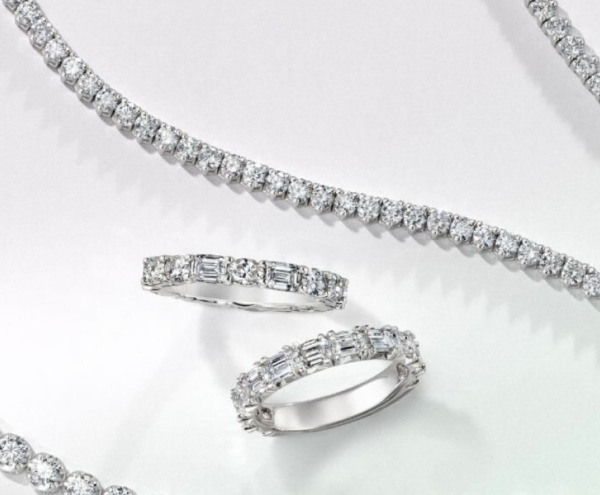
The most personal decision in buying an engagement ring isn’t the budget. It’s the cut and shape, which together determine how the diamond looks on the hand and what it communicates about the person wearing it. The range of types of diamond engagement rings is broader than most buyers initially realize. The round brilliant cut diamond remains the most popular choice globally, engineered to maximize light return and produce both white sparkle and diamond fire (those spectral flashes of color that catch the eye in motion). The oval has surged in recent years, particularly after a generation of celebrity rings brought its elongating, finger-flattering silhouette to mainstream attention. The emerald cut attracts buyers who want depth over dazzle, a hall-of-mirrors restraint that reads as understated confidence. The cushion cut, with its pillow-like corners and warm brilliance, has an antique quality that suits anyone drawn to jewelry with a sense of history.
The best engagement ring is the one that feels right for the person who will wear it every day. That’s a question of their style, the way they dress, the things they notice and value, and the kind of beauty that moves them. Everything else follows from that.

Natural vs lab-grown diamonds: what you should know
Natural and laboratory-grown diamonds share the same chemical composition. Both are carbon, structured in the same crystalline lattice. But understanding what is a lab grown diamond at a fundamental level makes clear that identical chemistry does not mean identical origin, and for an engagement ring, those origins matter in ways that go well beyond the molecular.
A lab-grown diamond is produced in an industrial facility in days or weeks, using either High Pressure High Temperature (HPHT) or Chemical Vapor Deposition (CVD) methods. They are, by design, consistent and uniform.
A natural diamond formed between 140 and 300 kilometers below the Earth’s surface over billions of years, under conditions that will never be precisely recreated. Its shape, color and internal characteristics are the product of a completely singular geological journey. No two are identical.
Because most lab-grown diamonds fall within a narrow range of quality characteristics, the GIA has introduced a simplified grading method for them, classifying stones as either Standard or Premium rather than applying the full 4Cs of diamonds framework used for natural diamonds. The precision and depth of that grading framework reflects the genuine complexity of what a natural diamond is. Questions around diamond clarity in natural vs lab-grown diamonds illustrate this clearly. In a natural diamond, inclusions are part of its individual geological record. In a lab-grown diamond, they’re a manufacturing variable.
A diamond engagement ring is worn every day for a lifetime, and often passed between generations. The question of what it’s made of, and where it came from, is not incidental to that.
FAQs
The GIA grades colorless to near-colorless natural diamonds on a D-to-Z scale. D is completely colorless and commands the highest premiums; Z carries a visible yellow or brown tint. In practice, the difference between adjacent grades is nearly imperceptible to the naked eye, but the price difference is real. For an engagement ring, most buyers find that grades in the G-to-I range offer exceptional visual quality without the premium of the colorless tier.
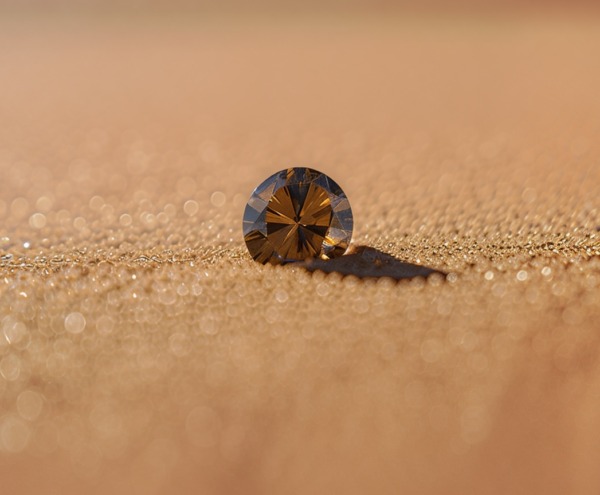
Color interacts with setting choice: a warmer-toned Desert diamond looks beautiful in yellow gold, where the warmth becomes complementary rather than conspicuous. The full spectrum of how diamond color affects value and desirability is more nuanced than the grade alone suggests, and worth understanding before making a decision.
Beyond the D-to-Z colorless scale, natural diamonds occur in vivid pinks, blues, greens, yellows and oranges. These are called fancy-colored diamonds, and they are among the rarest and most valuable gems on earth. Where a colorless diamond is prized for the absence of color, a fancy-colored diamond is valued for the intensity and saturation of its hue. The rarer the color, the higher the premium: natural pink and blue diamonds are extraordinarily scarce, and their prices reflect that. Fancy color diamonds have become increasingly sought after for engagement rings among buyers who want something genuinely singular.
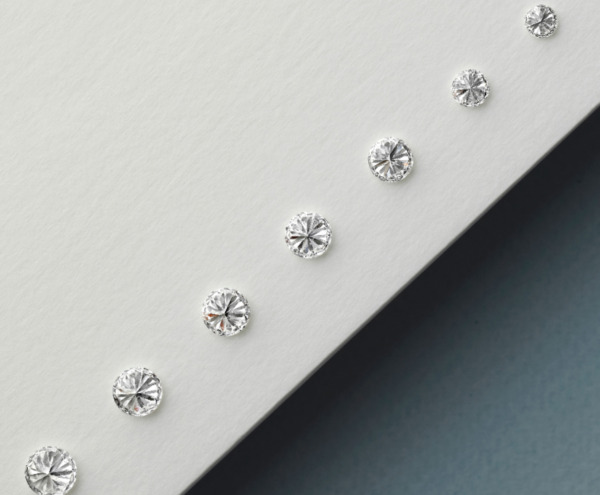
Machine cutting uses laser technology and 3D mapping to cut diamonds with extraordinary precision and consistency. The results are predictable, symmetrical and efficient at scale. Handcrafted diamonds are shaped by a diamantaire whose decisions are guided by intuition and experience built over years. Each stone is assessed individually and each cut is made in response to the specific character of that particular gem. The level of diamond craftsmanship involved, and the resulting diamond symmetry, differs meaningfully between the two approaches.
For an engagement ring, the choice between the two is ultimately a question of what the buyer values. A machine-cut diamond delivers reliable light performance; a handcrafted diamond carries something harder to define. The full context of what is diamond cutting and how the two methods differ is worth exploring before making a final decision on a stone that will be worn every day.
Sources
- www.gia.edu/gia-news-research-engagement-rings-through-ages/ ↩︎
- www.britannica.com/science/Is-Diamond-the-Hardest-Substance-on-Earth ↩︎
- emeralds.com/education/similarities-and-differences-in-hardness/ ↩︎
- www.naturaldiamonds.com/in/diamond-facts-info/10-point-guide-to-understanding-natural-diamond/ ↩︎
- www.capetowndiamondmuseum.org/education/diamond-myths-and-legends/ ↩︎
- www.capetowndiamondmuseum.org/education/diamond-myths-and-legends/ ↩︎
- timcodiamonds.com/en/editorial/the-history-of-diamonds-in-india/ ↩︎
- www.capetowndiamondmuseum.org/blog/history-of-the-engagement-ring/ ↩︎
- www.capetowndiamondmuseum.org/blog/history-of-the-engagement-ring/ ↩︎
- timcodiamonds.com/en/editorial/de-beers-the-legacy-behind-the-worlds-most-iconic-diamonds/ ↩︎
- www.gia.edu/hpht-and-cvd-diamond-growth-processes ↩︎
- www.gia.edu/gia-news-press/updated-laboratory-grown-diamond-services-to-launch-october ↩︎
- www.gia.edu/gia-about/4cs-color ↩︎
- www.gia.edu/fancy-color-diamond-quality-factor ↩︎


