With their icy brilliance and bright white sparkle, colorless natural diamonds have been the go-to for engagement rings, statement jewelry and heirloom pieces for decades. Given that they’re both stunning and incredibly rare, it’s no wonder that everyone wants a piece of them.
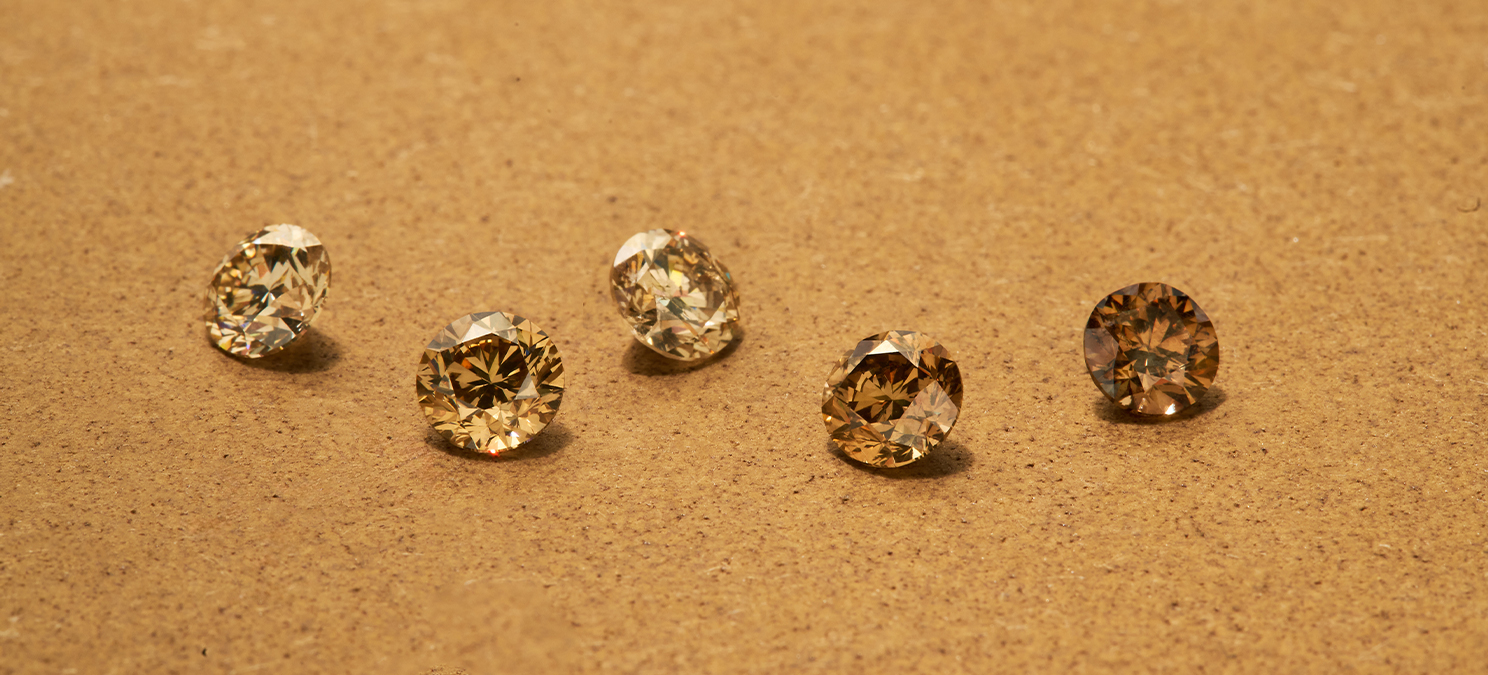
Here to shake things up, however, are Desert diamonds. Natural diamonds that showcase a graduation of earthy tones, from soft cream and warm champagne to deep amber and rich whisky tones, these diamonds carry a warmth and depth to them reminiscent of the desert itself.
But beyond their intriguing color, desert diamonds brim with symbolic meaning and cultural relevance. Let’s take a closer look at this hot new jewelry trend…

What are Desert diamonds?
It’d be easy to assume Desert diamonds are exclusively found in deserts, but don’t let their name fool you. The term ‘desert diamonds’ came thanks to their earthy, natural colors that mimic those of the desert. It’s also a nod to the landscape from which some are recovered.
The desert spectrum encompasses sun-lit creams, champagne, honey white diamond shades as well as ochre, whiskey and sunset brown, evoking the endless light rays, golden sands, amber skies and fiery horizons of the desert.
We’ve got Mother Nature to thank for their seductive hues: their color was derived from their geological surroundings.
How do Desert diamonds form?
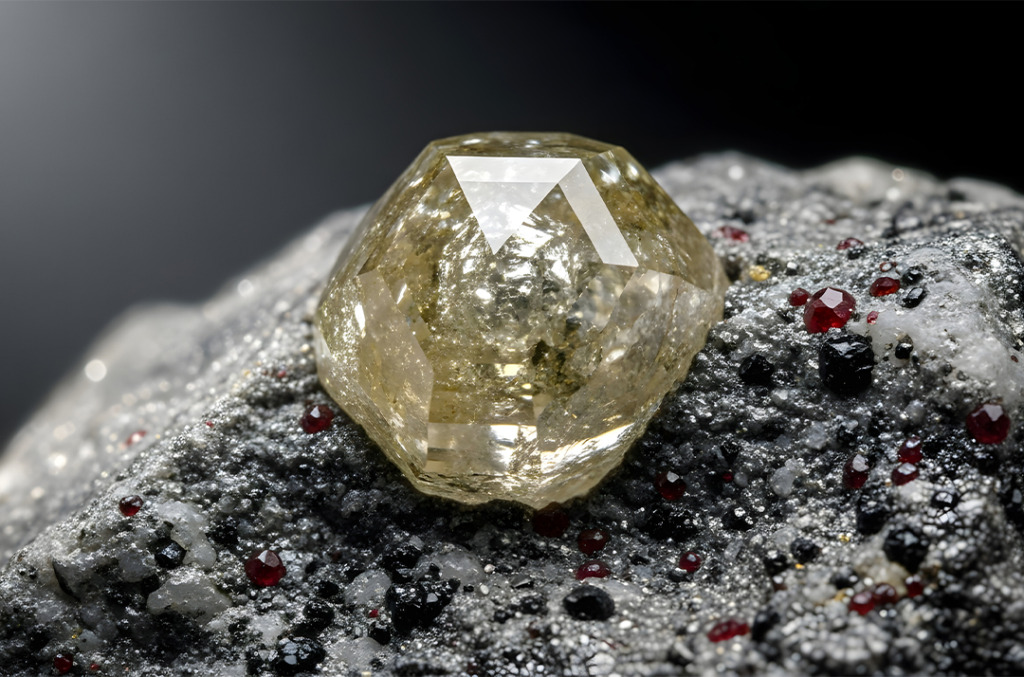
Like all natural diamonds, desert diamonds formed deep within the Earth, typically about 140 to 200 kilometers beneath its surface, over one to three billion years ago1.
Under intense heat and pressure (we’re talking temperatures of over 2,200°F and pressure up to 6 gigapascal), carbon atoms bonded in a crystalline structure to form diamonds.
Read > How natural diamonds are formed
Other factors, like the chemical properties of a diamond’s environment (such as trace elements and minerals), have a major role in determining a diamond’s final makeup, including its size, clarity and color. This is why every natural diamond (deserts diamonds included) is individual and why gemologists find them so fascinating.
It was then a series of rare volcanic eruptions that caused magma (molten rock) to surge from about 160 kilometers below ground, carrying many diamonds to the Earth’s surface. Some diamonds remained trapped below ground and aren’t accessible to humans, however, which means the diamonds we have today are part of a very limited and exclusive group. For context, the last eruption of this kind happened around 25 million years ago2, with scientists believing the odds of it happening again to be very slim.
The color spectrum of Desert diamonds
At the lighter end of the palette are cream and champagne diamonds. Mid-colors include light yellow, honey and caramels, while the dark end of the palette features whiskey, cognac and mocha brown diamonds.
That said, every Desert diamond has its own totally unique shade, determined by its contact with trace minerals or structural variations in its crystals. Nitrogen is the most common and is responsible for giving them a yellow, golden or brown-tinted hue3. These colors in diamonds can vary hugely, depending on exactly how much nitrogen is present.
Read > The color spectrum of natural diamonds
Structural variations (also known as distortions in a diamond’s crystal lattice or carbon structure) can also affect how a diamond absorbs and reflects light, which results in color differentiation4 to the naked eye. Brown tones (dark champagne and whisky shades, for example) are almost always the result of lattice distortions.
Desert diamonds and the GIA color scale
The Gemological Institute of America’s color scale (also called the GIA color scale) is the globally recognized system for grading colorless to near-colorless diamonds. The scale runs from D (absolutely colorless) through to Z (light yellow or light brown). Using this grading system, most desert diamonds fall at the latter end of the scale.
Where do fancy color (or fancy colored) diamonds come into it? Fancy color diamonds fall outside the D-Z range and are a formal GIA classification in their own right. They’re typically bolder in color and span the breadth of the rainbow – from bright canary yellows to rich pinks, deep blues and lush greens.
Some Desert diamonds fall into the fancy color classification, namely those officially graded as Fancy Light Yellow (FLY), Fancy Brownish Yellow (FBY), Fancy Deep Brown (FDB) and Fancy Deep Orangey Yellow (FDOY). Again, despite their pretty regimented labels, there will always be tiny differences within these color classifications.

The symbolism behind Desert diamonds
Each shade of Desert diamonds carries it owns significance and deep meaning – and always has, long before becoming today’s hottest diamond trend.
In Hindu scripture, brown diamonds were seen as talisman and associated with the root chakra, offering resilience to the wearer[AB1] . To this day, warm, earthy hues as a whole are said to have grounding energy,
Elegant pale yellow and champagne tones have long been linked with joy, abundance and vitality, while the deeper cognacs are believed to represent wisdom, protection and belonging.
The ombre of the Desert diamonds palette itself – from cream to deep, velvety brown – embodies transition, change, and the idea of light and shadow coexisting in harmony.
What makes Desert diamonds unique?
Desert diamonds offer the beauty of a subtle glow whereas icy, colorless diamonds boast scintillating sparkle. Desert diamonds are a quiet luxury that celebrates difference, character and natural provenance in a world of mass-produced goods.
Not only are desert diamonds individual, but their balmy tones also complement all metals – from cooler silver and platinum to yellow and rose golds – so pairing them with different bands and settings as well as other pieces from your jewelry box is easy.
Wondering if Desert diamonds are natural or if they can be grown in a factory, like lab grown diamonds? Desert diamonds are found in nature – their color is naturally derived.
A way of honoring life’s special moments
Genuinely one-of-a-kind, desert diamonds aren’t just a jewelry trend but a meaningful way to mark life’s big wins. How about a sun-kissed cream gem, brimming with joyful energy and vitality, to celebrate the arrival of a new baby? Or a mocha-colored diamond representing strength and protection as you or a loved one enters a new decade of life? There’s a Desert diamond for all of it.


