
Getting ready to pop the question? Moving your relationship to a deeper and more connected level is a priceless decision, but it’s always sensible to consider how to approach buying an engagement ring – and exactly how you should budget for it.
It often feels like money is no object when it comes to surprising the love of your life yet setting a budget (and sticking to it) isn’t about removing the magic from the process, it’s a way of making sure you enter into the next chapter of your lives in an authentic and honest way, together. After all, the ring you choose will be a meaningful reminder of your love, commitment and who you are as a couple – and getting it right, in terms of style, design and as a financial investment is key.

The importance of budgeting for an engagement ring
When you’re weighing up how to choose a diamond engagement ring, overall cost and budget are often the first things that come up, and for good reason. Setting a clear framework from the get-go can help you filter through the options with ease, so it feels empowering and exciting instead.
Of course, budgeting for any major purchase is important but when it comes to natural diamond engagement rings, it’s even more significant. Because natural diamonds aren’t just beautiful pieces of jewelry, they’re symbols of commitment, love and emotional depth. By establishing a financial framework, you’re not cutting back or being ‘stingy’ – you’re honoring what the diamond represents: something that’s meant to last.
It goes without saying that practicality plays its part, too. Having clear financial boundaries in place means you’re less likely to succumb to impulse splurges, so instead you can focus on making a purchase you’re comfortable with and proud of. We’ve all made decisions under pressure or without thinking things through properly… and it’s not usually our finest work, right?
Budgeting doesn’t mean sacrificing quality. It’s about finding the very best quality gemstone you can for what you’ve established is financially comfortable for you. There are plenty of inventive ways to make your money go further as a result (more on that shortly). And once you align your budget with your style, tastes and intentions as a couple, finding ‘the’ ring becomes an adventure you can’t wait to begin…
What to expect when it comes to natural diamond engagement ring prices
Feeling clueless about the average cost of engagement rings or how to budget for engagement rings? You’re far from alone. For many couples, the price of a natural diamond ring feels like an alien concept until they’re suddenly face-to-face with the options in a jewelry store. The good news? Once you know the average range, it becomes a lot easier to plan with confidence and manage expectations all round.
While prices vary depending on location, as a rough ballpark figure, ‘entry-level’ natural diamond engagement rings typically start at around $2,500–$4,000 USD1. Mid-range rings typically fall in a ballpark between $5,000–$10,000 USD, giving slightly more flexibility for a natural diamond’s size, cut and setting (the average cost for an engagement ring in 2024 was around $5,200 USD, FYI2). At the higher end of the scale are rings priced at $10,000 USD+. These usually reflect either larger carat weights, premium cuts or designs from luxury houses (sometimes color can play a part, too).
A smart approach is to plan based on your actual income, lifestyle and financial goals (you can do this together for full transparency). This way, your budget supports your future together, not just a fancy proposal or an Instagram-worthy moment.
There are several factors that shape the final cost and you’ve probably heard of some of them. The famous ‘4Cs’ play a major part (that’s carat, cut, clarity and color), particularly carat. A diamond ring’s setting style can impact it, too. Of course, other factors such as a brand’s reputation, a jeweler’s markup, an item’s age or history and even where you sign on the dotted line (online retailers vs luxury boutiques for example) can all have an impact on the overall price.
The main thing to remember? Prices vary, but having a loose grasp of the landscape means you can shop smartly, with intention, to focus on finding the natural diamond engagement ring that feels right for you both as a couple, without paying over-the-odds.
How the 4Cs shape diamond pricing
The 4Cs: cut, color, clarity and carat weight, all play an important role in a natural diamond’s value. It’s these factors that help determine a diamond’s brilliance, beauty and rarity. As a rule of thumb, a diamond that scores highly across all four Cs is typically more valuable than one that doesn’t.
And if you’ve found yourself wondering, ‘Are diamonds a good investment and do they hold their value?’, the answer is absolutely, especially if you consider the all-important 4Cs.
Cut
Cut is often the most important ‘C’ when it comes to visual impact (not to be confused with the shape of a diamond, which insiders call the ‘silhouette’).
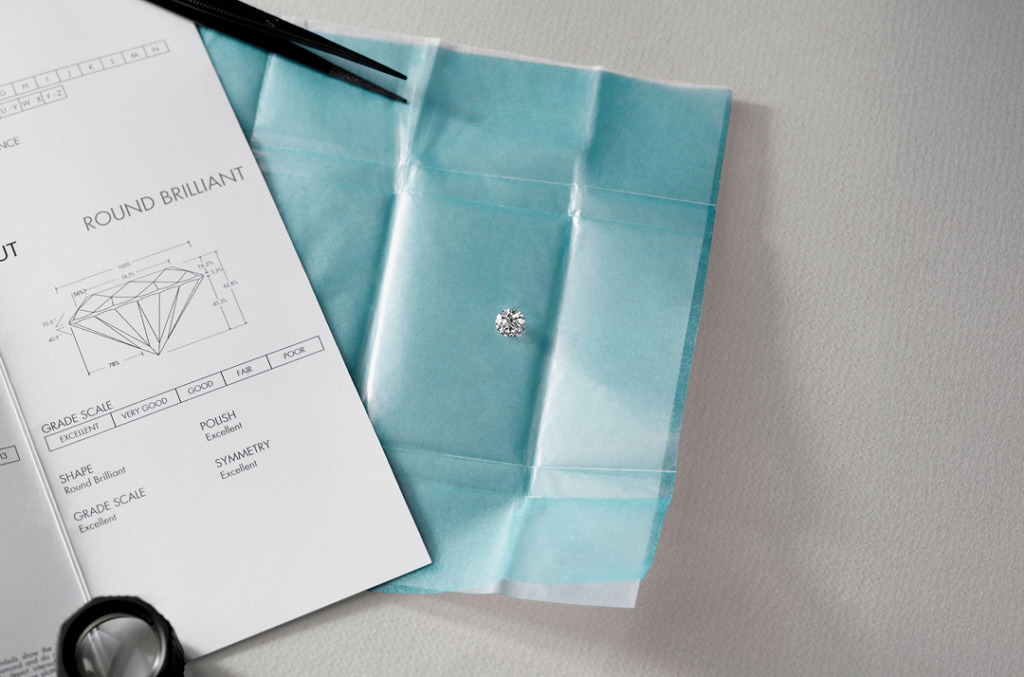
A diamond’s cut is all about proportions (the angles and sizes of the facets, which help the diamond reflect light) polish (how smooth the diamond’s surface is, which determines its shine) and its symmetry (how well the shape and facets line up with each another)3.
A well-cut diamond should ultimately create three effects: brilliance (white light reflections), fire (flashes of rainbow color) and scintillation (that gorgeous sparkle when the diamond moves).
The Gemological Institute of America (GIA) grades cut on a scale from excellent to poor4, so it’s easy to know if your diamond is as highly rated as you hope it is. Be sure to check for GIA or IGI (the International Gemological Institute5) certification, no matter the type of natural diamond you end up going with – it’s a safeguard against overpaying for diamonds that don’t measure up.
Color
When we talk about the color of a natural diamond, we’re talking about its lack of color (typically, the less color a diamond has, the rarer and more expensive it is). In a bid to standardize the way diamond color is graded, the GIA developed what’s known as the D-to-Z color scale, with 23 color grades, starting at D (completely colorless) and ending at Z (a strong yellow or brown hue)6.
As you might imagine, grades can make a major difference when it comes to value. Natural diamonds graded D or near to it, for example, are super rare and valuable. But the other 4Cs come into it too, since a near-colorless diamond ranked G-J could, in theory, look just as brilliant as a more expensive one rated D-F, if cut well (and cost a significant amount less)7.

Clarity
You might already know about ‘inclusions’ – these are internal flaws or blemishes found within a natural diamond8. They come about thanks to the way diamonds are formed, under intense pressure and heat deep within the Earth, and can take the form of tiny chips, feathering, graining and pinpoints. They’re sometimes called the individual ‘birthmarks’ of a natural diamond (since no two are ever the same).
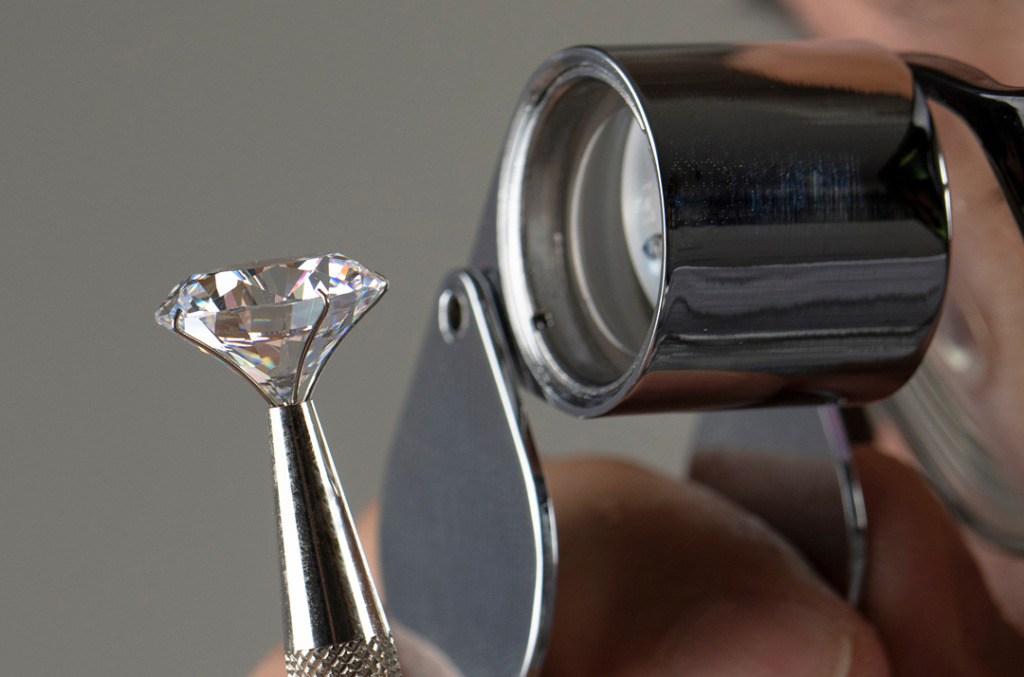
The diamond clarity scale, developed by the GIA, ranges from Flawless (F), where no imperfections are visible under 10x magnification, to Included (I1, I2, I3), where inclusions or flaws are more noticeable9. And while clarity can impact price and monetary value, there are ways of finding The One without spending eyewatering amounts on completely Flawless diamonds.

Carat weight
Often confused with size, a diamond carat is a measure of weight (one metric carat equals 200 milligrams, which is roughly the weight of a paperclip). In fact, a diamond’s visual size can vary based on its individual cut and proportions. A shallow cut, for example, could make a diamond look significantly larger than a smaller deeper-cut diamond of the same carat.
Heard of ‘magic sizes’? They’re classic diamond weights such as 0.5-carats, one-carat or two-carats and are often regarded as more appealing due to their widespread desirability10. But if you don’t mind not owning a ‘magic size’ (say, a 0.98-carat or 1.99-carat diamond) you could land yourself a brilliant diamond that looks almost identical in size to a much more costly full-carat alternative.
While carat weight is important, the number doesn’t always guarantee monetary value, so it’s important to assess all the 4Cs simultaneously, as much as possible. You may find two diamonds of the same weight could differ hugely in price thanks to a combination of the other Cs.
How style and setting affect total cost
Now that you’ve got a feel for how the 4Cs of the natural diamond itself can impact cost, next is understanding how different ring styles and settings can impact that all-important final bill. Because while the diamond is understandably important, the other parts of a ring all play their part, too.
Ring style
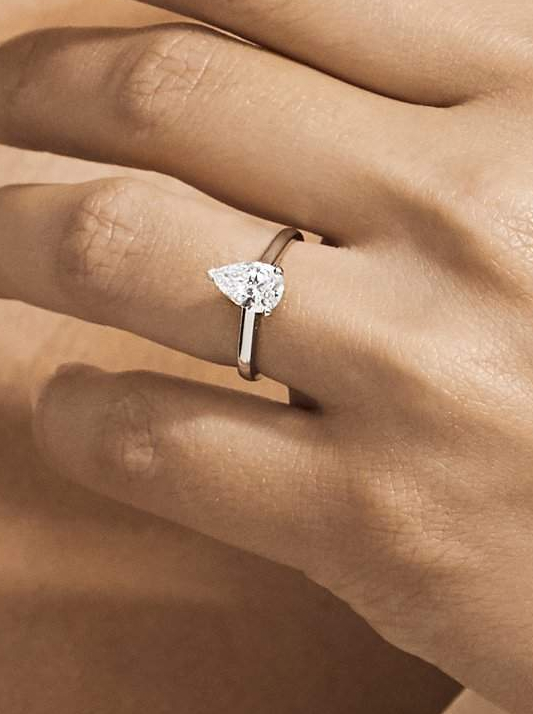
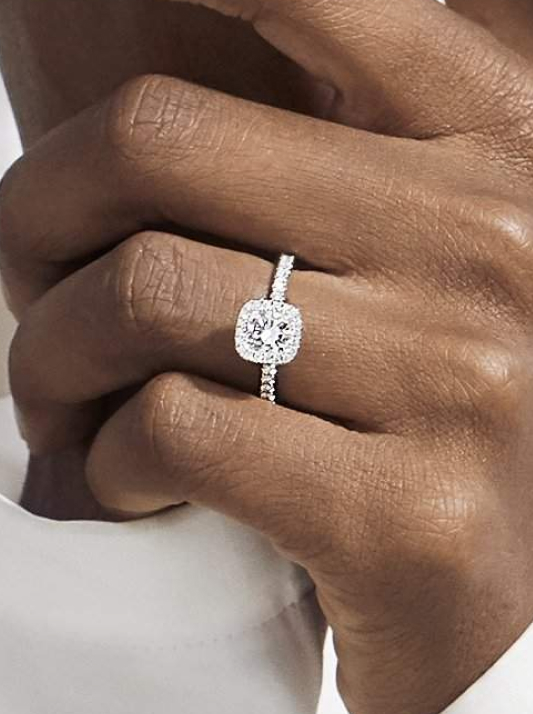
Classic solitaires (the most traditional style of ring, with a single diamond or gemstone in the centre) are usually one of the most affordable options11. It’s thanks to their straightforward design, which requires less metal and craftsmanship than other styles, such as halos (where the centre diamond is surrounded by a ‘halo’ of smaller diamonds or other precious stones) or three-stone rings.
Metal type
The metal you choose can impact overall price, too. It won’t come a surprise to you to learn that platinum is usually the most expensive, with less costly options including steel, tungsten and titanium. Silver is also relatively inexpensive (though bear in mind it scratches more easily than other metals and tarnishes, too). Mid-range metals include gold and palladium which are both popular options and relatively low maintenance12.
Band width and style
Whichever metal you end up choosing, picking a heavier band or higher carat can push the price up, so consider the design carefully – particularly if you’re designing it yourself and have full control. Extra details, such as pavé bands, hidden halos and bespoke elements, can increase labor and material costs. Thinking about your loved one’s style and preferences is important.
Hidden costs that can stretch your budget
When figuring out that all-important budget, it’s easy to forget add-ons that impact the final bill. We’re talking insurance, resizing fees, engraving or appraisals, all of which can all hike up the cost, along with annual maintenance and repairs (you may need to have the ring’s band polished or the prongs tightened, for example).
Where you’re based can also impact those costs. If you’re located in a city like New York or Los Angeles, for example, you’re likely to spend much more than if you’re residing in a quieter, less expensive city elsewhere in the world.13
It goes without saying that it’s probably a wise decision to avoid buying an engagement ring anytime close to Valentine’s Day thanks to price hikes (ahead of Valentine’s Day 2025, it was estimated that US shoppers would spend a staggering $6.5 billion on jewelry14).
Don’t forget other expenses like sales tax, shipping costs, shipping insurance and customs duties (particularly if buying from a far-flung destination). There’s also the possibility that the price you researched a few months ago when you first devised your ring budget has suddenly shifted thanks to global supply or currency fluctuations – which is why setting a realistic budget (with a degree of ‘wiggle room’) is a smart call.
How to create a personalized engagement ring budget
By now, you should have a feel for the factors influencing your budget, but here’s a reminder of what’s what and how to get started with settling on that pivotal figure…
Assess your personal financial circumstances
It sounds long-winded but taking a look at your income, savings and debt levels is a no-brainer – and it doesn’t have to take hours, either. If numbers aren’t your thing, speak to a trusted financial planner or friend to help – do the figures sound reasonable to them? Be sure to take into account things like any major upcoming expenses (like moving costs or if you’re expecting children, for example) to ensure your budget fits comfortably.
Be flexible when it comes to your situation
We mentioned the three-month rule earlier but remember, those traditional ‘rules’ should only be seen as gentle guidelines – and they’re not right for everyone. Instead of taking them literally, see them as a useful starting point to finding your ‘figure’. Tweak your budget to your own personal situation and what feels appropriate to you.
Make note of your top priorities
Ultimately, everyone’s different when it comes to the things that really matter – and jewelry is a super personal decision, particularly a piece of this magnitude. Before you hit up a store to make that life-changing purchase, figure out which aspects of the ring matter most to you – from carat size and cut to color, clarity or the setting style and material. Nailing those priorities from the start will allow you to cut through the noise and make sound choices, hopefully emerging with a ring you’ll (both) fall head over heels for.
Consider involving your loved one
If you feel it’s appropriate – and you both value open conversations about money – it could be worth raising the topic with your partner ahead of clicking ‘Buy’. From expectations around style to how much you both feel is appropriate to spend, having a chat could help reduce stress over the coming months and ensure you’re both on the same page from the start.
Finalizing your diamond engagement ring budget
Ready to say ‘Yes’ to the ring? Before you go full steam ahead, be sure to…
- Revisit your total budget to ensure it reflects your priorities across the 4Cs, setting and style.
- Confirm all hidden costs have been accounted for (think: taxes, insurance, resizing potential and delivery).
- Check your chosen payment method – whether it’s savings, financing or credit – is suitable and feels appropriate for your current situation.
- Don’t be afraid to double (or triple!) check certifications, return policies and retailer reputation (read as many reviews as you can!), as well as aftercare terms to avoid any unexpected glitches later down the line.
- Remember, a budget is more than financial planning, but a reflection of the care and significance of the purchase you’re making. Taking your time is fine. There’s no need to rush it.
Budgeting for a natural diamond engagement ring is about so much more than just number-crunching, it’s an important step in the process of asking somebody to share their life with you.
Spending a little time on figuring out your finances and prioritizing what truly matters to you both as a couple now means you can make this major decision with the utmost confidence, knowing that the precious gemstone on your partner’s hand was truly the very best call, in every way possible.
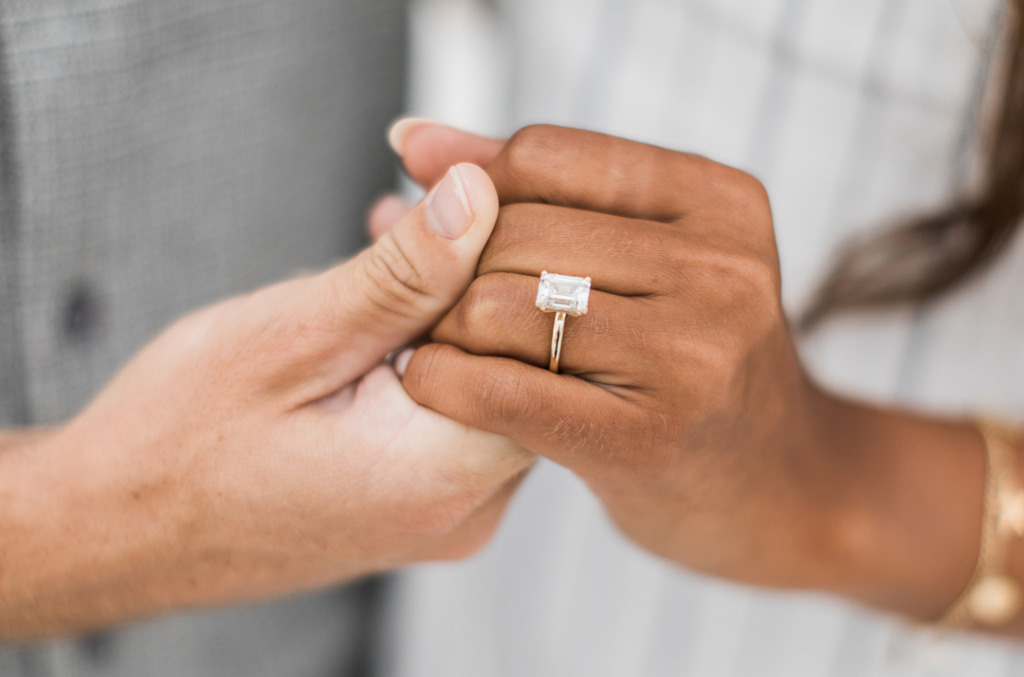
Because ultimately, you’re not just buying a piece of jewelry that looks dazzling, you’re buying a symbol of your love story to be cherished for years to come. And who knows? Maybe one day in the distant future it’ll be lovingly passed down for future engagements and other treasured celebrations, too. Quite a magical thought, right?
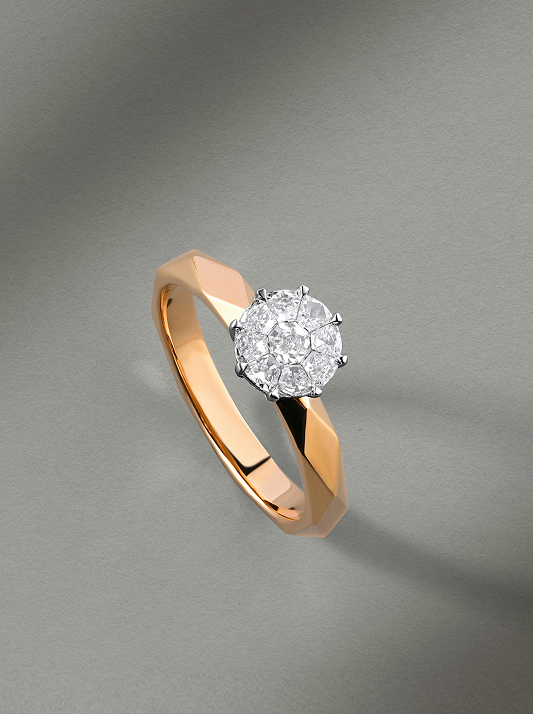
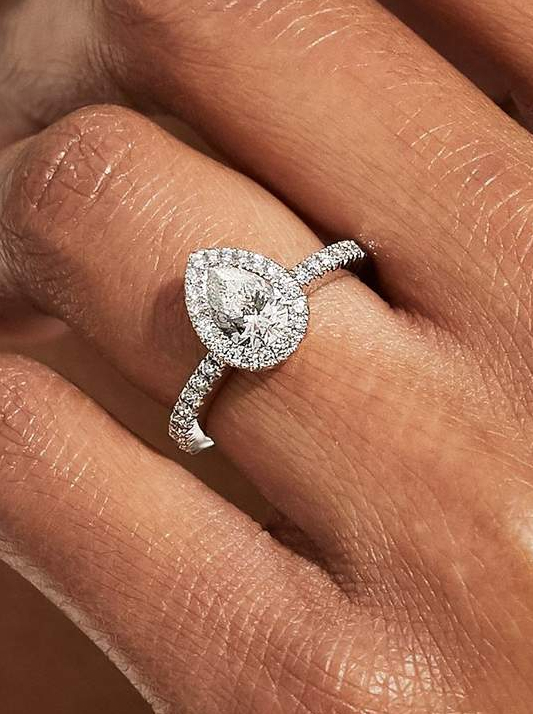
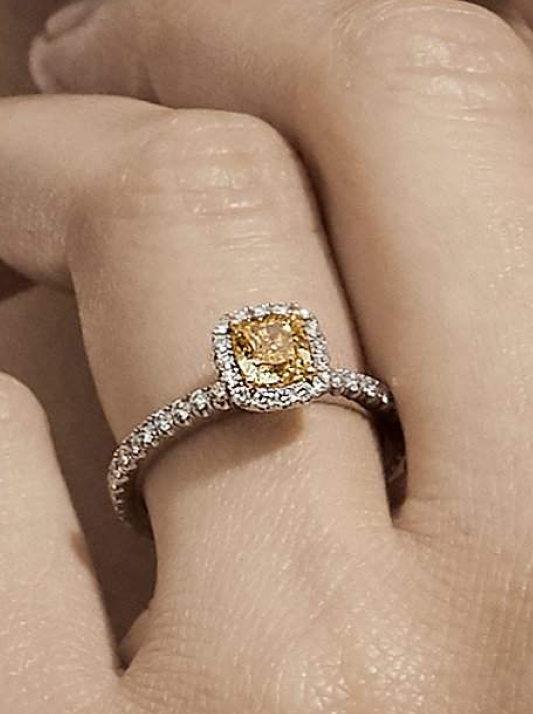
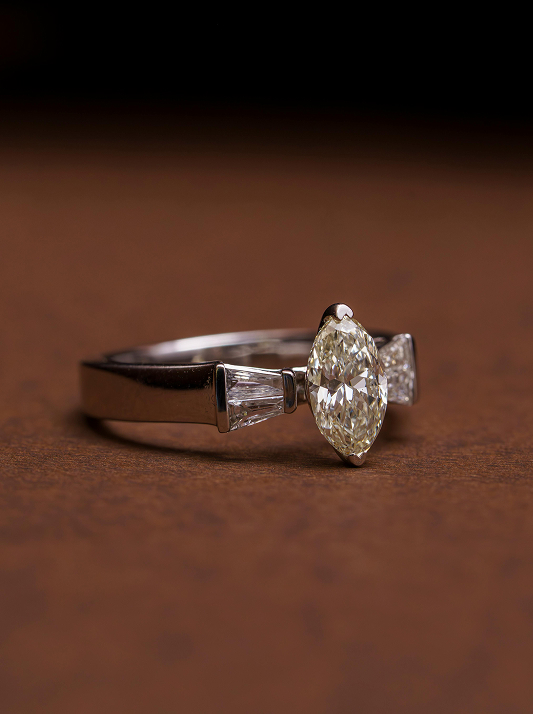
Main image: Adelaide ring, Celeste ring and Axis ring by Rachel Boston
Sources
- www.diamondrensu.com/engagement-rings/is-2500-good-for-an-engagement-ring/ ↩︎
- www.theknot.com/content/how-much-to-spend-on-engagement-ring/ ↩︎
- www.gia.edu/gia-about/4cs-cut/ ↩︎
- www.gia.edu/gia-about/4cs-cut/ ↩︎
- www.igi.org/ ↩︎
- www.gia.edu/gia-about/4cs-color/ ↩︎
- www.gia.edu/gia-about/4cs-color/ ↩︎
- www.4cs.gia.edu/en-us/diamond-clarity/ ↩︎
- www.naturaldiamonds.com/diamond-engagement-rings/4cs-of-diamonds/diamond-clarity-chart/ ↩︎
- www.4cs.gia.edu/nine-things-about-diamond-carat-weight-you-need-to-know/ ↩︎
- www.frankjewelers.com/the-five-best-affordable-engagement-ring-styles/ ↩︎
- www.qreport.com/engagement-rings/metals-cost-inexpensive-to-expensive/ ↩︎
- www.diamonds.pro/education/heres-how-much-to-spend-on-an-engagement-ring/ ↩︎
- www.rapaport.com/news/valentines-day-jewelry-spending-to-hit-new-high/ ↩︎


