
Contents
What are the 4Cs of diamonds and why are they important?
Diamond cut: the art of light and proportion
Diamond color: the subtle hues that influence value
Diamond clarity: nature’s signature in every gemstone
Diamond carat: the weight of precision
The 4Cs are the defining characteristics of every diamond
Debunking misconceptions about the 4Cs
How do I balance cut and carat when choosing a diamond?
The 4Cs of diamonds are the global standard for understanding what makes a natural diamond exceptional. Jackie Kennedy’s 40-carat marquise. The elongated oval solitaire Hailey Bieber helped cement as the ultimate it-girl ring . The Taylor-Burton diamond, a 69.42-carat, pear-shaped, D-color flawless diamond now associated with one of the greatest love stories of all time… Behind every iconic diamond is someone who knew exactly what they were looking for.
Cut, color, clarity and carat are the four qualities that determine how a natural diamond looks, what it’s worth and why it lasts. They’re also the difference between walking into a jewelry store feeling confident and walking out feeling like you settled. Whether you’re shopping for an engagement ring, a meaningful gift or something entirely for yourself, understanding the 4Cs of diamonds means you’ll always know what you’re choosing, and why.
What are the 4Cs of diamonds and why are they important?
The 4Cs stand for cut, clarity, color and carat. Together, they determine a natural diamond’s quality, beauty and value, and give buyers a shared, reliable language for understanding what they’re looking at.
- Diamond cut: how well a diamond’s proportions, polish and symmetry allow it to interact with light. The most technically demanding of the 4Cs, and widely considered the most important1.
- Diamond color: how much (or how little) color a diamond shows. For white diamonds, less is more. Colorless grades are rarer and have historically held more value2.
- Diamond clarity: the presence or absence of internal inclusions and surface blemishes, each one a natural record of the diamond’s formation deep in the Earth3.
- Diamond carat: the weight of the diamond, measured in metric carats. One carat equals 200 milligrams. Often misread as size, carat is really about mass.
The references keep coming with high profile celebrity proposals. Selena Gomez said yes to a bespoke marquise4. Adele confirmed her engagement with a 10-carat pear-cut natural diamond on a pavé band5. Taylor Swift’s 8-10 carat old mine cut diamond brings a vintage brilliance to the mix. Zendaya’s east-west cushion cut6 turned heads for its quiet confidence as much as its size. Each choice reflects something personal: a cut, a scale, a setting that felt exactly right. That’s what knowing the 4Cs makes possible.
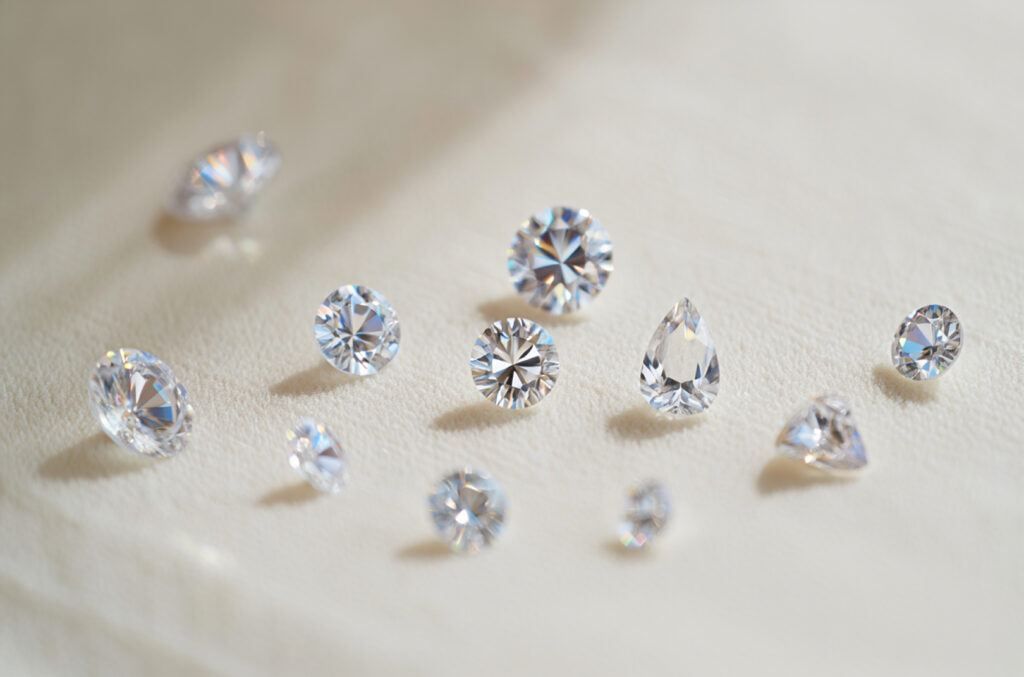
Who created the 4Cs?
Before the 4Cs of diamond grading, the diamond trade ran on vague poetry. Jewelers described gems as ‘without flaws’ or ‘like water,’ and buyers had little choice but to trust them. Only carat weight had a consistent measure, dating back to the 1500s7. The result was miscommunication, mistrust and uncertainty, especially for first-time buyers.
Enter Robert M. Shipley (opens in new window), founder of the Gemological Institute of America (GIA), who coined the term ‘4Cs of diamond quality’ in the 1940s to help his students and the wider industry standardize the way we talk about diamonds8. What started as a teaching tool became a global rating system, transforming diamond buying into a more transparent and trustworthy process.
How the 4Cs changed diamond buying
The shift from vague descriptors to a standardized grading system changed everything. For the first time, a buyer in New York and a jeweler in Antwerp could discuss the same diamond in the same terms. The 4Cs gave consumers the vocabulary to ask the right questions and the confidence to make informed decisions. That clarity (no pun intended) remains just as valuable today.
Diamond cut: the art of light and proportion
Cut is often confused with shape, but they’re not the same thing. Shape is the silhouette: pear, heart, round, oval. Cut refers to the technical execution, in other words, the proportions, polish and symmetry that determine how a diamond handles light.
What are diamond cuts?
A well-cut diamond produces three distinct optical effects: brilliance (the return of white light), fire (flashes of spectral color) and scintillation (the sparkle you see when the diamond moves). Even a diamond with exceptional clarity can look flat and lifeless if the cut is poor. That’s why many gemologists rank cut as the most important of all the 4Cs9.
Cut also shapes how large a diamond appears. A well-proportioned stone will always look more impressive than a heavier one with a poor cut, which is why diamond carat alone is rarely the full story.
How are diamonds cut?
If you’re wondering “what is diamond cutting” here’s the short answer: it’s the process of transforming a rough diamond into a polished gem, and it’s one of the most precise, skilled crafts in fine jewelry.
Cutters study each rough diamond carefully before making a single incision, working to maximize both size and brilliance from the raw material. The process involves determining the best shape and facet arrangement, cutting and polishing each facet to exact specifications, and assessing polish (the smoothness of each surface), symmetry (how well facets align) and proportion (the angles and dimensions of the overall form). Every decision a cutter makes directly influences how the finished diamond handles light. Whether diamond cutting is done by hand or machine also shapes the result and the distinction between handcrafted and machine-cut diamonds is worth understanding before you buy.
How diamond cuts are graded
The GIA grades cut on a five-point scale10:
- Excellent: maximum brilliance and fire; light is reflected with exceptional precision.
- Very Good: high-quality light performance; a slightly less precise version of Excellent.
- Good: strong light return, with some light escaping through the sides or bottom.
- Fair: noticeably reduced sparkle; may still be appealing at a lower price point.
- Poor: significant light loss; brilliance is visibly compromised.
The three key factors affecting cut quality are proportions (the angles and sizes of each facet), polish (the smoothness of each surface, which affects shine) and symmetry (how precisely the facets align, which impacts how light travels through the diamond).
Different types of diamond cuts
Each diamond shape interacts with light differently, but the best cut is always a matter of personal taste.
- Round brilliant: the classic choice, engineered for maximum sparkle. The most popular cut by far.
- Oval: elongated and flattering on the finger, with strong brilliance and a slightly larger visual footprint than a round of the same carat.
- Marquise: an elongated, pointed silhouette with an elegant, vintage feel. A favorite of Jackie Kennedy and Victoria Beckham.
- Pear: a teardrop shape that looks striking as a solitaire or pendant. Worn to memorable effect by Elizabeth Taylor.
- Emerald: a rectangular step-cut with long, open facets that emphasize clarity over sparkle. A modern favorite for those drawn to understated drama.
- Princess: a square brilliant cut with strong light performance. Clean-lined and contemporary.
- Cushion: a softened square or rectangle with rounded corners and a romantic, antique quality.
- Heart: the most overtly romantic cut, technically demanding to execute well.
ADIF tip: If you’re torn between shapes, try them on before you decide. A marquise or oval can make fingers look longer and more slender, while a round brilliant delivers reliable sparkle in every light. The best cut is the one you can’t stop looking at.
Diamond color: the subtle hues that influence value
When most people picture a natural diamond, they imagine something icy and colorless. The reality is more nuanced. Diamond color exists on a spectrum, and when it comes to white diamonds, the conversation is really about the absence of color. The less color a diamond shows, the rarer and more coveted it tends to be.
What is diamond color?
Diamond color refers to the presence or absence of hue within the stone. White or colorless diamonds are graded on how free they are from yellow or brown tints. Fancy colored diamonds, pinks, blues, yellows and beyond, are a separate category entirely, graded on the richness and intensity of their color rather than its absence.
What is the diamond color scale?
To standardize color assessment, the GIA developed the D-to-Z scale: 23 grades covering the full range from completely colorless to noticeably tinted11.
- D–F: The most colorless grades, prized for their icy brilliance and exceptional rarity.
- G–J: Near-colorless, with a subtle warmth beginning to show. Still visually bright, but softer and considerably more accessible in price.
- K–Z: Increasingly noticeable color, from gentle Champagne Desert diamonds to the deeper brown tones of Whiskey Desert diamonds. This is where natural warmth becomes part of the appeal.

Most engagement ring diamonds fall within the D–J range, and the differences between adjacent grades are subtle to the naked eye but can be significant in terms of price. That said, the most personal choice isn’t always the most colorless one. Desert diamonds are redefining what an engagement diamond can look like. Their natural warmth and one-of-a-kind color reflect who you are as a person, not just the occasion.
How is diamond color graded?
Diamond color grading isn’t guesswork. It’s a precise science. Professionals assess each diamond under controlled lighting conditions using a standardized process12:
- Controlled lighting conditions: diamonds are evaluated under daylight-equivalent light to eliminate distortion.
- Comparison against master stones: each diamond is held next to a set of graded reference diamonds to determine its grade.
- Assessment of hue, tone and saturation: graders analyze the precise character of any color present.
- Viewing from specific angles: diamonds are assessed face-down to prevent their brilliance from masking any color.
Even small differences between grades can significantly affect a diamond’s value. A D-graded diamond is among the rarest and most valuable in the world.
What are fancy colored diamonds and how do they differ from the standard color scale?
Fancy colored diamonds exist outside the D–Z scale entirely. These are natural diamonds that exhibit a strong, vivid hue: think deep yellow, vivid pink, ocean blue or the extraordinarily rare red. Rather than being assessed for the absence of color, fancy colored diamonds are graded on hue (the color itself), tone (how light or dark it is) and saturation (the intensity).
The GIA grades fancy colored diamonds across nine levels, from Faint through to Fancy Vivid, the most intensely colored and typically the most valuable13. A Fancy Vivid pink diamond is worth considerably more than a Fancy Light pink of the same size, simply because the color is stronger.
These colors are entirely natural, each one the result of specific geological conditions: boron gives blue diamonds their tint14, nitrogen produces yellow and brown hues15, and pink diamonds (think Blake Lively’s rose-hued oval-cut ring) are formed by structural distortions deep in the Earth’s mantle16. Unlike lab-grown diamonds, whose colors can be manufactured by introducing trace elements, the color in a natural fancy color diamond is unrepeatable. That’s what makes it rare, and what makes it matter.
Does diamond color change over time?
Many jewelry lovers also ask, do diamonds change color over time and the anwser is No. Natural diamond color is permanent under normal wear conditions. A diamond’s color is a product of its geological formation: structural characteristics and trace elements that are locked in forever. It’s assessed once during professional grading and doesn’t change.
Why diamond color affects value and rarity
Color rarity directly drives market demand. Completely colorless diamonds (D–F) are exceptional finds in nature, and that scarcity is reflected in their price. At the other end of the spectrum, fancy colored diamonds are rarer still. Fewer than 0.01% of all natural diamonds have enough color saturation to be classified as fancy17. In these gems, the intensity and uniformity of color can outweigh cut, clarity or carat when it comes to value.
How important is diamond color?
Color matters, but it doesn’t have to dictate your decision. In many settings, near-colorless diamonds in the G–J range look just as stunning as D–F stones, especially when they’re well-cut. Sunlit White Desert diamonds are a good example: their subtle warmth reads as pure brilliance once set, making them a smart choice for buyers who want show-stopping beauty without the top-tier premium.
And who’s to say that creamier, golden or even warmly tinted diamonds aren’t beautiful in their own right? Honey Desert diamonds and Sunset Brown Desert diamonds celebrate exactly that kind of individuality. Ultimately, color is personal.
Diamond clarity: nature’s signature in every gemstone
Natural diamonds form over billions of years under intense pressure and heat deep within the Earth. It’s no surprise, then, that most carry the marks of that journey. These internal features, known as inclusions, and surface blemishes are what clarity grading measures.
What is diamond clarity?
Clarity refers to the presence or absence of inclusions (internal characteristics) and blemishes (surface features) within a diamond. Inclusions can take many forms: tiny crystals, feathering, graining, pinpoints. Each one is unique to that diamond. Think of them as its fingerprint, the individual marks of a formation process that took billions of years and will never be replicated. Diamond clarity is also one of the key factors separating natural diamonds from lab-grown alternatives.
What is the diamond clarity scale?
The GIA diamond clarity scale runs from Flawless to Included, across 11 grades18:
- Flawless (F): no inclusions or blemishes visible under 10x magnification. The rarest clarity grade.
- Internally Flawless (IF): no internal inclusions; only minor surface blemishes may be present.
- Very, Very Slightly Included (VVS1 and VVS2): minute inclusions that are extremely difficult for trained graders to detect.
- Very Slightly Included (VS1 and VS2): minor inclusions that are difficult to see even under magnification.
- Slightly Included (SI1 and SI2): noticeable inclusions under magnification; occasionally visible to the naked eye depending on size and placement.
- Included (I1, I2 and I3): obvious inclusions that may impact the diamond’s transparency and brilliance.
This precise grading standard applies to natural diamonds. The GIA has introduced a more streamlined system for lab-grown diamonds, classifying them simply as Standard or Premium based on overall quality, a reflection of how narrowly consistent LGDs tend to be19.
What does a diamond clarity chart show?
A clarity chart maps each grade against what’s visible at 10x magnification and to the naked eye, and the gap between those two things is where the smart buying decisions happen. Many diamonds graded Slightly Included appear completely flawless once set in a ring or necklace, because their inclusions only show under a loupe. For buyers focused on beauty rather than technical perfection, VS2 or SI1 diamonds are often the sweet spot: clear to the eye, beautiful and considerably more affordable than Flawless or Internally Flawless grades.
How can I choose the right clarity for my diamond?
Prioritize what you can see, not what’s on the certificate. Here’s a practical framework:
- For engagement rings under 2 carats, VS2 or SI1 is widely considered the best value as it’s clear to the eye and visually identical to higher grades once set.
- For step cuts like emerald or Asscher, go higher. Their large, open facets make inclusions more visible. VS1 or above is worth the investment.
- For round brilliants or cushion cuts, inclusions are easier to conceal. SI1 or SI2 can look stunning without the clarity premium.
- For larger diamonds (2 carats and up), inclusions become easier to spot. Clarity matters more here.
- If investment potential matters, Flawless or Internally Flawless grades are rarer, more coveted and tend to hold their value best.
How important is clarity in a diamond?
Diamond clarity can significantly impact price, but it doesn’t have to impact beauty. Diamonds with inclusions can still sparkle, and a diamond clarity guide will tell you that those individual quirks, a tiny feather, a minute pinpoint, are precisely what make each natural diamond one of a kind. They’re not flaws. They’re character.
Diamond carat: the weight of precision
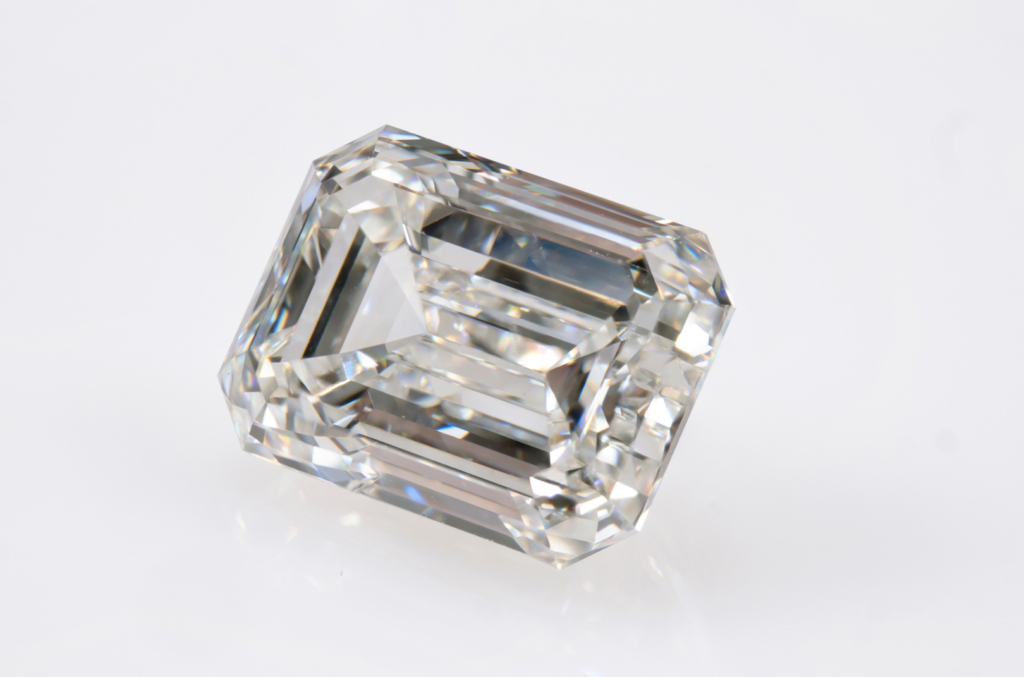
Diamond carat is one of the most misunderstood of the 4Cs. It’s a measure of weight, not physical size. One metric carat equals 200 milligrams, roughly the weight of a small paperclip20. The relationship between diamond size and value is more nuanced than the number on a certificate, and it works best understood alongside cut, color and clarity.
What is diamond carat?
Each carat is divided into 100 points, which is why jewelers can describe diamonds to the hundredth, even thousandth, of a carat. A 0.25ct diamond is called a ‘twenty-five pointer.’ This precision matters because small differences in weight can translate to meaningful differences in price, particularly at higher carat weights21.
Diamond carat weight alone doesn’t guarantee value. Two diamonds of the same weight can differ dramatically in price depending on their cut, color and clarity. A well-cut one-carat natural diamond with excellent grades across the other Cs can outshine a larger diamond with lower grades. Don’t fall for the bigger-is-better trap.
Larger carat natural diamonds are genuinely rare. The turbulent journey from the Earth’s mantle to the surface takes billions of years, and most of what survives is small. The Cullinan Diamond, discovered in South Africa in 1905, weighed a staggering 3,106 carats in rough form, the largest natural diamond ever found22.
How does the diamond carat weight chart work?
Diamonds that hit round numbers, 0.5ct, 1ct, 2ct, are known as ‘magic sizes.’ They’re psychologically desirable (saying you have a one-carat diamond sounds more impressive than a 0.98-carat one) and they command a price premium to match. But a 0.98ct diamond can look virtually identical to a 1ct stone on the finger, at a noticeably lower price.
Here’s a rough guide to how carat weight translates to diameter in a standard round brilliant cut:
- 0.25ct: approximately 4.1mm
- 0.50ct: approximately 5.2mm
- 0.75ct: approximately 5.9mm
- 1.00ct: approximately 6.5mm
- 1.50ct: approximately 7.4mm
- 2.00ct: approximately 8.2mm
What does diamond carat weight look like on hand?
Two diamonds of the same carat don’t always look the same size. A shallowly cut diamond will appear larger on the finger than a deeply cut stone of identical weight, because more of its mass is spread across the surface rather than sitting in depth. When shopping in person, always ask to see diamonds of similar carat in different cuts side by side. Online, check both carat weight and the millimeter dimensions. The latter tells you far more about how the diamond will actually look when worn.
How can I make a diamond look bigger?
There’s a well-worn toolkit for maximizing visual size without maximizing spend:
- Choose an elongated shape. Ovals, marquises and pears have a larger visual footprint than rounds of the same carat.
- Opt for a halo setting. A ring of smaller natural diamonds around the center stone adds perceived size and brilliance.
- Consider a thin band. A slender, delicate setting makes the center stone appear proportionally larger.
- Prioritize cut. An Excellent cut grade maximizes brilliance, which draws the eye and creates the impression of greater size.
- Go just below magic sizes. A 0.98ct or 1.96ct diamond looks nearly identical to a 1ct or 2ct, but costs meaningfully less.
ADIF tip: Before your appointment, decide which of the 4Cs you’re willing to be flexible on and which you’re not. Most buyers find that prioritizing an Excellent cut, choosing a near-colorless grade in the G–J range and staying clear to the eye on clarity gives them the best-looking diamond within their budget. Carat is usually the last thing to adjust, not the first.
The 4Cs are the defining characteristics of every diamond
No two people shop for a diamond the same way. Some are drawn to sparkle, some to scale, some to the quiet beauty of a natural diamond with character. The 4Cs give you the framework. What you do with them is entirely personal.
How can I balance the 4Cs when choosing a diamond?
If you want maximum sparkle, prioritize cut above everything. An Excellent cut in the G–J color range with VS2 or SI1 clarity is the formula most jewelers recommend for the best balance of beauty and value.
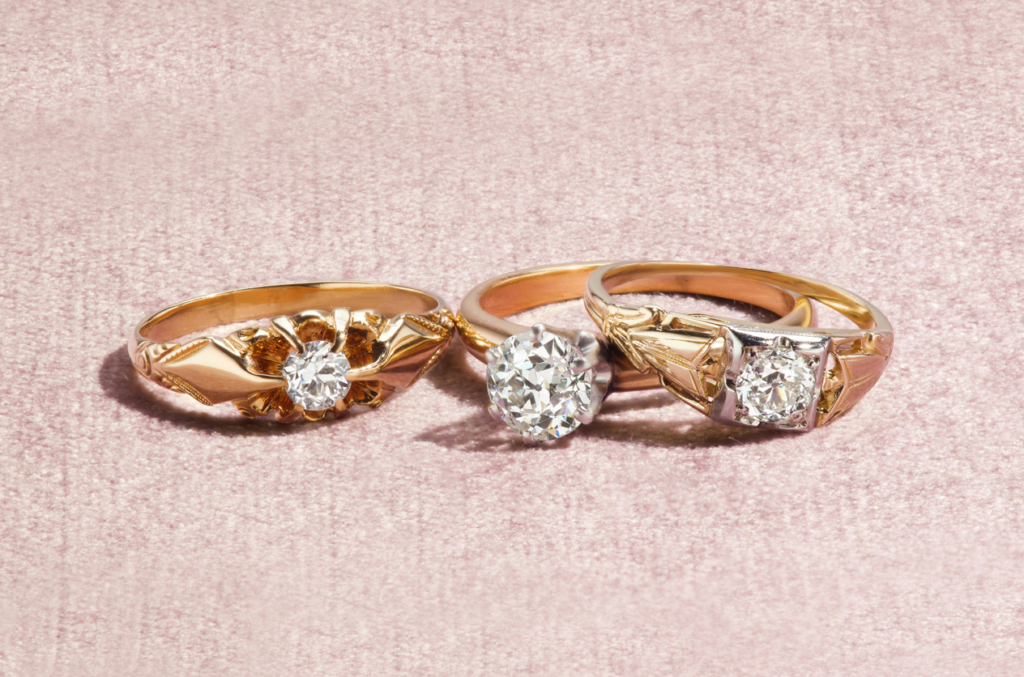
- If you want character, consider vintage or antique cuts, old mine or rose cuts, which often carry visible inclusions and warm tints that make them feel utterly personal. A diamond with a one-of-a-kind inclusion is a diamond with a story.
- If investment value matters, focus on rarity: high clarity (VS1 and above), colorless grades (D–F) and larger carat weights, particularly above one or two carats.
- If budget is a priority, start with an Excellent cut, choose near-colorless (G–J) and ask for eye-clean SI1 or SI2 clarity. Then be flexible on carat and avoid magic sizes.
- If instinct is driving you, trust it. A diamond’s origin, craftsmanship and the story it carries matter just as much as its grading report. Sometimes a diamond simply speaks to you.
Debunking misconceptions about the 4Cs
If you come away with anything from this guide, let it be this: the 4Cs are a tool, not a rulebook.
Bigger isn’t always better
A high carat weight sounds impressive, but scale alone doesn’t create sparkle. A poorly cut two-carat diamond can look flat and dull next to a beautifully cut one-carat. Brilliance, fire and scintillation come from proportions, not mass.
Perfect clarity isn’t essential
Flawless diamonds are among the rarest objects on Earth, and they’re priced accordingly. But inclusions in an SI1 or VS2 diamond are often completely invisible to the naked eye, especially once the diamond is set. You can land a visually flawless diamond without paying the flawless premium.
D-color diamonds are not the only beautiful ones
D is the top of the color scale, but unless you’re comparing it under controlled lighting against a master stone, you likely won’t see the difference between a D and a G. Near-colorless diamonds in the G–J range look colorless once set, especially in yellow or rose gold, where any warmth in the diamond becomes part of the aesthetic.
The 4Cs aren’t everything
The 4Cs tell you a great deal about a diamond’s quality. They don’t tell you everything that matters. A natural diamond’s origin, the craftsmanship of the people who cut it and the meaning it carries are all part of its value, and none of those things appear on a grading report.
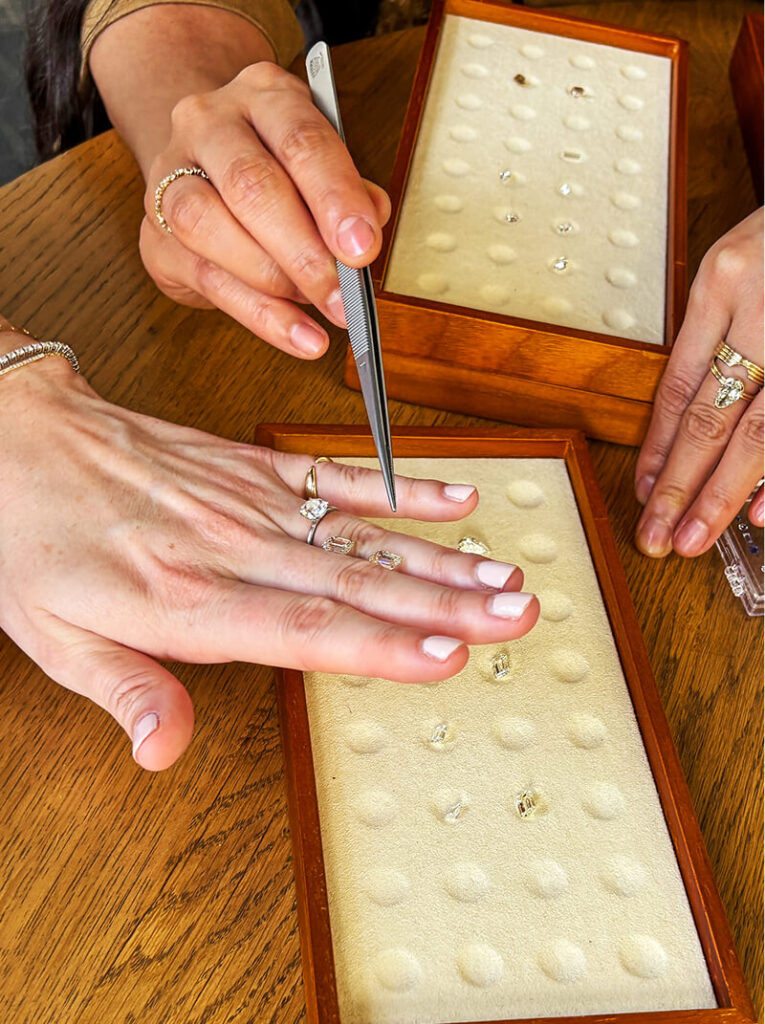
How do I balance cut and carat when choosing a diamond?
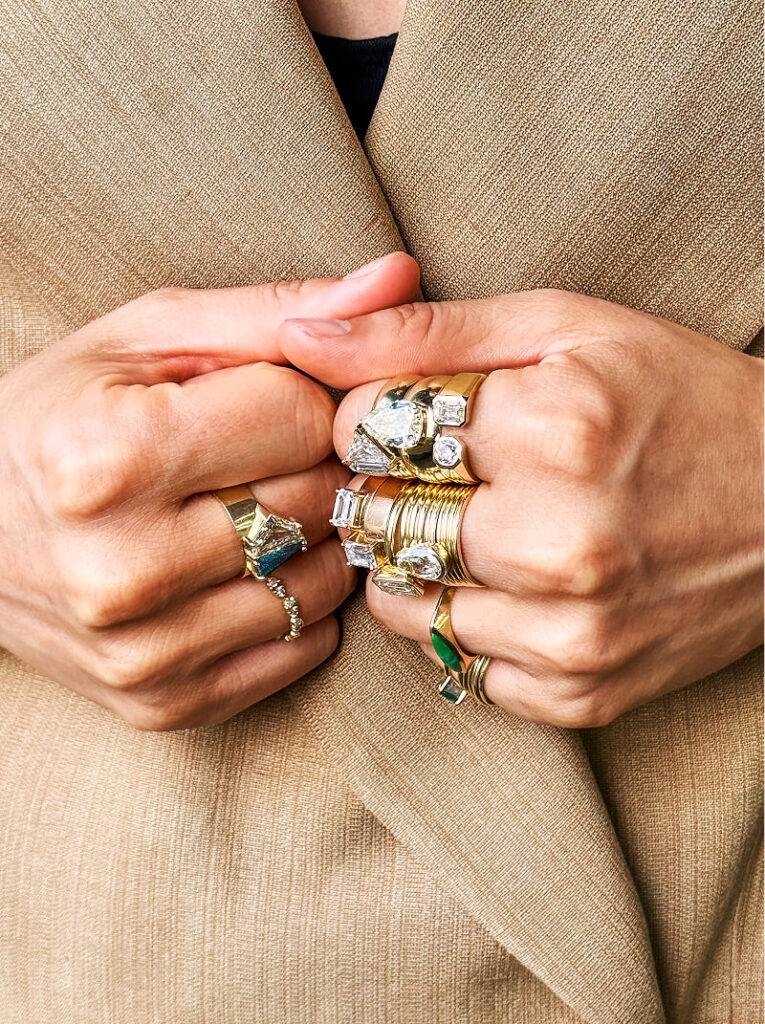
The relationship between cut and carat is one of the most important trade-offs in diamond buying. An excellent cut can make a smaller diamond outshine a larger, poorly proportioned one, at a lower price. If your budget is fixed, investing in cut quality and accepting a slightly smaller carat is nearly always the better call. Brilliance is visible. Carat weight is a number. The decisions involved in choosing the right carat, cut, and style for different milestones will look different depending on the occasion, the person and the ring.
The only rule that matters
Somewhere between the grading report and the glass cabinet is the moment that actually counts. The one where you stop reading about proportions and start seeing a diamond that looks, inexplicably, like it was made for you.
The 4Cs are the best tool the industry has ever produced for making that moment less bewildering and more informed. But they’ve never been able to account for the marquise that catches the light differently to every other marquise in the room, or the champagne-tinted Desert diamond that feels less like a convention and more like a statement. That part is still entirely human. Know your 4Cs. Then trust what you see.
FAQs
What are the 4Cs for engagement rings?
For an engagement ring, the 4Cs take on particular significance. This is a piece of diamond jewelry meant to be worn every day for decades. Cut is especially important here: a well-cut diamond catches the light beautifully in all conditions, from candlelight to daylight. Color in the G–J range offers excellent visual quality without the cost of colorless grades, and a clarity of VS2 or SI1 is typically clear to the eye at under two carats. Questions around what size diamond for engagement ring are among the most common we hear, and the answer almost always comes back to cut first, carat second.
What part of the 4Cs should you prioritize when purchasing an engagement ring?
Cut, consistently. It has the greatest impact on how a diamond looks in real life. Beyond that, prioritization depends on what matters most to you personally. If sparkle is your priority, cut and color lead. If size is key, be flexible on clarity. Setting a realistic engagement ring budget before you start shopping will make those trade-offs considerably easier to navigate.
How are natural diamonds formed?
Natural diamonds form deep in the Earth’s mantle, around 140 to 200 kilometers below the surface, over the course of one to three billion years. Under extreme heat and pressure, carbon atoms bond into a crystalline structure. Powerful volcanic eruptions then carry diamonds upward through the Earth in formations called kimberlite pipes, where they eventually become accessible for mining. Natural diamond formation is an extraordinary process spanning geological time, and the reason no two natural diamonds are ever truly alike.
Can I prioritize emotional value over the technical 4Cs?
Absolutely. The 4Cs exist to help you understand a diamond, not to dictate your choice. A diamond with a distinctive inclusion, a warm vintage tint or a rare antique cut can hold far more meaning than a technically perfect stone that doesn’t move you. Unique characteristics, nature’s love notes as some jewelers call them, are what make a natural diamond truly one of a kind. The history of diamond engagement rings is full of choices made on instinct rather than specification. If a diamond speaks to you, that’s reason enough.
Sources
- www.4cs.gia.edu/en-us/diamond-cut/ ↩︎
- www.gia.edu/diamond-quality-factor/ ↩︎
- www.4cs.gia.edu/en-us/diamond-clarity/ ↩︎
- www.elle.com/culture/celebrities/selena-gomez-marquise-diamond-engagement-ring-explained/ ↩︎
- www.naturaldiamonds.com/engagement-rings/celebrity-diamond-engagement-rings-2024/ ↩︎
- www.townandcountrymag.com/style/jewelry-and-watches/zendaya-engagement-ring-details/ ↩︎
- www.4cs.gia.edu/en-us/4cs-of-diamond-quality/ ↩︎
- www.4cs.gia.edu/en-us/blog/history-4cs-diamond-quality/ ↩︎
- www.martindiamonds.com/blogs/news/diamond-cut-guide-brilliance-fire-sparkle-explained/ ↩︎
- www.gemsociety.org/article/gias-new-diamond-cut-grading-system/ ↩︎
- www.gia.edu/gia-about/4cs-color/ ↩︎
- www.lumeradiamonds.com/diamond-education/how-gia-grades-diamonds/ ↩︎
- www.gia.edu/fancy-color-diamond-quality-factor/ ↩︎
- www.gia.edu/gia-news-press/researchers-discover-origin-of-blue-diamonds/ ↩︎
- www.gia.edu/gems-gemology/summer-2020-naturally-colored-yellow-orange-diamonds/ ↩︎
- www.gia.edu/gia-news-research/why-pink-diamonds-pink-gia-researchers-dive-deep-into-crystal-structure/ ↩︎
- www.laylakaisicollection.co.nz/blogs/lifestyle/inside-the-world-of-natural-fancy-coloured-diamonds-the-rarest-gems-on-earth/ ↩︎
- www.gia.edu/gia-about/4Cs-Clarity/ ↩︎
- www.gia.edu/gia-news-press/updated-laboratory-grown-diamond-services-to-launch-october/ ↩︎
- www.4cs.gia.edu/en-us/diamond-carat-weight/ ↩︎
- www.4cs.gia.edu/en-us/diamond-carat-weight/ ↩︎
- www.naturaldiamonds.com/historic-diamonds/cullinan-diamond/ ↩︎


