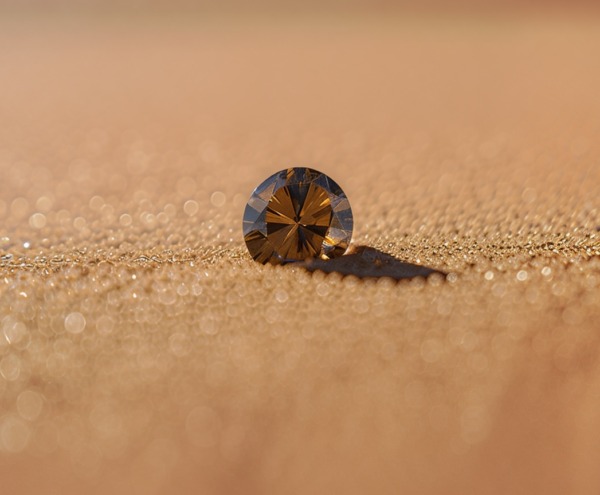

As most jewelry lovers can agree, diamonds are unlikely to ever go out of fashion, but the one specific type that’s currently got everybody talking? Fancy colored diamonds. AKA natural diamonds that exhibit color beyond the typical ‘colorless’ range (so D-Z on the Gemological Institute of America, or GIA, scale).
Prices for fancy colored or (‘fancy color’ diamonds as they’re also known) have surged a huge 205% over the past two decades1 and demand shows no sign of slowing down. It’s largely thanks to their rarity – only a tiny fraction (less than 0.01%) of all natural diamonds have a high enough color saturation to be classified as ‘fancy’2, meaning they’ve come to represent one of the most prestigious purchases for the lucky buyers who find themselves landing them.
And while the traditional 4Cs of diamonds (that’s cut, clarity, carat and color) still all matter, fancy color diamonds are valued slightly differently to those that fall within the D-Z scale, which covers colorless to light yellow, brown and gray hues. In these diamonds, intensity and evenness of color can matter more than clarity or size3, for example.
What is a fancy color diamond?
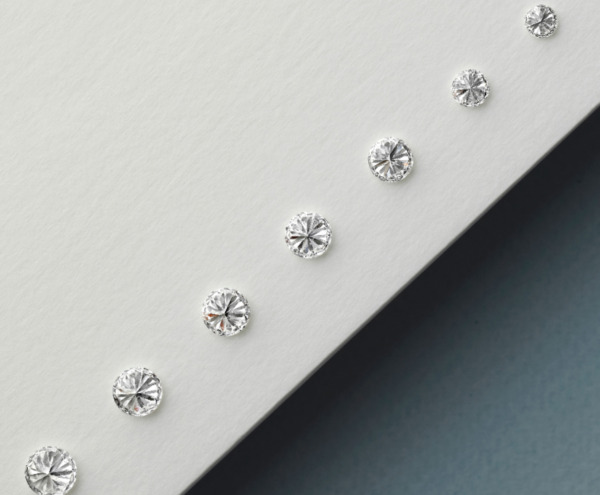
A fancy color diamond is one that shows noticeable color beyond the typical white or near-colorless range. While most diamonds are graded on how little color they have on a diamond color chart from D (completely colorless) to Z (Desert diamonds in shades from Sunlit White diamonds to Sunset Brown diamonds), fancy color diamonds fall outside that realm altogether. But instead of being seen as flaws, these colors are the main attraction.
But instead of being seen as flaws, these colors are the main attraction. For a diamond to be officially classified as ‘fancy’, the color must be strong and clearly visible when viewed face-up. The stronger and more vivid the color, the more valuable the diamond tends to be4.
The GIA, who set the standard for diamond grading, look at three things when they assess a fancy color diamond. The diamond’s hue (the spectral color, like blue or violet ), its tone (how light or dark it is) and its saturation (how intense the color appears5).
It’s worth knowing that not all colored diamonds are natural. Color can be introduced into a diamond through treatments like irradiation or high-pressure high-temperature (HPHT) processing, and lab-grown diamonds can also be produced in specific colors by controlling trace elements during growth6.
Natural fancy color, by contrast, forms over billions of years through geological processes that can’t be replicated or accelerated. This is why certification matters: a GIA grading report confirms whether a diamond’s color is natural or treated. When in doubt, checking that you’re buying a real diamond with verifiable natural color is always the right first step.
Color intensity matters significantly to value. A Fancy Vivid stone — the highest grade — commands dramatically higher prices than a Fancy Light of the same size and origin. The jump isn’t subtle. At auction, Fancy Vivid grades can be worth multiples of equivalent Fancy grades, because that depth of natural color is extraordinarily rare7.
Understanding the fancy color grading system
Once a diamond is considered ‘fancy,’ it’s graded on a completely different scale to that of white or colorless diamonds. It has it’s very own fancy diamond color scale.
It essentially focuses on how visible and intense the color is. The GIA use nine main grades to describe the depth and richness of color8:
- Faint: barely noticeable color
- Very Light: a soft wash of color
- Light: more obvious, but still subtle
- Fancy Light: a clearly visible color, though not deep
- Fancy: a medium strength color
- Fancy Intense: a strong color
- Fancy Vivid: a bright, bold and highly saturated color (the most valuable)
- Fancy Deep: rich, darker tones of a color with less saturation
- Fancy Dark: a saturated color combined with a darker tone
Perhaps unsurprisingly, in this part of the diamond market, the value of diamonds often rises with a diamond’s intensity and uniformity of color9. For example, a Fancy Vivid pink diamond is typically worth much more than a Fancy Light pink of the same size and clarity simply because the color ‘pops’ more10.
What gives fancy colored diamonds their vibrant hues?
Despite their rarity, natural diamonds are found in a surprising range of colors. These include yellow, brown, pink, blue, green, orange, purple, gray and red (the rarest of them all11). Most diamonds also show what’s known as ‘secondary hues’ or modifiers, which are graded with two descriptors, e.g. orangey-pink or greenish-blue12 which add depth and nuance to their beauty. Those fancy color diamonds without modifiers are rarer still.
What’s behind the colors? Well, through a mix of trace elements, natural irradiation and intense geological conditions, different elements or distortions in a diamond’s crystal structure are responsible for each color13. For example:
- Nitrogen causes yellow or brown hues by absorbing violet blue light. These colors are among the more ‘common’ fancy diamonds and can be incredibly beautiful when deeply saturated14.
- Boron produces blue diamonds by absorbing deep red light. Top-tier blue diamonds can command over $3.9 million per carat15.
- Natural irradiation over the course of millions of years can turn the surface of a diamond green by altering its atomic structure, though intense green diamonds are exceptionally rare.
- Stress-induced distortions deep in the Earth’s mantle can cause a slip in the diamond’s crystal lattice, on an atomic scale, resulting in brown, pink or red tones. These are some of the most sought-after fancy diamonds around. Red diamonds, for example, can exceed $1 million per carat and very, very few exist on the market16.
Rare and exotic diamond colors
Rarity, intensity and provenance combine to determine which hues are most coveted and most valuable. Here’s what sets each one apart.
Red diamonds
The rarest diamond color of all. Fewer than 30 true red diamonds are known to exist anywhere in the world, and most weigh under one carat. Their color comes from plastic deformation of the crystal lattice (the same mechanism as pink diamonds, but at a far more extreme degree). The Moussaieff Red, at 5.11 carats, is the largest known red diamond ever certified by the GIA and appeared in the Smithsonian’s 2003 Splendor of Diamonds exhibition. Price per carat for red diamonds can exceed $1 million. Australia’s Argyle Mine was historically the principal source; its 2024 closure has made existing specimens even more significant17.
Blue diamonds
Blue diamonds owe their color to boron, a trace element so scarce in the Earth’s mantle that its presence in a diamond is genuinely anomalous. They belong to the Type IIb classification, representing less than 0.1% of all natural diamonds18. The 45.52-carat Hope Diamond, currently held at the Smithsonian Institution, is the most famous example: deep blue, historically cursed according to legend, and priceless by any modern valuation.
Green diamonds
Natural green diamonds are colored by radiation, specifically, exposure to uranium or thorium in surrounding rock over millions of years, which displaces carbon atoms and creates light-absorbing vacancies in the lattice. Crucially, this radiation affects only the surface of the stone, which means a cutter must work with unusual care to preserve the color19. Many ‘green’ diamonds on the market have been treated to introduce color artificially; GIA certification specifying natural color origin is non-negotiable when buying green diamonds. The 41-carat Dresden Green, held in Saxony’s Green Vault, is one of the largest and finest naturally green diamonds ever found20.
Pink diamonds
Pink diamonds are among the most sought-after at auction and in private diamond jewelry collections. Their color is caused by plastic deformation during formation. These are structural distortions in the crystal lattice that alter how light is absorbed. The Argyle Mine in Western Australia was responsible for over 90% of the world’s pink diamond supply before its 2024 closure, which has driven prices for existing specimens sharply upward. The Pink Star, a 59.60-carat Fancy Vivid pink, set the world auction record for any gemstone when it sold for $71.2 million at Sotheby’s in 201721. Smaller pink diamonds have also become increasingly popular in engagement rings, partly driven by high-profile examples like Jennifer Lopez’s 6.1-carat pink diamond from Ben Affleck.
Orange diamonds
Orange diamonds are rarer than most buyers expect. Pure orange (without brown or yellow modifiers) is among the most difficult natural colors to achieve. The cause is a combination of nitrogen and structural defects in the lattice. The Pumpkin Orange, a 5.54-carat Fancy Vivid orange purchased by Harry Winston and worn by Halle Berry at the 2002 Academy Awards, remains one of the most famous examples. Pure orange at high intensity can command prices comparable to blue, making it an increasingly serious collector category22.
Purple diamonds
Purple diamonds are exceptionally rare and not fully understood scientifically. Their color is thought to result from plastic deformation combined with hydrogen impurities, though the exact mechanism remains a subject of gemological research23. Most purple diamonds originate from Siberia’s Mir Mine or Australia’s Argyle Mine. True purple without modifying red or pink tones is extremely scarce; the Supreme Purple Star, an estimated 2 to 5 carats and one of the most remarkable gems in private circulation, is thought by some experts to be the finest known example — though it has never been publicly auctioned or certified24.
Yellow and champagne diamonds
Yellow diamonds are the most commercially available of the fancy colors, caused by nitrogen atoms that absorb blue and violet light. Fancy Light grades are subtle and warm; Fancy Vivid (think the 128.54-carat Tiffany Yellow Diamond) is an intense canary that commands serious premiums.
Champagne diamonds share the same nitrogen-and-pressure origin but lean warmer, into golden-brown Desert diamond shades. Their earthy warmth has made them increasingly desirable to buyers who want something distinctive. Scarlett Johansson’s toffee-colored Desert diamond engagement ring is the most high-profile example. Warm, entirely natural, and quietly on the rise.
Why fancy color diamonds are rare and valuable
It’s all down to the conditions they were created in millions, if not billions, of years ago. Fancy color diamonds are incredibly rare because the geological conditions needed to produce visible, vibrant color happen in only a small – tiny even – fraction of natural diamond formations. According to GIA, only one in 10,000 diamonds shows enough natural color to be classified as ‘fancy’ and fewer than one in every 25,000 diamonds reach the level of intensity required for higher grades25.
Understandably, value is closely tied to this scarcity and recent auctions suggest collector demand is anything but waning. Take major recent sales like the 15.51-carat Fancy Vivid Yellow diamond ring that sold for $1.1 million at Phillips26, or the Fancy Pink diamond weighing 5.03 carats which achieved $2.9 million at Bonhams27.
Some of the most famous diamonds in history are fancy colored, too. Like the Hope Diamond, a 45.52-carat deep blue gem, which is one of the most well-known and lusted after. The Dresden Green, weighing an impressive 41 carats, is one of the few natural green diamonds of that size ever discovered. And the Graff Pink, a 24.78-carat Fancy Intense pink, sold for an incredible $46 million in 201028.


Are fancy color diamonds a good investment?
Good question. Because fancy color diamonds are so rare and eye-catching, they’ve become increasingly popular with collectors looking for long-term value, as well as those of us who appreciate their showstopping appeal. And as we mentioned earlier, prices absolutely reflect that demand. Generally, pink diamonds are leading the charge, following the closure of the Argyle mine in Australia – a major source of these rare gems (appreciating nearly 394%) followed by blue (240%) and yellow (50%)29.


But that doesn’t mean every colored diamond is a guaranteed investment. There are often other factors at play too, like the intensity of the color, the size of the gem, its certification and where it was sourced, which can all play a role in determining its overall value30. The key to ensuring your purchase (or gift, if you’re very lucky!) is a sound investment comes down to doing your homework and paying the right price in the first place.
Which leads us to…
Choosing a fancy colored diamond
When it comes to buying a fancy colored diamond, it’s helpful to look beyond color (though we appreciate that those candy-colored hues can be distracting!). Here are a few pointers that might come in handy:
- Get a report. Always choose diamonds graded by a reputable authority like the GIA. This confirms the color is natural, as well as detailing the diamond’s hue, intensity and origin.
- Prioritize color intensity. The more saturated and evenly distributed the color, the more valuable the diamond tends to be, as a rule.
- Factor in shape and size. Certain shapes like cushion, radiant and diamond cutting-optimized oval cuts can enhance color better than others. Larger diamonds with strong color are significantly rarer, too.
- Verify origin and provenance. Always ask for documentation about where your diamond was discovered – reputable retailers will be more than happy to share this.
- Choose with meaning. Rather than following trends, try to pick a diamond that reflects your personal style, or marks a meaningful milestone in a way that feels ‘you’. That way, you won’t regret your purchase, even if the market fluctuates.


Fancy colored natural diamonds are much more than just a high-value investment or an eye-catching trend to jump on board with. Their vivid hues and off-the-charts rarity make them a truly unique, one-of-a-kind treasure if you’re lucky enough to land yourself one (or two, or three – who’s counting?).
FAQs
What are the differences between natural and lab-grown diamonds?
The fundamental difference is origin. Natural diamonds form over one to three billion years, 90 to 120 miles beneath the Earth’s surface, under pressure and heat that can’t be replicated in a laboratory.
So what is a lab grown diamond then? To produce these synthetic alternatives, High Pressure High Temperature (HPHT) or Chemical Vapor Deposition (CVD) methods are used, and gems are manufactured in a matter of weeks. The resulting stones are chemically identical to natural diamonds, but they lack the geological rarity that drives natural diamond value. Lab-grown diamonds are increasingly available and often significantly cheaper, which is precisely why they don’t hold value in the same way. For fancy colors specifically, the contrast is stark: a natural Fancy Vivid pink diamond is extraordinarily rare; a lab-grown pink can be produced to order.
Why are natural diamonds considered the ultimate heirloom?
Because they don’t change and they can’t be replicated. The geological forces that created a natural diamond’s color are permanent: a Fancy Vivid pink passed down through generations arrives looking exactly as it did the day it was set. That permanence, combined with the knowledge that no other gem on Earth shares its exact color, character and formation history, is what makes natural diamonds so suited to becoming objects of lasting diamond value.
Why do natural diamonds have a history rooted in fame and reverence?
The diamond history of fancy colored diamonds runs through the French Crown Jewels, the collections of Mughal emperors, the courts of European royalty and the auction records of the 20th and 21st centuries. The Hope Diamond passed through the hands of Louis XIV, Marie Antoinette and multiple American owners before arriving at the Smithsonian. The Koh-i-Noor — a historically significant colorless stone — and the Dresden Green have each survived wars, revolutions and regime changes. What makes these stones culturally significant isn’t just their beauty or their value: it’s the fact that each one is a geological singular. Nothing else like it was ever formed, and nothing like it will be again. That irreplaceability is the foundation of everything natural diamonds have meant, across every culture that has prized them.
Sources
- https://robbreport.com/style/jewelry/fancy-colored-diamond-price-increase/ ↩︎
- https://robbreport.com/style/jewelry/fancy-colored-diamond-price-increase/ ↩︎
- https://www.diamonds.pro/education/fancy-color/ ↩︎
- https://www.gemsociety.org/article/most-expensive-diamond-colors-with-prices/ ↩︎
- https://www.gia.edu/fancy-color-diamond-description/ ↩︎
- www.gia.edu/hpht-and-cvd-diamond-growth-processes/ ↩︎
- www.lux-life.digital/beyond-colour-the-rarity-matrix-of-exceptional-fancy-diamonds/ ↩︎
- https://www.gia.edu/fancy-color-diamond/buyers-guide/ ↩︎
- https://www.gia.edu/gia-news-research/value-factors-design-cut-quality-colored-gemstone-value-factors/ ↩︎
- https://www.diamondportfolio.com.au/investor-centre/what-to-buy/pink-diamond/ ↩︎
- https://www.leibish.com/en-gb/blogs/diamonds/what-are-the-rarest-diamond-colors ↩︎
- https://www.naturallycolored.com/diamond-education/colored-diamonds-color-combinations/ ↩︎
- https://www.sothebys.com/en/articles/how-colored-diamonds-get-their-hue/ ↩︎
- https://www.gemsociety.org/article/most-expensive-diamond-colors-with-prices/ ↩︎
- https://www.gemsociety.org/article/most-expensive-diamond-colors-with-prices/ ↩︎
- https://www.gemsociety.org/article/most-expensive-diamond-colors-with-prices/ ↩︎
- www.capetowndiamondmuseum.org/fancy-color/red-diamonds/ ↩︎
- www.carnegiescience.edu/news/what-makes-diamonds-blue-boron-oceanic-crustal-remnants-earths-lower-mantle ↩︎
- www.gia.edu/gems-gemology/spring-2018-natural-color-green-diamonds-beautiful-conundrum ↩︎
- www.gia.edu/gems-gemology/winter-1990-dresden-diamond-kane/ ↩︎
- www.naturaldiamonds.com/historic-diamonds/ctf-pink-star-diamond/ ↩︎
- www.naturaldiamonds.com/science-of-diamonds/pumpkin-diamond/ ↩︎
- www.naturaldiamonds.com/science-of-diamonds/purple-diamonds/ ↩︎
- www.leibish.com/blogs/diamonds/the-supreme-purple-star-the-king-of-all-purple-diamonds/ ↩︎
- https://www.gia.edu/gia-news-research-worlds-fascination-fancy-colored-diamonds/ ↩︎
- https://galeriemagazine.com/auction-yellow-diamond/ ↩︎
- https://www.bonhams.com/press_release/26579/ ↩︎
- https://www.naturaldiamonds.com/historic-diamonds/diamond-color-famous/ ↩︎
- https://www.diamondworld.net/news/fancy-colour-diamond-prices-surge-205-since-2005-says-natural-diamond-council/ ↩︎
- https://www.gia.edu/fancy-color-diamond-quality-factor/ ↩︎


