
Answer
Lab-grown diamonds sit outside the traditional definition of luxury jewelry, which rests on rarity, uniqueness and origin. They are made in a laboratory and are highly accessible, with prices for a 1.5 carat diamond down more than 80% since 2015. Natural diamonds, formed deep in the Earth over millions to billions of years, remain the diamonds that high end jewelry houses and the red carpet turn to.
Natural diamonds vs lab-grown diamonds: Symbolism
| Attribute |  Natural |  Lab-grown diamonds |
|---|---|---|
Rarity | Rare and finite, formed naturally within the Earth. | Factory produced in unlimited quantities. |
Journey | Formed deep within the Earth between one and three billion years ago. | Created using HPHT or CVD technology in as little as three to four weeks. |
Emotional permanence | Synonymous with life’s most precious moments and sentimental heirlooms, their heritage and journey only add to their desirability over time. | Often chosen for affordability, with prices falling more than 70% between 2016 and 2022. |
Cultural symbolism | Continue to symbolize love and commitment since the first recorded diamond engagement ring in 1477. | Originally developed for industrial tools in the 1950s. The composition is the same, but lacking the rarity, emotion, symbolism, and history of a natural diamond. |
Long-term collectability | Strong heirloom appeal, with trade-in and upgrade programs widely available. | Mass-produced with lower resale demand and collectability. |
Lab-grown diamonds explained
What is a lab-grown diamond? LGDs are produced in factories using High Pressure High Temperature (HPHT) or Chemical Vapor Deposition (CVD) technology, which replicate the conditions under which natural diamonds form.
While chemically and visually similar to natural diamonds, they are graded differently. The Gemological Institute of America (GIA) recently replaced detailed lab-grown diamond grading reports with broader descriptors such as “premium” and “standard,” reinforcing their position as a separate product category.
Produced in unlimited quantities, lab-grown diamonds are also more widely available and typically lower in price.
What defines a luxury diamond: rarity or abundance?
A luxury diamond is defined by rarity, permanence and origin. Natural diamonds are finite gemstones formed over millions to billions of years, whilelab-grown diamonds can be produced endlessly, making supply effectively unlimited. When availability increases indefinitely, exclusivity naturally becomes harder to maintain.
Natural diamonds are also valued for their rarity, resale potential and emotional significance. As the hardest natural substance on Earth, they are prized for their durability, classic sparkle and deep association with love, milestones and heirlooms. Lab-grown diamonds, by contrast, are mass-produced Type IIa diamonds with lower resale demand and rapidly declining prices.
How rarity and supply shape a diamond’s value
While debates around the value of lab-grown diamonds often hinge on affordability, this misses the point of what makes a gem special. Lab-grown diamonds can offer brilliance, but what makes a natural diamond meaningful is its rarity, authenticity and timeless appeal. When fashion moves on, natural diamonds remain symbols of permanence, beauty and emotional connection.
That distinction is also becoming clearer in the 4Cs of diamonds, particularly diamond clarity and color grading. Under the GIA’s updated system, only LGDs meeting the highest benchmarks qualify for “Premium” status, while gems falling below minimum standards no longer receive a grading report at all. The shift highlights how mass production has compressed the lab-grown quality range, making true rarity increasingly difficult to achieve.
Do lab-grown diamonds belong in high jewelry?
High jewelry is judged on the quality of its diamonds, the craft behind each piece and how well it lasts. Natural diamonds sit at the center of that standard. Luxury auction house Sotherby’s goes on to explain that the finishing and polishing of high jewelry is also far superior to that of mass-market fine jewelry. Each piece often requires hundreds of hours of skilled labor. Only the most talented artisans are entrusted with the design, creation and refinement of these extraordinary pieces, ensuring that every high jewelry creation is a true work of art. High jewelry’s value rests on the quality of its gems, the fact that it is not trend driven, and that the best can be resold on a secondary market where specialists authenticate and price each piece. Lab-grown diamonds simply do not offer the rarity, uniqueness or resale value to meet the standards associated with high jewelry.
Why do luxury jewelry houses still use natural diamonds?
At this level, the diamond is where a piece of jewelry begins and its origin is part of its value. Sotheby’s names Van Cleef & Arpels, Cartier and Harry Winston among the leading houses whose high jewelry is “in a class of their own,” and notes that many pieces are one-of-a-kind and cannot be replicated once their diamonds are sourced.
Origin matters to these houses as much as size. Tiffany & Co. individually registers each newly sourced natural diamond and lets clients choose the country or region of origin for an engagement diamond. In 2022, Van Cleef & Arpels presented 67 diamonds cut from the 910-carat Lesotho Legend, each with certified provenance.
What this signals is that these houses treat a diamond’s origin as part of its worth. A natural diamond arrives with a known source, a story of its own and an individuality no design can add, and the piece of jewelry made around it inherits all three. That is why the great houses keep choosing them.
Red carpet diamonds: which gemstones do stars actually wear?
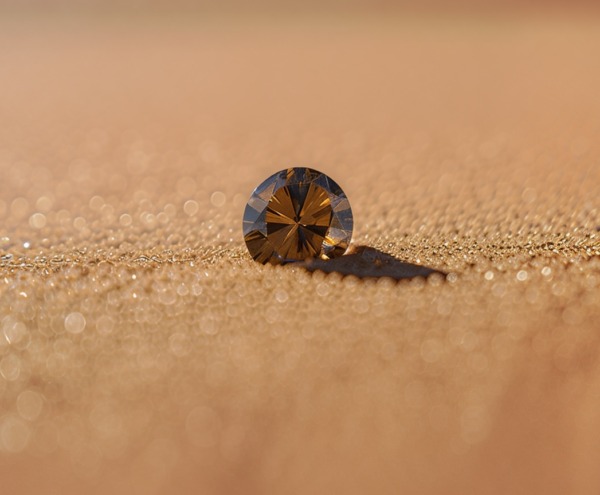
Natural diamonds, and often the most exceptional ones are often what celebrities choose for red carpets, album covers, and Instagram grids . Oscars jewelry (opens in a new window) has a long record of it. Elizabeth Taylor wore the 69.42-carat Taylor-Burton diamond in 1970, and Angela Bassett wore a 273-carat Harry Winston necklace in 1996. The same houses keep returning, with Harry Winston, Tiffany & Co. and Cartier each appearing across decades. In 2026, warm-toned Desert diamonds (opens in a new window) led, among them Rose Byrne’s 22.58-carat fancy yellow-brown pear-shaped diamond (opens in a new window), worn with a ring set with a 16.54-carat diamond sourced in Botswana. Each has a story of its own, which is why the diamonds stars wear are remembered long after the ceremony.
The cultural legacy of natural diamonds
Diamonds have always been more than just beautiful accessories. Whether slipped onto a finger during a proposal, gifted to mark a precious moment or bought to celebrate our own achievements, each gem represents a chapter in your story. It is this emotional connection that gives diamonds their real value, the kind that deepens with time.
Diamonds as a symbol of power
Diamond history shows how closely these gems have always been tied to power, rarity and status. In the 13th century, Saint Louis IX of France reserved them for royalty, declaring that only the king could wear them thanks to their rarity and value. From that point, diamonds became the ultimate status symbol, gleaming from the crowns and gowns of Europe’s monarchs.
England’s royal collection alone reads like a gemstone history book, from the Koh-i-Noor to the record-breaking Cullinan Diamond, both now part of the Crown Jewels collection in London that draw millions of visitors each year. Over time diamonds became coveted by those outside royal circles. By the 17th century, diamonds had moved into the salons of Europe’s aristocracy, then on to the vaults of the wealthy merchant class.

How rarity and permanence make natural diamonds timeless
In an age when almost anything can be replicated, true rarity is elusive. That’s what imbues natural diamonds with their inimitable appeal. They can’t simply be made in a factory; each one is the result of a billion-year-long geological process. These gems aren’t just beautiful; they’re miracles of nature.
RAre natural diamonds becoming more rare over time?
Natural diamond rarity is increasing. Global recovery of natural diamonds peaked in 2005, and by 2023, production had fallen by nearly 40%. To put that into perspective, the total number of one-carat-and-above diamonds unearthed each year could fill a single exercise ball. That’s how rare they’ve become.
Every naturally formed diamond carries a distinct fingerprint, tiny inclusions, irregularities, and growth patterns that make it entirely one-of-a-kind. These aren’t flaws, but the unique imprint of its billion-year journey. It is this natural individuality that adds emotional gravitas to owning a diamond; a connection to something powerful and elemental.
It also highlights the difference between rarity and replication. Natural diamonds are prized for a formation journey that spans millions to billions of years, while LGDs are produced through controlled manufacturing in just three to four weeks. In luxury, that rarity, individuality and natural origin continue to hold enormous value.
Market value and pricing trends in diamond choices
For decades, the natural diamond market has been associated with rarity and long-term desirability. A natural diamond is often seen as more than a purchase; it is something intended to last, both emotionally and financially. Their rarity and deep cultural associations have helped them hold value. While crazes burn bright and then fizzle out, an authentic piece has longevity.
That stability shows up in the numbers, too:
- Over the past 50 years, natural diamond prices have grown by around 3% annually.
- By contrast, the market for LGDs tells a different story. Since 2015, the price of a 1.5 carat LGD has dropped by more than 83%, a reflection of just how fast production has increased and how quickly novelty wears off.
The same factors that make these lab-made alternatives affordable also make them unstable; mass production has flooded the market, driving prices down.
Resale value in natural vs lab-grown diamonds
As lab grown diamond supply grows, resale value has also been affected. If you want to sell, you will usually only receive a fraction of the original price, with consumers sometimes receiving up to 60% less than the original purchase price. With no natural limits on production, supply continues to grow, keeping the market crowded and prices under pressure.
Natural diamonds, by contrast, continue to hold value because their rarity cannot be manufactured. Many jewelers still offer trade-in programmes for natural diamonds, while buy-back options for lab grown diamonds remain far more limited.
For consumers, that volatility matters. Natural diamonds are seen not only as beautiful but as something that carries trust, authenticity, and longevity. Trends may shift, but the narrative of lab-grown value always circles back to one truth: in an overcrowded world, rarity still reigns.
Emotional longevity and heirloom value
A natural diamond fast becomes more than its initial sparkle. It’s woven into a family’s story, becoming an irreplaceable heirloom diamond. Provenance adds depth; knowing where a diamond came from and whose hands it passed through gives it a soul that no laboratory can engineer.
You only need to look at Meghan Markle’s engagement ring from Prince Harry to see that symbolism in action. Prince Harry designed the three-stone ring himself, choosing a center cushion-cut diamond from Botswana, a place deeply connected to their relationship, and flanking it with two smaller diamonds from Princess Diana’s personal collection. That kind of emotion, that kind of emotional heft, is impossible to recreate with mass-produced gems.

Does a lab-grown diamond feel like a luxury gift?
Not in the way a natural diamond does. Lab-grown diamonds are not typically used in luxury high jewelry, with diamond industry analyst Paul Zimnisky noting that while they may have similarities to natural diamonds looks and durability, they lack “the component of ‘luxury.’” Natural diamonds carry the emotional weight and symbolism that gifts for life’s biggest moments depend on.
Why old mine cut rings are on the rise
Taylor Swift’s engagement ring, designed by fiancé Travis Kelce, reflects the same desire for something genuine and meaningful. Kelce worked with designer Kindred Lubeck to create a one-of-a-kind ring set with a brilliant-cut old mine diamond, reflecting the singer’s love of storytelling and vintage style. It was only possible to create something so personal and unique by selecting a natural diamond, which brings its own personality to the piece.
Swift isn’t the only celebrity with an old mine-cut engagement ring. Natalie Portman’s ring features an estimated four-carat old mine-cut diamond, while Gabriella Brooks recently revealed the east-west old mine-cut diamond Liam Hemsworth proposed with in 2025. The rise of celebrity old mine cut rings reflects a growing appetite for natural diamonds that offer the personality, individuality and character people increasingly crave.

The emotional permanence of natural diamonds
Both natural diamonds and LGDs shimmer and sparkle, but only natural diamonds come with a history and story that has been etched into the Earth. It is their unique mix of characteristics honed over billions of years that transforms them from jewelry into treasured pieces that become powerful heirlooms carefully handed down from one generation to the next.
Diamond symbolism vs trend
Natural diamonds gain emotional resonance over years, becoming intertwined with the emotions of both the giver and receiver. They are the solitaire on the band that marks a lifetime commitment; the pendant passed down from mother to daughter; the glittering cufflinks saved for a son’s wedding day. When thinking about what diamonds represent, it often comes back to the stories attached to them. Each one carries a connection between its ancient origins and the milestones, memories and future hopes woven into it over time.
Why sparkle alone isn’t enough
By contrast, LGDs’ charm often lies in affordability, not ancestry. They offer accessible, contemporary glitter, and they are not the first diamond alternatives to do so. In the 1970s, cubic zirconia promised diamond sparkle for less, and for a moment, it seemed unstoppable. Everyone wanted it until they didn’t. Once the novelty wore off, people realized that while it could mimic the look of a diamond, it could never hold the same meaning or value.
Why natural diamonds hold value
A natural diamond’s power, meanwhile, grows with every story it becomes a part of. Questions like “do natural diamonds hold value?” are often answered not only through rarity and longevity, but through emotional permanence and cultural significance. You only have to think of history’s most famous diamonds to understand that their allure lies not in their monetary worth, but in the priceless value of the events they’ve witnessed over the years.
The Hope Diamond is one such icon; surviving the French Revolution, passing through the hands of British monarchs, American socialites and the famous jeweler, Pierre Cartier, and now drawing crowds of visitors at the Smithsonian Institute.

Sustainability isn’t a simple question
There’s another layer of tension: sustainability. LGDs are often marketed as more sustainable diamonds, but the reality is far more complex. Their production is highly energy-intensive, relying on extreme heat and pressure to mimic the Earth’s natural conditions.
More than 60% of LGDs are produced in regions where coal remains the dominant energy source, contributing to a significant carbon footprint. A 2019 analysis by Trucost found that creating LGDs can generate more than three times the carbon emissions of a natural diamond.
While LGDs rely on energy-intensive factory production, natural diamonds remain finite resources formed by nature over billions of years. Natural diamond recovery also supports jobs, infrastructure and local economies in diamond-producing regions around the world, reinforcing their long-term social and economic value alongside their rarity and longevity.
Changing consumer perception
Just a few years ago, LGDs were positioned as the disruptors of the jewelry world, marketed as a more accessible and supposedly eco-conscious way to own a diamond. They created undeniable momentum within the industry, but as the initial excitement begins to settle, consumer attitudes are becoming more discerning.
Today’s buyers are asking more layered questions, not just about price, but about permanence, rarity and emotional value. The early narrative around simplicity and sustainability is increasingly being scrutinized as consumers look beyond marketing language and toward long-term meaning.
Lab diamond value in a shifting market
Where LGDs once symbolized modern disruption, they are now increasingly associated with affordability and fast-moving consumption. They still hold appeal within fashion jewelry and trend-led purchases, but for engagements, heirlooms and milestone moments, many buyers continue to gravitate toward the emotional weight and lasting significance of a natural diamond.
Long-term value of natural vs lab-grown diamonds
Choosing a natural diamond is a statement. It is selecting something precious with beauty, history, and its own individual quirks to perfectly complement the wearer. It is investing in something that will grow in value, both sentimental and financial. Unlike lab-grown value, which is susceptible to shifting trends and tastes, the increasing rarity of a natural diamond means it will always be in demand.
A natural diamond isn’t a fleeting purchase; it’s something with true value that will long outlast that first dopamine hit. Investing in one is inviting that special gem to become a part of your story, creating a treasured heirloom to be passed from mother to daughter, father to son, best friend to best friend.
In a world that moves fast and forgets easily, a natural diamond still holds its place. Its value comes not only from beauty, but from rarity, permanence and the stories it gathers over time. While lab diamond value is often tied to accessibility and affordability, natural diamonds continue to carry something far harder to manufacture: emotional weight, individuality and enduring worth.

FAQs
What are luxury diamonds?
Luxury diamonds are natural diamonds prized for their rarity, provenance and craftsmanship in addition to their 4Cs (color, clarity, cut and carat weight) grading. These natural gems are finite, and global diamond recovery is now at its lowest level since 1992, with supply struggling to climb back above 100 million carats a year. This part of what makes luxury bespoke pieces, such as high jewelry tiaras (opens in a new window), so difficult to replace.
Are luxury diamond rings made with natural or lab-grown diamonds?
Many luxury diamond rings (including those created by the likes of Tiffany & Co., Cartier and De Beers London) are still made with natural diamonds, since fine jewelry traditionally prizes rarity, provenance and resale value over affordability. Lab-grown diamonds, which can be produced in unlimited quantities, have seen prices for a 1.5 carat gem fall 86% between mid-2015 and 2025, a decline reflected in the cost of lab grown diamonds vs natural (opens in a new window).
Are natural diamonds timeless?
Yes. Natural diamonds have been treasured since as early as the fourth century BCE, they rate a perfect 10 on the Mohs scale of hardness and formed millions to billions of years ago deep within the Earth. Even as modern diamond trends (opens in a new window) evolve, that history and durability keep them relevant, from royal collections to today’s engagement rings.
Are luxury diamond earrings natural or lab-grown?
Natural diamonds are the benchmark for luxury diamond earrings and chosen for their rarity, individual character and ability to hold value. Lab-grown earrings can look similar at a lower price, but the disadvantages of lab-grown diamonds (opens in a new window), from falling value to a lack of individuality, are worth weighing up for jewelry meant to last.
Are lab-grown diamonds seen as modern symbols?
Lab-grown diamonds are modern, but they have not yet built a symbolism of their own. Colorless ones reached the market in commercial quantities only in the mid-2010s, too recently to have gathered any significant cultural meaning. Natural diamonds have been treasured for more than 2,000 years, and the first recorded diamond engagement ring dates to 1477. That history is what shapes diamond symbolism.
Do lab-grown diamonds affect the symbolism of commitment?
Lab-grown diamonds inherit the symbolism of commitment rather than create it. That symbolism grew over centuries, from the first recorded diamond engagement ring in 1477 to its place today as a near-universal symbol of love and marriage. Every diamond in those founding stories of commitment was natural.
Do lab-grown diamonds feel less symbolic?
A lab-grown diamond can look like a natural one, but the two are not the same. Gemological laboratories can tell them apart with advanced instruments, because their growth histories are vastly different. Natural diamonds formed millions to billions of years ago, while lab-grown diamonds are created synthetically in a matter of weeks. That is why gifting a natural vs lab-grown diamond (opens in a new window) often comes down to what the story behind the diamond means to the person giving it.
Are natural diamonds aspirational?
Natural diamonds remain aspirational because they are closely associated with celebration, achievement and meaningful milestones. Whether gifted for an engagement, anniversary or personal success moment, they represent intention and emotional value in a way few luxury purchases do. Thoughtful diamond gift ideas continue to mark some of life’s most meaningful moments.
Do natural diamonds carry generational value?
Natural diamonds often carry generational value because they are passed between family members as heirlooms tied to stories, milestones and personal history. Their durability and enduring appeal mean they’re often held onto for decades, which is why many families pass down diamond jewelry collections through generations.
Is rarity what makes natural diamonds appealing?
Rarity is one of the defining appeals of natural diamonds, especially when it comes to exceptional clarity, color and larger carat weights. What’s the highest diamond clarity? The answer is Flawless (FL), meaning no internal or external imperfections are visible under 10x magnification. These diamonds are exceptionally scarce, with experts estimating they make up just 0.5% to 1% of diamonds.
Are larger natural diamonds disproportionately rare?
Larger natural diamonds are considerably rarer in nature because the likelihood of finding a rough gem large enough to produce a polished one-carat or larger diamond is far lower than finding material suited to smaller cuts. As diamond carat weight increases, availability drops dramatically, which is why larger natural diamonds are so prized for their rarity and scarcity.
Sources
- Natural Diamond Council. Lab-Grown Diamonds.
https://thediamondcollective.world/natural-diamond-types-and-alternatives/lab-grown-diamonds/ (opens in a new window). Accessed Oct. 8, 2026. - www.naturaldiamonds.com/engagement-rings/lab-grown-diamond-grading/ (opens in a new window)
- www.naturaldiamonds.com/natural-diamond-types-and-alternatives/lab-grown-diamonds/ (opens in a new window)
- www.naturaldiamonds.com/natural-diamond-types-and-alternatives/lab-grown-diamonds/ (opens in a new window)
- www.naturaldiamonds.com/engagement-rings/lab-grown-diamond-grading/ ↩︎
- Sotheby’s. Complete Guide to Collecting High Jewelry or Haute Joaillerie.
https://www.sothebys.com/en/articles/complete-guide-to-collecting-high-jewelry-or-haute-joaillerie (opens in a new window). Accessed Oct. 9, 2026. - Sotheby’s. Complete Guide to Collecting High Jewelry or Haute Joaillerie.
https://www.sothebys.com/en/articles/complete-guide-to-collecting-high-jewelry-or-haute-joaillerie (opens in a new window). Accessed Oct. 9, 2026. - Tiffany & Co. The Leader in Diamond Traceability.
https://www.tiffany.com/engagement/tiffany-difference/diamond-provenance.html (opens in a new window). Accessed Oct. 8, 2026. - www.baunat.com/royal-history-diamonds/ ↩︎
- www.bntdiamonds.com/what-is-the-royal-history-of-diamonds/ ↩︎
- www.capetowndiamondmuseum.org/about-diamonds/formation-of-diamonds/ ↩︎
- www.naturaldiamonds.com/diamond-facts-info/ ↩︎
- www.capetowndiamondmuseum.org/education/natural-inclusions-in-diamonds/ ↩︎
- www.naturaldiamonds.com/industry-insights/price-trends-lab-grown-and-natural-diamonds/ ↩︎
- www.naturaldiamonds.com/industry-insights/price-trends-lab-grown-and-natural-diamonds/ ↩︎
- Zimnisky, Paul. What a Mature Lab-Grown Diamond Jewelry Market Could Look Like.
https://www.paulzimnisky.com/What-a-Mature-Lab-Grown-Diamond-Jewelry-Market-Could-Look-Like (opens in a new window). Accessed Oct. 9, 2026. - www.thezoereport.com/p/natalie-portmans-engagement-ring-features-a-sustainable-recycled-setting-13207569/ ↩︎
- www.elle.com/culture/celebrities/a66068597/liam-hemsworth-gabriella-brooks-antique-diamond-engagement-ring-explained/ ↩︎
- www.naturaldiamonds.com/natural-diamond-types-and-alternatives/lab-grown-diamonds/ ↩︎
- Gem & Jewellery Export Promotion Council (GJEPC), Solitaire. Natural Diamond Production to Remain at Multi-decade Lows in 2026.
https://gjepc.org/solitaire/?p=35287 (opens in a new window). Oct. 8, 2026. - Tiffany & Co. Diamond Provenance & Source Initiative.
https://www.tiffany.com/engagement/tiffany-difference/diamond-provenance.html (opens in a new window). Oct. 8, 2026. - Cartier. Resources of Excellence.
https://www.cartier.com/en-us/cartier-and-corporate-social-responsibility/resources-of-excellence.html (opens in a new window). Accessed Oct. 8, 2026. - The Diamond Collective. What Sets Natural Diamonds Apart from Lab Grown Diamonds?
https://thediamondcollective.world/natural-diamond-types-and-alternatives/lab-grown-diamonds/ (opens in a new window). Accessed Oct. 8, 2026. - Gem & Jewellery Export Promotion Council (GJEPC), Solitaire. NDC’s Latest Report Reveals Current Realities of LGDs.
https://gjepc.org/solitaire/ndcs-latest-report-reveals-current-realities-of-lgds/ (opens in a new window). Accessed Oct. 8, 2026. - Gemological Institute of America (GIA). Why Are Diamonds So Hard? https://4cs.gia.edu/en-us/blog/why-are-diamonds-so-hard-3/ (opens in a new window). Accessed Oct. 8, 2026.
- Gemological Institute of America (GIA). Why Are Diamonds So Hard? https://4cs.gia.edu/en-us/blog/why-are-diamonds-so-hard-3/ (opens in a new window). Accessed Oct. 8, 2026.
- The Diamond Collective. What Sets Natural Diamonds Apart from Lab Grown Diamonds?
https://thediamondcollective.world/natural-diamond-types-and-alternatives/lab-grown-diamonds/ (opens in a new window). Accessed Oct. 8, 2026. - Gemological Institute of America (GIA) (Russell Shor). Is There a Difference Between Natural and Laboratory-Grown Diamonds? https://www.gia.edu/gia-news-research/difference-between-natural-laboratory-grown-diamonds (opens in a new window). Accessed Oct. 9, 2026.
- Cape Town Diamond Museum. Diamonds Through the Ages.
https://www.capetowndiamondmuseum.org/about-diamonds/diamonds-through-the-ages/ (opens in a new window). Accessed Oct. 9, 2026. - Cape Town Diamond Museum. Diamonds Through the Ages.
https://www.capetowndiamondmuseum.org/about-diamonds/diamonds-through-the-ages/ (opens in a new window). Accessed Oct. 9, 2026. - www.thediamondreserve.com/education/what-percentage-of-diamonds-are-flawless/ ↩︎
- www.mirojewelers.com/blogs/our-blogs/are-diamonds-rare/ ↩︎


