
Lab-grown diamonds (LGDs) offer a lower purchase price, but their main disadvantages relate to rarity, resale value and long-term price stability. Because they can be produced in unlimited quantities, LGD prices have fallen significantly in recent years, with some declining by more than 80% between 2015 and 2024. Unlike natural diamonds, which formed millions to billions of years ago and exist in finite supply, LGDs are created in factories and can be produced at scale.
How do lab-grown diamonds compare to natural diamonds on rarity, value and resale?

Natural diamonds

Lab-grown
Finite supply, formed over millions to billions of years
Produced in factories and available in unlimited quantities
Rare fancy colors and exceptional high-carat diamonds have historically held or appreciated in value
Prices have fallen as production has increased
Established resale and trade-in market
Limited resale demand and lower second-hand values
Historically more stable pricing
Greater price volatility and declining retail prices
Valued for natural rarity, unique colors and inclusions, provenance and craftsmanship
Primarily marketed around affordability
Do lab-grown diamonds retain their value after purchase?
LGDs have historically depreciated faster than natural diamonds because their prices are driven by manufacturing costs and supply rather than scarcity. As production has increased, wholesale prices have fallen sharply in recent years. Buyers considering long-term value retention should keep in mind that LGDs have generally experienced greater price volatility.
Are lab-grown diamonds less rare than natural diamonds?
Natural diamonds formed over millions to billions of years and exist in finite supply, while LGDs can be created in factories in a matter of weeks. Because supply can expand to meet demand, LGDs do not have the same level of rarity as natural diamonds.

What are the resale challenges for lab-grown diamonds?
The resale market for LGDs remains limited. Increasing supply and falling retail prices have put pressure on second-hand values, while retailers and pawnbrokers may be reluctant to buy them back due to unpredictable pricing. This can make resale, trade-ins and upgrades more challenging.

How do people and luxury brands view lab-grown diamonds?
Consumer opinions vary, but luxury brands have largely continued to champion natural diamonds for their rarity, unique colors, inclusions and craftsmanship. LGDs, by contrast, are typically marketed around affordability, with critics arguing that their mass production and widespread availability reduce their sense of exclusivity.

FAQs
Do luxury brands use lab-grown diamonds?
Most luxury brands continue to focus on natural diamonds, positioning them around rarity and craftsmanship. While some brands have introduced lab-grown collections, others emphasize the uniqueness and finite supply of natural gems. If you’re wondering what a lab-grown diamond is, (opens in a new window) it is a gem created in a factory rather than formed naturally within the Earth.
What are the best men’s diamond stud earrings?
The best men’s diamond stud earrings ultimately come down to personal style, but many buyers gravitate towards natural diamond (opens in a new window) studs for their rarity and classic appeal. Round and princess cuts remain popular choices.
Do lab-grown diamonds hold their diamond value?
LGDs have historically experienced greater price volatility than natural diamonds, meaning their diamond value (opens in a new window) can decline as production increases. Natural diamonds, by contrast, derive part of their value from their rarity and finite supply.
Are fancy color diamonds available as lab-grown diamonds?
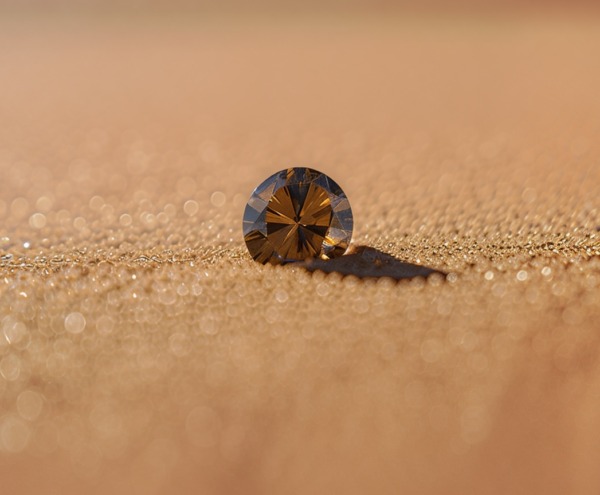
Fancy color diamonds (opens in a new window) can be produced in laboratories, but they remain far less rare than their natural counterparts. Furthermore, only a tiny fraction of LGDs are created in brown hues, and even those often struggle to replicate the exact tones and refractions found in natural Desert diamonds (opens in a new window).
Can lab-grown diamonds become heirloom diamonds?
Heirloom diamonds (opens in a new window) are often valued for the stories they carry across generations. Natural diamonds formed deep within the Earth, giving each gem a unique history that cannot be replicated. While LGDs can hold sentimental value, some buyers feel they lack the rarity and provenance that make heirloom pieces so meaningful.
Is diamond clarity different in lab-grown diamonds?
GIA uses different terminology to describe the diamond clarity (opens in a new window) of LGDs than it does for natural diamonds. While natural diamonds receive grades such as VVS1 and SI2, LGD reports use broader categories, including Very Very Slightly Included and Slightly Included. These differences reflect the distinct growth patterns created in natural and laboratory environments.
Sources
- Natural Diamond Council. Lab-grown diamonds. https://www.naturaldiamonds.com/natural-diamond-types-and-alternatives/lab-grown-diamonds/ (opens in a new window). Accessed 6 August 2026.
- Natural Diamond Council. Lab-grown diamonds. https://www.naturaldiamonds.com/natural-diamond-types-and-alternatives/lab-grown-diamonds/ (opens in a new window). Accessed 6 August 2026.
- Gemological Institute of America (GIA). Gems & Gemology summary: The latest research on lab-grown diamonds. https://www.gia.edu/gia-news-research/gems-gemology-summary-latest-research-lab-grown-diamonds. (opens in a new window)Accessed 6 August 2026.
- Prins & Prins. Market dynamics: The secondary market for natural vs lab diamonds. https://prinsandprins.com/market-dynamics-the-secondary-market-for-natural-vs-lab-diamonds/ (opens in a new window). Accessed 6 August 2026
- Natural Diamond Council. Lab-grown diamonds. https://www.naturaldiamonds.com/natural-diamond-types-and-alternatives/lab-grown-diamonds/ (opens in a new window). Accessed 6 August 2026.
- Natural Diamond Council. Desert diamonds: Inside Namibia’s extraordinary natural treasures. https://www.naturaldiamonds.com/responsible/desert-diamonds-namibia/ (opens in a new window). Accessed 6 August 2026.
- Gemological Institute of America (GIA). Why does GIA use fewer categories to describe color and clarity in laboratory-grown diamonds? https://www.gia.edu/gia-faq-analysis-grading-fewer-categories-color-clarity-synthetic-diamond (opens in a new window). Accessed 6 August 2026.


