
Answer
Natural diamonds and lab-grown diamonds may share the same chemical composition, but they are not equal. Every natural diamond forms over millions to billions of years under specific geological conditions, creating a rich and storied history that cannot be replicated. Lab-grown diamonds, by contrast, are manufactured in controlled environments and can be produced on mass and on demand, meaning they do not share the same geological rarity, finite supply or natural origin that distinguish every natural diamond.
How do natural and lab-grown diamonds differ in rarity and uniqueness?
Natural diamonds
Lab-grown diamonds
Formed naturally over millions to billions of years
Mass produced in controlled laboratory environments
Unique geological process
Repeatable manufacturing process (2 to 4 weeks)
Finite natural supply
Produced on demand
Individual combinations of color, inclusions and growth characteristics
Manufactured in controlled environments with more uniform characteristics
What makes a natural diamond unique?
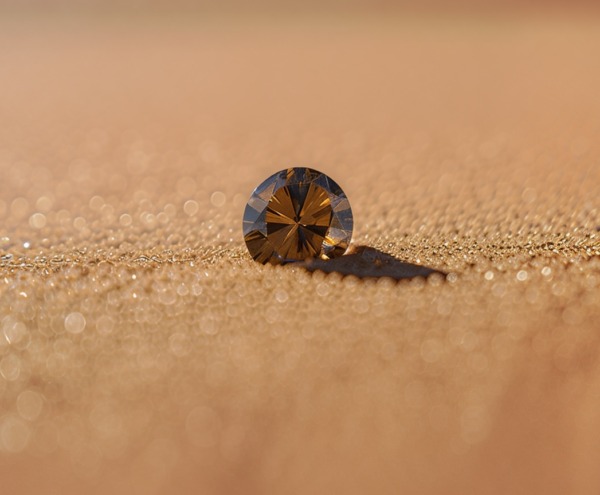
Every natural diamond is distinguished by its own combination of crystal growth patterns, inclusions and trace elements. These characteristics can help gemologists distinguish one diamond from another and create natural color variations, such as those seen in Desert diamonds. Combined with their finite supply, this individuality is one of the reasons natural diamonds continue to appeal to collectors and those investing in diamonds long-term.

Are lab-grown diamonds unique too?
If you’re wondering what a lab-grown diamond is (opens in a new window), it is a gem created in a laboratory using High Pressure High Temperature (HPHT) or Chemical Vapor Deposition (CVD). While laboratory-grown diamonds share the same chemical composition as natural diamonds, this is where the comparison ends. They are manufactured to replicate natural formation and can be produced at scale. As a result, they do not possess the same geological rarity, finite supply or naturally formed history that make every natural diamond genuinely unique.

Do people value uniqueness in diamonds?
Historically, uniqueness is part of what makes a diamond meaningful. A natural diamond’s rarity, individual characteristics and unique origin accentuate its beauty and emotional significance, particularly for engagements, anniversaries and family heirlooms. While every buyer values different qualities, those seeking a one-of-a-kind gem are often drawn to natural diamonds because no two share the exact same journey. The rarity of a natural diamond, for many, makes it something to be cherished forever. A mass-produced lab-grown diamond in the same context can be easily replaced.

FAQs
Are natural diamonds more unique than lab-grown diamonds?
Yes. Every natural diamond is shaped by natural diamond formation (opens in a new window) over millions to billions of years. While LGDs share the same chemical composition, they do not have the same natural origin, finite supply or geological rarity as natural diamonds.
Does the GIA certify natural and lab-grown diamonds differently?
Yes. The Gemological Institute of America uses different assessment systems for natural diamonds and LGDs. Natural diamonds receive traditional grading reports, while eligible LGDs are assessed as either Premium or Standard, clearly identifying a real diamond (opens in a new window) by its origin.
Is uniqueness the same as rarity?
No. Every natural diamond is unique because it has its own individual characteristics, while rarity refers to how uncommon a diamond or its qualities are. Natural diamonds are rare because their supply is finite, but some are exceptionally rare. For example, a flawless diamond (opens in a new window) accounts for less than 1% of all gem-quality natural diamonds.
Will a natural diamond lose its color?
If you’re wondering if diamonds change color over time? (opens in a new window) Natural diamonds generally do not. Their color and diamond clarity (opens in a new window) are determined during formation and remain stable under normal wear for a lifetime.
Sources
- Natural Diamond Council. Lab-Grown Diamonds. https://www.naturaldiamonds.com/natural-diamond-types-and-alternatives/lab-grown-diamonds/. Date accessed: 21 July 2026. ↩︎
- Natural Diamond Council. Where Are Diamonds Found? The Origins of Natural Diamonds. https://www.naturaldiamonds.com/natural-diamond-types-and-alternatives/where-are-diamonds-found-origins/. Date accessed: 21 July 2026. ↩︎
- Gemological Institute of America (GIA). Updated Laboratory-Grown Diamond Services to Launch October 1. https://www.gia.edu/gia-news-press/updated-laboratory-grown-diamond-services-to-launch-october-1. Date accessed: 21 July 2026. ↩︎
- Brian Gavin Diamonds. How Rare Are Flawless Diamonds? https://www.briangavindiamonds.com/blogs/rare-diamonds/how-rare-are-flawless-diamonds. Date accessed: 21 July 2026. ↩︎
- Brian Gavin Diamonds. How Rare Are Flawless Diamonds? https://www.briangavindiamonds.com/blogs/rare-diamonds/how-rare-are-flawless-diamonds. Date accessed: 21 July 2026./ ↩︎


