
Answer
Yes, natural diamonds are central to many heritage jewelry houses and their designs. These maisons are defined by preserved archives and generations of craftsmanship. Natural diamonds bring rarity and provenance, and heritage jewelry houses design around them. Tiffany & Co. created its 1886 eponymous setting to lift the diamond above the band, and Cartier’s signature garland-style jewels let diamonds shine without added weight. Across generations, these maisons have let the design follow the diamond.
Key takeaways
How do natural diamonds perform in vintage jewelry settings?
Natural diamonds work particularly well in vintage settings because those designs were created around them. Antique diamond styles (opens in a new window) preserve the distinctive proportions and broad flashes of light of their era, while newer natural diamonds can sit beautifully in vintage-inspired designs. Art Deco jewelry of the 1920s and 1930s paired baguette and pavé-set diamonds in geometric patterns, while the Rivière necklace, a string of graduated old European cut diamonds, has stayed in fashion since the 18th century. Decades later, collectors still seek out these settings and the diamonds they showcase.

Credit: @elizapagejewelry (Instagram)
Do natural diamonds represent history?
Natural diamonds have appeared in jewelry for centuries, with diamond cutting documented in Europe from around the 14th century. Those early diamonds came mainly from India, which remained the principle source until deposits were found in Brazil in the 1720s. As techniques developed, cutters moved from early point and table cuts to rose, brilliant and later old mine and old European cuts. Each cut reflects the tools, techniques and jewelry styles of its era.

Credit: @stephenrusselljewelry (Instagram)
The role of old mine and old European cuts
Old mine and old European cuts reflect different eras of diamond cutting. Old mine cuts became prominent in the 18th century, with cushion-like outlines, high crowns and larger facets. By the 19th century, advances in cutting technology helped create the rounder old European cut.

Are natural diamonds a traditional choice for heritage houses?
Natural diamonds have been central to fine jewelry traditions for generations, with jewelers designing around the cuts of their era. That tradition runs from Chaumet, which set 1,040 diamonds in the tiara Empress Joséphine wore at the 1804 coronation, to Boucheron, whose 1884 Question Mark necklace of cascading diamonds still inspires its high jewelry. Innovations from rose and brilliant cuts to the Asscher cut, patented in 1902, expanded design possibilities and helped define distinctive period styles.
Old European cut vs modern round brilliant cut
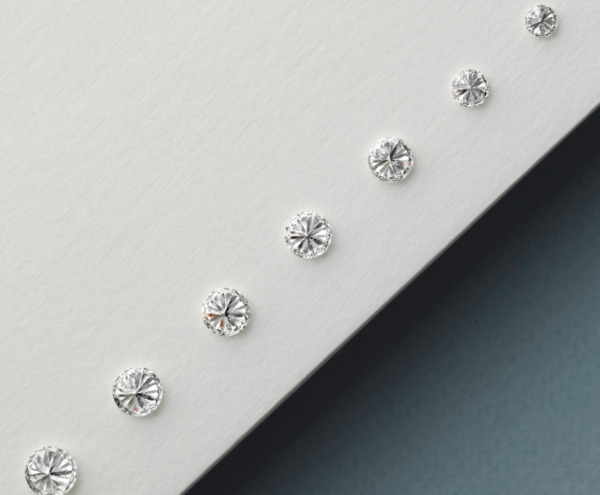
Old European cuts were shaped before modern round brilliant proportions were established. They generally have larger facets, higher crowns and smaller tables, producing broader flashes of light. Modern round brilliants use more standardized proportions designed to optimize brilliance and light return.

Why do luxury houses prefer natural diamonds?
For many luxury houses, natural diamonds offer rarity, provenance and a direct connection to the history of high jewelry. They also connect contemporary creations with archival pieces and generations of craftsmanship, reinforcing the heritage that distinguishes established jewelry houses.

Credit: @stephenrusselljewelry (Instagram)
FAQs
Why are natural diamonds passed down through generations?
A natural diamond (opens in a new window) can endure for generations, gathering personal significance and provenance as the jewel develops its own family history.
What makes diamonds heirlooms?
A real diamond (opens in a new window) can become an heirloom when it is passed between generations, carrying the history of the jewel, its craftsmanship and its previous wearers with it.
Are antique diamonds more valuable than modern-cut diamonds?
Not necessarily. Diamond value (opens in a new window) depends on rarity, condition, provenance and quality as well as age. Exceptional antique cuts can attract collectors, but age alone does not determine value.
Are vintage diamonds collectible?
Yes. Collectors may consider rarity, provenance, condition and period craftsmanship alongside the 4Cs of diamonds (opens in a new window). Original settings and distinctive historic cuts can also influence desirability.
Why are natural diamonds suited to vintage-inspired bridal jewelry?
Natural diamonds give bridal jewelry (opens in a new window) a connection to the history of engagement and wedding jewelry. Antique cuts can reference a particular era, while newer natural diamonds pair the same geological rarity and provenance with vintage-inspired design.
Sources
- The National. “How the likes of Cartier, Chaumet and Boucheron are turning centuries-old archives into modern high jewellery.”
https://thenationalnews.com/magazine/2026/04/24/cartier-chaumet-boucheron-archives-high-jewellery/ (opens in a new window). Accessed 12 November 2026. - Sotheby’s. “The Brilliant History of Tiffany and Co Jewelry.”
https://www.sothebys.com/en/articles/the-brilliant-history-of-tiffany-and-co-jewelry (opens in a new window) Accessed 12 November 2026 - Country Life. “How Cartier became ‘the jeweller of kings and the king of jewellers’.” Kim Parker.
https://countrylife.co.uk/luxury/art-and-antiques/how-cartier-became-the-jeweller-of-kings-and-the-king-of-jewellers (opens in a new window). Accessed 12 November 2026. - The Diamond Collective. The Hottest New Natural Diamonds are Actually Old.
https://thediamondcollective.world/culture-and-style/old-diamonds-guide/ (opens in a new window). Accessed Nov. 12, 2026 - Sotheby’s. “The Timeless Appeal of Art Deco Jewels.”
https://www.sothebys.com/en/articles/the-timeless-appeal-of-art-deco-jewels (opens in a new window). Accessed 12 November 2026 - Sotheby’s. “A History of Jewellery Through the Ages: From 18th to Mid-20th Century.”
https://www.sothebys.com/en/articles/a-history-of-jewellery-through-the-ages-from-18th-to-mid-20th-century (opens in a new window). Accessed 12 November 2026 - Gemological Institute of America (GIA). “Historical Reading List: Diamonds in Ancient India.”
https://my.gia.edu/diamonds-ancient-india-reading-list (opens in a new window). Accessed 12 November 2026. - Gemological Institute of America (GIA). Diamond History and Lore. https://www.gia.edu/diamond-history-lore. Accessed 24 August 2026. ↩︎
- Taylor & Hart. Vintage Diamond Cuts. https://taylorandhart.com/us/diamond-guidance/advanced-diamond-guidance/vintage-diamond-cuts. Accessed 25 August 2026. ↩︎
- Rapaport. “Tiaras, Royal Jewels and Deco Showstoppers: Chaumet’s Legacy.”
https://rapaport.com/magazine-article/tiaras-royal-jewels-and-deco-showstoppers-chaumets-legacy/ (opens in a new window). Accessed 12 November 2026. - W Magazine. Boucheron’s Question Mark Necklace Gets a Wild New Twist.
https://www.wmagazine.com/fashion/boucheron-jewelry-untamed-necklace-backstory (opens in a new window). Nov. 12, 2026. - Gemological Institute of America (GIA). Diamond History and Lore. https://www.gia.edu/diamond-history-lore. Accessed 25 August 2026.https://www.gia.edu/diamond-history-lore ↩︎
- Taylor & Hart. Vintage Diamond Cuts. https://taylorandhart.com/us/diamond-guidance/advanced-diamond-guidance/vintage-diamond-cuts. Accessed 25 August 2026. ↩︎
- Gemological Institute of America (GIA). Diamond History and Lore. https://www.gia.edu/diamond-history-lore. Accessed 25 August 2026. ↩︎


