
Answer
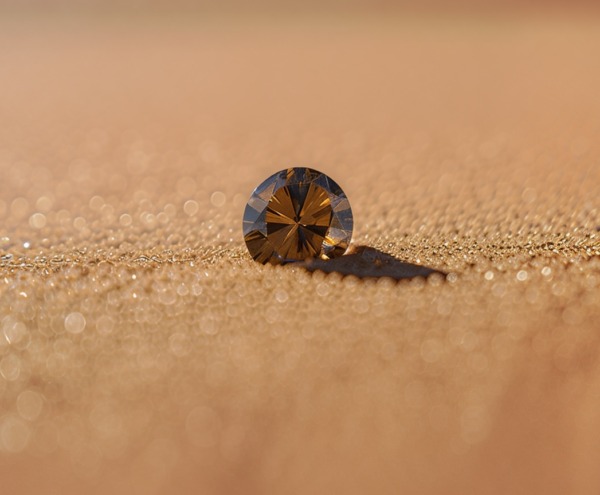
People choose natural diamonds because of their physical properties and what they represent. Each one-of-a-kind diamond formed over one to three billion years and is rarer and harder than almost anything else in nature, valued for these unique properties since at least the first century AD. That same rarity and durability are what give natural diamonds meaning; as a symbol of love, a family heirloom, or to honor a rare and special moment.
Key takeaways
What do natural diamonds symbolize?
Permanence is the meaning most consistently attached to natural diamonds, which is why they’re so often chosen to represent love. Natural diamond formation (opens in a new window) takes one to three billion years, as carbon crystallizes under extreme heat and pressure deep in the Earth’s mantle before the diamond reaches the surface. By the time a diamond is formed, it has already proven it can last, which is part of why it is the perfect representation for a love that endures in the same way.
Natural diamonds carry other symbolism too. Centuries before diamond became April’s official birthstone in 1912, people already wore them as good-luck talismans, a belief that hasn’t disappeared: more athletes now wear diamonds during competition, not just after winning it.

Why are natural diamonds culturally significant?
Diamonds became culturally significant for reasons that hold up under scrutiny. Geographically they are extremely rare, with only 1% of all diamonds ever formed making it to the surface, which makes them worth competing for, and harder than anything else in nature, which means they didn’t wear down. Their ability to reflect the light beautifully makes them visible, and valuable, from across a room. The Roman author and naturalist Pliny the Elder wrote about the impact of diamonds in the first century AD, calling them “the most valuable, not only of precious stones, but of all things.”
Why do natural diamonds become family heirlooms?
Diamonds are the hardest naturally occurring material on Earth, measuring 10 on the Mohs scale (the standard geologists use to rank scratch resistance). This means that a diamond will not show visible marks or scratching even after decades of wear, something that can’t be said for softer gemstones or metals.
That durability is why a natural diamond (opens in a new window) can pass through a family for generations without ever needing to be replaced. A diamond worn by a grandmother in one decade can be worn by a grandchild in another, carrying precious memories and emotional connections forward, and continuing the diamond’s billion-year story even further into the future.

Why do some buyers prefer natural diamonds today?
Preference hasn’t disappeared even as lab-grown diamonds (opens in a new window) (LGDs) have become widely available and, thanks to mass production, considerably cheaper. A 2025 industry survey found that when buyers were shown two diamonds of identical quality, 49% chose the natural diamond while only 17% chose a lab-gown version, so price alone doesn’t explain the gap. The rest comes down to what a natural diamond represents. Each one has a documented, geologically unique origin and comes from a supply that’s naturally finite, which is why it holds value in a way a manufactured, scalable alternative cannot.
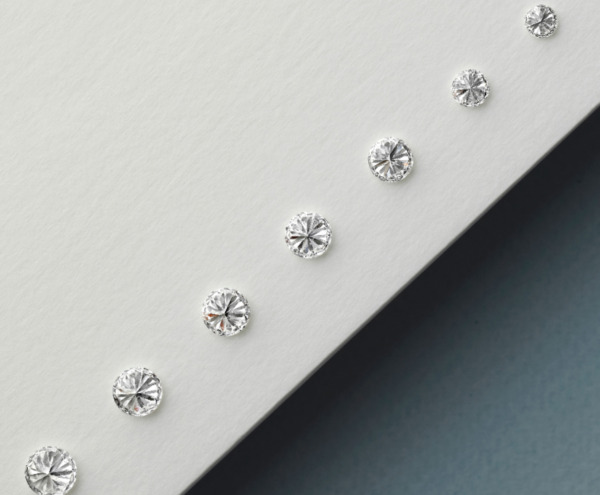
Uniqueness plays a role too. No two natural diamonds share the same combination of color, clarity and internal characteristics, each one shaped by nature over billions of years. For many buyers, that’s exactly what feels right about it. A diamond forms once, in one particular way, given to a person who is just as irreplaceable.

FAQs
Are natural diamonds traditional?
Yes, though tradition isn’t a single custom. It’s the pattern of reaching for a natural diamond, repeatedly, across multiple generations and cultures to honor status, love and commitment. Mughal India used diamonds at court to signal power, Victorian England arranged them alongside other gems to spell hidden words… different customs built around the same gem. That repetition, not any one ritual, is what makes natural diamonds traditional.
Why are natural diamonds used in engagement rings?
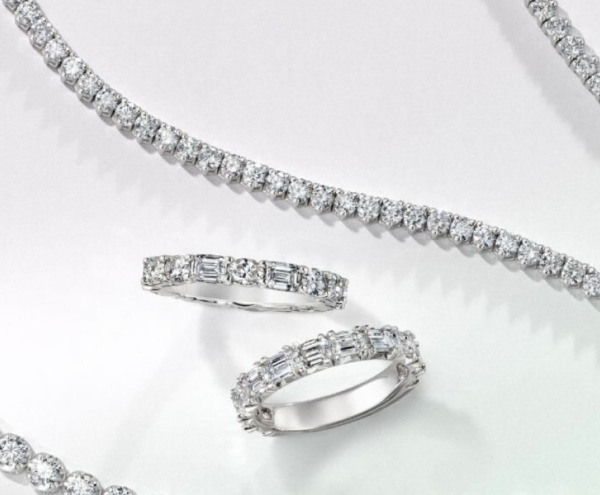
The history of diamond engagement rings (opens in a new window) can be traced to 1477, when Archduke Maximilian of Austria gave Mary of Burgundy a diamond ring, though it remained rare outside royal and noble circles for centuries. It wasn’t until the 20th century that diamond engagement rings became widespread, largely because natural diamonds combined durability, brilliance and symbolism in a way few other materials matched.
Do natural diamonds have emotional value?
Yes, and it’s separate to the diamond value (opens in a new window) that is measured by grading reports or market data. No two natural diamonds share the same combination of internal characteristics, so the one given at an engagement, a graduation, a milestone birthday or an anniversary like a diamond jubilee is genuinely one of a kind; something that mirrors the moment itself. Through its rarity, beauty and uniqueness, a natural diamond holds emotional value that can say something about a love, or a life, that very few other things can.
Sources
- Natural Diamond Council. How Are Diamonds Formed? 10 Fascinating Scientific Facts. https://www.naturaldiamonds.com/science-of-diamonds/how-are-diamonds-formed/. Accessed July 27, 2026. ↩︎
- Jewelers of America. Birthstones. https://www.jewelers.org/buying-jewelry/jewelry-buying-guides/birthstones. Aug. 28, 2026. ↩︎
- GIA. The Extraordinary Backstory of Natural Diamonds: A Diamond Is (and Has Been) Forever. https://www.gia.edu/gems-gemology/fall-2024-diamond-reflections. Accessed July 27, 2026. ↩︎
- GIA. Mohs Scale. https://4cs.gia.edu/en-us/blog/mohs-scale/. Accessed July 27, 2026. ↩︎
- BriteCo. The Lab-Grown vs. Natural Diamond Report. https://brite.co/the-lab-grown-vs-natural-diamond-report/. Accessed July 27, 2026. ↩︎
- Natural Diamond Council. How Are Diamonds Formed? 10 Fascinating Scientific Facts. https://www.naturaldiamonds.com/science-of-diamonds/how-are-diamonds-formed/. Accessed July 27, 2026. ↩︎
- GIA. Diamonds of Golconda. https://4cs.gia.edu/en-us/blog/diamonds-location-golconda/. Accessed July 27, 2026. ↩︎
- National Jeweler. The History Behind Acrostic Jewelry. https://nationaljeweler.com/articles/8812-the-history-behind-acrostic-jewelry. Accessed July 27, 2026. ↩︎
- American Gem Society. The History of the Diamond as an Engagement Ring. https://www.americangemsociety.org/buying-diamonds-with-confidence/the-history-of-the-diamond-as-an-engagement-ring/. Accessed July 27, 2026. ↩︎
- GIA. Seven Things to Know When Looking at Diamond Clarity. https://4cs.gia.edu/en-us/blog/seven-things-to-know-about-diamond-clarity/. Accessed July 27, 2026. ↩︎


